


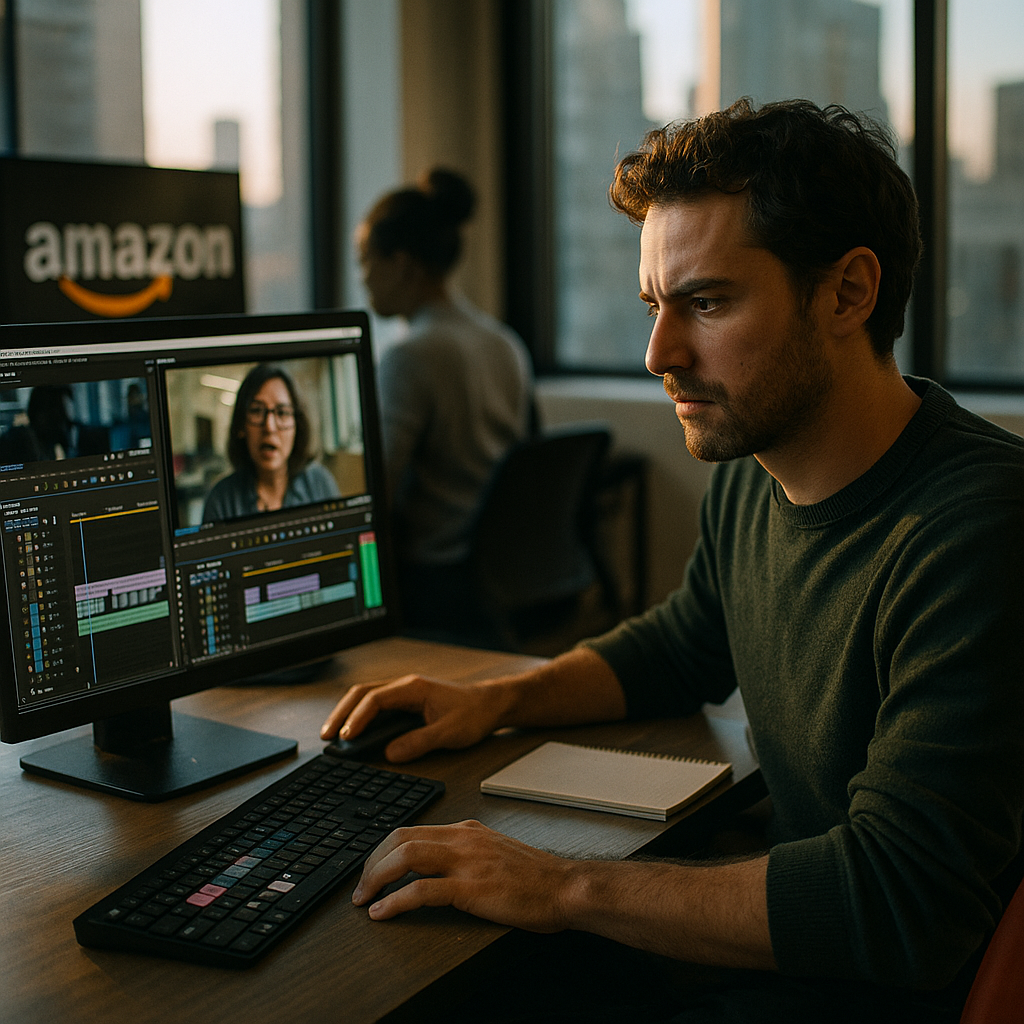
Search “video editor” on Amazon’s careers page right now and you’ll find postings demanding motion graphics fluency, generative AI tool mastery, and rapid-turnaround skills that didn’t exist as job requirements three years ago. The videography talent shortage isn’t a staffing inconvenience anymore. It’s a structural bottleneck reshaping how brands plan content, budget for creative production, and compete for attention.
Marketing leaders who treat editing talent as a commodity are about to get an expensive lesson.
The Job Postings Are the Tell
Pull up recent listings from Amazon, Google, and Estée Lauder and a pattern emerges fast. These aren’t entry-level cutting jobs. Amazon’s advanced video editor roles ask for proficiency across Premiere Pro, After Effects, and AI-assisted tools like Runway or Adobe Firefly, plus the judgment to know when automation helps and when it flattens a story. Google’s postings lean into YouTube-native formats: retention curves, thumbnail psychology, platform-specific pacing. Estée Lauder, notably a beauty brand and not a tech company, is hiring editors who understand livestream commerce cutdowns and short-form repurposing at a volume that would have required an entire agency five years ago.
The throughline: brands want editors who function as strategists, not technicians. Someone who can look at raw footage and immediately see the six different assets it needs to become — a TikTok cut, a YouTube Short, a paid social variant, a landing page hero video — without a creative director hand-holding every decision.
When Amazon, Google, and a beauty conglomerate are competing for the same editing talent pool, that’s not a coincidence — it’s a signal that video production has become core infrastructure, not a support function.
Why the Shortage Exists
Three forces collided to create this gap.
First, content volume exploded. Brands that once produced a handful of hero videos per quarter now need dozens of platform-native variants per week. TikTok Shop alone has turned commerce into a content treadmill — as we covered in our analysis of TikTok Shop’s retail shift, brands are now producing live and short-form content at a cadence that traditional production pipelines simply weren’t built for.
Second, the skill bar rose overnight. Editors now need fluency in AI-assisted workflows, platform algorithm behavior, and direct-response principles simultaneously. It’s no longer enough to cut a beautiful sequence. The edit has to hook a viewer in under two seconds, hold attention through a completion-rate curve, and drive a measurable action. That’s a different discipline than film-school editing, and most training programs haven’t caught up.
Third, the pandemic-era hiring boom in creative roles didn’t translate into a durable talent pipeline. A lot of mid-career editors moved into freelance or agency-hopping arrangements, chasing higher day rates rather than staying in-house. Enterprise brands are now competing with agencies, creator collectives, and each other for a shrinking pool of people who can do both craft and strategy.
According to eMarketer, video continues to absorb a growing share of total content marketing spend, even as budgets for other formats plateau. That spending growth is running ahead of the talent supply curve. Simple economics: more demand, flat or shrinking supply, rising cost and rising standards.
What “Advanced” Actually Means Now
The word “advanced” in these job postings isn’t fluff. It’s doing real work to filter candidates. Based on the specific tools and outcomes listed across these postings, advanced now means:
- AI-native workflows: comfort using generative tools for rough cuts, b-roll generation, and localization, not as a novelty but as a daily production step.
- Platform algorithm literacy: understanding how watch-time and completion rate influence distribution, similar to the shifts we’ve tracked in TikTok’s watch-time algorithm changes.
- Direct-response instincts: editing with conversion, not just aesthetics, as the success metric. This is exactly the shift documented in our piece on direct-response video editors becoming a hiring category in their own right.
- Multi-format output speed: turning one shoot into ten deliverables without ten separate timelines.
- Compliance awareness: knowing disclosure requirements and platform-specific ad labeling well enough to flag issues before legal has to.
That last point matters more than most creative leads realize. As the FTC tightens enforcement around commercial intent and disclosure, editors are increasingly the last line of defense before a video goes live. A skilled editor who understands disclosure requirements can catch a compliance problem that a rushed brand manager might miss.
The ROI Math Brands Are Missing
Here’s the uncomfortable part for finance teams: paying a premium for advanced editing talent is usually cheaper than the alternative.
Consider the math. A mid-tier freelance editor without platform-native skills might charge less per hour, but produces content that underperforms on watch time, gets deprioritized by the algorithm, and needs a second round of revisions anyway. A brand that hires for craft alone, without strategic and technical range, ends up paying twice: once for the edit, once for the underperformance.
Compare that to the 30% conversion rates livestream commerce is driving versus roughly 2% for standard paid social. The editors capable of producing that kind of high-conversion, fast-turnaround content aren’t interchangeable with generalist video hires. They’re a specialized function with measurable revenue impact, and brands are finally pricing them that way.
This is the same logic driving the broader shift we’ve seen in influencer manager roles now requiring CAC and LTV fluency. Marketing job descriptions across the board are collapsing the line between creative execution and business outcomes. Editing is simply the latest function to get pulled into that convergence.
How Brands Should Respond, Practically
Panicking and throwing more money at freelance rates isn’t a strategy. A few moves are more durable.
Build tiered editing benches, not single hires. Just as brands have moved to tiered influencer models, splitting spend across macro, micro, and nano creators, smart creative teams are building tiered editing benches: a small in-house core for brand-critical assets, a rotating freelance layer for volume, and AI-assisted tools for first-pass cuts. This mirrors the structure described in our piece on tiered influencer models becoming the enterprise standard — the same logic, applied to production capacity.
Invest in upskilling before poaching. The talent pool of editors who already have every skill listed above is thin. Brands that identify strong craft-level editors and invest in training them on AI tools and platform strategy will out-hire brands waiting for a unicorn candidate to apply.
Treat editing tools as infrastructure, not discretionary software spend. HubSpot’s research on content operations consistently shows that tool fragmentation slows output more than talent shortages do. If your editors are juggling six disconnected platforms, you’re compounding the shortage with friction. This connects to the broader martech consolidation trend we’ve covered, where AI tool sprawl is quietly draining marketing budgets across departments, not just creative.
Rethink the org chart. Some brands are formalizing creative leadership at the executive level, a trend we detailed in Chief Creator Officer roles signaling real org chart change. If video production is now a revenue driver, it deserves a seat with budget authority, not a reporting line buried three layers under brand marketing.
None of this is optional anymore. Content volume isn’t slowing down, and the platforms rewarding fast, native, algorithm-fluent editing aren’t waiting for brands to catch up.
Next Step
Audit your current editing bench against the skill list above this quarter, identify the gap between what your team can do and what Amazon, Google, and Estée Lauder are now hiring for, and budget accordingly before your competitors lock up the talent that’s left.
Frequently Asked Questions
Why are Amazon, Google, and Estée Lauder hiring for “advanced” video editing skills now?
Content volume across short-form, livestream, and paid social has grown faster than the available pool of editors who can combine technical craft with platform algorithm knowledge and AI tool fluency. These companies are competing for a shrinking specialist talent pool, not just filling generic creative roles.
What skills define an “advanced” video editor in the current market?
Based on current job postings, advanced editors need AI-assisted workflow experience, platform-specific algorithm literacy (especially around watch time and completion rate), direct-response editing instincts, multi-format output speed, and working knowledge of ad disclosure compliance.
Is the videography talent shortage likely to ease soon?
Not in the near term. Training pipelines for AI-native, platform-fluent editing are still catching up to demand, and content volume expectations continue to rise as formats like livestream commerce and short-form video expand across new categories.
How should brands budget for this shortage?
Build a tiered editing structure: a small in-house core for high-stakes brand assets, a flexible freelance layer for volume production, and AI tools for first-pass cuts. Treat editing tool stacks as core infrastructure rather than discretionary software spend.
Does this shortage affect small and mid-size brands, or just enterprise companies?
It affects everyone, but enterprise brands feel it first because they compete directly for the same specialist talent. Smaller brands often feel the downstream effect: rising freelance rates and longer turnaround times as top editors get absorbed by larger budgets.
Top Influencer Marketing Agencies
The leading agencies shaping influencer marketing in 2026
Agencies ranked by campaign performance, client diversity, platform expertise, proven ROI, industry recognition, and client satisfaction. Assessed through verified case studies, reviews, and industry consultations.
Moburst

-
2

The Shelf
Boutique Beauty & Lifestyle Influencer AgencyA data-driven boutique agency specializing exclusively in beauty, wellness, and lifestyle influencer campaigns on Instagram and TikTok. Best for brands already focused on the beauty/personal care space that need curated, aesthetic-driven content.Clients: Pepsi, The Honest Company, Hims, Elf Cosmetics, Pure LeafVisit The Shelf → -
3

Audiencly
Niche Gaming & Esports Influencer AgencyA specialized agency focused exclusively on gaming and esports creators on YouTube, Twitch, and TikTok. Ideal if your campaign is 100% gaming-focused — from game launches to hardware and esports events.Clients: Epic Games, NordVPN, Ubisoft, Wargaming, Tencent GamesVisit Audiencly → -
4

Viral Nation
Global Influencer Marketing & Talent AgencyA dual talent management and marketing agency with proprietary brand safety tools and a global creator network spanning nano-influencers to celebrities across all major platforms.Clients: Meta, Activision Blizzard, Energizer, Aston Martin, WalmartVisit Viral Nation → -
5

The Influencer Marketing Factory
TikTok, Instagram & YouTube CampaignsA full-service agency with strong TikTok expertise, offering end-to-end campaign management from influencer discovery through performance reporting with a focus on platform-native content.Clients: Google, Snapchat, Universal Music, Bumble, YelpVisit TIMF → -
6

NeoReach
Enterprise Analytics & Influencer CampaignsAn enterprise-focused agency combining managed campaigns with a powerful self-service data platform for influencer search, audience analytics, and attribution modeling.Clients: Amazon, Airbnb, Netflix, Honda, The New York TimesVisit NeoReach → -
7

Ubiquitous
Creator-First Marketing PlatformA tech-driven platform combining self-service tools with managed campaign options, emphasizing speed and scalability for brands managing multiple influencer relationships.Clients: Lyft, Disney, Target, American Eagle, NetflixVisit Ubiquitous → -
8

Obviously
Scalable Enterprise Influencer CampaignsA tech-enabled agency built for high-volume campaigns, coordinating hundreds of creators simultaneously with end-to-end logistics, content rights management, and product seeding.Clients: Google, Ulta Beauty, Converse, AmazonVisit Obviously →