


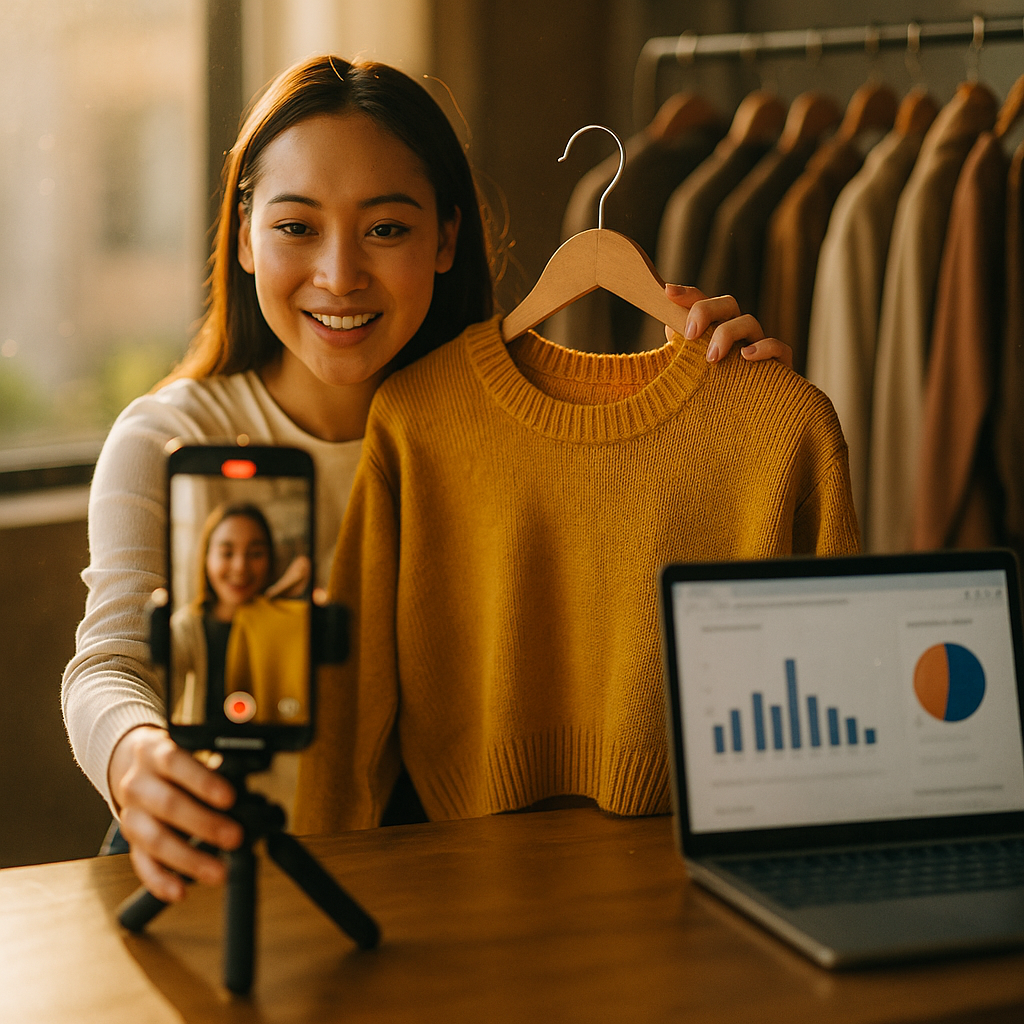
Thirty percent. That’s the conversion rate some brands are pulling from livestream commerce sessions, against a paid social average that struggles to clear 2 to 3 percent. If your media plan still treats livestream commerce investment as a side experiment, you’re leaving revenue on the table while competitors quietly rebuild their funnels around it.
This isn’t a TikTok Shop fad or a China-only phenomenon anymore. It’s a structural shift in how conversion happens, and the numbers are strong enough to force a real conversation with your CFO.
The Numbers That Should Be Making Budget Meetings Uncomfortable
Let’s start with the uncomfortable math. Traditional ecommerce conversion rates hover between 2 and 4 percent, according to benchmarks widely cited by eMarketer. Paid social campaigns, even well-optimized ones, rarely beat that. Livestream shopping sessions on platforms like TikTok Shop, Whatnot, and Amazon Live routinely report conversion rates in the 10 to 30 percent range during active broadcasts, with flash-sale moments spiking even higher.
That’s not a marginal improvement. That’s an order-of-magnitude difference in how efficiently a dollar of attention turns into a dollar of revenue.
A livestream session converting at 30 percent isn’t an outlier anymore — it’s becoming the baseline expectation for well-produced, creator-led shopping events on platforms built for real-time commerce.
Why does this matter for budget allocation specifically? Because most brands are still funding channels based on historical performance data that predates this shift. If your media mix modeling was built on 2022 or 2023 benchmarks, it’s structurally blind to livestream’s efficiency. That’s the same blind spot we flagged in our piece on conversion rate as the new north star — reach-based planning simply doesn’t capture where the real ROI lives anymore.
Why Livestream Converts So Much Better Than Static Content
It’s not magic. It’s mechanics.
Livestream commerce compresses the entire funnel — awareness, consideration, trust, urgency, and purchase — into a single continuous session. A viewer watches a creator try on a jacket, asks a question in the chat, gets an answer in real time, sees a countdown timer, and buys. No tab-switching. No cart abandonment gap between “interested” and “checkout.” The friction that kills conversion on a static product page simply doesn’t exist in the same way.
There’s also a trust dynamic at play. Real-time Q&A functions as instant objection-handling. A shopper who’s on the fence about sizing or ingredients gets an answer from a person, not a FAQ page. That immediacy is worth more than any amount of polished creative.
- Urgency is engineered, not implied. Limited stock counters and session-only pricing create genuine scarcity, not the fake “only 3 left!” banners shoppers have learned to ignore.
- Social proof compounds in real time. Viewers see purchase notifications and comment volume climbing, which reinforces the decision to buy.
- The creator absorbs the risk. A trusted host effectively vouches for the product, reducing the perceived risk of an unfamiliar brand.
This connects directly to the broader merger of content and commerce we covered in our analysis of live-shopping and shoppable video convergence. The lines between content, community, and checkout are gone. Brands still organizing teams around those old silos are structurally disadvantaged.
What This Means for Budget Allocation, Concretely
Here’s where it gets practical. If livestream commerce converts at 5 to 15x the rate of standard paid social, the cost-per-acquisition math shifts dramatically even before you account for production costs.
Consider a simplified scenario: a brand spending $200,000 monthly across paid social nets a 2.5 percent conversion rate on $50 average order value. Reallocating even 20 percent of that spend to livestream sessions with a conservative 12 percent conversion rate (well below the headline 30 percent figures some brands report) can meaningfully lower blended CAC, assuming traffic acquisition costs stay comparable.
The catch, and there’s always a catch, is that livestream requires different inputs: a skilled host, real-time inventory sync, live moderation, and post-stream clip repurposing. It’s not a “set it and forget it” ad unit. It’s closer to producing a mini QVC segment, which means the labor and planning costs are real. But they’re front-loaded and largely fixed, unlike paid media spend that scales linearly with reach.
Which Brands Are Already Proving This Out
You don’t have to take this on faith. Estée Lauder’s creator program restructuring, which we broke down in our piece on tiered creator models, explicitly weights livestream-capable creators higher because of their conversion performance relative to static content creators. Amazon Live’s newsletter-driven creator strategy, detailed in our coverage of Amazon Live’s payout model shift, is a direct response to competing for the same conversion-hungry creator talent that Whatnot and TikTok Shop are courting.
Whatnot, for its part, has gone so far as to build hiring requirements around CAC and LTV fluency for influencer managers, a trend we examined in our report on Whatnot’s hiring shift. That’s a telling signal. When a platform starts hiring for unit economics literacy rather than pure relationship management, it means the category has matured past “nice to have” into “core revenue channel.”
Fashion resale, collectibles, and beauty have been the early proving grounds, largely because those categories benefit most from visual demonstration and immediate trust-building. But grocery, electronics, and even B2B SaaS demos are starting to experiment with livestream formats for the same reason: the funnel compression works regardless of category, even if the conversion ceiling varies.
The Skeptic’s Case (Because You Should Hear It)
Not every brand should pour half its budget into livestream tomorrow. Fair pushback exists.
First, the 30 percent figure is often measured against live-session traffic, not total campaign reach. A stream might convert incredibly well among the 500 people watching, but if you only reached 500 people, the absolute revenue impact is small. Conversion rate and volume are different variables, and conflating them is a common planning mistake.
Second, production quality matters enormously. A poorly hosted, low-energy stream converts terribly. This isn’t a “turn on the camera and profit” channel. It requires genuine talent, the kind of on-camera skill that overlaps with what we discussed in our piece on direct-response video editing as a hiring category. Livestream commerce needs performers who can sell live, not just influencers who look good in a feed post.
Third, attribution remains messy. Cross-device viewing, delayed purchases after the stream ends, and platform-specific reporting quirks make it hard to build clean incrementality models. Marketers should treat platform-reported conversion rates as directionally useful, not gospel, and validate with their own first-party data wherever possible.
Livestream commerce rewards brands that treat it as a discipline, with trained hosts and real production, not as a cheap live-video experiment bolted onto an existing content calendar.
None of this undermines the core case. It just means the budget shift needs to be paired with a capability build-out, not a blind reallocation.
Building the Business Case Internally
How do you actually pitch this to finance without sounding like you’re chasing a trend?
Start small and instrumented. Run a controlled pilot: two to four livestream sessions per month, on one platform, with clear tracking parameters and a dedicated host. Compare blended CAC against your existing paid social benchmarks over a full quarter, not a single campaign. This mirrors the vendor evaluation discipline we recommend in our adaptive MarTech vendor selection framework — test before you commit, and demand platform-level reporting transparency as a condition of spend.
Also budget for the org chart implications. Someone needs to own livestream commerce operationally: sourcing hosts, managing inventory sync, handling real-time moderation and compliance. This is part of the broader shift toward specialized creator-economy roles we’ve tracked in our coverage of Chief Creator Officer roles. Treating livestream as a bolt-on task for an already-stretched social media manager is a recipe for mediocre execution and disappointing numbers.
Finally, don’t ignore the compliance layer. Live, real-time claims made on camera carry the same disclosure and substantiation obligations as any other advertising, arguably more so because there’s no editing pass to catch a problematic claim before it airs. Review your host guidelines against current FTC endorsement guidance before scaling spend, and build a real-time moderation protocol that can flag issues mid-stream.
Next Step
Don’t reallocate your entire budget on a headline conversion stat. Run a quarter-long pilot with real tracking, compare blended CAC against your current channel mix, and use those numbers, not the industry average, to make the case for scaling livestream commerce investment.
Frequently Asked Questions
What conversion rate should brands realistically expect from livestream commerce?
Conservative benchmarks suggest 8 to 15 percent for well-produced sessions, with top-performing flash-sale moments reaching 25 to 30 percent. Treat the higher figures as ceiling performance, not the average outcome.
Which platforms are best for testing livestream commerce first?
TikTok Shop and Whatnot are strong starting points for consumer categories like beauty, fashion, and collectibles, while Amazon Live suits brands already selling on Amazon’s marketplace. Platform choice should follow where your existing audience already shops.
How much budget should a brand shift toward livestream commerce?
Most practitioners recommend starting with 10 to 15 percent of paid social or influencer budget as a pilot allocation, scaling only after a full quarter of tracked performance data justifies the shift.
Does livestream commerce work outside of beauty and fashion?
Yes, though conversion ceilings vary by category. Electronics, home goods, and even grocery brands have run successful sessions; the format works wherever visual demonstration and real-time Q&A reduce purchase hesitation.
What’s the biggest execution mistake brands make with livestream commerce?
Treating it as a low-effort live video instead of a produced sales event. Weak hosting, poor inventory sync, and no moderation plan are the most common reasons sessions underperform benchmarks.
FAQs
Top Influencer Marketing Agencies
The leading agencies shaping influencer marketing in 2026
Agencies ranked by campaign performance, client diversity, platform expertise, proven ROI, industry recognition, and client satisfaction. Assessed through verified case studies, reviews, and industry consultations.
Moburst

-
2

The Shelf
Boutique Beauty & Lifestyle Influencer AgencyA data-driven boutique agency specializing exclusively in beauty, wellness, and lifestyle influencer campaigns on Instagram and TikTok. Best for brands already focused on the beauty/personal care space that need curated, aesthetic-driven content.Clients: Pepsi, The Honest Company, Hims, Elf Cosmetics, Pure LeafVisit The Shelf → -
3

Audiencly
Niche Gaming & Esports Influencer AgencyA specialized agency focused exclusively on gaming and esports creators on YouTube, Twitch, and TikTok. Ideal if your campaign is 100% gaming-focused — from game launches to hardware and esports events.Clients: Epic Games, NordVPN, Ubisoft, Wargaming, Tencent GamesVisit Audiencly → -
4

Viral Nation
Global Influencer Marketing & Talent AgencyA dual talent management and marketing agency with proprietary brand safety tools and a global creator network spanning nano-influencers to celebrities across all major platforms.Clients: Meta, Activision Blizzard, Energizer, Aston Martin, WalmartVisit Viral Nation → -
5

The Influencer Marketing Factory
TikTok, Instagram & YouTube CampaignsA full-service agency with strong TikTok expertise, offering end-to-end campaign management from influencer discovery through performance reporting with a focus on platform-native content.Clients: Google, Snapchat, Universal Music, Bumble, YelpVisit TIMF → -
6

NeoReach
Enterprise Analytics & Influencer CampaignsAn enterprise-focused agency combining managed campaigns with a powerful self-service data platform for influencer search, audience analytics, and attribution modeling.Clients: Amazon, Airbnb, Netflix, Honda, The New York TimesVisit NeoReach → -
7

Ubiquitous
Creator-First Marketing PlatformA tech-driven platform combining self-service tools with managed campaign options, emphasizing speed and scalability for brands managing multiple influencer relationships.Clients: Lyft, Disney, Target, American Eagle, NetflixVisit Ubiquitous → -
8

Obviously
Scalable Enterprise Influencer CampaignsA tech-enabled agency built for high-volume campaigns, coordinating hundreds of creators simultaneously with end-to-end logistics, content rights management, and product seeding.Clients: Google, Ulta Beauty, Converse, AmazonVisit Obviously →