


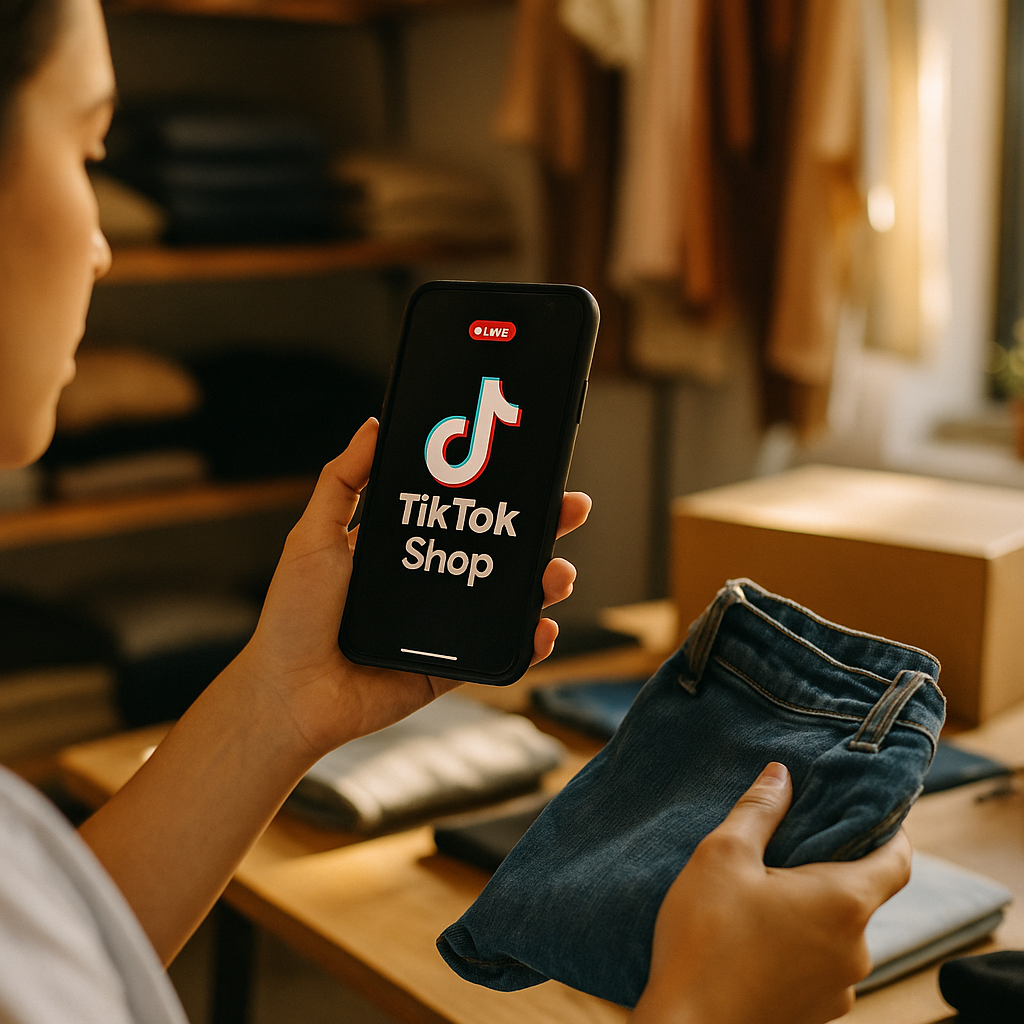
TikTok Shop crossed $33 billion in projected gross merchandise value this year, according to eMarketer estimates. That number should stop you cold. This isn’t a discovery app with a checkout bolted on anymore. TikTok Shop marks the moment TikTok stopped being a marketing channel and became a retail environment — one that owns awareness, consideration, and conversion under a single roof. If your media plan still treats TikTok as a top-of-funnel play, you’re already behind.
The Platform Rebuilt Itself Around Retail, Not Reach
Remember when TikTok’s pitch to brands was simple? Get discovered. Go viral. Drive traffic somewhere else to convert. That model is dead. TikTok has spent the last two years quietly rebuilding its entire architecture around closed-loop commerce: in-app checkout, affiliate marketplaces, livestream shopping, warehousing partnerships, and even its own logistics infrastructure in select markets.
This is the shopping-center operator model. Think about what a mall actually does: it doesn’t just get foot traffic through the door, it controls the tenants, the layout, the payment systems, the loyalty programs, and the data on every transaction. TikTok is doing the same thing digitally. It owns the algorithm that decides what you see, the creator ecosystem that sells to you, and now the payment rails that process the sale.
TikTok no longer just influences purchase decisions — it now captures the entire transaction, from the first scroll to the final tap on “buy,” inside one owned environment.
That’s a fundamentally different value proposition than what Meta or YouTube offer. Those platforms still largely hand you off to a brand’s own site or app. TikTok wants to keep you inside its walls for the whole journey, and it’s built the infrastructure to make that possible.
Why Full-Funnel Ownership Changes the Math for Brands
Here’s the uncomfortable part for CMOs and performance marketers. When a platform owns the full funnel, it also owns the attribution story. You’re no longer measuring TikTok’s contribution to a sale that happens on Shopify or Amazon. You’re measuring performance inside a system where TikTok controls the algorithm, the ranking signals, the fee structure, and the reporting dashboard.
That’s a lot of trust to place in one vendor. And it’s not paranoia — it’s basic risk management. Enterprise marketing teams have already started consolidating tools for exactly this reason, folding identity resolution, CDP, and attribution into fewer systems to reduce blind spots, as covered in our piece on identity and attribution consolidation. TikTok Shop introduces a new blind spot: a platform-native commerce layer that doesn’t always play nicely with your existing measurement stack.
Practically, this means a few things for anyone managing budget against TikTok:
- Attribution windows shrink. Livestream and Shop conversions often happen in minutes, not days, which breaks legacy multi-touch models built for longer consideration cycles.
- Creator briefs need commerce fluency. A creator optimizing for watch-time completion is not the same as one optimizing for add-to-cart. Brands need to specify which outcome they’re paying for.
- Budget allocation gets murkier. Is TikTok Shop spend “media” or “retail media”? Most finance teams haven’t decided yet, and that ambiguity slows approval cycles.
Livestream Commerce Is the Proof Point
If you want evidence that TikTok’s shopping-center bet is working, look at conversion rates. Livestream commerce is converting at roughly 30% versus 2% for standard paid social, a gap wide enough to make any performance marketer sit up. We broke down why that gap exists in our analysis of livestream commerce conversion rates, but the short version is this: livestream removes friction. There’s no redirect, no third-party checkout, no cart abandonment triggered by a slow-loading landing page. The sale happens where the demand is created.
That’s the shopping-center thesis in action. TikTok isn’t sending shoppers to a store down the street. It’s building the store inside the mall and taking a cut of every register ring.
The Algorithm Is Now a Merchandising Tool, Not Just a Ranking System
TikTok’s recommendation engine used to be famous for one thing: surfacing content people didn’t know they wanted. That’s still true, but the engine has quietly evolved into something closer to a merchandising system, similar to how a retailer decides what goes at eye level versus the bottom shelf.
Watch-time signals now interact directly with commerce intent signals. A video that keeps someone watching longer doesn’t just get more reach, it gets more shopping cart exposure too. We covered how this shift is already forcing brands to rewrite creator briefs in our piece on the watch-time algorithm changes. The takeaway for brand strategists: content that used to be judged purely on engagement now needs to be judged on its ability to move product, because the algorithm is doing exactly that calculation behind the scenes.
Authenticity signals matter more here too, not less. TikTok’s discovery algorithm increasingly weighs UGC-style authenticity markers when deciding what to surface, a trend detailed in our coverage of authenticity signals in discovery ranking. Polished, ad-like content gets deprioritized. Content that looks like a genuine recommendation, even when it’s sponsored, gets rewarded with both reach and shelf space.
What Gets Harder When One Platform Owns Everything
Full-funnel ownership sounds efficient on paper. One platform, one dashboard, one creator relationship, one checkout. In practice, it introduces new operational risk that brand and agency teams need to plan for.
Regulatory exposure increases. When a platform handles discovery, endorsement, and transaction in one flow, disclosure requirements get harder to police. The FTC has already sharpened its focus on commercial intent rather than just hashtag compliance, a shift we unpacked in our analysis of FTC commercial intent enforcement. Brands running TikTok Shop affiliate programs at scale need compliance processes that catch undisclosed commerce content before regulators do. Check current guidance directly at the FTC’s website rather than relying on secondhand summaries.
Vendor lock-in becomes a real negotiating weakness. If a meaningful share of your revenue runs through TikTok Shop, you have limited leverage on fee structures, algorithm changes, or policy shifts. This is the same dynamic playing out across martech more broadly, where consolidation is rewriting renewal negotiations in vendors’ favor. Diversify your commerce footprint across platforms, even if TikTok Shop is your top performer today.
Measurement benchmarks keep moving. TikTok has already changed its view-count methodology once, which broke historical benchmarks for plenty of media teams, as we detailed in our piece on the view count methodology change. Expect more of this. A platform that’s actively rebuilding its business model around commerce will keep adjusting what it measures and how it reports it.
Talent and Org Structure Are Already Adapting
This shift isn’t just strategic, it’s operational. Job descriptions for influencer managers now routinely list CAC and LTV fluency as required skills, not nice-to-haves, a trend we covered in influencer manager hiring requirements. Companies like Whatnot are explicitly tying influencer manager hiring to CAC and LTV performance, detailed in our coverage of Whatnot’s hiring approach. The people running these programs need to think like retail buyers now, not just content strategists.
Some organizations are going further, creating dedicated leadership roles to manage creator relationships as a strategic asset rather than a campaign line item, a shift we explored in our piece on Chief Creator Officer roles. That’s a meaningful signal. Org charts don’t change for fads.
So What Should Brands Actually Do?
Don’t panic, but don’t coast either. A few concrete moves make sense right now, regardless of your category or size.
- Separate your TikTok Shop budget from your general TikTok media budget. Treat it like retail media, with its own ROAS targets and its own reporting cadence.
- Audit creator contracts for commerce clarity. Are you paying for views, for engagement, or for conversions? Make sure the brief and the compensation model actually match the KPI you care about.
- Build a compliance checkpoint specifically for Shop-linked content. Affiliate links and livestream selling carry disclosure obligations that standard sponsored content workflows often miss.
- Keep a second commerce channel warm. Whether that’s Instagram Shopping, YouTube Shopping, or your own DTC site, don’t let TikTok Shop become your only conversion path.
- Reassess measurement quarterly, not annually. Given how often TikTok has adjusted its metrics and algorithm weighting, an annual measurement review is too slow.
None of this requires abandoning TikTok. It requires treating it with the seriousness a retail partner deserves, not the casual approach brands historically applied to a discovery feed. For more on how conversion-focused thinking is reshaping media planning broadly, see our piece on why conversion rate is the new north star. You can also review TikTok’s own advertiser resources directly at TikTok for Business and benchmark broader social commerce trends via Sprout Social’s research.
Frequently Asked Questions
Is TikTok Shop actually profitable for most brands, or just high-volume sellers?
Results vary widely by category. Livestream-heavy categories like beauty and apparel tend to see the strongest conversion rates, while considered-purchase categories with longer sales cycles see more modest returns. Brands should pilot with a defined budget and clear ROAS thresholds before scaling spend.
How is TikTok Shop different from Instagram Shopping or YouTube Shopping?
TikTok Shop integrates checkout, logistics, and affiliate commerce more tightly into the core content experience, and its algorithm actively factors commerce intent into content ranking. Instagram and YouTube have shopping features, but discovery and commerce remain more loosely coupled on those platforms.
Does TikTok Shop spend count as media budget or retail media budget?
Most finance and marketing teams are still working this out. The practical recommendation is to treat TikTok Shop as its own budget line with retail-media-style KPIs (ROAS, CAC, repeat purchase rate) rather than folding it into general brand awareness media spend.
What compliance risks come with TikTok Shop affiliate programs?
Undisclosed affiliate links and livestream sales pitches carry the same FTC disclosure obligations as any sponsored content, but the fast-paced, transactional nature of Shop content makes non-compliance easier to miss. Brands should build a dedicated review step for Shop-linked content rather than relying on standard sponsorship checklists.
Should brands reduce reliance on TikTok given how much control the platform holds over the funnel?
Not necessarily reduce, but diversify. Maintaining a secondary commerce channel and keeping first-party customer data outside TikTok’s ecosystem protects brands if algorithm changes, fee increases, or policy shifts affect performance.
Frequently Asked Questions
Is TikTok Shop actually profitable for most brands, or just high-volume sellers?
Results vary widely by category. Livestream-heavy categories like beauty and apparel tend to see the strongest conversion rates, while considered-purchase categories with longer sales cycles see more modest returns. Brands should pilot with a defined budget and clear ROAS thresholds before scaling spend.
How is TikTok Shop different from Instagram Shopping or YouTube Shopping?
TikTok Shop integrates checkout, logistics, and affiliate commerce more tightly into the core content experience, and its algorithm actively factors commerce intent into content ranking. Instagram and YouTube have shopping features, but discovery and commerce remain more loosely coupled on those platforms.
Does TikTok Shop spend count as media budget or retail media budget?
Most finance and marketing teams are still working this out. The practical recommendation is to treat TikTok Shop as its own budget line with retail-media-style KPIs (ROAS, CAC, repeat purchase rate) rather than folding it into general brand awareness media spend.
What compliance risks come with TikTok Shop affiliate programs?
Undisclosed affiliate links and livestream sales pitches carry the same FTC disclosure obligations as any sponsored content, but the fast-paced, transactional nature of Shop content makes non-compliance easier to miss. Brands should build a dedicated review step for Shop-linked content rather than relying on standard sponsorship checklists.
Should brands reduce reliance on TikTok given how much control the platform holds over the funnel?
Not necessarily reduce, but diversify. Maintaining a secondary commerce channel and keeping first-party customer data outside TikTok’s ecosystem protects brands if algorithm changes, fee increases, or policy shifts affect performance.
Top Influencer Marketing Agencies
The leading agencies shaping influencer marketing in 2026
Agencies ranked by campaign performance, client diversity, platform expertise, proven ROI, industry recognition, and client satisfaction. Assessed through verified case studies, reviews, and industry consultations.
Moburst

-
2

The Shelf
Boutique Beauty & Lifestyle Influencer AgencyA data-driven boutique agency specializing exclusively in beauty, wellness, and lifestyle influencer campaigns on Instagram and TikTok. Best for brands already focused on the beauty/personal care space that need curated, aesthetic-driven content.Clients: Pepsi, The Honest Company, Hims, Elf Cosmetics, Pure LeafVisit The Shelf → -
3

Audiencly
Niche Gaming & Esports Influencer AgencyA specialized agency focused exclusively on gaming and esports creators on YouTube, Twitch, and TikTok. Ideal if your campaign is 100% gaming-focused — from game launches to hardware and esports events.Clients: Epic Games, NordVPN, Ubisoft, Wargaming, Tencent GamesVisit Audiencly → -
4

Viral Nation
Global Influencer Marketing & Talent AgencyA dual talent management and marketing agency with proprietary brand safety tools and a global creator network spanning nano-influencers to celebrities across all major platforms.Clients: Meta, Activision Blizzard, Energizer, Aston Martin, WalmartVisit Viral Nation → -
5

The Influencer Marketing Factory
TikTok, Instagram & YouTube CampaignsA full-service agency with strong TikTok expertise, offering end-to-end campaign management from influencer discovery through performance reporting with a focus on platform-native content.Clients: Google, Snapchat, Universal Music, Bumble, YelpVisit TIMF → -
6

NeoReach
Enterprise Analytics & Influencer CampaignsAn enterprise-focused agency combining managed campaigns with a powerful self-service data platform for influencer search, audience analytics, and attribution modeling.Clients: Amazon, Airbnb, Netflix, Honda, The New York TimesVisit NeoReach → -
7

Ubiquitous
Creator-First Marketing PlatformA tech-driven platform combining self-service tools with managed campaign options, emphasizing speed and scalability for brands managing multiple influencer relationships.Clients: Lyft, Disney, Target, American Eagle, NetflixVisit Ubiquitous → -
8

Obviously
Scalable Enterprise Influencer CampaignsA tech-enabled agency built for high-volume campaigns, coordinating hundreds of creators simultaneously with end-to-end logistics, content rights management, and product seeding.Clients: Google, Ulta Beauty, Converse, AmazonVisit Obviously →