


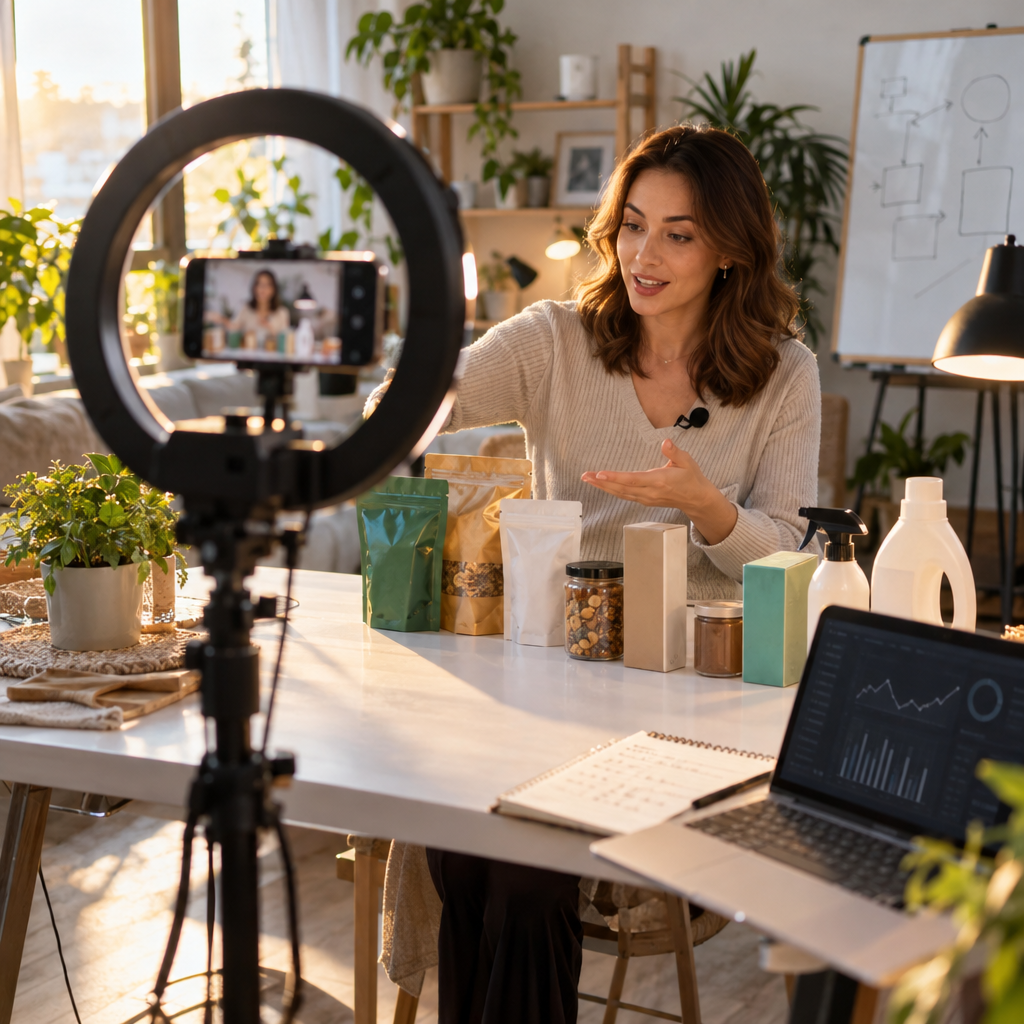
According to Amazon’s own Amazon Live advertiser page, audiences exposed to Amazon Live plus at least one other ad product observed a 17x higher purchase rate than audiences not exposed to Amazon Live. That is Amazon’s own number, and it comes with caveats. Still, it explains why Amazon Live creator streams are on every CPG brand’s shortlist. This playbook covers what the format requires, how to run a stream that converts, and where the measurement gaps are.
What Amazon Live Actually Is Right Now
Get the facts straight first, because a lot of advice online treats Amazon Live as an open creator marketplace. It isn’t.
According to Amazon Ads support pages, Amazon Live is in beta for select US advertisers. Streams run inside the brand’s own Amazon Brand Store. Amazon describes the product as a creative advertising format, so think of it as a shoppable show you produce, not a creator-owned channel you rent.
Where do creators fit? Amazon’s advertiser page says brands can tap Amazon Live hosts, media personalities and celebrity influencers, or feature their own brand ambassador. Brands can use self-service tools or Live Managed Services for fuller production support. So “creator stream” for a CPG brand usually means one of three things:
- A creator hosts inside your Brand Store stream.
- An Amazon Live host fronts your campaign through managed services.
- Your in-house ambassador, such as a chef, trainer or founder, runs the show.
Availability is the first gate. If you aren’t in the beta, ask your Amazon Ads rep before you brief a single creator.
Pick the Host Like a Shelf Strategist
Amazon’s guidance on hosts is short: pick relatable ones, because authenticity builds trust. I’d go further. In CPG, the host’s job is to remove purchase friction for a low-cost item that shoppers already half-know.
Match the host to the buying question, not to follower count:
- Pantry and snacks: a home cook who can demo three uses in 90 seconds.
- Personal care: a creator with visible, repeatable routines and honest before-and-after talk.
- Household: someone who can show a cleaning result live, in real time, without edits.
- Baby and pet: a parent or owner whose audience asks questions constantly.
Vet for live fluency. A creator who shines in edited short video can freeze when chat asks about allergens. Ask for a past livestream, not a reel. Our piece on verifying stream recaps covers what you can and can’t confirm about a creator’s live track record before paying.
Amazon’s own materials cite lifts in purchase rate and branded search, but the support pages offer no viewing, conversion or sales data. Treat the platform’s numbers as a hypothesis to test, not a forecast to bank.
Script the Run of Show Around Amazon’s Rules
Amazon’s best practices read like a producer’s brief, and they’re specific. According to the PPC Land breakdown of Amazon’s support pages, brands are told to stream from a location with at least 50 Mbps upload and download speed, at 1920 x 1080 resolution, 30 frames per second and a 4.5 Mbps bitrate. The page also recommends two to three camera angles and lavalier microphones, per the same PPC Land breakdown of Amazon’s support pages.
Don’t hand that to a creator and hope. Run a tech check the day before, from the actual location, on the actual connection.
Product order is a conversion lever
Amazon asks brands to put the highest-priority ASIN first and the deal ASINs in the first four slots. It also asks for up to 5 highlighted products and up to 10 in total. Content guidance says to spend one to three minutes on each product.
For a CPG brand, that suggests a simple structure:
- Slot one: your hero ASIN, the one with the best review base and margin.
- Slots two to four: deal ASINs, such as bundles, subscribe-and-save promotions or multipacks.
- Remaining slots: new launches or line extensions that benefit from a halo.
Order the segments to match the order the host discusses them. Do the opposite and you’ll have a host talking about slot seven while the carousel highlights slot two.
Chat deserves a producer too. Amazon tells brands to monitor and respond to chat in real time and to ask viewers to follow. Put one person on chat, with pre-approved answers on ingredients, claims and shipping.
Where Do the Viewers Come From?
Here’s the uncomfortable part. Amazon says the stream appears in your Brand Store where customers can discover it organically. For reach beyond that, it recommends Sponsored Brands or DVA+ campaigns pointed at the Store page carrying the stream. It also recommends social posts to drive traffic back to the Store.
So budget for traffic. A creator with a loyal audience helps, but you need to send that audience to the right Store page.
- Before: run paid campaigns and creator teasers to build tune-in.
- During: push the live link through the creator’s own channels.
- After: promote the video-on-demand recording, which Amazon says to extend engagement.
Amazon’s creative advice includes a 50/50 mix of static and video assets, and it suggests static formats on Instagram with video reserved for UGC-style executions. That guidance says this mix “tends to drive the best results,” but it doesn’t define the result or share the data behind it. Test it yourself.
If your creators already drive Amazon sales from social, connect the dots with our guide to Amazon affiliate links on Instagram. And if you’re comparing live commerce platforms, the TikTok Shop briefing guide shows how a native-checkout model differs from Amazon’s Store-based approach.
Compliance: Disclose Early and Often
Live is the format where disclosure slips. The creator is mid-demo, chat is moving, and nobody remembers to say it.
The FTC is clear on this point. Its influencer disclosure guidance says that in a live stream the disclosure should be repeated periodically so viewers who only see part of it still get the message. It also says terms like “advertisement,” “ad” and “sponsored” work, while vague abbreviations like “sp” or “collab” don’t.
Put this in the contract and the run of show:
- A verbal disclosure at the open and at each product segment.
- An on-screen disclosure that stays visible, not just in the description.
- Claims language approved in advance for every ASIN.
- A rule that hosts only describe experience with products they’ve actually used.
The FTC guidance also notes that you can’t say a product is great if you were paid to talk about it and thought it was terrible. Brief hosts on honest feedback and build in a review step for claims.
Measure What the Beta Won’t Tell You
Amazon’s support pages give no conversion benchmarks, so build your own scorecard. For each stream, log:
- Brand Store page views driven by the paid campaigns (Sponsored Brands has a Brand Store page views metric).
- Units and revenue on the featured ASINs against a matched baseline week.
- New followers gained, since followers can get push notifications when you go live if they opt in.
- Branded search lift and subscribe-and-save enrollments on hero ASINs.
- Video-on-demand views after the live window.
Use unique creator codes or tracked links where you can. Our guide on promo code attribution lays out the logic, even though the platform differs. Run at least three streams with one variable changed each time, such as the host, the deal structure or the paid support level, before you decide whether it scales.
FAQs
Can any CPG brand run Amazon Live creator streams?
Not yet. Amazon’s support pages state that Amazon Live is in beta and available for select advertisers in the US, and they don’t say how advertisers are selected. Ask your Amazon Ads representative about eligibility.
Where do the streams appear?
Amazon says the stream appears in your Brand Store. Its advertiser page also lists the Amazon Live site on mobile and web (US and India only) and an Amazon Live free, ad-supported channel on Fire TV and Prime Video (US only). Placements on those surfaces depend on the program you buy into.
What equipment do we need?
Amazon recommends 50 Mbps upload and download speed, 1080p video at 30 frames per second, a 4.5 Mbps bitrate, two to three camera angles and a backup internet connection. Its pages also mention a 720p option for shared Wi-Fi.
How many products should a stream feature?
Amazon says to highlight up to 5 ASINs, with up to 10 total, and to place deal ASINs in the first four slots. Spend one to three minutes on each.
Do creators have to disclose partnerships on live streams?
Yes. FTC guidance says live endorsements need clear disclosures repeated periodically. Build the language into your creator contract and monitor streams for compliance.
How do we know if a stream worked?
Compare ASIN sales against a baseline, track Brand Store traffic from your paid support, and count follower growth. Amazon’s own lift figures are platform-reported, so validate them against your own data.
Before you brief a creator, confirm your beta access, then pilot one stream. Make your hero ASIN slot one, put your deal bundles in slots two to four, and fund the Sponsored Brands traffic that sends viewers to the Store page.
Top Influencer Marketing Agencies
The leading agencies shaping influencer marketing in 2026
Agencies ranked by campaign performance, client diversity, platform expertise, proven ROI, industry recognition, and client satisfaction. Assessed through verified case studies, reviews, and industry consultations.
Moburst

-
2

The Shelf
Boutique Beauty & Lifestyle Influencer AgencyA data-driven boutique agency specializing exclusively in beauty, wellness, and lifestyle influencer campaigns on Instagram and TikTok. Best for brands already focused on the beauty/personal care space that need curated, aesthetic-driven content.Clients: Pepsi, The Honest Company, Hims, Elf Cosmetics, Pure LeafVisit The Shelf → -
3

Audiencly
Niche Gaming & Esports Influencer AgencyA specialized agency focused exclusively on gaming and esports creators on YouTube, Twitch, and TikTok. Ideal if your campaign is 100% gaming-focused — from game launches to hardware and esports events.Clients: Epic Games, NordVPN, Ubisoft, Wargaming, Tencent GamesVisit Audiencly → -
4

Viral Nation
Global Influencer Marketing & Talent AgencyA dual talent management and marketing agency with proprietary brand safety tools and a global creator network spanning nano-influencers to celebrities across all major platforms.Clients: Meta, Activision Blizzard, Energizer, Aston Martin, WalmartVisit Viral Nation → -
5

The Influencer Marketing Factory
TikTok, Instagram & YouTube CampaignsA full-service agency with strong TikTok expertise, offering end-to-end campaign management from influencer discovery through performance reporting with a focus on platform-native content.Clients: Google, Snapchat, Universal Music, Bumble, YelpVisit TIMF → -
6

NeoReach
Enterprise Analytics & Influencer CampaignsAn enterprise-focused agency combining managed campaigns with a powerful self-service data platform for influencer search, audience analytics, and attribution modeling.Clients: Amazon, Airbnb, Netflix, Honda, The New York TimesVisit NeoReach → -
7

Ubiquitous
Creator-First Marketing PlatformA tech-driven platform combining self-service tools with managed campaign options, emphasizing speed and scalability for brands managing multiple influencer relationships.Clients: Lyft, Disney, Target, American Eagle, NetflixVisit Ubiquitous → -
8

Obviously
Scalable Enterprise Influencer CampaignsA tech-enabled agency built for high-volume campaigns, coordinating hundreds of creators simultaneously with end-to-end logistics, content rights management, and product seeding.Clients: Google, Ulta Beauty, Converse, AmazonVisit Obviously →