


Twenty-five percent. That’s the ROI gap brands in Jakarta, Bangkok, and Seoul are seeing when they trade broad feed placement for tight, niche micro-communities. If your APAC media plan still leans on reach-first influencer buys, you’re paying a premium for engagement that isn’t showing up. Micro-communities are quietly rewriting the playbook, and the numbers are hard to ignore.
The Feed Is Full, But Nobody’s Home
Broad feed placement worked when attention was scarce and platforms were young. Neither is true anymore. In Southeast Asia alone, users now scroll past hundreds of sponsored posts a week, and most of that content registers as noise, not signal. A 2026 eMarketer analysis of APAC ad spend found that impression-based buys are seeing declining click-through even as budgets climb, a classic sign of diminishing returns.
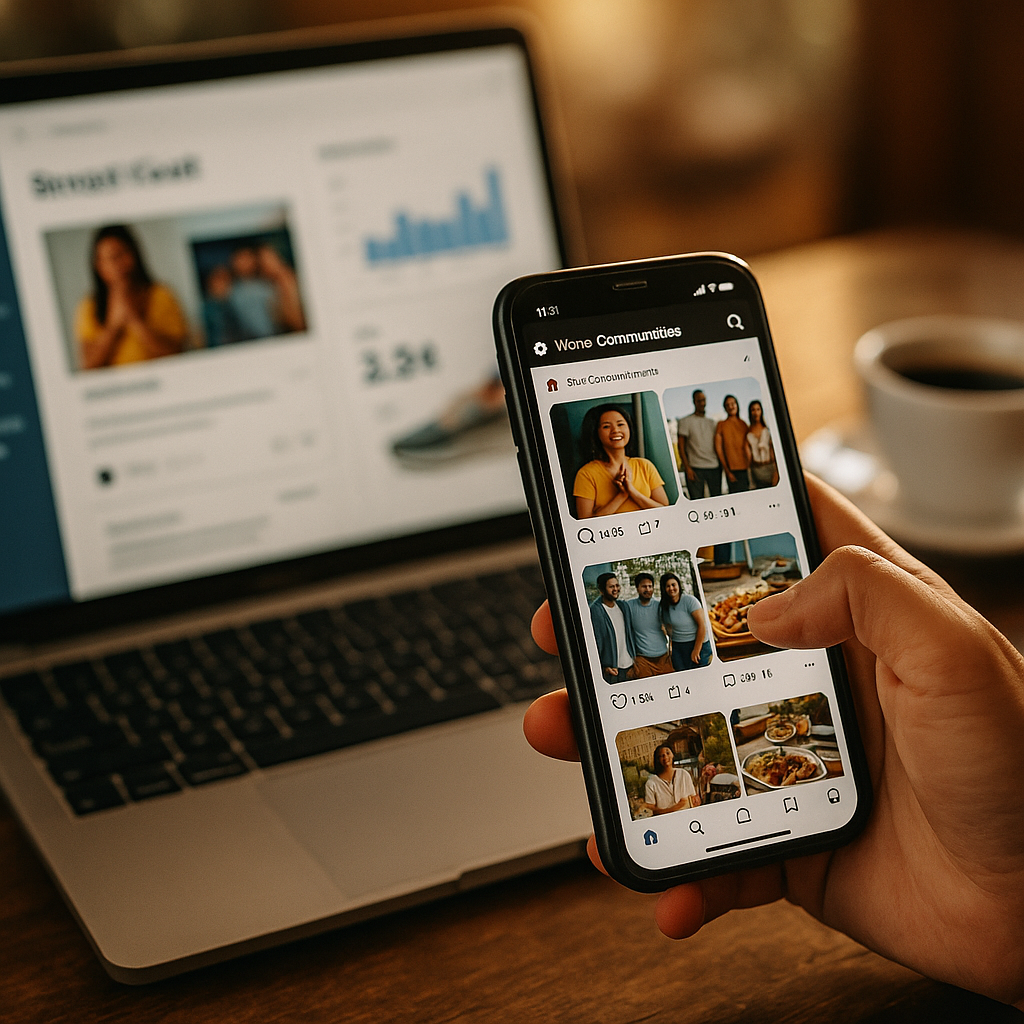
Micro-communities flip the equation. Instead of renting attention from a general feed, brands embed themselves inside spaces where trust already exists: Discord servers for K-beauty enthusiasts, WeChat groups organized around parenting in Shanghai, LINE communities built around fitness in Bangkok. These aren’t audiences. They’re relationships that predate the brand’s arrival.
Micro-communities aren’t a smaller version of mass reach — they’re a fundamentally different mechanism, built on pre-existing trust rather than borrowed attention.
This distinction matters more in APAC than almost anywhere else. Markets like Indonesia, Vietnam, and the Philippines have some of the highest social commerce penetration globally, but they also have some of the most fragmented platform ecosystems on earth. A single “APAC strategy” rarely survives contact with local reality. Micro-communities, by design, are local first.
What the 25% Number Actually Measures
The 25% ROI lift isn’t a vague marketing claim. It shows up consistently across case studies tracking cost-per-engagement, conversion-assisted revenue, and repeat purchase rate from community-embedded campaigns versus standard feed placements. China’s micro-community model has become something of a reference case here — brands running parallel campaigns in Xiaohongshu interest groups versus open feed placement saw engagement lift that translated directly into lower acquisition costs.
Why does this hold up? Three reasons, mostly.
- Context does the selling. A recommendation inside a community someone joined voluntarily carries more weight than an ad interrupting a scroll.
- Waste drops sharply. Feed placement pays for impressions regardless of relevance. Community placement targets people already self-selected into the category.
- Compounding trust. Community members return. A single post in a feed disappears in hours; a pinned recommendation in a group persists for weeks.
None of this means feed placement is dead. It means it’s being asked to do a job it was never built for: building trust at scale, cheaply, in markets with wildly different platform behaviors.
Why APAC Specifically?
Ask any regional media buyer and they’ll tell you: APAC isn’t one market, it’s fifteen markets wearing a trench coat. Consumer behavior in Seoul bears little resemblance to consumer behavior in Manila. Platform preference varies just as wildly — LINE dominates in Japan and Thailand, KakaoTalk in Korea, Zalo in Vietnam. Broad feed placement forces a homogenized creative and targeting approach onto markets that don’t behave homogeneously.
Micro-communities solve this by default. They’re already segmented by geography, language, and interest before a brand shows up. A skincare brand doesn’t need to guess which Indonesian city index skews toward K-beauty adoption — the community self-selects.
There’s also a trust dimension that’s specific to this region. Trust in advertising across APAC has been eroding as AI-generated content floods feeds. AI ad trust keeps falling even as adoption of generative tools rises, and audiences are getting sharper at spotting synthetic or scaled content. Micro-communities, run by real moderators and populated by real conversation, are harder to fake and therefore harder to distrust.
Platform algorithms are shifting to reward this too. TikTok now ranks trust signals over reach, meaning content from creators with genuine community engagement outperforms content from accounts optimized purely for follower count. That algorithmic shift is accelerating the ROI gap, not just reflecting it.
The Budget Conversation Nobody Wants to Have
Here’s the uncomfortable part for media planners: shifting budget toward micro-communities means shifting away from the reach metrics that make quarterly reports look impressive. A campaign that hits 50 million impressions looks better on a slide than one that reaches 500,000 highly engaged community members. But impressions don’t pay invoices. Conversions do.
Circana’s retail data has already shown that 75% of brands underspend on creators relative to what the ROI data actually justifies — and that underspend is concentrated precisely in the smaller, niche-audience creators who run or seed these micro-communities. Brands keep funding the safe, big-number option instead of the option the data says works.
This isn’t an argument for abandoning reach entirely. It’s an argument for sequencing. Use broad placement for awareness in new markets, then reallocate toward micro-communities once you understand which niches actually convert. Creator ROI clusters in a small number of categories anyway, so the earlier you can identify your category’s high-performing niche, the faster you stop wasting spend on the rest.
What Operationally Changes
Running a micro-community strategy is not the same operational lift as running a feed campaign. It’s slower to set up, harder to scale linearly, and requires genuine relationship management rather than pure media buying. A few practical shifts brands need to make:
Rethink the brief. Feed campaigns brief for reach and frequency. Micro-community campaigns need to brief for tone, community norms, and long-term presence. A creator embedded in a Discord server for six months behaves differently than one running a one-off sponsored post.
Prioritize long-term partnerships over one-off placements. The data on this is fairly unambiguous — long-term creator partnerships beat one-off sponsorships consistently, and nowhere is that more true than in community-based marketing, where trust is the entire mechanism of effectiveness.
Expect to pay more per creator, but need fewer of them. Micro and nano-influencer rates are rising fast, partly because demand for exactly this kind of embedded, trust-based marketing is increasing faster than supply of credible community voices.
A smaller, more expensive creator roster that actually converts beats a large, cheap one that generates impressions nobody remembers.
Build measurement around community health, not just conversion. Engagement rate, sentiment, repeat mentions, and community growth are leading indicators that predict ROI before the sales data catches up. Retail data is increasingly treated as a trust signal in influencer measurement, and brands should be layering that alongside community-specific metrics rather than relying on platform-reported reach alone.
Where This Goes Wrong
Not every brand executes this well. The most common failure mode: treating a micro-community like a smaller feed. Dropping a scripted, obviously branded post into a tight-knit group reads as an intrusion, not a contribution. Community moderators and members notice immediately, and the backlash can undo months of organic trust-building in a single post.
The second failure mode is impatience. Micro-community strategies take longer to show results than feed campaigns because the mechanism is relational, not transactional. Brands that pull budget after one underwhelming month often quit right before the compounding trust effect kicks in.
Compliance also gets trickier. Community-embedded creators often blur the line between organic recommendation and paid placement, which raises disclosure questions regulators are watching closely. The FTC and other regulators globally have made clear that sponsored content inside private or semi-private communities still requires disclosure — brands operating across APAC should also track converging youth safety laws given how many micro-communities in gaming and beauty verticals skew younger.
Is This a Trend or a Structural Shift?
Worth asking directly: is this a temporary correction, or has something fundamental changed? The evidence points to structural. Platform algorithms across TikTok, Instagram, and regional apps are increasingly weighting trust and relationship signals over raw distribution — trust-based distribution is beating volume in how platforms rank content generally, not just in APAC. That’s an algorithmic tailwind, not a fad.
At the same time, broad social behavior is shifting away from public feed consumption. Friend content on Instagram has collapsed to just 7% of what users see, replaced by algorithmically recommended and increasingly branded content. Users are retreating to smaller, more curated spaces precisely because open feeds have become noisy and low-trust. Micro-communities aren’t a marketing tactic exploiting a loophole — they’re where actual human attention is migrating.
For APAC specifically, add one more factor: mobile-first, app-fragmented markets were always better suited to community-based distribution than to the feed-and-scroll model that Western platforms optimized for. In some sense, APAC brands aren’t adopting a new strategy so much as catching up to how their audiences already behave.
Brands serious about capturing this shift should start with an audit: which of your current creator partners have genuine community presence versus pure follower count? Reallocate even 15% of feed-based budget into a three-month micro-community pilot in one priority APAC market, measure engagement depth and repeat purchase rather than impressions, and let that data — not the org chart’s comfort with reach metrics — decide where next quarter’s spend goes.
FAQs
What counts as a micro-community in influencer marketing?
A micro-community is a small, tightly bonded group of people connected by shared interest, platform (like Discord, LINE, or WeChat groups), or identity, typically ranging from a few hundred to low tens of thousands of members, where engagement and trust levels are far higher than in open, algorithm-driven feeds.
Why are micro-communities outperforming broad feed placement specifically in APAC?
APAC markets are highly fragmented by platform and language, and consumer trust in generic advertising has been declining as AI-generated content increases. Micro-communities offer pre-segmented, high-trust environments that match this fragmented, trust-sensitive landscape better than one-size-fits-all feed campaigns.
How do brands measure ROI from micro-community campaigns?
Beyond standard conversion tracking, brands should measure engagement depth, sentiment, repeat mentions, community growth rate, and retail data signals like repeat purchase behavior, rather than relying solely on impressions or reach metrics reported by ad platforms.
Does this mean brands should abandon broad feed advertising entirely?
No. Broad feed placement still has value for initial awareness in new markets. The recommended approach is sequencing: use feed placement to build awareness, then reallocate budget toward micro-communities once high-performing niches and categories are identified.
What are the biggest risks in running micro-community campaigns?
The two most common failures are treating communities like smaller feeds (posting obviously branded content that breaks community norms) and pulling budget too early before trust-based compounding effects show measurable results. Disclosure compliance is also more complex in semi-private community settings.
FAQs
What counts as a micro-community in influencer marketing?
A micro-community is a small, tightly bonded group of people connected by shared interest, platform (like Discord, LINE, or WeChat groups), or identity, typically ranging from a few hundred to low tens of thousands of members, where engagement and trust levels are far higher than in open, algorithm-driven feeds.
Why are micro-communities outperforming broad feed placement specifically in APAC?
APAC markets are highly fragmented by platform and language, and consumer trust in generic advertising has been declining as AI-generated content increases. Micro-communities offer pre-segmented, high-trust environments that match this fragmented, trust-sensitive landscape better than one-size-fits-all feed campaigns.
How do brands measure ROI from micro-community campaigns?
Beyond standard conversion tracking, brands should measure engagement depth, sentiment, repeat mentions, community growth rate, and retail data signals like repeat purchase behavior, rather than relying solely on impressions or reach metrics reported by ad platforms.
Does this mean brands should abandon broad feed advertising entirely?
No. Broad feed placement still has value for initial awareness in new markets. The recommended approach is sequencing: use feed placement to build awareness, then reallocate budget toward micro-communities once high-performing niches and categories are identified.
What are the biggest risks in running micro-community campaigns?
The two most common failures are treating communities like smaller feeds (posting obviously branded content that breaks community norms) and pulling budget too early before trust-based compounding effects show measurable results. Disclosure compliance is also more complex in semi-private community settings.
Top Influencer Marketing Agencies
The leading agencies shaping influencer marketing in 2026
Agencies ranked by campaign performance, client diversity, platform expertise, proven ROI, industry recognition, and client satisfaction. Assessed through verified case studies, reviews, and industry consultations.
Moburst

-
2

The Shelf
Boutique Beauty & Lifestyle Influencer AgencyA data-driven boutique agency specializing exclusively in beauty, wellness, and lifestyle influencer campaigns on Instagram and TikTok. Best for brands already focused on the beauty/personal care space that need curated, aesthetic-driven content.Clients: Pepsi, The Honest Company, Hims, Elf Cosmetics, Pure LeafVisit The Shelf → -
3

Audiencly
Niche Gaming & Esports Influencer AgencyA specialized agency focused exclusively on gaming and esports creators on YouTube, Twitch, and TikTok. Ideal if your campaign is 100% gaming-focused — from game launches to hardware and esports events.Clients: Epic Games, NordVPN, Ubisoft, Wargaming, Tencent GamesVisit Audiencly → -
4

Viral Nation
Global Influencer Marketing & Talent AgencyA dual talent management and marketing agency with proprietary brand safety tools and a global creator network spanning nano-influencers to celebrities across all major platforms.Clients: Meta, Activision Blizzard, Energizer, Aston Martin, WalmartVisit Viral Nation → -
5

The Influencer Marketing Factory
TikTok, Instagram & YouTube CampaignsA full-service agency with strong TikTok expertise, offering end-to-end campaign management from influencer discovery through performance reporting with a focus on platform-native content.Clients: Google, Snapchat, Universal Music, Bumble, YelpVisit TIMF → -
6

NeoReach
Enterprise Analytics & Influencer CampaignsAn enterprise-focused agency combining managed campaigns with a powerful self-service data platform for influencer search, audience analytics, and attribution modeling.Clients: Amazon, Airbnb, Netflix, Honda, The New York TimesVisit NeoReach → -
7

Ubiquitous
Creator-First Marketing PlatformA tech-driven platform combining self-service tools with managed campaign options, emphasizing speed and scalability for brands managing multiple influencer relationships.Clients: Lyft, Disney, Target, American Eagle, NetflixVisit Ubiquitous → -
8

Obviously
Scalable Enterprise Influencer CampaignsA tech-enabled agency built for high-volume campaigns, coordinating hundreds of creators simultaneously with end-to-end logistics, content rights management, and product seeding.Clients: Google, Ulta Beauty, Converse, AmazonVisit Obviously →