


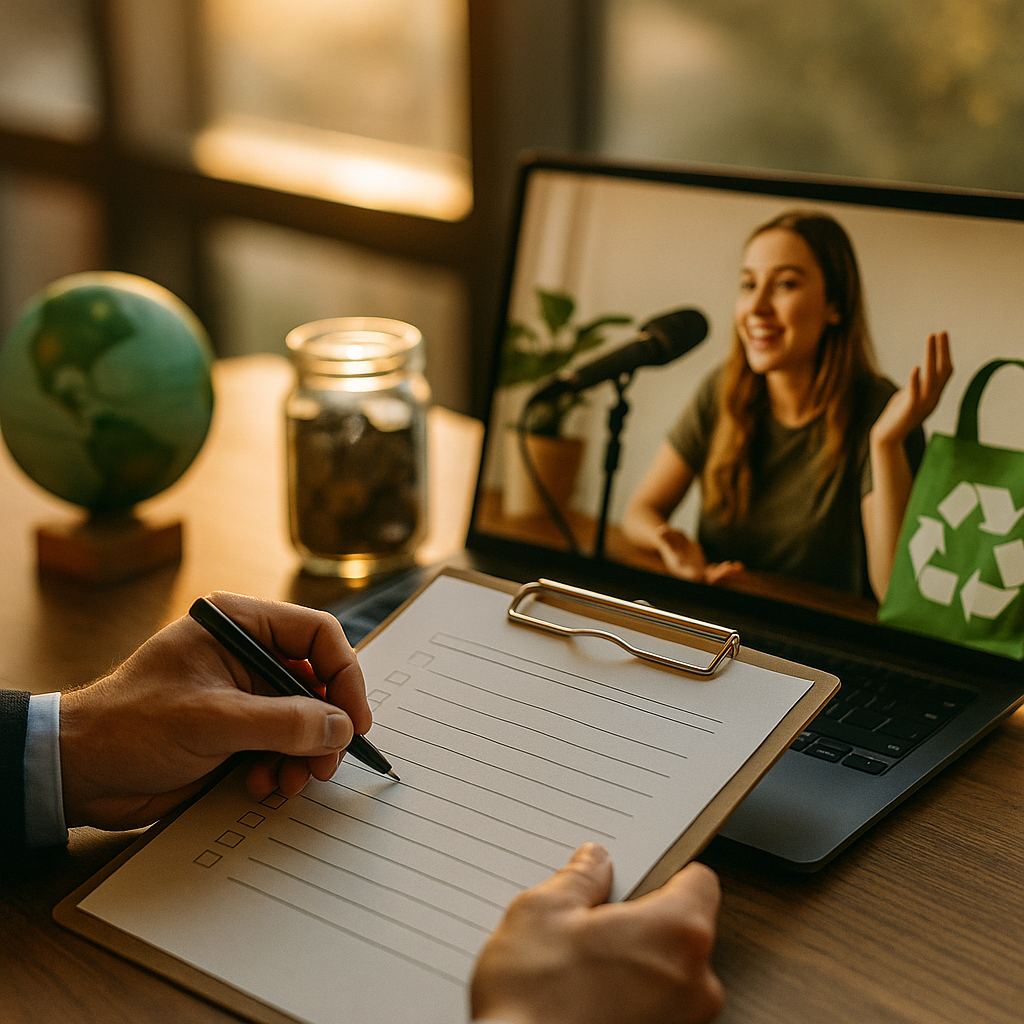
Greenwashing risk just became a creator economy problem, not just a corporate one. Regulators fined companies more than $36 million globally for misleading environmental claims last year, and a growing share of those cases trace back to influencer content brands never reviewed before it went live. If your creator program touches sustainability, eco-friendly, or “clean” messaging, you’re already exposed.
Here’s the uncomfortable truth: most brands audit creator content for disclosure hashtags and FTC tags, but almost nobody is checking whether the sustainability claim inside the caption is even true. That gap is where the next wave of enforcement action, and the next viral backlash, will come from.
Why Sustainability Claims Became a Creator Compliance Blind Spot
Brand marketing teams built entire review processes around disclosure language: #ad, #sponsored, clear and conspicuous placement. Legal reviewed contracts. Compliance checked FTC basics. But sustainability claims slipped through because they felt like “marketing fluff,” not legal risk.
They aren’t fluff anymore. The FTC’s updated Green Guides apply the same standards to a creator’s Instagram Reel as they do to a product label. If a creator says a skincare brand is “carbon neutral” or a fashion label uses “sustainable materials” without substantiation, that’s a deceptive advertising claim, full stop. The brand is liable even if the creator wrote the copy themselves.
A single unverified “eco-friendly” claim in a creator post can trigger the same regulatory exposure as a misleading product label, but with far less oversight before it publishes.
Add state attorneys general into the mix. Several states have started running sweeps specifically looking for unsubstantiated environmental marketing claims in influencer content, mirroring the approach covered in our piece on disclosure sweep audits. Sustainability language is the next logical target because it’s everywhere, it’s rarely fact-checked, and it’s easy to prove false with a basic supply chain records request.
What Counts as a Sustainability Claim, Exactly?
Broader than you think. It’s not just “sustainable” or “eco-friendly.” Regulators and consumer watchdogs increasingly scrutinize:
- Carbon neutral, carbon negative, or net zero claims
- Recyclable, biodegradable, or compostable packaging statements
- “Made from recycled materials” or “ocean plastic” sourcing claims
- Cruelty-free, vegan, or non-toxic ingredient assertions
- Vague virtue language like “planet-friendly,” “clean,” or “responsibly made”
- Comparative claims (“greener than,” “less waste than competitors”)
Notice how many of those are creator-generated phrases, not brand copy. A creator riffing on a product’s eco angle in their own words is still making a claim your brand is responsible for. That’s the part most legal teams miss until it’s too late.
Building the Pre-Publish Audit: A Practical Framework
You don’t need a sustainability scientist on staff. You need a repeatable checklist that catches unsubstantiated claims before content goes live, similar in spirit to the workflow gates described in creator ad approval audits. Here’s what that looks like in practice.
Step one: Claim inventory. Before any brief goes to a creator, list every sustainability-adjacent claim the brand is comfortable substantiating, and the exact evidence behind each one (third-party certification, LCA report, supplier audit). If you can’t point to documentation, the claim doesn’t go in the brief.
Step two: Language guardrails. Give creators approved phrasing and explicitly flagged phrases to avoid. “Made with 30% recycled cotton, certified by [body]” is defensible. “Eco-conscious” with nothing behind it is not. Vague superlatives are where most violations happen because they sound harmless and substantiate nothing.
Step three: Draft review before publish. This is the step almost everyone skips. Whoever approves the creator’s draft caption or script needs a sustainability checklist alongside the usual disclosure and brand-safety checklist. Cross-reference every environmental claim in the draft against your substantiation file. If a creator improvised a claim that isn’t in your approved list, it gets flagged and rewritten, not published as-is.
Step four: Documentation trail. Save the approved claim list, the substantiation source, and the final approved content together. If a regulator or journalist ever asks “what evidence supports this claim,” you want an answer in under five minutes, not a scramble through old email threads.
Brands that document substantiation at the point of approval, not after a complaint, cut their average greenwashing investigation timeline dramatically because they’re not reconstructing evidence under pressure.
Red Flags That Should Stop a Post Before It Goes Out
Train whoever reviews creator content to treat these as automatic holds:
- Absolute claims with no qualifier (“zero waste,” “100% sustainable”)
- Comparisons to unnamed competitors or industry averages without a cited source
- Certification logos or badges the creator added without brand approval
- Future-tense promises stated as present fact (“we’re carbon neutral” when the target is years out)
- Claims that mix the brand’s overall mission with a specific product’s attributes
That last one trips up more brands than anything else. A company might have a legitimate sustainability initiative at the corporate level, but a creator promoting one specific product implies the claim applies to that item. If it doesn’t, you’ve got a mismatch that regulators specifically look for.
Where This Intersects With AI-Generated Creator Content
AI tools are now drafting captions, scripts, and even full video briefs for creator campaigns. That accelerates production, but it also means sustainability claims can get generated by a language model with zero connection to your actual substantiation file. If your team is using AI to speed up creator briefing or content review, the same audit discipline outlined in our AI marketing pre-flight checklist needs a sustainability-specific layer bolted on. Don’t assume an AI drafting tool knows the difference between a certified claim and marketing language it pulled from a competitor’s site.
This also connects to broader source verification questions. If your creator-matching or content generation stack pulls claims from unverified sources, you’re inheriting risk you didn’t create but will still own. The source verification framework built for AI marketing applies just as directly to sustainability substantiation as it does to factual product claims.
What About Disclosure Language Specifically for Green Claims?
Standard #ad disclosure isn’t enough when a sustainability claim is involved. The FTC expects “clear and conspicuous” qualification right next to the claim itself, not buried in a bio link or a pinned comment. If a creator says a product is “made from recycled ocean plastic,” the percentage, the certifying body, and any limitations need to be visible in the same post, not three scrolls away. This mirrors the native advertising line issues covered in native advertising compliance, where proximity and clarity matter as much as presence.
Consumer trust data backs up why this matters commercially, not just legally. Research from Sprout Social consistently shows consumers penalize brands harder for perceived greenwashing than for having no sustainability message at all. A vague claim that gets called out publicly does more brand damage than silence would have. That’s the ROI argument legal teams should be making to marketing leadership: this isn’t just about avoiding fines, it’s about avoiding a credibility hit that’s expensive to repair.
Operationalizing This Without Slowing Down Campaigns
The goal isn’t to add three weeks of legal review to every creator post. It’s to build a lightweight, repeatable gate. Most brands that do this well embed a single sustainability-claims checkbox into their existing content approval workflow, the same one used for FTC disclosure and brand safety. One extra reviewer, one extra ten-minute check, applied consistently, catches the majority of risk before it ever reaches a regulator’s desk or a watchdog account’s screenshot.
Track it the way you’d track any other compliance metric: number of claims flagged, number rewritten, time to resolution. If that number climbs, it tells you your creator briefs need tighter guardrails, not that your review process is broken.
Next step: pull your last ten creator posts mentioning sustainability, eco-friendly, or similar language, and check each claim against actual substantiation on file. If you can’t find the backup document in under five minutes, you’ve found your first audit priority.
Frequently Asked Questions
What is greenwashing risk in influencer marketing?
Greenwashing risk in influencer marketing refers to the legal and reputational exposure a brand faces when a creator makes an environmental or sustainability claim that can’t be substantiated, whether the brand wrote that language or the creator improvised it.
Who is liable if a creator makes a false sustainability claim?
The brand is typically liable, not just the creator. Regulators like the FTC treat sponsored creator content as brand advertising, meaning the company behind the campaign is responsible for substantiating claims even if a creator generated the specific wording.
How often should brands audit creator sustainability claims?
Every sustainability-related claim should be reviewed before the content publishes, not on a periodic schedule. A pre-publish checkpoint catches unsubstantiated claims before they create liability, rather than discovering them during a complaint or investigation.
What documentation should brands keep for sustainability claims?
Brands should retain the approved claim language, the underlying substantiation (certifications, lifecycle assessments, supplier audits), and the final published content together in one file, so evidence can be produced quickly if questioned.
Does standard FTC disclosure cover sustainability claims too?
No. Standard #ad disclosure addresses the sponsorship relationship, but sustainability claims require separate substantiation and clear, conspicuous qualification placed directly next to the claim itself, not just a general disclosure elsewhere in the post.
Top Influencer Marketing Agencies
The leading agencies shaping influencer marketing in 2026
Agencies ranked by campaign performance, client diversity, platform expertise, proven ROI, industry recognition, and client satisfaction. Assessed through verified case studies, reviews, and industry consultations.
Moburst

-
2

The Shelf
Boutique Beauty & Lifestyle Influencer AgencyA data-driven boutique agency specializing exclusively in beauty, wellness, and lifestyle influencer campaigns on Instagram and TikTok. Best for brands already focused on the beauty/personal care space that need curated, aesthetic-driven content.Clients: Pepsi, The Honest Company, Hims, Elf Cosmetics, Pure LeafVisit The Shelf → -
3

Audiencly
Niche Gaming & Esports Influencer AgencyA specialized agency focused exclusively on gaming and esports creators on YouTube, Twitch, and TikTok. Ideal if your campaign is 100% gaming-focused — from game launches to hardware and esports events.Clients: Epic Games, NordVPN, Ubisoft, Wargaming, Tencent GamesVisit Audiencly → -
4

Viral Nation
Global Influencer Marketing & Talent AgencyA dual talent management and marketing agency with proprietary brand safety tools and a global creator network spanning nano-influencers to celebrities across all major platforms.Clients: Meta, Activision Blizzard, Energizer, Aston Martin, WalmartVisit Viral Nation → -
5

The Influencer Marketing Factory
TikTok, Instagram & YouTube CampaignsA full-service agency with strong TikTok expertise, offering end-to-end campaign management from influencer discovery through performance reporting with a focus on platform-native content.Clients: Google, Snapchat, Universal Music, Bumble, YelpVisit TIMF → -
6

NeoReach
Enterprise Analytics & Influencer CampaignsAn enterprise-focused agency combining managed campaigns with a powerful self-service data platform for influencer search, audience analytics, and attribution modeling.Clients: Amazon, Airbnb, Netflix, Honda, The New York TimesVisit NeoReach → -
7

Ubiquitous
Creator-First Marketing PlatformA tech-driven platform combining self-service tools with managed campaign options, emphasizing speed and scalability for brands managing multiple influencer relationships.Clients: Lyft, Disney, Target, American Eagle, NetflixVisit Ubiquitous → -
8

Obviously
Scalable Enterprise Influencer CampaignsA tech-enabled agency built for high-volume campaigns, coordinating hundreds of creators simultaneously with end-to-end logistics, content rights management, and product seeding.Clients: Google, Ulta Beauty, Converse, AmazonVisit Obviously →