


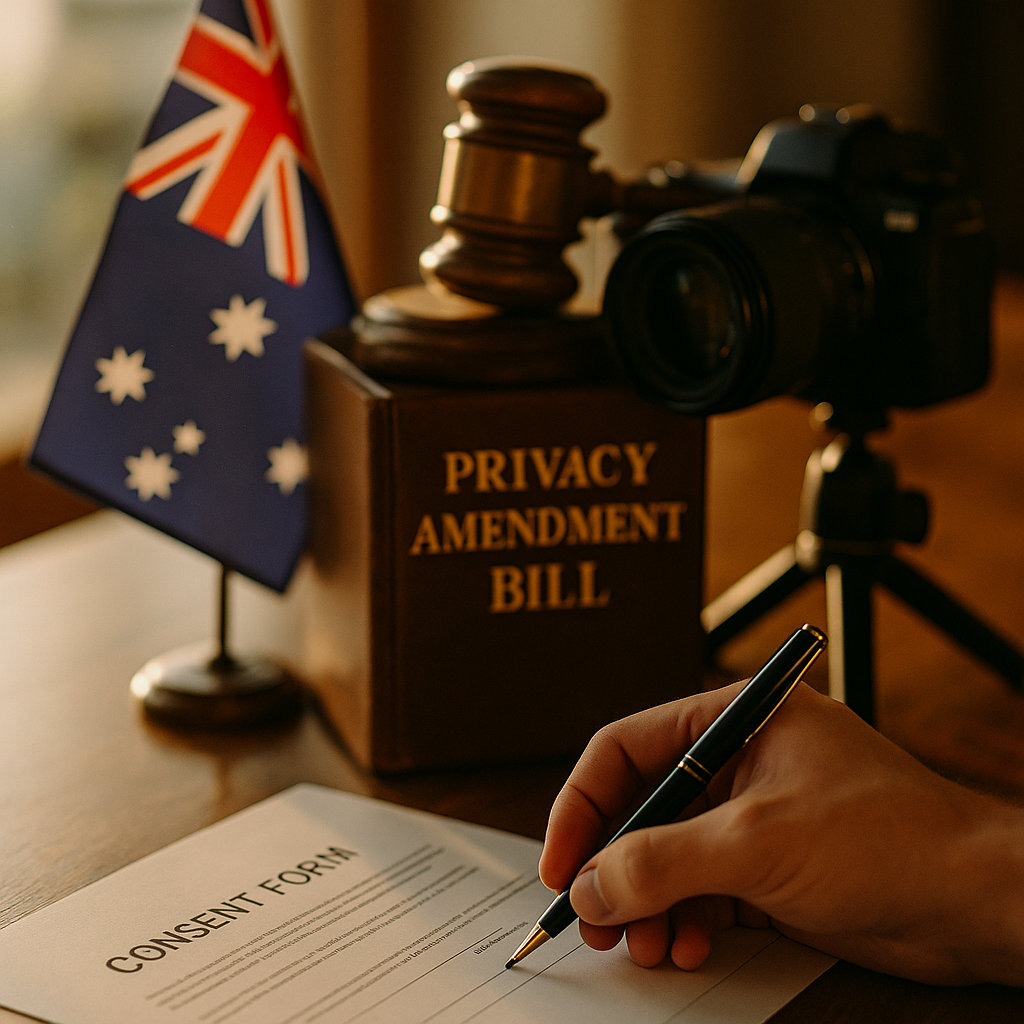
Here’s an uncomfortable number for your legal team: the Office of the Australian Information Commissioner received over 500 notifiable data breach reports in a recent twelve-month period, and creator and influencer marketing data is now squarely in scope. Australia’s Privacy Amendment Bill isn’t a distant regulatory footnote. It’s a direct challenge to how brands collect, store, and share creator data, and the clock to fix your practices is already running.
If your influencer program still treats creator contact details, payment information, and content performance data as low-risk marketing assets, that assumption is about to get expensive.
What Changed, and Why Should Brands Care?
The amendment strengthens the Australian Privacy Principles with teeth that didn’t exist before. It introduces a statutory tort for serious invasions of privacy, meaning individuals, including creators, can sue directly rather than waiting for the OAIC to act on their behalf. It also raises maximum penalties for serious or repeated interferences with privacy, and it expands what counts as personal information to capture inferred and technical data, not just names and emails.
For brands running influencer programs, this matters because creator relationships generate exactly the kind of data the bill targets: bank details for payouts, home addresses for product mailers, engagement analytics tied to identifiable individuals, and increasingly, biometric or behavioral data pulled from livestream and UGC platforms.
Marketing teams have historically treated creator data as a vendor management issue. Under the amended Act, it’s a privacy compliance issue with personal legal exposure attached.
This isn’t happening in isolation either. Australia’s broader regulatory direction mirrors moves already underway with AI inference rules reshaping influencer targeting, and brands operating across APAC are seeing similar tightening in markets covered by the Korea daily penalty bill.
The Compliance Gaps Hiding in Your Creator Stack
Most brands discover their exposure the hard way: during an audit, a breach notification, or a creator’s legal request. Here are the gaps showing up most often in pre-2027 readiness reviews.
- No documented consent trail. Brands collect creator banking and contact details through DMs, spreadsheets, and third-party platforms without a clear, timestamped consent record showing what the creator agreed to and when.
- Vague data retention policies. Creator data from campaigns that ended years ago is still sitting in CRM systems with no deletion schedule, which is a direct liability under the strengthened erasure provisions.
- Unclear vendor responsibility. Agencies, influencer marketplaces, and payment processors all touch creator data, but few contracts specify who’s accountable when something goes wrong.
- Weak breach response timelines. The amended framework pushes brands toward faster notification obligations, and most marketing teams don’t have an internal process that moves that quickly.
That last point deserves its own flag. The pressure to notify quickly after a breach is already reshaping contracts elsewhere, as detailed in our breakdown of creator CRM breaches and the 72 hour notification gap. Australia’s amendment pushes in the same direction: faster disclosure, less tolerance for silence.
The Erasure Right Is the One Everyone Underestimates
Buried in the amendment is a provision that gives individuals, including creators, a stronger practical ability to demand deletion of their personal information. Sounds simple. It isn’t, once you consider how creator data actually moves through a brand’s ecosystem.
A single campaign can scatter a creator’s data across an influencer marketing platform, a payment processor, an agency’s internal tracker, a CRM, and a cloud storage folder used for content approvals. When a creator exercises their erasure right, your brand needs to locate and delete that data everywhere, not just in the system the marketing team touches daily. We’ve gone deep on the mechanics of this in our full analysis of the erasure right and the creator data gap, and it’s worth reading alongside this piece if your program runs more than a handful of creator partnerships.
Most brands currently can’t do this cleanly. Ask your ops team right now: if a creator emailed asking for full deletion of their data, how long would it take, and could you prove you got it all? If the honest answer is “we’re not sure,” that’s your starting point for remediation.
Cross-Border Data Transfers: The Quiet Risk
Global brands running campaigns with Australian creators, or Australian brands working with creators abroad, face an added layer of complexity. The amendment tightens expectations around where creator data physically lives and who can access it, which creates friction for brands using US-based CRM tools or offshore agency teams.
This isn’t unique to Australia. Similar cross-border tension is playing out in China’s creator data rules and the brand risk gap, and in the EU’s evolving consent framework covered in our piece on the EU Digital Omnibus proposal. The pattern is consistent: regulators want brands to know exactly where creator data sits, and “our vendor handles that” is no longer an acceptable answer.
If your influencer program relies on cross-device tracking to match creator-driven traffic to conversions, you’ve got an additional consent layer to manage. Our coverage of cross-device identity resolution and the creator consent gap walks through how that tracking intersects with privacy obligations, and it’s directly relevant to anyone running attribution models tied to Australian audiences.
Fixing Consent Before the Clock Runs Out
Here’s the practical sequence most compliance leads are following right now, in rough priority order:
- Audit where creator data actually lives. Map every system, spreadsheet, and vendor platform that touches creator personal information. This sounds basic. Almost no brand has done it thoroughly.
- Rewrite consent language in creator contracts. Generic “we may use your information for marketing purposes” clauses won’t hold up. Consent needs to be specific, informed, and revocable.
- Build a deletion workflow that actually works end to end. Not a policy document, an operational process with a named owner and a defined timeline.
- Renegotiate vendor and agency contracts to assign clear liability for data handling, storage location, and breach notification responsibilities.
- Train the marketing team, not just legal and compliance. The people signing creators and sending payment details need to understand what’s at stake.
Treat this like a budget line, not a one-time legal review. Privacy compliance for creator data is now an ongoing operational cost, and brands that price it in now will spend far less than those scrambling after an enforcement action.
What Happens If You Don’t Fix This?
The honest answer is: it depends on how visible your failure becomes. Regulatory enforcement rarely starts with the biggest violator. It starts with whoever gets caught first, often through a creator complaint or a breach that makes headlines. Once that happens, the statutory tort gives individual creators a direct legal path that didn’t exist before, which means your exposure isn’t limited to regulatory fines. It extends to civil litigation from the creators themselves.
According to industry data on data breach costs, the financial impact of a breach extends well beyond the immediate fine, covering legal fees, reputational damage, and lost partnerships. For a brand whose entire influencer strategy depends on creator trust, a privacy scandal doesn’t just cost money. It costs the relationships that make the program work.
Worth noting too: this pressure doesn’t stop at Australia’s border. Market research on global privacy regulation consistently shows regulators borrowing language and enforcement mechanisms from each other, which means the fixes you make for Australian compliance will likely serve you well when the next market tightens its own rules. For broader operational context on how AI decisioning tools intersect with consent requirements, see our breakdown of AI decisioning and the creator consent trail gap.
Where Does Your Program Actually Stand?
Run this quick gut check with your team. Can you produce, within 48 hours, a complete list of every creator whose personal data your brand holds? Can you show documented consent for each one? Can you delete a single creator’s data across every system that touches it, without missing a spreadsheet somewhere? If any answer is no, you have work to do before enforcement activity ramps up.
The UK’s Information Commissioner’s Office offers useful comparative guidance here, since UK data protection enforcement has already dealt with many of the same consent and erasure questions Australia is now codifying. Brands with UK operations may already have internal frameworks they can adapt rather than build from scratch.
Frequently Asked Questions
What is Australia’s Privacy Amendment Bill and who does it affect?
It’s a reform to the existing Privacy Act that strengthens individual rights, including erasure, introduces a statutory tort for serious privacy invasions, and raises penalties for non-compliance. It affects any brand, agency, or platform handling personal information of Australian residents, including creators and influencers.
Does the bill apply to brands based outside Australia?
Yes. If a brand collects or processes personal data belonging to Australian creators or consumers, the obligations generally apply regardless of where the brand is headquartered.
What creator data counts as personal information under the amended Act?
Names, contact details, bank and payment information, addresses, and increasingly inferred or technical data such as behavioral and engagement analytics tied to an identifiable individual.
What is the statutory tort for privacy, and why does it matter for influencer marketing?
It gives individuals, including creators, a direct legal right to sue over serious invasions of privacy, rather than relying solely on regulator enforcement. This increases a brand’s exposure to civil claims from creators whose data is mishandled.
How should brands prepare before enforcement ramps up?
Audit where creator data lives across every system and vendor, rewrite consent language in creator contracts, build a working deletion process, and assign clear accountability in agency and vendor agreements.
What happens if a brand fails to comply?
Exposure includes regulatory fines, individual civil claims under the statutory tort, and reputational damage that can undermine creator trust and future partnerships.
Next step: Schedule a data mapping audit this quarter, not next year. Brands that can prove consent and demonstrate a working deletion process now will spend far less time and money reacting once enforcement activity intensifies.
Frequently Asked Questions
What is Australia’s Privacy Amendment Bill and who does it affect?
It’s a reform to the existing Privacy Act that strengthens individual rights, including erasure, introduces a statutory tort for serious privacy invasions, and raises penalties for non-compliance. It affects any brand, agency, or platform handling personal information of Australian residents, including creators and influencers.
Does the bill apply to brands based outside Australia?
Yes. If a brand collects or processes personal data belonging to Australian creators or consumers, the obligations generally apply regardless of where the brand is headquartered.
What creator data counts as personal information under the amended Act?
Names, contact details, bank and payment information, addresses, and increasingly inferred or technical data such as behavioral and engagement analytics tied to an identifiable individual.
What is the statutory tort for privacy, and why does it matter for influencer marketing?
It gives individuals, including creators, a direct legal right to sue over serious invasions of privacy, rather than relying solely on regulator enforcement. This increases a brand’s exposure to civil claims from creators whose data is mishandled.
How should brands prepare before enforcement ramps up?
Audit where creator data lives across every system and vendor, rewrite consent language in creator contracts, build a working deletion process, and assign clear accountability in agency and vendor agreements.
What happens if a brand fails to comply?
Exposure includes regulatory fines, individual civil claims under the statutory tort, and reputational damage that can undermine creator trust and future partnerships.
Top Influencer Marketing Agencies
The leading agencies shaping influencer marketing in 2026
Agencies ranked by campaign performance, client diversity, platform expertise, proven ROI, industry recognition, and client satisfaction. Assessed through verified case studies, reviews, and industry consultations.
Moburst

-
2

The Shelf
Boutique Beauty & Lifestyle Influencer AgencyA data-driven boutique agency specializing exclusively in beauty, wellness, and lifestyle influencer campaigns on Instagram and TikTok. Best for brands already focused on the beauty/personal care space that need curated, aesthetic-driven content.Clients: Pepsi, The Honest Company, Hims, Elf Cosmetics, Pure LeafVisit The Shelf → -
3

Audiencly
Niche Gaming & Esports Influencer AgencyA specialized agency focused exclusively on gaming and esports creators on YouTube, Twitch, and TikTok. Ideal if your campaign is 100% gaming-focused — from game launches to hardware and esports events.Clients: Epic Games, NordVPN, Ubisoft, Wargaming, Tencent GamesVisit Audiencly → -
4

Viral Nation
Global Influencer Marketing & Talent AgencyA dual talent management and marketing agency with proprietary brand safety tools and a global creator network spanning nano-influencers to celebrities across all major platforms.Clients: Meta, Activision Blizzard, Energizer, Aston Martin, WalmartVisit Viral Nation → -
5

The Influencer Marketing Factory
TikTok, Instagram & YouTube CampaignsA full-service agency with strong TikTok expertise, offering end-to-end campaign management from influencer discovery through performance reporting with a focus on platform-native content.Clients: Google, Snapchat, Universal Music, Bumble, YelpVisit TIMF → -
6

NeoReach
Enterprise Analytics & Influencer CampaignsAn enterprise-focused agency combining managed campaigns with a powerful self-service data platform for influencer search, audience analytics, and attribution modeling.Clients: Amazon, Airbnb, Netflix, Honda, The New York TimesVisit NeoReach → -
7

Ubiquitous
Creator-First Marketing PlatformA tech-driven platform combining self-service tools with managed campaign options, emphasizing speed and scalability for brands managing multiple influencer relationships.Clients: Lyft, Disney, Target, American Eagle, NetflixVisit Ubiquitous → -
8

Obviously
Scalable Enterprise Influencer CampaignsA tech-enabled agency built for high-volume campaigns, coordinating hundreds of creators simultaneously with end-to-end logistics, content rights management, and product seeding.Clients: Google, Ulta Beauty, Converse, AmazonVisit Obviously →