


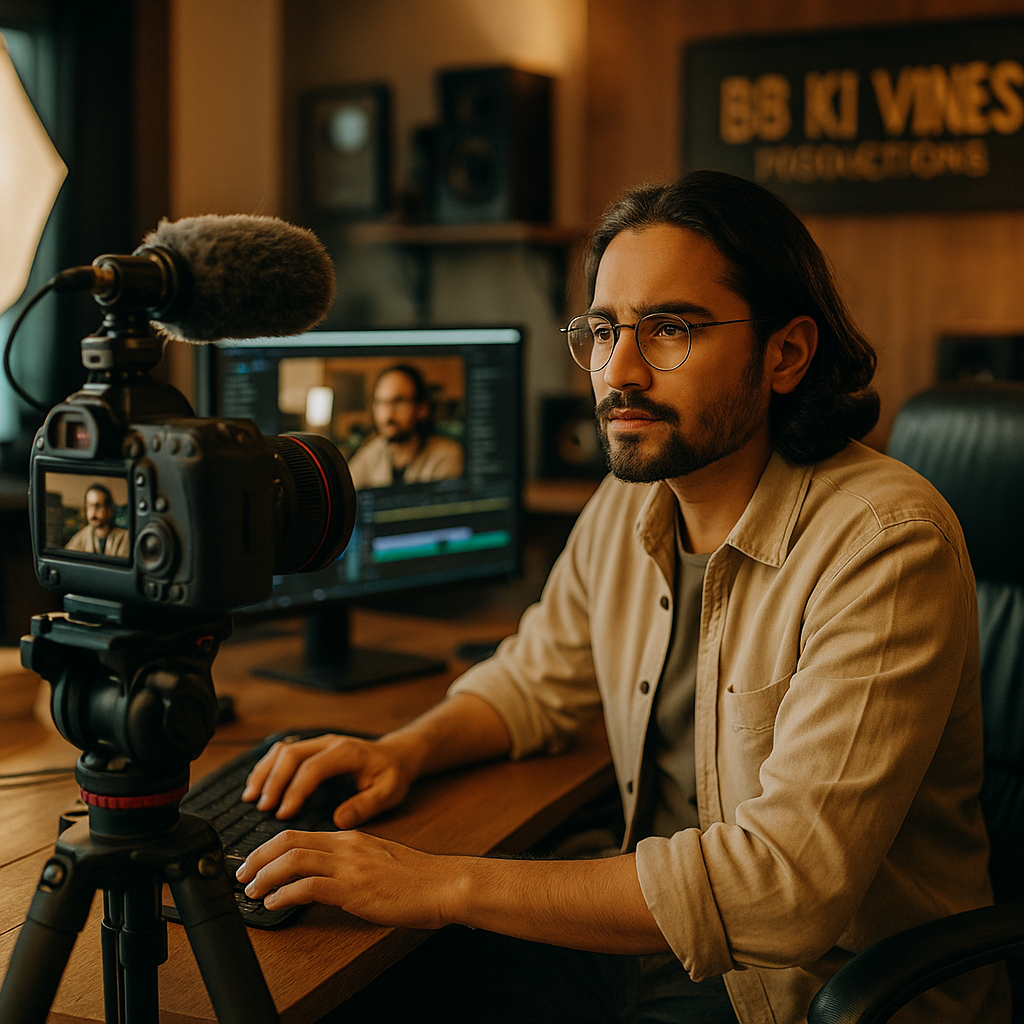
One YouTube channel. One recurring comic character. A production company now pitching brand deals across film, streaming, and branded series. BB Ki Vines Productions is arguably the clearest case study in India’s creator economy of what happens when a solo creator refuses to stay a solo creator. For marketers still treating influencer partnerships as one-off sponsored posts, this is the model that should be keeping you up at night.
Bhuvan Bam started BB Ki Vines in 2015 with a single character, Titu Mama, filmed on a phone in a Delhi bedroom. A decade later, the operation behind it produces original series, feature-length content, music, and multi-platform IP that brands line up to co-create with, not just sponsor. That trajectory matters to anyone allocating influencer budget in 2026, because it maps the exact path from “creator” to “media company” that most brands still don’t know how to partner with correctly.
Why This Case Study Matters to Brand Marketers, Not Just Creator Watchers
Most influencer marketing case studies focus on a single campaign: a product seeding wave, a TikTok Shop livestream, a hashtag challenge. BB Ki Vines Productions is different. It’s a longitudinal study in how a creator business matures, and maturity changes the partnership terms brands should expect.
Early-stage creators sell reach. Mature creator companies sell narrative universes, production capability, and audience trust built over years. Bhuvan Bam’s channel has crossed 26 million subscribers on YouTube, but the subscriber count is almost the least interesting part. The interesting part is that BB Ki Vines built multiple original characters (Titu Mama, Bancho, Sameer Fuddi) into a recognizable comic universe, then extended that universe into music releases, a Prime Video-adjacent web series (“Dhindora”), stand-up specials, and film. Each extension carried the built-in audience with it.
A creator with a durable IP universe isn’t a media buy — they’re a distribution channel you co-own if you structure the deal right.
For brand strategists, this reframes the sourcing question entirely. You’re no longer asking “what’s this creator’s engagement rate?” You’re asking “what does this creator’s production pipeline look like, and can our brand become a recurring character in it?”
From Bedroom Sketches to a Production Slate
The shift from solo creator to production company didn’t happen by accident. It followed a pattern that’s now recognizable across the top tier of the creator economy globally, from MrBeast’s Feastables operation to Zach King’s studio deals.
- Character-first, not creator-first content. Titu Mama became more famous, in some circles, than Bhuvan Bam’s own name. That’s deliberate. Characters can be licensed, merchandised, and spun into new formats without depending on one person’s face carrying every video.
- Format diversification before platform diversification. BB Ki Vines moved into music (the track “Teri Meri Kahani” crossed hundreds of millions of views) and long-form comedy before chasing every new platform. Depth of format came first.
- Owned production infrastructure. Instead of outsourcing every shoot, the operation built internal writing, editing, and production capacity, which is what let it scale to a Prime Video series without losing creative control.
- Cross-platform sequencing. YouTube for the core comic universe, Spotify and audio platforms for music, streaming platforms for scripted series. Each platform got content built for its native format, not repurposed cuts.
This is the operational playbook brands should study closely, because it’s the same sequencing that separates a creator you rent for a campaign from a creator company you can build a multi-year partnership roadmap with.
What Brands Actually Get From Creator-Led Production Companies
Here’s the uncomfortable truth for a lot of media planners: a single Instagram Reel from a mid-tier creator often outperforms a six-figure TVC on cost-per-engagement. But that’s not the interesting comparison anymore. The interesting comparison is between a one-off sponsored post and a structured co-production deal with a creator-led studio.
When a creator has production infrastructure, brands get access to things a traditional influencer deal can’t offer:
- Narrative continuity. A brand integrated into an ongoing character universe gets repeat exposure across episodes, not a single flash of visibility.
- Production quality control. Studios like BB Ki Vines Productions have editors, writers, and continuity staff. That reduces the brand safety risk of a rushed, off-brand integration.
- Cross-format amplification. A brand moment in a web series can be clipped, remixed, and pushed across YouTube Shorts, Instagram, and audio platforms by the same production team, multiplying reach without new spend.
- Audience trust transfer. Fans who have followed a character for years extend a different level of trust to that character’s brand choices than they do to a rented influencer post.
This is the same underlying principle behind why tiered creator strategies consistently outperform celebrity-led halo campaigns: audiences respond to consistency and perceived authenticity more than raw star power. A creator-led production company is the ultimate expression of consistency, because the audience has watched the IP evolve over years, not weeks.
The ROI Math Brands Should Be Running
Marketing teams evaluating a creator-studio partnership need a different scorecard than a standard influencer campaign. Reach and engagement still matter, but three additional metrics deserve weight:
- IP longevity. How many years has the core character or format sustained audience interest? BB Ki Vines’ Titu Mama has run for the better part of a decade. That’s a durability signal traditional CPM math doesn’t capture.
- Cross-format conversion. Does the creator’s audience follow them from YouTube to Spotify to streaming? If yes, a brand integration gets multiple exposure windows for one negotiated deal.
- Production cost offset. A studio with existing infrastructure can often produce branded content at lower incremental cost than a brand building its own creative from scratch, similar to the efficiency logic behind nano-creator seeding models that trade production polish for authenticity and volume.
According to eMarketer, influencer marketing spend continues to shift toward longer-term, retainer-based creator relationships rather than single-post transactions, a trend that mirrors exactly what BB Ki Vines Productions has capitalized on by building repeatable IP rather than one-off virality.
Where Brands Get This Wrong
The most common mistake brands make with creator-led studios is treating them like bigger influencers instead of smaller production houses. That distinction changes everything about deal structure.
An influencer negotiation is about deliverables: number of posts, usage rights, exclusivity windows. A production company negotiation needs to cover creative control, character integrity, IP licensing terms, and long-term brand fit within an ongoing story. Get this wrong and you either over-constrain the creator’s creative process (killing the authenticity that made the audience show up in the first place) or under-protect your brand’s presence in a narrative you don’t fully control.
There’s also a compliance layer brands frequently underweight. As creator-led studios scale into scripted content and streaming distribution, disclosure requirements get more complex. A branded integration inside a fictional web series episode still needs to meet FTC endorsement guidelines, and in markets with their own regulators, equivalent local disclosure rules. Brand and legal teams need to review scripts, not just captions, before content ships.
The bigger the creator’s production operation gets, the more your legal and compliance review needs to look like a studio deal, not an influencer contract.
This is the same operational discipline that separates brands that scale creator programs safely from brands that get burned by a viral moment gone wrong. It’s worth comparing notes with how other DTC and consumer brands have structured creator partnerships for durability rather than one-time spikes, like the approach detailed in how Liquid Death built its creator engine or the retention-first thinking behind Rhode’s launch strategy.
A Template Other Creators Are Already Following
BB Ki Vines Productions isn’t an isolated case. It’s part of a broader pattern of solo creators globally graduating into studios: MrBeast’s Feastables and MrBeast Productions, Zach King’s licensing deals, and a growing list of regional creators building production houses around a signature character or format. What makes the BB Ki Vines case particularly instructive for brand strategists is the clarity of the sequence: character first, format diversification second, platform expansion third, brand partnerships layered in only once the production infrastructure could support them without diluting quality.
Brands evaluating creator partnerships in adjacent categories, from food and beverage to consumer tech, should be asking every prospective creator partner a version of the same question: is there a production operation behind this account, or is it just one person and a ring light? The answer determines whether you’re buying a media impression or investing in a channel.
The Takeaway for Marketing Teams
Stop evaluating creators solely on follower count and engagement rate. Start asking whether they’ve built, or are building, production infrastructure around a durable idea. That’s the signal that predicts whether a partnership will still be delivering value three years from now, not three weeks.
FAQs
What made BB Ki Vines Productions different from a typical influencer channel?
It built recurring, licensable comic characters like Titu Mama rather than relying solely on the creator’s personal brand, which allowed the IP to expand into music, streaming series, and film without losing audience continuity.
How should brands structure deals with creator-led production companies?
Treat the negotiation like a studio deal rather than an influencer contract. Cover creative control, IP licensing terms, character integrity, and long-term narrative fit, and route scripts through legal review for disclosure compliance, not just social captions.
What metrics matter most when evaluating a creator studio partnership?
IP longevity, cross-format audience conversion (does the audience follow the creator across YouTube, audio, and streaming), and production cost offset compared to building brand content in-house.
Is this model only relevant for entertainment or comedy brands?
No. The underlying lesson, that durable IP and production infrastructure outperform one-off influencer posts, applies across consumer categories, from food and beverage to retail and consumer tech.
What compliance risks should brands watch for in scripted creator content?
Branded integrations inside fictional or scripted content still require clear endorsement disclosure under FTC guidelines, and brand teams should review full scripts, not just final cuts, before content goes live.
FAQs
Top Influencer Marketing Agencies
The leading agencies shaping influencer marketing in 2026
Agencies ranked by campaign performance, client diversity, platform expertise, proven ROI, industry recognition, and client satisfaction. Assessed through verified case studies, reviews, and industry consultations.
Moburst

-
2

The Shelf
Boutique Beauty & Lifestyle Influencer AgencyA data-driven boutique agency specializing exclusively in beauty, wellness, and lifestyle influencer campaigns on Instagram and TikTok. Best for brands already focused on the beauty/personal care space that need curated, aesthetic-driven content.Clients: Pepsi, The Honest Company, Hims, Elf Cosmetics, Pure LeafVisit The Shelf → -
3

Audiencly
Niche Gaming & Esports Influencer AgencyA specialized agency focused exclusively on gaming and esports creators on YouTube, Twitch, and TikTok. Ideal if your campaign is 100% gaming-focused — from game launches to hardware and esports events.Clients: Epic Games, NordVPN, Ubisoft, Wargaming, Tencent GamesVisit Audiencly → -
4

Viral Nation
Global Influencer Marketing & Talent AgencyA dual talent management and marketing agency with proprietary brand safety tools and a global creator network spanning nano-influencers to celebrities across all major platforms.Clients: Meta, Activision Blizzard, Energizer, Aston Martin, WalmartVisit Viral Nation → -
5

The Influencer Marketing Factory
TikTok, Instagram & YouTube CampaignsA full-service agency with strong TikTok expertise, offering end-to-end campaign management from influencer discovery through performance reporting with a focus on platform-native content.Clients: Google, Snapchat, Universal Music, Bumble, YelpVisit TIMF → -
6

NeoReach
Enterprise Analytics & Influencer CampaignsAn enterprise-focused agency combining managed campaigns with a powerful self-service data platform for influencer search, audience analytics, and attribution modeling.Clients: Amazon, Airbnb, Netflix, Honda, The New York TimesVisit NeoReach → -
7

Ubiquitous
Creator-First Marketing PlatformA tech-driven platform combining self-service tools with managed campaign options, emphasizing speed and scalability for brands managing multiple influencer relationships.Clients: Lyft, Disney, Target, American Eagle, NetflixVisit Ubiquitous → -
8

Obviously
Scalable Enterprise Influencer CampaignsA tech-enabled agency built for high-volume campaigns, coordinating hundreds of creators simultaneously with end-to-end logistics, content rights management, and product seeding.Clients: Google, Ulta Beauty, Converse, AmazonVisit Obviously →