


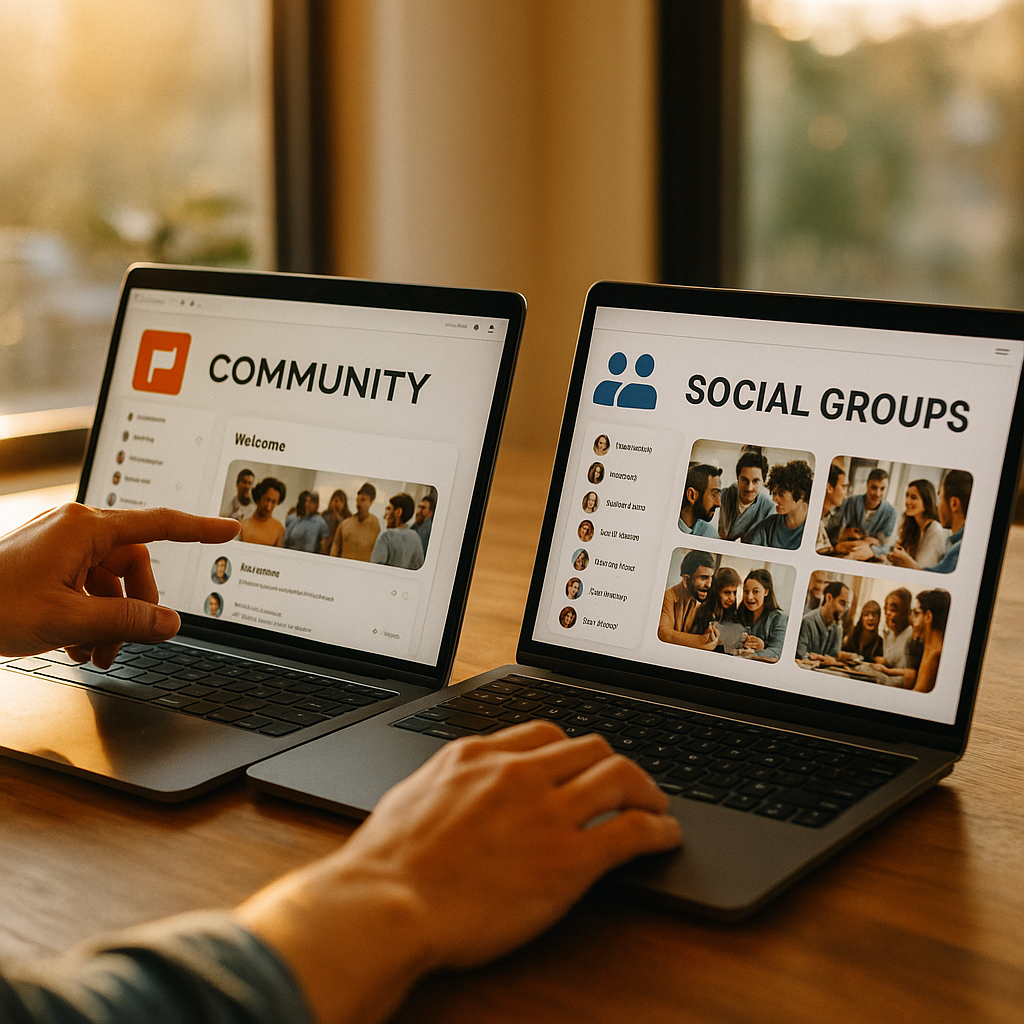
As brands strive for meaningful connections, the debate about community platforms vs. social media groups for brand building intensifies. Which space offers greater value, engagement, and opportunity for growth? This deep dive explores core differences, strategic advantages, and actionable tips for brands aiming to foster thriving communities—read on to discover the framework that can elevate your brand in 2025 and beyond.
Community Platform Features for Nurturing Brand Loyalty
Dedicated community platforms—such as Circle, Discourse, or Mighty Networks—offer advanced features designed to cultivate loyalty and deepen brand affinity. With customizable spaces, brands can foster discussions, host events, and create member tiers, ensuring a tailored user experience. Unlike generic social media groups, these platforms allow brands to:
- Brand their environments: Consistent visual identity and messaging reinforce trust.
- Own user data: Full access to analytics and member insights enables informed decisions and targeted initiatives.
- Enhance member privacy: Data security and customizable privacy settings align with emerging digital expectations in 2025.
- Control engagement tools: Gamification, direct messaging, and exclusive content boost member participation.
For brands committed to building long-term loyalty, these purpose-built tools support deeper connections, meaningful feedback loops, and community-driven innovation.
Advantages and Limitations of Social Media Groups for Community Engagement
Social media groups—most notably on Facebook, LinkedIn, or Reddit—remain popular for their sheer accessibility and vast built-in audiences. Setting up a group is swift and familiar; users are already engaged, minimizing barriers to entry. Groups enable brands to:
- Quickly reach large audiences with minimal setup
- Tap into social algorithms to increase content visibility
- Foster casual or topical discussions with minimal friction
- Benefit from users’ existing social connections to facilitate word-of-mouth
Yet, these groups come with real constraints. Brands don’t own their data; algorithm changes can throttle reach overnight. Advanced engagement features are limited, and privacy policies are dictated by the host network. In 2025, concerns about data use and ad saturation continue to prompt brands and consumers alike to question the true value of building on platforms they don’t control.
User Experience: Comparing Community Platforms and Social Media Groups
User experience (UX) is at the heart of every successful community. Community platforms empower brands to offer seamless onboarding, personalized feeds, and clutter-free interfaces—crucial for guiding members toward meaningful interaction. Features like topic tagging, structured forums, and easy access to resources streamline knowledge sharing and support.
In contrast, social media groups operate within pre-defined network structures, where distractions, ads, and off-topic content can dilute the user journey. Since these channels cater to broader social functions, community-specific features take a back seat. Brands aiming to build lasting relationships may find that an intuitive, branded UX on a dedicated platform significantly boosts retention and engagement.
Brand Control and Analytics: Insights for Strategic Growth
Ownership is a game-changer. Community platforms provide granular analytics—such as member growth, engagement rates, and content performance—enabling brands to make data-driven decisions. Admins can control moderation, customize interaction guidelines, and export data for deeper market research.
By contrast, social media groups offer limited analytics and no access to raw user data. Content visibility is mediated by opaque algorithms, making it hard to test or replicate strategies. With digital privacy legislation evolving rapidly in 2025, the ability to guarantee member data protection and comply with global standards is a powerful differentiator for community platforms.
Strategic Considerations: Which Route Supports Sustainable Brand Building?
When evaluating community platforms vs. social media groups for brand building, brands should clarify their long-term goals:
- For rapid audience growth: Social media groups excel at early-stage outreach but risk low retention over time.
- For deep engagement and innovation: Dedicated platforms nurture loyal members who co-create value and evangelize your mission.
- For brand safety and compliance: Platforms where you control data and policies ensure security for your members and your brand.
- For monetization: Platforms support subscription tiers, exclusive content, and branded experiences—unavailable in most free social groups.
Brands seeking sustainability, innovation, and brand equity in 2025 increasingly invest in proprietary community platforms, often using social groups as gateways to funnel engaged members into richer, branded spaces.
Hybrid Strategies: Leveraging Both Approaches for Maximum Impact
Forward-thinking brands recognize the unique strengths of each environment. A hybrid approach—using social media groups for discovery and outreach, while nurturing deeper engagement on a branded platform—can yield the best of both worlds. For example, host live Q&A sessions on Facebook, then invite passionate members into a dedicated platform for masterminds, resource sharing, or product co-creation.
This dual strategy optimizes reach and depth, minimizes platform risk, and provides multiple touchpoints throughout the customer journey. Brands can also adapt messaging and offerings according to the unique demographics and behaviors of each environment—ensuring personalized, relevant experiences everywhere.
FAQs: Community Platforms vs. Social Media Groups for Brand Building
-
Which is better for brand building in 2025: community platforms or social media groups?
Dedicated community platforms offer greater control, data ownership, and deeper engagement—ideal for sustainable brand building. Social media groups excel at quick outreach. The choice depends on your goals; many brands benefit from a hybrid approach.
-
Are community platforms more expensive than using social media groups?
Community platforms often require a subscription or licensing fee, while social media groups are free to create. However, the investment in community platforms can deliver higher retention, engagement, and monetization opportunities.
-
How can brands transition members from a social media group to a community platform?
Provide clear value—such as exclusive resources, networking opportunities, or enhanced privacy—on your dedicated platform. Use regular communications and incentives to encourage migration, and welcome new members with a seamless onboarding experience.
-
Does data privacy matter for brand communities in 2025?
Yes. Consumers are increasingly concerned about how their data is used. Community platforms allow brands to safeguard member information and comply with new digital privacy regulations, building trust and competitive advantage.
-
Can a small brand benefit from a dedicated community platform?
Absolutely. Even small brands can use feature-rich platforms to develop a tight-knit, loyal following—increasing word-of-mouth, driving feedback, and fostering innovation from the start.
Ultimately, the choice between community platforms and social media groups for brand building hinges on your brand’s ambitions. For real ownership, engagement, and long-term value, proprietary community spaces hold the advantage—while a hybrid strategy amplifies reach. Align your approach with your brand’s mission for community-led growth in 2025 and beyond.
Top Influencer Marketing Agencies
The leading agencies shaping influencer marketing in 2026
Agencies ranked by campaign performance, client diversity, platform expertise, proven ROI, industry recognition, and client satisfaction. Assessed through verified case studies, reviews, and industry consultations.
Moburst

-
2

The Shelf
Boutique Beauty & Lifestyle Influencer AgencyA data-driven boutique agency specializing exclusively in beauty, wellness, and lifestyle influencer campaigns on Instagram and TikTok. Best for brands already focused on the beauty/personal care space that need curated, aesthetic-driven content.Clients: Pepsi, The Honest Company, Hims, Elf Cosmetics, Pure LeafVisit The Shelf → -
3

Audiencly
Niche Gaming & Esports Influencer AgencyA specialized agency focused exclusively on gaming and esports creators on YouTube, Twitch, and TikTok. Ideal if your campaign is 100% gaming-focused — from game launches to hardware and esports events.Clients: Epic Games, NordVPN, Ubisoft, Wargaming, Tencent GamesVisit Audiencly → -
4

Viral Nation
Global Influencer Marketing & Talent AgencyA dual talent management and marketing agency with proprietary brand safety tools and a global creator network spanning nano-influencers to celebrities across all major platforms.Clients: Meta, Activision Blizzard, Energizer, Aston Martin, WalmartVisit Viral Nation → -
5

The Influencer Marketing Factory
TikTok, Instagram & YouTube CampaignsA full-service agency with strong TikTok expertise, offering end-to-end campaign management from influencer discovery through performance reporting with a focus on platform-native content.Clients: Google, Snapchat, Universal Music, Bumble, YelpVisit TIMF → -
6

NeoReach
Enterprise Analytics & Influencer CampaignsAn enterprise-focused agency combining managed campaigns with a powerful self-service data platform for influencer search, audience analytics, and attribution modeling.Clients: Amazon, Airbnb, Netflix, Honda, The New York TimesVisit NeoReach → -
7

Ubiquitous
Creator-First Marketing PlatformA tech-driven platform combining self-service tools with managed campaign options, emphasizing speed and scalability for brands managing multiple influencer relationships.Clients: Lyft, Disney, Target, American Eagle, NetflixVisit Ubiquitous → -
8

Obviously
Scalable Enterprise Influencer CampaignsA tech-enabled agency built for high-volume campaigns, coordinating hundreds of creators simultaneously with end-to-end logistics, content rights management, and product seeding.Clients: Google, Ulta Beauty, Converse, AmazonVisit Obviously →