


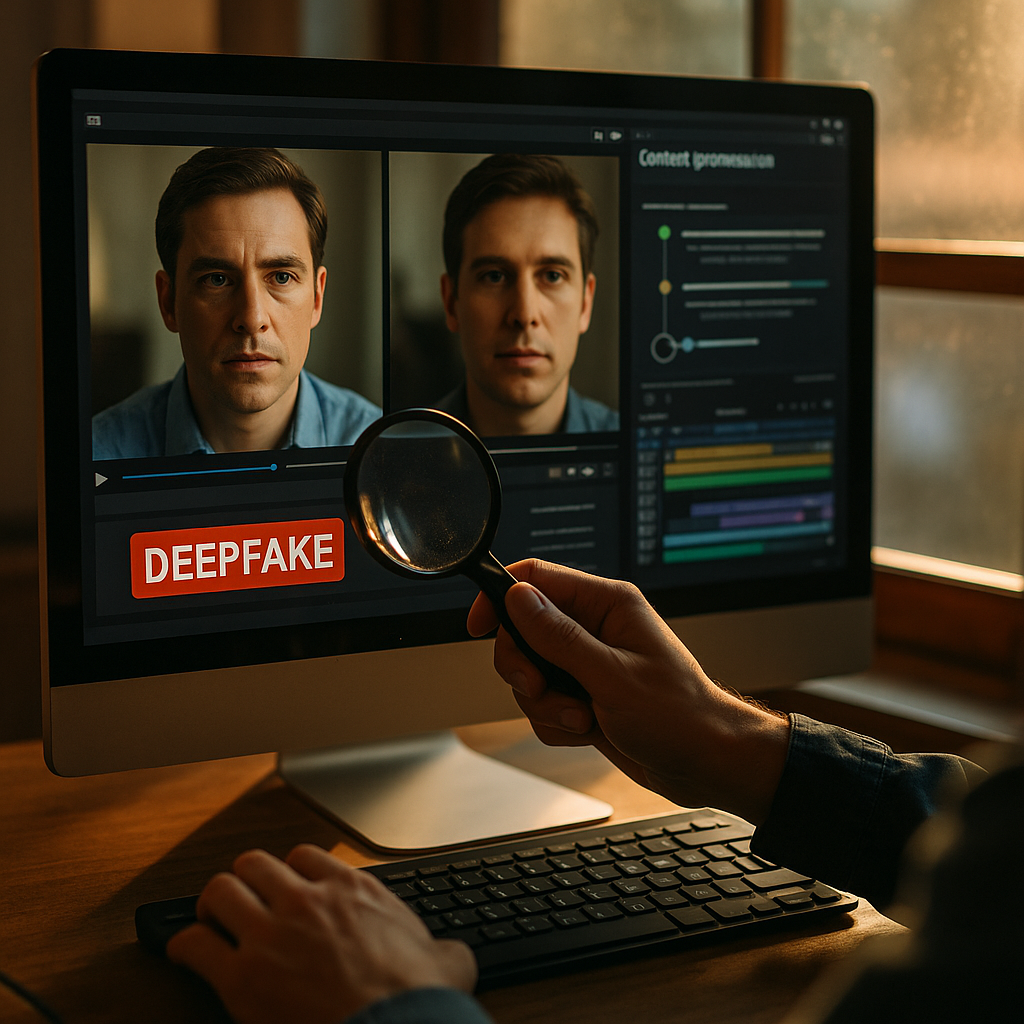
Content provenance standards are rapidly emerging as a frontline defense against the spread of deepfakes and manipulated digital content. As the sophistication of AI-generated media grows, establishing clear digital origins and traceability for images, videos, and audio has never been more critical. Explore practical steps and global efforts shaping the future of trustworthy media in 2025.
Understanding Content Provenance and Its Role in Deepfake Detection
Content provenance refers to the documentation of the origins, history, and manipulations of a piece of digital media. In today’s online environment, deepfakes—AI-generated or altered images, audio, and videos designed to deceive—pose increasing threats to individuals, businesses, and public trust. By establishing verified digital “paper trails,” provenance tools enable platforms, journalists, and users to scrutinize the authenticity and lifecycle of media.
Recent research and industry trends indicate that by early 2025, over 60% of internet users will encounter at least one synthetic media post every week. Such prevalence highlights the urgent need for robust mechanisms that enhance transparency, help identify altered content, and support media literacy efforts. Content provenance isn’t only about detection; it’s about building a foundation of trust in the global information ecosystem.
Current Content Provenance Standards and Technologies
Several organizations and industry consortia are leading the charge to establish interoperable content provenance standards. The Coalition for Content Provenance and Authenticity (C2PA), founded by Adobe, Microsoft, and others, has set publicly available specifications for embedding secure provenance metadata into digital files. These specifications outline how information about the file’s creation, provenance, and edits is cryptographically signed and verifiable at each stage of its lifecycle.
Key technologies being deployed include:
- Metadata Embedding: Attaching tamper-evident information about origin and alterations directly within the file.
- Digital Signatures: Ensuring creators’ identities and subsequent modifications are cryptographically signed, preventing unnoticed manipulation.
- Blockchain Solutions: Recording media transactions on decentralized ledgers for transparent and immutable provenance tracking.
- AI Detection Tools: Leveraging machine learning to analyze content for inconsistencies aligned with provenance metadata.
In 2025, mainstream cameras, editing software, and publishing platforms are increasingly supporting these standards by default, giving creators and consumers more confidence in content authenticity.
Global Efforts and Regulatory Actions for Deepfake Accountability
Governments and industry leaders worldwide now recognize the urgency of regulating deepfakes. In Europe, digital services regulations urge major platforms to implement provenance solutions and label synthetic content. In the United States, major technology firms and news organizations have signed voluntary codes, committing to reinforce content provenance infrastructure across their services.
Industry watchdogs have advocated for mandatory adoption of provenance disclosure for AI-generated content. As a result, many platforms in 2025 now require provenance tags or risk heavy penalties and erosion of user trust. At the same time, privacy laws are impacting how much information can be embedded, balancing security with individual rights.
The alignment of legal frameworks, technical standards, and public policy is gradually helping to curb the malicious use of deepfakes, fostering a more accountable digital environment.
How Publishers, Platforms, and Individuals Can Apply Provenance Standards
Applying content provenance isn’t limited to large media organizations—it can be integrated by social platforms, independent publishers, and even individuals. Here’s how different stakeholders can utilize provenance standards effectively:
- Publishers: Embed C2PA-compliant metadata during content creation and editing, and verify the provenance of syndicated media to avoid the spread of manipulated content.
- Social Platforms: Detect and display provenance badges, alerting users when content lacks verifiable origins or has been altered after publication.
- Individual Creators: Use mobile apps, cameras, and content suites that enable provenance metadata insertion at the moment of capture.
- End Users: Make use of browser extensions and platform tools that visualize provenance trails, helping to discern trustworthy content from potential deepfakes.
By embracing these practices, all internet users contribute to a safer, more transparent information space.
Challenges and Limitations of Content Provenance in Deepfake Mitigation
Despite rapid advances, content provenance standards are not a silver bullet. Challenges persist in adoption, interoperability, and technical resilience:
- Adoption Gaps: Not all devices, apps, or publishers have enabled provenance technology, creating blind spots exploited by malicious actors.
- Breakable Chains: If provenance metadata is stripped, modified, or not embedded at critical stages, confidence in the file’s authenticity can be undermined.
- Privacy Concerns: Some users worry about embedding personal information or traceable data into media files, prompting ongoing work on privacy-preserving standards.
- Resource Intensity: Smaller organizations may lack the technical capacity to implement robust provenance workflows without increased support and investment.
Addressing these limitations requires ongoing collaboration between technologists, policymakers, civil society, and end users to shape a balanced, resilient ecosystem for digital trust.
The Future of Content Provenance: Trends for Trust and Transparency
Looking ahead in 2025 and beyond, content provenance standards will continue to evolve alongside new threats and technologies. With the rise of generative AI, provenance systems are incorporating real-time detection, multi-modal authentication (covering image, video, and audio simultaneously), and intuitive visualization interfaces for both creators and consumers.
Emerging trends include:
- Widespread Device Integration: Next-gen cameras and smartphones natively generate provenance-aware media with minimal manual intervention.
- Cross-Platform Compatibility: Open-source tools ensure provenance data remains consistent across different content management systems and social platforms.
- Consumer Literacy: Public awareness campaigns teach users to interpret provenance indicators and challenge suspicious media effectively.
Ultimately, the mainstream adoption of provenance standards represents a key step toward strengthening trust in our shared digital reality and protecting public discourse from the harms of deepfakes.
FAQs: Essential Questions on Content Provenance and Deepfakes
- What is content provenance and why is it important?
Content provenance refers to tracking a digital media’s origins, history, and edits to ensure authenticity. It is crucial for identifying manipulated content and combating the spread of deepfakes. - How do content provenance standards help fight deepfakes?
By embedding verifiable metadata in media files, provenance standards allow users and platforms to confirm that digital content is original and unaltered, making it harder for deepfakes to masquerade as genuine media. - Which industries benefit most from content provenance?
News organizations, social media platforms, creative professionals, and regulatory bodies are among the top beneficiaries, as their credibility relies heavily on trusted, unmanipulated content. - Are there privacy risks with embedding provenance metadata?
While provenance systems can raise privacy questions, standards like C2PA are evolving to minimize personal data exposure, focusing on security and transparency without compromising user rights. - How can ordinary users check for content provenance?
Users can utilize platform-provided visual badges, browser extensions, or dedicated apps to view an asset’s provenance trail and verify its authenticity before sharing or acting on its content.
Content provenance standards are a powerful tool in today’s fight against deepfakes. By adopting verifiable, interoperable protocols, individuals and organizations can help restore trust in digital media, protect public discourse, and safeguard themselves from manipulation as technology continues to advance.
Top Influencer Marketing Agencies
The leading agencies shaping influencer marketing in 2026
Agencies ranked by campaign performance, client diversity, platform expertise, proven ROI, industry recognition, and client satisfaction. Assessed through verified case studies, reviews, and industry consultations.
Moburst

-
2

The Shelf
Boutique Beauty & Lifestyle Influencer AgencyA data-driven boutique agency specializing exclusively in beauty, wellness, and lifestyle influencer campaigns on Instagram and TikTok. Best for brands already focused on the beauty/personal care space that need curated, aesthetic-driven content.Clients: Pepsi, The Honest Company, Hims, Elf Cosmetics, Pure LeafVisit The Shelf → -
3

Audiencly
Niche Gaming & Esports Influencer AgencyA specialized agency focused exclusively on gaming and esports creators on YouTube, Twitch, and TikTok. Ideal if your campaign is 100% gaming-focused — from game launches to hardware and esports events.Clients: Epic Games, NordVPN, Ubisoft, Wargaming, Tencent GamesVisit Audiencly → -
4

Viral Nation
Global Influencer Marketing & Talent AgencyA dual talent management and marketing agency with proprietary brand safety tools and a global creator network spanning nano-influencers to celebrities across all major platforms.Clients: Meta, Activision Blizzard, Energizer, Aston Martin, WalmartVisit Viral Nation → -
5

The Influencer Marketing Factory
TikTok, Instagram & YouTube CampaignsA full-service agency with strong TikTok expertise, offering end-to-end campaign management from influencer discovery through performance reporting with a focus on platform-native content.Clients: Google, Snapchat, Universal Music, Bumble, YelpVisit TIMF → -
6

NeoReach
Enterprise Analytics & Influencer CampaignsAn enterprise-focused agency combining managed campaigns with a powerful self-service data platform for influencer search, audience analytics, and attribution modeling.Clients: Amazon, Airbnb, Netflix, Honda, The New York TimesVisit NeoReach → -
7

Ubiquitous
Creator-First Marketing PlatformA tech-driven platform combining self-service tools with managed campaign options, emphasizing speed and scalability for brands managing multiple influencer relationships.Clients: Lyft, Disney, Target, American Eagle, NetflixVisit Ubiquitous → -
8

Obviously
Scalable Enterprise Influencer CampaignsA tech-enabled agency built for high-volume campaigns, coordinating hundreds of creators simultaneously with end-to-end logistics, content rights management, and product seeding.Clients: Google, Ulta Beauty, Converse, AmazonVisit Obviously →