


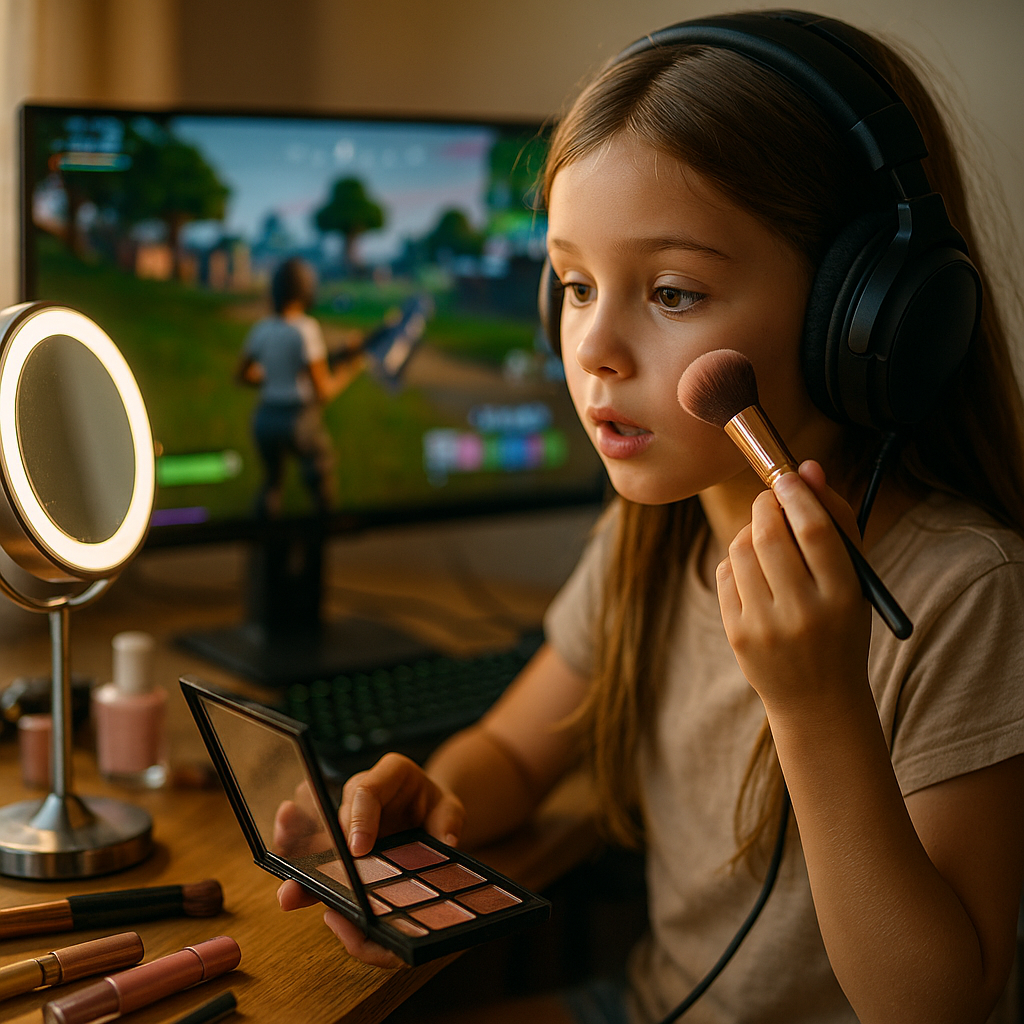
The FTC collected more than $20 million in COPPA settlements from a single gaming company last year. Not because the brand marketed to kids — because its creator content did, and nobody checked. COPPA-adjacent enforcement risk is now one of the fastest-growing exposure categories for beauty and gaming brands running influencer programs, and most compliance teams still treat it as someone else’s problem.
It isn’t. If your creator’s audience skews young, the FTC increasingly doesn’t care whose fault that is.
What “COPPA-Adjacent” Actually Means Here
COPPA itself — the Children’s Online Privacy Protection Act — applies to operators of websites and services “directed to children” or that have “actual knowledge” they’re collecting data from kids under 13. Strictly speaking, a beauty brand running a mascara campaign with a 24-year-old creator isn’t a COPPA operator. But regulators have gotten comfortable stretching the spirit of the rule into adjacent enforcement actions: unfair-or-deceptive-practices claims, state attorney general actions, and FTC endorsement guide violations layered on top of child-directed content concerns.
That’s the “adjacent” part. You’re rarely getting fined under COPPA’s exact text. You’re getting fined under Section 5 of the FTC Act, or a state privacy law, or a platform enforcement action, with COPPA’s underlying logic — “this content reaches kids and you should have known” — doing the heavy lifting in the complaint.
Regulators don’t need to prove you targeted kids. They need to prove you had reason to know your creator content was reaching them and did nothing about it.
Why Beauty and Gaming Are the Two Categories Getting Hit Hardest
Every vertical has some under-13 audience bleed. But beauty and gaming are structurally exposed in ways that, say, B2B SaaS or financial services aren’t.
- Beauty: Tween and preteen beauty consumption exploded via TikTok and Sephora Kids trend coverage. Brands didn’t create that audience — creators did, organically, by making tutorials that 10-year-olds find aspirational. The brand’s product ends up in a haul video with a 500,000-follower creator whose audience skews 11-14, and the brand never asked what that audience looked like before signing the deal.
- Gaming: Cross-platform content built around titles rated E10+ or T pulls enormous under-13 viewership on YouTube and Twitch clips, regardless of the platform’s 13+ terms of service. A creator streaming a T-rated shooter to an audience that’s 30% under 13 isn’t hypothetical — it’s Tuesday.
Neither category set out to market to children. That’s exactly the point regulators are making: intent doesn’t matter much anymore when reach is measurable and ignorable.
The Data Problem Nobody Wants to Own
Here’s the uncomfortable operational truth: most brands have no reliable way to know a creator’s actual under-13 reach before signing them. Platform-reported demographics are self-declared, age-gated imperfectly, and often simply wrong. TikTok’s own community guidelines require users to be 13+, but independent research on platform demographics has repeatedly found meaningful under-13 usage despite age gates.
So when a brand’s legal team asks, “did we know,” the honest answer is often “we didn’t look.” That absence of diligence is precisely what turns a marketing mistake into an enforcement exposure. The FTC’s own guidance stresses “actual knowledge” and “constructive knowledge” standards — if a reasonable brand *should have known* based on available audience data, ignorance stops being a defense.
This is where COPPA-adjacent risk intersects with broader influencer audience targeting compliance work. If you’re already auditing creator audiences for other regulatory reasons — state minor-protection laws, data broker restrictions — the under-13 question should be part of the same workflow, not a separate fire drill.
Where the Legal Exposure Actually Sits
Break the risk into three buckets. Brands that treat this as one undifferentiated “COPPA thing” tend to under-invest in the parts that carry the most exposure.
- FTC unfairness/deception claims. If your creator content misleads or fails to disclose material connections to an audience that includes children, the FTC’s endorsement guidelines apply with extra weight — regulators treat child-reachable content as inherently higher scrutiny.
- State-level minor protection statutes. A growing patchwork of state laws (see our under-16 creator marketing compliance matrix) extends protections well past COPPA’s under-13 threshold, meaning brands need to plan for 13-15 audience segments too, not just the literal COPPA age band.
- Platform enforcement and contract liability. TikTok, YouTube, and Instagram all have their own child-safety enforcement mechanisms that can suspend campaigns, claw back ad spend, or terminate creator partnerships mid-flight — independent of any government action.
Gaming brands should note that international exposure compounds this. Australia’s under-16 social media restrictions, for instance, create parallel obligations that brands running global creator campaigns can’t treat as a US-only compliance problem. Our global compliance matrix on Australia’s under-16 penalties is a useful cross-reference if your gaming or beauty brand runs APAC creator programs alongside US ones.
A Practical Audit Framework, Not a Legal Theory
Marketing teams don’t need to become COPPA scholars. They need a repeatable pre-flight check that catches exposure before a campaign launches, not after a journalist or regulator finds it.
- Pull creator audience demographics before contracting, not after. Most platforms’ business dashboards (see TikTok’s advertiser tools or Meta’s business platform) provide age-band estimates. They’re imperfect but they’re evidence of diligence — which matters legally even when the data itself is imprecise.
- Flag content formats known to skew young. Unboxing videos, “get ready with me” tutorials, and Roblox/Minecraft gameplay content are magnets for under-13 viewership regardless of who’s making them.
- Build an escalation trigger into contracts. If a creator’s under-13 audience share crosses a defined threshold post-launch, the brand should have contractual rights to pull content or require re-editing. This pairs naturally with the right-of-audit clauses already extending into clipping and repost networks.
- Document your review process. Regulators and platforms respond very differently to “we had a documented pre-launch audience review” versus “we found out from a TechCrunch headline.”
A documented, imperfect audience review beats a perfect audience review that never happened. Regulators reward process, not prophecy.
Script Approval and Disclosure Still Matter Here
It’s tempting to treat under-13 audience risk as purely a targeting and data problem. It isn’t. Content itself matters — a script that includes aggressive purchase prompts, urgency language, or unclear sponsorship disclosure becomes materially worse when it’s reaching a child audience, even unintentionally. Brands already tightening script approval depth for standard FTC liability reasons should extend that same review lens specifically to child-audience risk: is the disclosure legible and simple enough that context matters less, is the CTA free of manipulative urgency, does the content avoid direct calls to purchase.
This overlaps meaningfully with the broader script approval liability shift brands are already navigating — the more control you exercise over creator content, the more responsibility regulators assign you for its downstream effects, including who ends up watching it.
What This Means for Budget and Vendor Selection
Compliance teams often frame this as a legal cost center. It’s actually a media efficiency conversation too. Campaigns that unintentionally reach heavy under-13 audiences are, by definition, spending against a non-purchasing, non-target demographic. That’s wasted budget before it’s ever a legal problem.
Brands running influencer marketing platforms or agencies should be asking vendors directly: what’s your under-13 audience filtering methodology, and can you show it in reporting? If the honest answer is “we don’t track that,” that’s a vendor risk question as much as a legal one.
Emerging creator economy research increasingly segments audience age data as a standard campaign metric, not a niche compliance add-on. Brands that build this into standard reporting now will be ahead of what’s likely to become a default expectation within a couple of budget cycles.
Next step: Add a mandatory under-13 audience estimate to your creator vetting checklist this quarter, with a documented threshold that triggers legal review before contracts are signed — not after content goes live.
Frequently Asked Questions
Does COPPA actually apply to brands running influencer campaigns?
Rarely in the strict legal sense. COPPA targets operators of child-directed services with actual knowledge of under-13 data collection. Most brand-creator campaigns face adjacent exposure instead, through FTC unfairness claims, state minor-protection laws, or platform enforcement — not COPPA itself.
What counts as “actual knowledge” that content is reaching kids?
Regulators look at whether a reasonable brand should have known based on available data: platform demographic reports, comment sections skewing young, creator audience analytics, or industry-known patterns (like beauty tutorials attracting tweens). Not checking available data doesn’t prevent liability, it can create it.
Can a brand be liable if the creator, not the brand, attracted the under-13 audience?
Yes, potentially. Enforcement increasingly focuses on whether the brand had the means to know and acted on it, not who “caused” the audience composition. This is why pre-contract audience vetting matters more than after-the-fact disclaimers.
How is this different from general child-safety content moderation?
Platform content moderation addresses whether content itself is appropriate for minors. COPPA-adjacent enforcement risk is about data collection, targeting, and commercial practices reaching an under-13 audience, which is a separate legal question even when the content passes standard moderation.
What’s the single highest-risk creator content format for this issue?
Unboxing and haul-style videos in beauty, and gameplay streams of E10+/T-rated titles in gaming, both consistently show disproportionate under-13 viewership regardless of platform age gates or creator intent.
Top Influencer Marketing Agencies
The leading agencies shaping influencer marketing in 2026
Agencies ranked by campaign performance, client diversity, platform expertise, proven ROI, industry recognition, and client satisfaction. Assessed through verified case studies, reviews, and industry consultations.
Moburst

-
2

The Shelf
Boutique Beauty & Lifestyle Influencer AgencyA data-driven boutique agency specializing exclusively in beauty, wellness, and lifestyle influencer campaigns on Instagram and TikTok. Best for brands already focused on the beauty/personal care space that need curated, aesthetic-driven content.Clients: Pepsi, The Honest Company, Hims, Elf Cosmetics, Pure LeafVisit The Shelf → -
3

Audiencly
Niche Gaming & Esports Influencer AgencyA specialized agency focused exclusively on gaming and esports creators on YouTube, Twitch, and TikTok. Ideal if your campaign is 100% gaming-focused — from game launches to hardware and esports events.Clients: Epic Games, NordVPN, Ubisoft, Wargaming, Tencent GamesVisit Audiencly → -
4

Viral Nation
Global Influencer Marketing & Talent AgencyA dual talent management and marketing agency with proprietary brand safety tools and a global creator network spanning nano-influencers to celebrities across all major platforms.Clients: Meta, Activision Blizzard, Energizer, Aston Martin, WalmartVisit Viral Nation → -
5

The Influencer Marketing Factory
TikTok, Instagram & YouTube CampaignsA full-service agency with strong TikTok expertise, offering end-to-end campaign management from influencer discovery through performance reporting with a focus on platform-native content.Clients: Google, Snapchat, Universal Music, Bumble, YelpVisit TIMF → -
6

NeoReach
Enterprise Analytics & Influencer CampaignsAn enterprise-focused agency combining managed campaigns with a powerful self-service data platform for influencer search, audience analytics, and attribution modeling.Clients: Amazon, Airbnb, Netflix, Honda, The New York TimesVisit NeoReach → -
7

Ubiquitous
Creator-First Marketing PlatformA tech-driven platform combining self-service tools with managed campaign options, emphasizing speed and scalability for brands managing multiple influencer relationships.Clients: Lyft, Disney, Target, American Eagle, NetflixVisit Ubiquitous → -
8

Obviously
Scalable Enterprise Influencer CampaignsA tech-enabled agency built for high-volume campaigns, coordinating hundreds of creators simultaneously with end-to-end logistics, content rights management, and product seeding.Clients: Google, Ulta Beauty, Converse, AmazonVisit Obviously →