


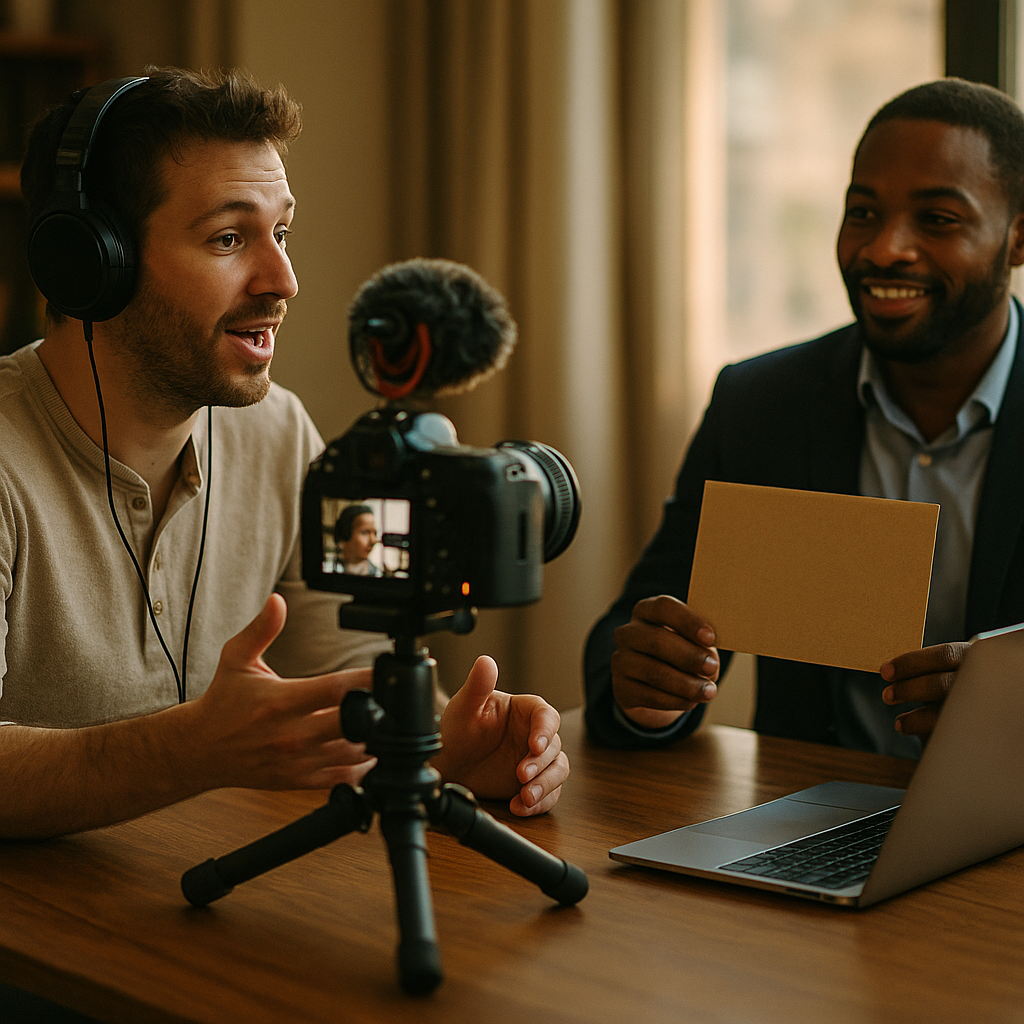
Creator Channels Are Sitting at the Upfront Table
YouTube’s upfront commitments crossed $1 billion for the first time last year. That number isn’t a curiosity. It’s a signal that streaming and social convergence has crossed from trend to structural market shift, and most brand partnership architectures weren’t built for it.
The old mental model was simple: streaming for reach and prestige, social for engagement and conversion. Those lanes no longer exist. MrBeast’s content routinely outperforms prime-time cable in the 18-34 demographic. Kai Cenat’s live streams generate appointment viewing that would make network programmers envious. And platforms like YouTube, Twitch, and Kick are actively positioning themselves in upfront conversations alongside NBCUniversal, Disney, and Paramount. If your partnership team still treats creator buys as a social line item, you’re misallocating against the actual competitive dynamics of the attention market.
Why Traditional Partnership Tiers Break Down Here
Most brand partnership frameworks still organize creators into tiers: mega, macro, micro, nano. Useful for pricing and procurement. Useless for strategic architecture when a single creator’s platform functions more like a media network than an individual channel.
Consider the operational reality. Dhar Mann Studios produces narrative episodic content at scale, commands brand integrations priced closer to mid-tier streaming inventory than influencer sponsorships, and has a documented content cadence that allows for upfront planning. That is not influencer marketing as traditionally practiced. For a deeper look at how studios like this are repricing the market, the Dhar Mann Studios revenue model analysis is essential reading for anyone in brand partnership roles.
The tier model also breaks down because creator channels increasingly serve multiple audience touchpoints simultaneously: episodic YouTube content (lean-back, prime-time behavior), Shorts and TikTok reposts (discovery), live streaming (appointment viewing), and podcast feeds (commute and background consumption). One creator. Four distinct media behaviors. One partnership agreement that likely only accounts for one of them.
When a single creator operates across four distinct audience behaviors simultaneously, a single-post partnership agreement isn’t a partnership. It’s a missed opportunity with a signature on it.
Redesigning Partnership Architecture for Convergence
The functional shift brands need to make is from campaign thinking to inventory thinking. Here’s what that looks like in practice.
Separate the creator from the channel. A partnership with a creator who commands 8 million YouTube subscribers, 3 million Twitch followers, and a top-100 Spotify podcast should be structured as a multi-property media buy, not a talent deal. Your media team, not just your influencer marketing team, should have a seat at the negotiation table.
Build exclusivity windows that match content cadence. Streaming platforms negotiate exclusivity by window and content type. Brand partnerships should do the same. A 30-day category exclusivity across a creator’s episodic series costs more than a single integration, but it also prevents your competitor from appearing in episode three when your brand appeared in episode one. For brands currently navigating the creator inventory vs. Netflix and Hulu planning question, this window-based model maps directly to how streaming upfronts work.
Fund for distribution, not just production. The single biggest architectural error brands make is treating creator partnerships as production expenses. The content creation is table stakes. The distribution amplification is where ROI is actually generated. Distribution consistently outperforms production as a lever for brand outcomes, and partnership budgets need to reflect that reality with a dedicated paid amplification line.
Negotiate for content rights upfront. As creator content migrates to streaming surfaces (YouTube on connected TV, Twitch VODs, Kick replays), the IP rights conversation becomes materially important. A clip filmed for YouTube Shorts that gets repurposed onto a creator’s CTV compilation triggers different FTC disclosure rules and potentially different talent rights. Get legal in the room before the deal closes. The microdrama IP rights framework offers a useful contractual starting point even for non-narrative formats.
The Upfront Budget Question
Should creator inventory sit in the TV/streaming budget or the social budget? This is less an accounting question and more a strategic one, because where it lives determines who negotiates it, what KPIs govern it, and how it gets evaluated against alternatives.
The pragmatic answer for most marketing organizations: split it by behavior. Creator content consumed primarily in lean-back, long-form formats on CTV or desktop prime-time should be planned and measured against streaming inventory benchmarks. Creator content consumed primarily in-feed on mobile should be planned and measured against social. The same creator can generate both. Your budget architecture just needs to accommodate that reality rather than forcing one format into the wrong measurement framework.
For teams building quarterly frameworks that span both buckets, the CMO quarterly planning framework provides a practical structure for allocating across these converging channels without losing accountability at the line item level.
Agencies are also adjusting. The consolidation vs. specialist AOR debate has new urgency when creator channels require negotiators who understand both streaming upfront mechanics and social content strategy. Most specialist influencer agencies aren’t equipped for the former. Most traditional media agencies still undervalue the latter. The gap is real, and it’s where budget gets lost.
Platform Dynamics Brand Strategists Can’t Ignore
YouTube’s CTV growth is the single most important platform dynamic in this space. More than 150 million people watch YouTube on their televisions monthly in the U.S. alone, according to Statista. The platform is actively building upfront infrastructure to capture linear TV dollars, not just social budgets. That changes the negotiating context for every large-scale creator partnership on the platform.
Twitch and Kick present a different opportunity: live, appointment-driven content with viewer behavior that closely mirrors sports broadcasting. Brands that have historically sponsored live sports understand the mechanics. The audience co-presence, the real-time commentary, the shared cultural moment. Live creator streaming delivers all of that at significantly lower CPMs than traditional sports inventory, though with less brand safety infrastructure. FTC disclosure requirements in live formats remain an active compliance issue that partnership teams must address contractually, not reactively.
TikTok’s LIVE and Series features are also closing the gap with traditional streaming behavior. A creator publishing a multi-episode Series on TikTok is functionally producing a short-form streaming property, complete with episode structure, season arcs, and subscriber notifications. TikTok’s advertising tools are evolving to accommodate brand integrations at this format level, though the inventory is still nascent compared to YouTube’s CTV offering.
The CPM gap between live creator streaming and traditional sports broadcast inventory is a short-term arbitrage window. Brands that move now lock in pricing before upfront standardization catches up.
Compliance and Brand Safety at the Streaming-Social Seam
The convergence creates compliance complexity that deserves its own budget line. A creator integration that was disclosed correctly for a social post may not be disclosed correctly when that same content appears as a VOD on a CTV platform. The FTC’s endorsement guidelines and the ICO’s data privacy framework in the UK both apply differently across distribution surfaces, and very few creator contracts currently account for cross-surface republication.
Brand safety tooling also lags the convergence. Most brand safety vendors are calibrated for programmatic display and pre-roll video. They have limited capabilities for evaluating creator episodic content, live streaming contexts, or multi-episode series where brand adjacency shifts across episodes. Until the tooling catches up, contractual brand safety provisions and creator vetting processes carry more of the risk management burden than they should. Brands working with certified creators have a structural advantage here. The compliance infrastructure behind IAB-UK certified creator programs provides a measurable baseline that off-platform compliance processes can’t easily replicate.
The creator economy’s convergence with streaming isn’t coming. It’s operational. The brands that will win upfront dollars and prime-time attention in this market are the ones redesigning their partnership architecture now, before the pricing standardizes and the arbitrage closes.
Start with one audit: pull every active creator partnership and identify which ones involve long-form, episodic, or live content. Those deals need to be renegotiated under a streaming-adjacent framework before next quarter’s upfront cycle opens.
Frequently Asked Questions
How is creator content competing with traditional streaming platforms for ad dollars?
Creator channels on YouTube, Twitch, and TikTok are now generating prime-time viewing behaviors, particularly on connected TV surfaces. YouTube’s upfront commitments have crossed $1 billion, signaling that major brands are allocating streaming-level budgets to creator inventory. As creator content becomes appointment viewing at scale, it competes directly with Netflix, Hulu, and linear TV for the same audience attention and upfront media dollars.
What is streaming and social convergence in the context of brand partnerships?
Streaming and social convergence describes the collapse of the traditional boundary between lean-back streaming content and in-feed social content. A single creator now produces episodic YouTube series for CTV consumption, short-form clips for discovery, live streams for appointment viewing, and podcast content for audio audiences. Brand partnerships must be architected to span all of these behaviors rather than treating them as separate channels.
Should creator inventory be planned under the TV budget or the social budget?
The most effective approach is to split by consumption behavior. Long-form and episodic creator content consumed in lean-back formats on CTV should be benchmarked against streaming inventory. In-feed mobile content should be measured against social benchmarks. The same creator can generate both, so budget architecture needs to accommodate dual classification rather than forcing a false binary.
What are the biggest compliance risks at the streaming-social seam?
The primary risks involve FTC disclosure requirements that may not transfer correctly when content is republished across surfaces, and brand safety tooling that is calibrated for programmatic display rather than episodic or live creator content. Creator contracts should explicitly address cross-surface republication rights and disclosure obligations for each distribution context, not just the original post format.
How should brands negotiate creator partnerships for upfront planning cycles?
Brands should approach large-scale creator partnerships as multi-property media buys rather than talent deals. This means negotiating exclusivity windows by content type and format, building in paid amplification budget separate from production fees, securing IP and republication rights upfront, and involving both media planners and influencer specialists in the negotiation. The upfront model used by streaming platforms provides a useful structural template for this kind of planning.
Top Influencer Marketing Agencies
The leading agencies shaping influencer marketing in 2026
Agencies ranked by campaign performance, client diversity, platform expertise, proven ROI, industry recognition, and client satisfaction. Assessed through verified case studies, reviews, and industry consultations.
Moburst

-
2

The Shelf
Boutique Beauty & Lifestyle Influencer AgencyA data-driven boutique agency specializing exclusively in beauty, wellness, and lifestyle influencer campaigns on Instagram and TikTok. Best for brands already focused on the beauty/personal care space that need curated, aesthetic-driven content.Clients: Pepsi, The Honest Company, Hims, Elf Cosmetics, Pure LeafVisit The Shelf → -
3

Audiencly
Niche Gaming & Esports Influencer AgencyA specialized agency focused exclusively on gaming and esports creators on YouTube, Twitch, and TikTok. Ideal if your campaign is 100% gaming-focused — from game launches to hardware and esports events.Clients: Epic Games, NordVPN, Ubisoft, Wargaming, Tencent GamesVisit Audiencly → -
4

Viral Nation
Global Influencer Marketing & Talent AgencyA dual talent management and marketing agency with proprietary brand safety tools and a global creator network spanning nano-influencers to celebrities across all major platforms.Clients: Meta, Activision Blizzard, Energizer, Aston Martin, WalmartVisit Viral Nation → -
5

The Influencer Marketing Factory
TikTok, Instagram & YouTube CampaignsA full-service agency with strong TikTok expertise, offering end-to-end campaign management from influencer discovery through performance reporting with a focus on platform-native content.Clients: Google, Snapchat, Universal Music, Bumble, YelpVisit TIMF → -
6

NeoReach
Enterprise Analytics & Influencer CampaignsAn enterprise-focused agency combining managed campaigns with a powerful self-service data platform for influencer search, audience analytics, and attribution modeling.Clients: Amazon, Airbnb, Netflix, Honda, The New York TimesVisit NeoReach → -
7

Ubiquitous
Creator-First Marketing PlatformA tech-driven platform combining self-service tools with managed campaign options, emphasizing speed and scalability for brands managing multiple influencer relationships.Clients: Lyft, Disney, Target, American Eagle, NetflixVisit Ubiquitous → -
8

Obviously
Scalable Enterprise Influencer CampaignsA tech-enabled agency built for high-volume campaigns, coordinating hundreds of creators simultaneously with end-to-end logistics, content rights management, and product seeding.Clients: Google, Ulta Beauty, Converse, AmazonVisit Obviously →