


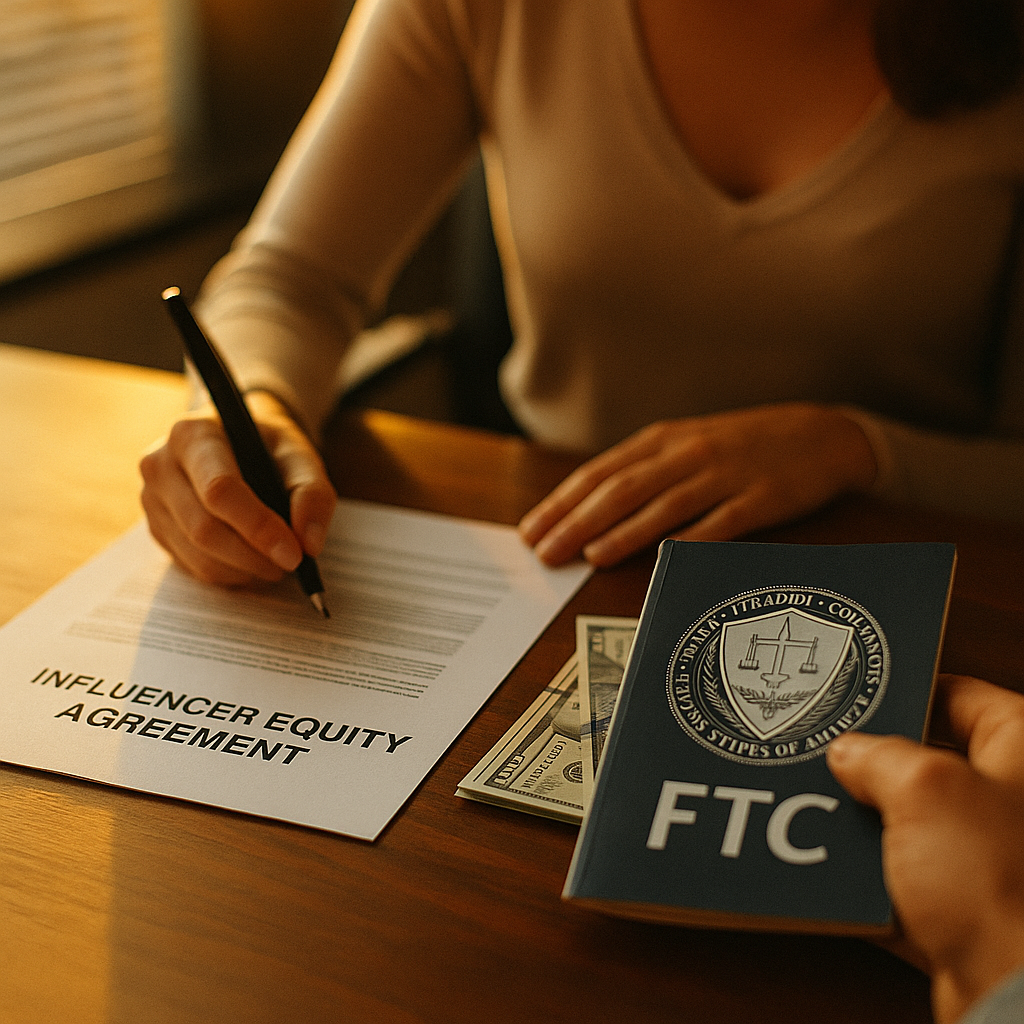
Zero. That’s how many words some brands think they need to disclose when a creator gets paid in equity instead of cash. They’re wrong, and the FTC has been signaling for a while now that it disagrees, too. Material connection disclosure rules have quietly expanded to cover cap tables, not just checks, and most influencer agreements haven’t caught up.
If your legal team still thinks “material connection” means sponsored posts and free product, you’re already behind. The definition now stretches into ownership stakes, revenue splits, affiliate override structures, and advisory board seats. Brands running creator equity programs need to rethink disclosure from the ground up.
What “Material Connection” Actually Means Now
The FTC’s Endorsement Guides define a material connection as any relationship that could affect the weight a consumer gives an endorsement. Originally, that meant cash payments, free products, and employment relationships. Simple enough.
But equity changes the calculus in ways the original guidance never anticipated. When a creator holds shares in the brand they’re promoting, their financial upside is tied directly to company performance, not just to a single post’s engagement. That’s arguably a deeper material connection than a flat sponsorship fee, because the creator’s incentive to paint the brand favorably doesn’t expire when the campaign does.
A creator with equity has a permanent, compounding incentive to protect the brand’s reputation. That’s a stronger material connection than a one-off paid post, yet most disclosure templates weren’t built for it.
The FTC has made clear in enforcement actions and guidance updates that “connection” is not limited to direct payment. It includes any economic benefit that could reasonably influence content. Revenue share, referral commissions tied to lifetime value, and phantom equity all qualify. So does a creator sitting on a startup’s advisory board while reviewing its product on camera.
Why Equity Deals Confuse Everyone (Including Legal Teams)
Cash sponsorships are easy. Pay a fee, tag #ad, move on. Equity and revenue-share deals are messier because the compensation isn’t fixed, isn’t always visible, and often unfolds over months or years.
Consider a creator who takes a small equity stake in a DTC skincare brand instead of an upfront fee. Six months later, they’re posting “unboxing” content and glowing reviews with no disclosure, because in their mind, they’re not being “paid” for that specific post. Legally, that argument doesn’t hold. The equity stake itself is the material connection, and it applies to every piece of content that could influence a purchase decision, not just the original sponsored post.
This is the exact gap covered in equity-paid creators still trigger FTC disclosure rules. Brands assume equity is a one-time legal event handled at signing. The FTC treats it as an ongoing disclosure obligation that follows every post, story, and livestream the creator ever does about the brand.
Revenue-Share Deals Carry the Same Risk, Different Packaging
Revenue-share arrangements are increasingly common in TikTok Shop and Amazon affiliate ecosystems, where creators earn a percentage of sales they drive. That’s a textbook material connection, no different from an affiliate link, except the commission structure is often buried in a private contract instead of disclosed with a simple #ad tag.
The complication comes from lifetime value structures. Some brands now offer creators recurring commission on repeat purchases from customers they originally referred, sometimes for a year or more after the initial post. That means a creator could be earning ongoing income from a single video long after the campaign wrapped, with no updated disclosure reflecting that the financial relationship is still active.
This is where sales-pathway attribution agreements for creator equity deals become essential. If a brand can’t trace which sales trace back to which creator relationship, it can’t accurately disclose or audit the material connection either. Attribution isn’t just a marketing metric anymore. It’s compliance infrastructure.
The Reputational Fallout Nobody Models
Here’s what brand teams underestimate: equity disclosure failures don’t just risk FTC penalties, they risk a much messier PR problem. Consumers who discover a creator had hidden equity in a brand they “reviewed” don’t file complaints with regulators first. They post screenshots. They tag journalists. They start threads.
According to eMarketer, trust in influencer recommendations has been steadily declining as consumers grow savvier about paid partnerships. Undisclosed equity relationships accelerate that erosion faster than a missed hashtag ever could, because the “gotcha” narrative writes itself: brand hid financial stake, creator lied by omission, consumers got played.
Brands running equity programs should be logging this exposure formally, not hoping it never surfaces. The creator equity risk register for reputational fallout is a useful model for tracking which creators hold what stakes, and what the blast radius looks like if disclosure lapses become public.
Where the Enforcement Risk Actually Lives
The FTC doesn’t need to catch every undisclosed equity deal to make a point. It needs a handful of high-visibility enforcement actions to reshape industry behavior, the same way it did with early influencer sponsorship crackdowns a decade ago.
Brands should expect scrutiny to concentrate in a few areas:
- Nano and micro-creator seeding programs where small equity grants or free product get treated as “not real compensation.” The nano-creator seeding gift-tax reporting trap shows how these small-dollar relationships still carry outsized compliance obligations.
- Livestream and TikTok Shop commission structures, where real-time selling makes it easy to skip disclosure in the heat of a live session. See TikTok live-shopping governance for equity and commission for how leading brands are scripting around this.
- Long-tail revenue share where the financial relationship outlives the campaign and disclosure quietly disappears from later content.
- Advisory or board relationships disclosed in SEC filings but never mentioned in consumer-facing content, creating a gap between investor transparency and consumer transparency.
Notice a pattern? None of these require a creator to lie outright. They just require silence, and silence is exactly what the FTC’s expanding definition is designed to close.
Building a Disclosure Framework That Actually Holds
Fixing this isn’t about slapping “#ad” on more posts. It requires structural changes to how equity and revenue-share deals get drafted, tracked, and disclosed over time.
Start with the contract language itself. Termination clauses need to specify what happens to disclosure obligations after a creator exits an equity arrangement, since residual holdings can still create a material connection long after the working relationship ends. The guidance in drafting a creator equity termination clause that holds covers exactly this scenario, and it’s worth building into every new deal template.
Next, treat disclosure as a living requirement, not a one-time signature event. That means:
- Auditing existing creator contracts for equity, revenue-share, or advisory arrangements that aren’t reflected in current disclosure practices.
- Building disclosure language into every piece of content touching the brand, not just the original sponsored post, for as long as the financial relationship exists.
- Tracking attribution and commission flows so the brand always knows which creators still have an active financial stake.
- Running periodic compliance checks using a creator compliance dashboard that catches violations before regulators or reporters do.
This is also where due diligence matters before a deal even gets signed. The due diligence framework for creator equity stake deals lays out the questions brands should be asking upfront: how will disclosure be maintained, who owns that responsibility, and what happens if the creator’s content cadence outlasts the brand’s compliance monitoring.
A Note on Securities Risk, Because It’s Related
There’s a second layer of risk that often gets tangled up with disclosure: whether the revenue-share structure itself resembles an unregistered security. That’s a separate legal question from FTC disclosure, but the two problems tend to travel together, since both stem from creators having an ongoing financial stake dressed up as a simple partnership. When creator revenue-share deals become unregistered securities is worth a read if your legal team hasn’t already flagged this.
Brand and legal teams often silo these conversations, FTC compliance goes to marketing legal, securities questions go to corporate counsel, and neither side talks to the other. That’s a mistake. Equity-based creator deals sit at the intersection of both, and treating them separately guarantees blind spots.
Practical Steps Before Your Next Equity Deal
Marketing and legal teams evaluating a new creator equity or revenue-share arrangement should run through a short gut-check before signing anything:
- Does the disclosure obligation survive as long as the financial relationship exists, or does it expire with the campaign?
- Is there a clear owner internally responsible for monitoring ongoing disclosure compliance?
- Does the contract specify what happens to disclosure requirements if the creator sells their stake or the deal terminates early?
- Are commission structures transparent enough that attribution data can support an audit if the FTC comes asking?
None of this requires abandoning equity or revenue-share models. They remain attractive because they align creator and brand incentives better than flat fees ever could. But alignment cuts both ways: if the creator’s incentives are tied to the brand’s success, consumers deserve to know that, every time, not just the first time.
Frequently Asked Questions
Does equity compensation for creators always require FTC disclosure?
Yes. Any equity stake, no matter how small, creates a material connection under FTC guidance because it gives the creator a financial interest in the brand’s performance. This applies to every piece of content referencing the brand, not just an initial sponsored post.
How is a revenue-share deal different from a standard affiliate link disclosure?
Functionally, they’re similar, both require disclosure because the creator earns money based on consumer purchases. The complication with revenue-share deals is duration: commissions can continue long after a campaign ends, meaning disclosure needs to persist as long as the financial relationship remains active.
What happens if a brand doesn’t disclose a creator’s equity stake?
The brand risks FTC enforcement action, including fines and consent decrees, plus reputational damage if the undisclosed relationship surfaces publicly. Consumer backlash over “hidden” financial ties tends to spread faster than regulatory penalties get issued.
Do micro or nano-creators need to worry about equity disclosure too?
Yes. Deal size doesn’t change the disclosure obligation. Small equity grants or product-based compensation still count as material connections, and brands running large seeding programs should treat these relationships with the same rigor as major creator partnerships.
Who is responsible for ensuring disclosure compliance in equity deals, the brand or the creator?
Both parties share responsibility, but brands typically bear greater enforcement risk since the FTC generally has more resources and incentive to pursue brands than individual creators. Contracts should clearly assign ongoing disclosure monitoring to a specific internal owner.
Next Step
If your current creator contracts treat equity and revenue-share compensation as a one-time legal formality, pull them for review this quarter. Build ongoing disclosure obligations directly into the agreement, assign an internal owner to monitor them, and audit existing partnerships before a regulator or a viral thread does it for you.
Top Influencer Marketing Agencies
The leading agencies shaping influencer marketing in 2026
Agencies ranked by campaign performance, client diversity, platform expertise, proven ROI, industry recognition, and client satisfaction. Assessed through verified case studies, reviews, and industry consultations.
Moburst

-
2

The Shelf
Boutique Beauty & Lifestyle Influencer AgencyA data-driven boutique agency specializing exclusively in beauty, wellness, and lifestyle influencer campaigns on Instagram and TikTok. Best for brands already focused on the beauty/personal care space that need curated, aesthetic-driven content.Clients: Pepsi, The Honest Company, Hims, Elf Cosmetics, Pure LeafVisit The Shelf → -
3

Audiencly
Niche Gaming & Esports Influencer AgencyA specialized agency focused exclusively on gaming and esports creators on YouTube, Twitch, and TikTok. Ideal if your campaign is 100% gaming-focused — from game launches to hardware and esports events.Clients: Epic Games, NordVPN, Ubisoft, Wargaming, Tencent GamesVisit Audiencly → -
4

Viral Nation
Global Influencer Marketing & Talent AgencyA dual talent management and marketing agency with proprietary brand safety tools and a global creator network spanning nano-influencers to celebrities across all major platforms.Clients: Meta, Activision Blizzard, Energizer, Aston Martin, WalmartVisit Viral Nation → -
5

The Influencer Marketing Factory
TikTok, Instagram & YouTube CampaignsA full-service agency with strong TikTok expertise, offering end-to-end campaign management from influencer discovery through performance reporting with a focus on platform-native content.Clients: Google, Snapchat, Universal Music, Bumble, YelpVisit TIMF → -
6

NeoReach
Enterprise Analytics & Influencer CampaignsAn enterprise-focused agency combining managed campaigns with a powerful self-service data platform for influencer search, audience analytics, and attribution modeling.Clients: Amazon, Airbnb, Netflix, Honda, The New York TimesVisit NeoReach → -
7

Ubiquitous
Creator-First Marketing PlatformA tech-driven platform combining self-service tools with managed campaign options, emphasizing speed and scalability for brands managing multiple influencer relationships.Clients: Lyft, Disney, Target, American Eagle, NetflixVisit Ubiquitous → -
8

Obviously
Scalable Enterprise Influencer CampaignsA tech-enabled agency built for high-volume campaigns, coordinating hundreds of creators simultaneously with end-to-end logistics, content rights management, and product seeding.Clients: Google, Ulta Beauty, Converse, AmazonVisit Obviously →