


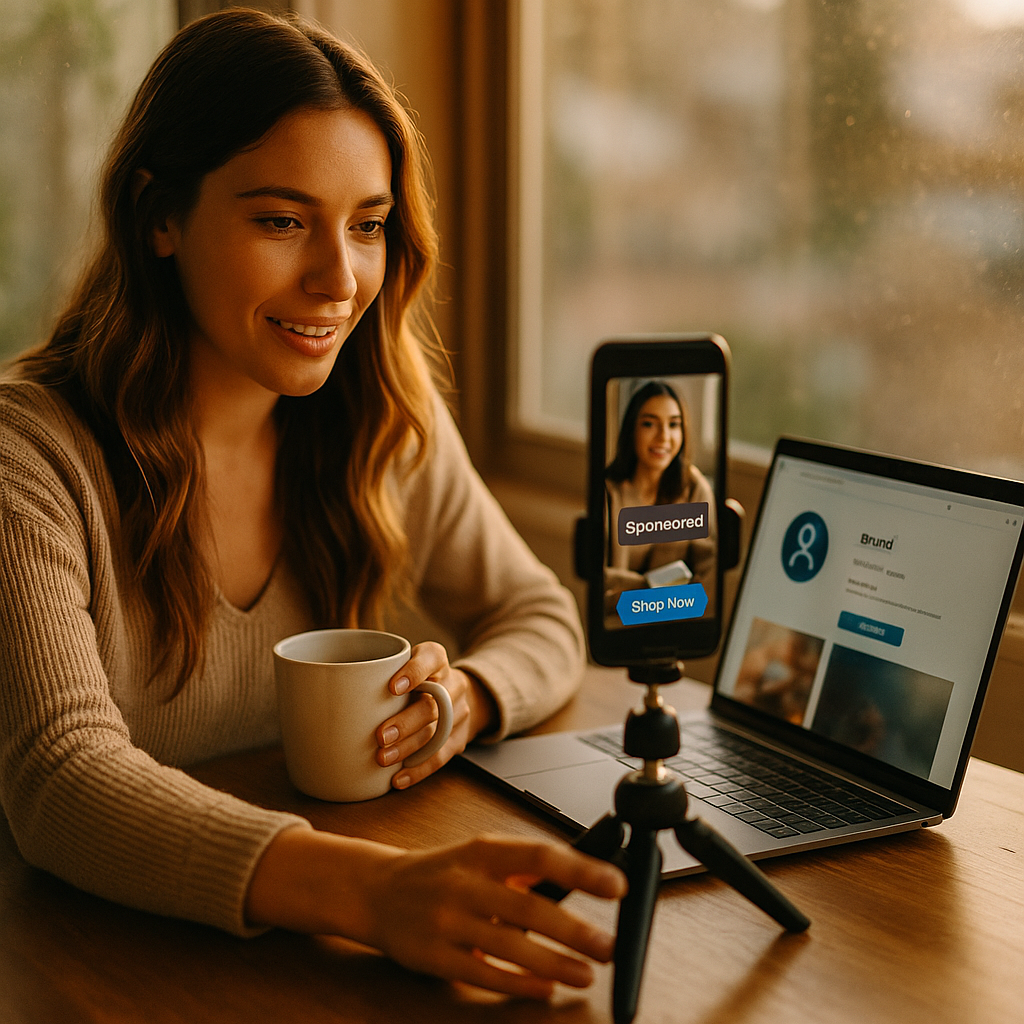
Would you rather pay for a click or pay for trust? That’s the real question buried in the latest performance data comparing creator-hosted ads to brand-handle media. Across multiple verticals, creator-hosted ads are now beating brand-run campaigns on click-through rate and cost per acquisition, sometimes by double digits. For anyone building media plans for next year, this is not a nice-to-have insight. It’s a budget line that needs to move.
The Numbers Brands Don’t Want to See
Internal benchmarking from agency trading desks and platform-level ad data has been telling a consistent story for the last two quarters: ads run through a creator’s own handle, using the platform’s whitelisting or partnership ad tools, routinely outperform the same creative posted from a brand account.
On Meta and TikTok, marketers running parallel tests report creator-hosted placements pulling CTRs 20 to 60 percent higher than brand-handle versions of identical creative. CPA tells a similar story, often landing 15 to 30 percent lower when the ad lives under a creator’s profile instead of the brand’s. Same video. Same offer. Same targeting. Different handle, different math.
When the only variable is the account the ad appears to come from, and CPA still drops by double digits, that’s not a creative problem. That’s a trust problem brands have been underpricing for years.
This isn’t a fluke of one platform or one niche. Beauty, supplements, fintech apps, even B2B SaaS running thought-leadership ads through founder-adjacent creators, are seeing the pattern repeat. The common thread is simple: audiences respond differently to a face and a voice they already follow than to a logo asking for their attention.
Why Does the Handle Matter More Than the Message?
Marketers love to believe creative is king. It isn’t, not entirely. Platform algorithms and human scroll behavior both weight source credibility into how content gets received, and increasingly, how it gets distributed.
- Algorithmic favoritism: Platforms like TikTok and Instagram have quietly optimized for creator-native content signals, meaning ads that look and feel organic get more initial reach before paid amplification even kicks in.
- Parasocial trust: Followers have an existing relationship with the creator. A brand handle is a stranger. A creator handle is, functionally, a friend with a recommendation.
- Disclosure normalization: Audiences have gotten comfortable with #ad and paid partnership labels on creator content. The same label on a brand account can read as a non-sequitur, since brands are expected to sell, not “partner.”
There’s also a format fit issue. Creator-hosted ads tend to retain the pacing, captions, and editing style native to that creator’s channel, while brand-handle versions often get re-cut to match internal brand guidelines, stripping out exactly the cues that made the content feel authentic in the first place. The irony is hard to miss: brands sanitize the ad, then wonder why it underperforms. This mirrors a broader shift documented in coverage of how rigid style guides push creators to reject brand deals, where over-controlled creative briefs quietly erode the performance edge creators bring to the table.
What This Means for 2027 Planning
If creator-hosted ads consistently beat brand handles on efficiency metrics, the planning implication is blunt: media buyers need to shift spend allocation, not just creative production, toward creator-owned ad placements.
That means renegotiating contracts now to secure whitelisting and spark ad rights as standard terms, not premium add-ons. It means building 2027 media plans with a larger share of paid amplification routed through creator accounts rather than brand-owned ones. And it means rethinking how creative teams brief for performance, since content built specifically to run from a creator’s handle needs different pacing than content built for a brand feed.
Budget conversations are already shifting in this direction. Coverage of how performance briefs replace awareness KPIs in creator deals shows brands are increasingly structuring contracts around measurable outcomes rather than reach alone, and creator-hosted ad rights are becoming a line item inside those performance briefs rather than an afterthought.
Securing whitelisting rights after the content is approved is too late. The negotiation needs to happen at the brief stage, with CPA benchmarks attached, or you’ll be bidding against your own creative’s better-performing version.
The Rights and Risk Side Nobody Budgets For
Here’s where the operational headaches start. Running ads through a creator’s handle means the brand doesn’t own the account, the comment section, or the reporting dashboard by default. That creates three recurring friction points for planning teams:
- Usage rights scope. Whitelisting agreements need explicit duration, platform, and spend-cap terms, or renewals become a renegotiation fire drill every quarter. Industry data on content rights setting creator value shows rights language, not follower count, is now the primary driver of negotiated rates.
- Brand safety exposure. A creator’s comment section and content history become reputational surface area for the brand the moment ad dollars start flowing through that handle. This is exactly the terrain covered in brand safety shifts from scripts to contracts and disclosure, where contract language is replacing script approval as the primary risk control.
- Disclosure compliance. Running paid ads from a creator handle doesn’t exempt anyone from disclosure rules. The FTC treats creator-hosted paid partnerships the same as brand-run ads when it comes to endorsement guidelines, and enforcement attention on influencer disclosure has only increased.
None of this is a reason to avoid creator-hosted placements. It’s a reason to build the operational muscle to manage them properly, the same way programmatic buyers built verification layers for open-web media.
Measurement Still Lags Behind the Shift
Here’s the uncomfortable part: a lot of brands running creator-hosted ads can’t actually attribute performance cleanly, because the reporting lives partly inside the creator’s ad account and partly inside the brand’s. This is the same measurement gap flagged in research showing 37 percent of brands cannot prove influencer ROI at all. Add a second account structure into the mix, and attribution gets messier before it gets cleaner.
Platforms are improving this. Meta’s Partnership Ads tool and TikTok’s Spark Ads both centralize reporting more than they used to, giving brands dashboard access without needing creator login credentials. Marketers should check current documentation at Meta Business and TikTok Ads before assuming their measurement stack is ready for scaled creator-hosted spend. Tools like Sprout Social and benchmarking data from eMarketer are also useful for validating whether the CTR and CPA gaps hold true for a specific vertical before committing a full year’s budget to the shift.
Still, the infrastructure lags the opportunity. Planning teams moving budget toward creator-hosted ads for next year need to build attribution requirements into vendor selection now, not retrofit them after Q1 spend has already gone out the door.
Where the Smart Money Is Already Moving
Brands that scaled creator rosters for cost efficiency are now layering in hosted-ad strategy as the next optimization lever. The logic tracks with what’s already been observed in programs that scale 50 plus creator rosters to cut CPM and risk, where diversifying across many creator handles both lowers cost per placement and spreads platform risk if any single account underperforms or gets flagged.
Multi-quarter contract structures are becoming the norm here too, since one-off hosted-ad tests don’t give brands enough data to optimize CPA over time. The shift toward longer commitments, detailed in reporting on how brands ditch one-off deals for multi-quarter creator contracts, gives media buyers the repeated exposure needed to actually trust the CTR and CPA data rather than treating it as a one-campaign anomaly.
Next Step
Pull your last two quarters of paid social data and compare CTR and CPA on identical creative run from brand handles versus creator handles. If the gap mirrors industry benchmarks, start renegotiating whitelisting terms into your next round of creator contracts before 2027 planning locks in, not after.
FAQs
What are creator-hosted ads?
Creator-hosted ads are paid placements run through a creator’s own social media account using tools like Meta Partnership Ads or TikTok Spark Ads, rather than being posted from the brand’s own handle.
Why do creator-hosted ads get lower CPA than brand-handle ads?
Audiences extend more trust to accounts they already follow. That trust reduces the friction between seeing an ad and acting on it, which lowers cost per acquisition even when the creative itself is identical.
Do brands need separate disclosure compliance for creator-hosted ads?
Yes. Creator-hosted paid partnerships still fall under FTC endorsement guidelines, so disclosure requirements apply the same way they would to a brand-run ad.
How should brands negotiate whitelisting rights for next year’s campaigns?
Rights negotiations should happen at the brief stage, with explicit terms on duration, spend caps, and platforms covered, rather than being added as a late addendum after content is approved.
Can brands measure ROI accurately when ads run through creator accounts?
It’s improving. Platform tools now centralize some reporting, but many brands still struggle with attribution gaps between creator-side and brand-side dashboards, so measurement requirements should be built into vendor contracts upfront.
Top Influencer Marketing Agencies
The leading agencies shaping influencer marketing in 2026
Agencies ranked by campaign performance, client diversity, platform expertise, proven ROI, industry recognition, and client satisfaction. Assessed through verified case studies, reviews, and industry consultations.
Moburst

-
2

The Shelf
Boutique Beauty & Lifestyle Influencer AgencyA data-driven boutique agency specializing exclusively in beauty, wellness, and lifestyle influencer campaigns on Instagram and TikTok. Best for brands already focused on the beauty/personal care space that need curated, aesthetic-driven content.Clients: Pepsi, The Honest Company, Hims, Elf Cosmetics, Pure LeafVisit The Shelf → -
3

Audiencly
Niche Gaming & Esports Influencer AgencyA specialized agency focused exclusively on gaming and esports creators on YouTube, Twitch, and TikTok. Ideal if your campaign is 100% gaming-focused — from game launches to hardware and esports events.Clients: Epic Games, NordVPN, Ubisoft, Wargaming, Tencent GamesVisit Audiencly → -
4

Viral Nation
Global Influencer Marketing & Talent AgencyA dual talent management and marketing agency with proprietary brand safety tools and a global creator network spanning nano-influencers to celebrities across all major platforms.Clients: Meta, Activision Blizzard, Energizer, Aston Martin, WalmartVisit Viral Nation → -
5

The Influencer Marketing Factory
TikTok, Instagram & YouTube CampaignsA full-service agency with strong TikTok expertise, offering end-to-end campaign management from influencer discovery through performance reporting with a focus on platform-native content.Clients: Google, Snapchat, Universal Music, Bumble, YelpVisit TIMF → -
6

NeoReach
Enterprise Analytics & Influencer CampaignsAn enterprise-focused agency combining managed campaigns with a powerful self-service data platform for influencer search, audience analytics, and attribution modeling.Clients: Amazon, Airbnb, Netflix, Honda, The New York TimesVisit NeoReach → -
7

Ubiquitous
Creator-First Marketing PlatformA tech-driven platform combining self-service tools with managed campaign options, emphasizing speed and scalability for brands managing multiple influencer relationships.Clients: Lyft, Disney, Target, American Eagle, NetflixVisit Ubiquitous → -
8

Obviously
Scalable Enterprise Influencer CampaignsA tech-enabled agency built for high-volume campaigns, coordinating hundreds of creators simultaneously with end-to-end logistics, content rights management, and product seeding.Clients: Google, Ulta Beauty, Converse, AmazonVisit Obviously →