


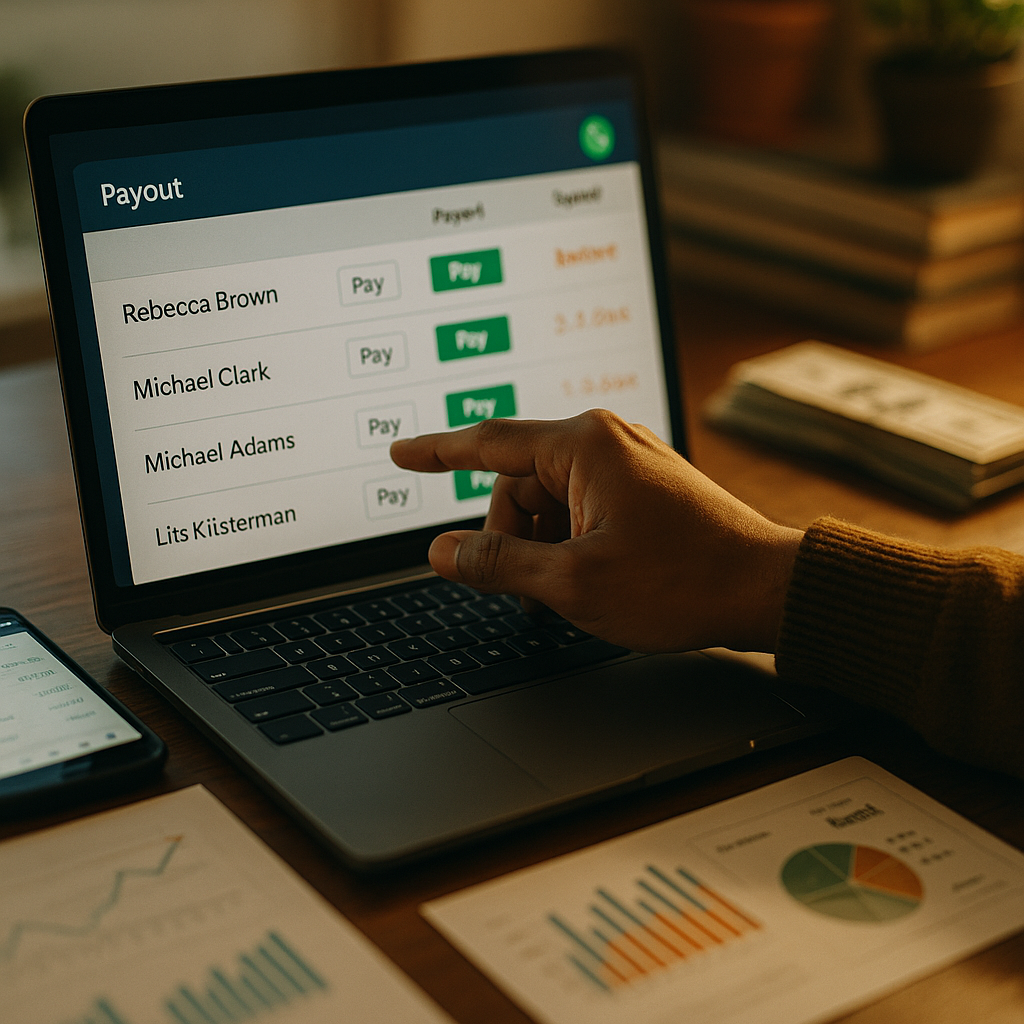
Sixty days. That’s how long some brands still take to pay a creator after a deliverable goes live, according to finance teams we’ve spoken with running programs of 500+ creators. In a category where creators compare notes in private Discord servers and Slack groups, a slow creator payment platform isn’t just an accounting nuisance. It’s a churn risk that shows up in your next campaign’s application rate.
Payout bottlenecks used to be a manageable annoyance when programs ran twenty or thirty creators through a single agency contact. At scale, they become a structural liability: tax form chaos, currency conversion losses, compliance exposure, and creators who simply stop responding to your next brief. This piece compares how the leading platforms handle payout velocity, and where the real risk sits when you’re managing hundreds or thousands of payees across borders.
Why Payout Speed Became a Retention Metric
Marketers used to measure creator programs on engagement rate and CPM. Now finance and ops leaders are asking a blunter question: how fast do we get money into creator hands, and how many support tickets does that generate per cycle? A delayed payout doesn’t just annoy one creator. It becomes a public data point. Creator forums and TikTok itself have turned payment reliability into a de facto brand reputation score.
This shift matters because creator supply has diversified. You’re no longer just paying five agency-repped talent a month; you’re paying nano and micro creators pulled from AI creator discovery tools, UGC contributors sourced through testing platforms, and affiliate-style earners triggered by live commerce sales. Each cohort has different tax documentation needs, different minimum payout thresholds, and different patience levels.
A 2024 survey cited by eMarketer found creator trust in a brand drops measurably after a single late or disputed payment, regardless of campaign performance. Payout reliability is now a brand equity line item, not a back-office footnote.
The Bottleneck Points Nobody Budgets For
Where do payouts actually stall? Rarely at the point of approval. Almost always in the plumbing behind it.
- Tax documentation collection. W-9s, W-8BENs, and international equivalents pile up unsigned, and platforms without automated chasing sequences leave finance manually emailing creators.
- Currency conversion and banking rails. Paying a creator in Manila or Lagos through a US-centric ACH system adds days and fees that both sides resent.
- Approval chains that weren’t designed for volume. A single marketing manager approving 400 line items in a spreadsheet is a bottleneck by design, not by accident.
- Dispute resolution. When a creator claims non-payment and support can’t find the transaction quickly, trust erodes fast, and so does your renewal rate on that creator relationship.
None of these are exotic problems. They’re the same operational friction that ecommerce marketplaces solved a decade ago for sellers. The creator economy is just catching up, and the platforms that treat payouts as a core product (not a Stripe integration bolted on) are the ones brands should be evaluating first.
Comparing the Platforms: What Actually Differs
Most creator payment tools fall into three categories: standalone payout infrastructure, payout modules bundled inside influencer relationship management (IRM) suites, and payroll-adjacent contractor platforms repurposed for creators.
Standalone Payout Infrastructure
Tools like Tipalti and Trolley (now Papaya Global’s payout arm in some markets) were built for mass payouts across affiliates and marketplaces before creators were a distinct category. Their strength is banking rail coverage: dozens of currencies, local payment methods (think M-Pesa or Alipay), and automated tax form collection with built-in W-9/W-8BEN workflows. The tradeoff is that they don’t natively track deliverables, so you still need a separate system recording whether the creator actually posted before you release funds. That’s a real gap if your approval logic depends on content verification.
IRM Suites With Built-In Payments
Aspire, GRIN, and CreatorIQ have all built payout modules directly into their creator management dashboards, so payment triggers off the same record that tracks the deliverable, the contract, and the usage rights. This is operationally cleaner because finance and campaign teams work off one source of truth instead of reconciling two systems. If you’re already comparing these platforms for attribution accuracy, it’s worth reading how Aspire’s attribution model holds up before assuming the payout layer is equally mature. Rights and payout tracking often need separate scrutiny too, which is where a side-by-side like Aspire vs Traackr on rights risk becomes useful homework before you sign an annual contract.
Payroll-Adjacent Contractor Tools
Platforms like Deel and Remote were built for global contractor payroll, not creators specifically, but agencies with heavy international creator rosters have adopted them because compliance is their core product. They handle worker classification risk, in-country tax withholding, and contract localization better than any creator-native tool currently on the market. The downside: no native concept of “campaign,” “deliverable,” or “usage rights window,” so you’re bolting creator context onto a system that wasn’t designed for it.
None of these three categories is universally right. A DTC brand running 50 US-based creators a month has different needs than an agency managing 2,000 creators across 30 countries for a global CPG client. The mistake is picking a platform because a competitor uses it, rather than mapping the tool to your actual payee geography and volume.
What Slows Down Approval, Not Just Payment
Here’s something procurement teams underweight: the payout platform is only as fast as the approval workflow feeding it. If your team is still confirming deliverables by scrolling a creator’s Instagram grid manually, no amount of payment rail sophistication will fix your speed problem. This is where integration with discovery and verification tools matters. If your CRM and automation stack can’t confirm a post went live and met usage terms automatically, someone is manually checking screenshots before releasing funds, and that person is your bottleneck.
Brands running UGC-heavy programs face a related issue: verifying that a submitted asset is even eligible for payment. Rights and licensing disputes downstream cost far more than a slow approval upstream. It’s worth reviewing how UGC testing platforms handle rights verification before assuming your payout trigger logic is airtight.
Every day a payment sits in an unapproved queue is a day the creator has zero visibility into whether the brand intends to pay at all. Ambiguity, not delay itself, is what damages trust.
Compliance Risk Is the Quiet Budget Line
Worker misclassification is the risk nobody wants to discuss until an audit happens. In the US, the line between “independent contractor” and “employee” gets blurrier the more a brand dictates a creator’s schedule, exclusivity, and content specifications. The FTC’s disclosure guidance already puts brands on the hook for creator compliance in sponsored content; payment classification adds a second layer of exposure that finance and legal teams should be reviewing jointly, not in silos.
International programs add sales tax and VAT complexity on top. A platform that can’t generate localized tax documentation per country isn’t just slower, it’s a liability waiting for a regulator to notice. Agencies operating in the UK should also keep an eye on ICO guidance on data handling tied to payment records, since payout systems inevitably store personal banking data that falls under stricter retention rules than campaign performance data.
This is also where identity verification intersects with payout risk. If you can’t confirm the person submitting banking details is actually the creator under contract, you’ve opened a fraud vector. Programs scaling past a few hundred payees should be pairing payout infrastructure with the same rigor used for identity resolution and consent tracking elsewhere in the stack.
Choosing the Right Fit: A Quick Framework
Before signing anything, run your program through three questions:
- What’s your payee geography? If more than 20% of creators are outside your home market, prioritize platforms with strong local banking rail coverage over ones optimized purely for US ACH.
- Is your deliverable verification automated or manual? If it’s manual, fix that first. A faster payout rail bolted onto a slow approval process just moves the bottleneck one step downstream.
- Who owns compliance risk internally? If legal and finance aren’t reviewing your payout vendor’s tax documentation workflows, you’re assuming risk nobody signed off on.
Programs also benefit from stress-testing payout platforms the same way teams vet attribution tools before renewal. If you haven’t done that exercise, the questions raised in procurement scrutiny of commerce OS attribution claims apply almost identically to payout vendor claims: ask for proof, not a pitch deck.
The Real Fix Is Fewer Manual Touchpoints
Every manual step in a payout chain is a delay waiting to happen and a support ticket waiting to be filed. The brands seeing the fastest payout cycles, often under 72 hours from approval to funds landing, have automated the boring parts: tax form collection, deliverable confirmation, and batch approval thresholds for smaller payments. They save human review for exceptions and disputes, not routine transactions. That’s not a technology story so much as an operating discipline story, and it’s one finance teams should be driving alongside marketing, not reacting to after the complaints start.
Frequently Asked Questions
FAQs
What is a creator payment platform?
A creator payment platform is software that automates paying influencers and content creators for sponsored work, handling tasks like tax documentation, currency conversion, deliverable verification, and batch payouts across large numbers of payees.
How fast should creator payouts happen after a deliverable is approved?
Leading programs target 3 to 5 business days from approval to funds landing. Anything beyond two weeks typically signals a manual bottleneck in tax documentation, approval workflow, or banking rail limitations.
Do IRM platforms like Aspire or CreatorIQ handle payments as well as discovery?
Most major IRM suites now include built-in payout modules tied to campaign and deliverable records, though the depth of international banking rail support and tax automation varies significantly between vendors, so it’s worth testing with a real payee sample before committing.
What compliance risks come with creator payouts?
Worker misclassification, incomplete tax documentation across jurisdictions, and improper handling of banking data under privacy regulations are the three most common risks brands underestimate when scaling international creator programs.
Should brands use a general payroll tool like Deel for creators?
Payroll-adjacent tools like Deel offer stronger compliance and international tax handling than most creator-native platforms, but they lack native tracking of deliverables and usage rights, so brands typically need a separate system to confirm work before triggering payment.
What causes most creator payout delays at scale?
Manual deliverable verification and incomplete tax documentation cause the majority of delays, not the payment rail itself. Fixing the approval workflow upstream usually solves more problems than switching payout vendors.
Next step: Audit your last 90 days of payout timestamps against your approval timestamps before evaluating new vendors. If the gap between approval and payment is small but the gap between deliverable submission and approval is large, you don’t have a payment platform problem, you have a workflow problem, and no vendor swap will fix that.
Top Influencer Marketing Agencies
The leading agencies shaping influencer marketing in 2026
Agencies ranked by campaign performance, client diversity, platform expertise, proven ROI, industry recognition, and client satisfaction. Assessed through verified case studies, reviews, and industry consultations.
Moburst

-
2

The Shelf
Boutique Beauty & Lifestyle Influencer AgencyA data-driven boutique agency specializing exclusively in beauty, wellness, and lifestyle influencer campaigns on Instagram and TikTok. Best for brands already focused on the beauty/personal care space that need curated, aesthetic-driven content.Clients: Pepsi, The Honest Company, Hims, Elf Cosmetics, Pure LeafVisit The Shelf → -
3

Audiencly
Niche Gaming & Esports Influencer AgencyA specialized agency focused exclusively on gaming and esports creators on YouTube, Twitch, and TikTok. Ideal if your campaign is 100% gaming-focused — from game launches to hardware and esports events.Clients: Epic Games, NordVPN, Ubisoft, Wargaming, Tencent GamesVisit Audiencly → -
4

Viral Nation
Global Influencer Marketing & Talent AgencyA dual talent management and marketing agency with proprietary brand safety tools and a global creator network spanning nano-influencers to celebrities across all major platforms.Clients: Meta, Activision Blizzard, Energizer, Aston Martin, WalmartVisit Viral Nation → -
5

The Influencer Marketing Factory
TikTok, Instagram & YouTube CampaignsA full-service agency with strong TikTok expertise, offering end-to-end campaign management from influencer discovery through performance reporting with a focus on platform-native content.Clients: Google, Snapchat, Universal Music, Bumble, YelpVisit TIMF → -
6

NeoReach
Enterprise Analytics & Influencer CampaignsAn enterprise-focused agency combining managed campaigns with a powerful self-service data platform for influencer search, audience analytics, and attribution modeling.Clients: Amazon, Airbnb, Netflix, Honda, The New York TimesVisit NeoReach → -
7

Ubiquitous
Creator-First Marketing PlatformA tech-driven platform combining self-service tools with managed campaign options, emphasizing speed and scalability for brands managing multiple influencer relationships.Clients: Lyft, Disney, Target, American Eagle, NetflixVisit Ubiquitous → -
8

Obviously
Scalable Enterprise Influencer CampaignsA tech-enabled agency built for high-volume campaigns, coordinating hundreds of creators simultaneously with end-to-end logistics, content rights management, and product seeding.Clients: Google, Ulta Beauty, Converse, AmazonVisit Obviously →