


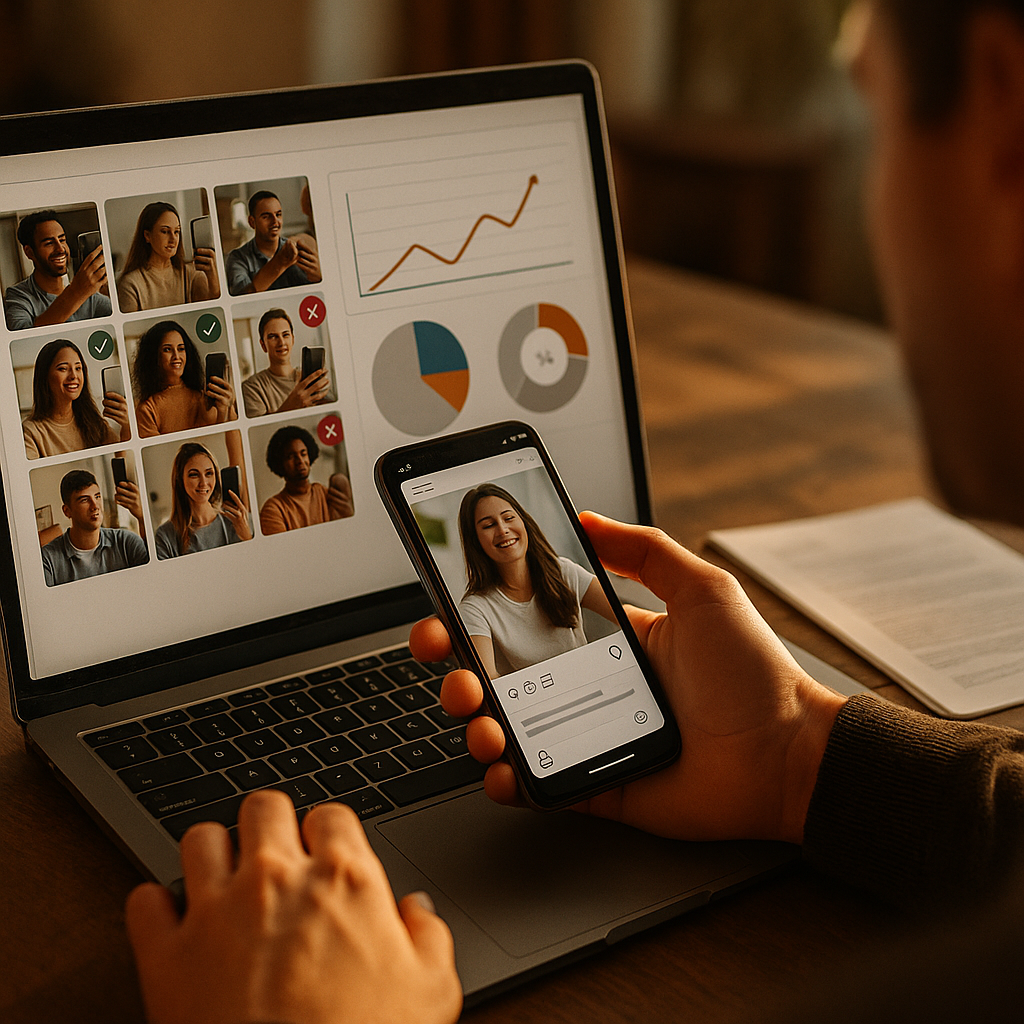
Seventy-two percent of paid social spend now dies inside the first three seconds, according to Meta’s own creative benchmarking data shared with advertisers. That means the hook, not the product shot, not the CTA, decides whether a brand’s media budget survives contact with the feed. Canvas-style UGC testing platforms exist specifically to solve that problem: they let brand teams generate, remix, and stress-test dozens of hook variations before a single dollar hits an ad account. But which vendor actually delivers on that promise, and which ones just repackage a stock-footage library with a fancier UI?
What Is a Canvas-Style UGC Testing Platform, Exactly?
The term “canvas” refers to the drag-and-drop workspace where marketers assemble hook variants: swapping opening lines, b-roll, on-screen text, and pacing without re-shooting anything. Think of it as a spreadsheet for creative logic, except the cells are video clips instead of numbers. Brands upload a library of raw UGC-style footage (either creator-shot or AI-generated), then the canvas lets a strategist mix and match elements to produce a testing matrix, often 10 to 30 variants, in a single afternoon.
This is distinct from traditional creator briefing, where you commission ten different creators and hope one of them nails the hook. Canvas tools flip the workflow: brand teams control the variable testing internally, then only scale the winning combination out to creators or paid media once data confirms it works.
The real value of a canvas-style workflow isn’t the AI polish. It’s the compression of a six-week creative testing cycle into three or four days, which changes how fast a brand can react to a losing ad set.
The Core Vendor Categories
Most tools in this space fall into three buckets, and confusing them leads to procurement headaches.
- Full-stack creative testing suites: These bundle canvas editing, AI voice/script variation, and built-in performance analytics tied to ad account data. Examples include Motion App and Foreplay, both of which market directly to performance marketing teams rather than agencies.
- UGC-specific hook libraries with remix layers: Platforms like Billo and JoinBrands started as creator marketplaces but added canvas-style editing so brands can chop creator footage into new hook sequences without going back to the original creator for a re-cut.
- AI-generated UGC simulators: Tools such as Arcads and Captions.ai generate synthetic “creator” footage from scripts, letting brands test dozens of hook phrasings using AI avatars before ever hiring a real human. This is the fastest-growing category, and also the most legally murky.
Each category solves a different bottleneck. If your problem is “we have footage but no fast way to test hooks,” you want a remix layer. If your problem is “we don’t have footage at all and need volume,” you’re looking at AI simulators. If your problem is “we’re guessing which hook works,” you need the analytics-native suite.
Vendor Comparison: Where Brands Actually Get ROI
Here’s the uncomfortable truth: most vendor comparison content in this niche is written by affiliates, not practitioners. So let’s ground this in operational criteria a brand marketer would actually use during procurement.
Speed to First Test
Motion App and Foreplay both let a mid-level marketer build a 15-variant hook matrix in under two hours, assuming footage is pre-uploaded. Billo’s remix tool takes longer because it routes through a request queue tied to the original creator’s rights, adding a day or two of latency. Arcads is the fastest by a wide margin: script-to-video generation can produce ten synthetic hook variants in about fifteen minutes, though the output quality still reads as noticeably synthetic to a trained eye.
Analytics Depth
This is where the category splits sharply. Foreplay integrates directly with Meta Ads Manager, so hook performance data (hook rate, hold rate, thumb-stop ratio) flows back into the canvas automatically. Motion App offers similar integration but leans more heavily on TikTok-side metrics. Billo and JoinBrands, by contrast, treat performance tracking as an add-on or a manual export, which means brand teams often end up stitching data together in a separate attribution platform anyway. If your team already runs a mature measurement stack, this gap matters less. If you don’t, you’re buying incomplete visibility.
Rights and Compliance Exposure
This is the criterion most procurement teams underweight, and it’s the one that eventually costs the most money. Canvas tools that remix creator-shot footage require explicit usage rights language covering derivative edits, not just the original post. A creator who agreed to a single organic post did not necessarily agree to have their face and voice chopped into 20 different paid hook variants. Brands using Billo or JoinBrands should confirm the rights contract explicitly covers “derivative editing for paid amplification,” a clause that’s easy to miss in a standard UGC agreement. This is the same gap explored in UGC rights and program risk comparisons, and it applies just as directly to canvas remix tools as it does to full-length UGC licensing.
A hook that tests well but was built from footage without proper derivative rights isn’t a win. It’s a liability sitting in your ad account waiting for a creator’s lawyer to notice.
AI-Generated UGC: The Regulatory Wildcard
Synthetic UGC tools like Arcads sidestep the creator-rights problem entirely since there’s no real person to license. But they introduce a different risk: disclosure. The FTC’s endorsement guidelines are increasingly scrutinizing content that mimics authentic testimonial style without disclosing that it’s AI-synthesized or paid. A brand running AI-avatar hook tests at scale, then pushing winners into paid media without a synthetic-content disclosure, is walking into exactly the kind of enforcement action the FTC has signaled it’s watching for. This isn’t hypothetical anxiety, it’s a documented enforcement priority, and it should factor into vendor selection the same way rights language does.
How Should Brands Actually Structure a Testing Workflow?
Regardless of vendor, a canvas-style testing program only works if the operational process around it is disciplined. A few patterns separate teams that get real lift from teams that generate noise.
- Isolate one variable per test batch. If you change the opening line, the pacing, and the on-screen text simultaneously, you’ll never know which change drove the lift. Canvas tools make it dangerously easy to change everything at once because it’s all drag-and-drop.
- Set a statistical floor before scaling spend. A hook that “feels” better after 200 impressions is not a winner. Most performance teams wait for at least 3,000 to 5,000 impressions per variant before declaring a result, mirroring the sample-size discipline used in broader attribution tooling procurement.
- Feed winners back to real creators, not just paid media. The best canvas workflows use internal testing to identify winning hook structures, then brief actual creators to reproduce that structure organically. This keeps content feeling native instead of ad-like, which matters as platforms increasingly penalize obviously synthetic ad creative.
- Audit editing tool output for platform-native feel. Whether you’re editing in a canvas suite or a standard NLE, the finished cut needs to read as native content, not polished brand video. The same tension shows up in editing rules for creator deals, where over-produced edits quietly kill organic-feeling performance.
Cost Reality: What This Actually Runs
Pricing across this category varies more than most vendor sites let on. Foreplay and Motion App both sit in the $150 to $400 monthly range for team plans, scaling with seats and ad account connections. Billo and JoinBrands charge per-creator-video, typically $150 to $300 per clip, with remix editing sometimes bundled and sometimes billed as an extra service fee. Arcads and similar AI-avatar tools price per generated video or per credit pack, often working out cheaper per unit but requiring higher volume to find a winning hook, since synthetic output has a lower baseline conversion rate than real creator footage in most category benchmarks.
The math that actually matters isn’t the subscription cost. It’s cost-per-validated-hook: total spend on the testing cycle divided by the number of hooks that cross your performance threshold. Teams that skip this calculation tend to over-index on the tool with the flashiest canvas UI rather than the one that reliably produces winners.
Where This Fits in the Broader Creative Stack
Canvas-style hook testing doesn’t replace a full creator program, and it isn’t meant to. It’s a pre-filter. The goal is to walk into creator briefs, or into a full production cycle, already knowing which hook structures earn attention in the first three seconds. Brands running larger influencer programs are increasingly pairing this workflow with AI creator discovery tools to shortlist talent, then using canvas testing to validate the messaging those creators will be briefed to deliver. That sequencing, test internally first, brief externally second, is becoming the default operating model for performance-driven influencer teams heading into next year’s budget cycles, according to trend commentary from eMarketer and creative benchmarking from Sprout Social.
FAQs
Frequently Asked Questions
What makes a canvas-style UGC testing platform different from a regular video editor?
A regular editor produces one finished video at a time. A canvas-style platform is built specifically to generate and organize multiple hook variants from a shared footage library, with performance tracking layered on top so brand teams can compare results side by side.
Do brands need creator permission to remix UGC into new hook variants?
Yes, in almost every case. Standard UGC agreements typically cover the original posted content, not derivative edits created for paid amplification. Brands should confirm their creator contracts explicitly grant rights for remixing and re-cutting before using canvas tools on that footage.
Is AI-generated synthetic UGC a compliance risk?
It can be, particularly around disclosure. If synthetic UGC is styled to look like an authentic testimonial without disclosing that it’s AI-generated, it risks running afoul of FTC endorsement guidance. Brands should build disclosure language into their AI-UGC workflow before scaling spend behind it.
How many hook variants should a brand test before scaling spend?
Most performance teams test between 10 and 20 variants per product or campaign, isolating one creative variable at a time, and wait for a minimum sample size (often 3,000 to 5,000 impressions per variant) before declaring a winner.
Which canvas platform is best for a small team with limited budget?
Teams with tight budgets and existing creator footage typically get the fastest ROI from remix-focused tools like Billo, since they avoid the higher per-seat cost of full-stack suites. Teams without any footage at all may find AI-avatar tools more cost-efficient for early-stage testing, provided disclosure practices are in place.
Pick the vendor that matches your actual bottleneck, footage volume, rights clarity, or analytics depth, not the one with the smoothest demo. Run a two-week pilot on real spend before signing an annual contract, and confirm your creator rights language before your first remix goes live.
Top Influencer Marketing Agencies
The leading agencies shaping influencer marketing in 2026
Agencies ranked by campaign performance, client diversity, platform expertise, proven ROI, industry recognition, and client satisfaction. Assessed through verified case studies, reviews, and industry consultations.
Moburst

-
2

The Shelf
Boutique Beauty & Lifestyle Influencer AgencyA data-driven boutique agency specializing exclusively in beauty, wellness, and lifestyle influencer campaigns on Instagram and TikTok. Best for brands already focused on the beauty/personal care space that need curated, aesthetic-driven content.Clients: Pepsi, The Honest Company, Hims, Elf Cosmetics, Pure LeafVisit The Shelf → -
3

Audiencly
Niche Gaming & Esports Influencer AgencyA specialized agency focused exclusively on gaming and esports creators on YouTube, Twitch, and TikTok. Ideal if your campaign is 100% gaming-focused — from game launches to hardware and esports events.Clients: Epic Games, NordVPN, Ubisoft, Wargaming, Tencent GamesVisit Audiencly → -
4

Viral Nation
Global Influencer Marketing & Talent AgencyA dual talent management and marketing agency with proprietary brand safety tools and a global creator network spanning nano-influencers to celebrities across all major platforms.Clients: Meta, Activision Blizzard, Energizer, Aston Martin, WalmartVisit Viral Nation → -
5

The Influencer Marketing Factory
TikTok, Instagram & YouTube CampaignsA full-service agency with strong TikTok expertise, offering end-to-end campaign management from influencer discovery through performance reporting with a focus on platform-native content.Clients: Google, Snapchat, Universal Music, Bumble, YelpVisit TIMF → -
6

NeoReach
Enterprise Analytics & Influencer CampaignsAn enterprise-focused agency combining managed campaigns with a powerful self-service data platform for influencer search, audience analytics, and attribution modeling.Clients: Amazon, Airbnb, Netflix, Honda, The New York TimesVisit NeoReach → -
7

Ubiquitous
Creator-First Marketing PlatformA tech-driven platform combining self-service tools with managed campaign options, emphasizing speed and scalability for brands managing multiple influencer relationships.Clients: Lyft, Disney, Target, American Eagle, NetflixVisit Ubiquitous → -
8

Obviously
Scalable Enterprise Influencer CampaignsA tech-enabled agency built for high-volume campaigns, coordinating hundreds of creators simultaneously with end-to-end logistics, content rights management, and product seeding.Clients: Google, Ulta Beauty, Converse, AmazonVisit Obviously →