


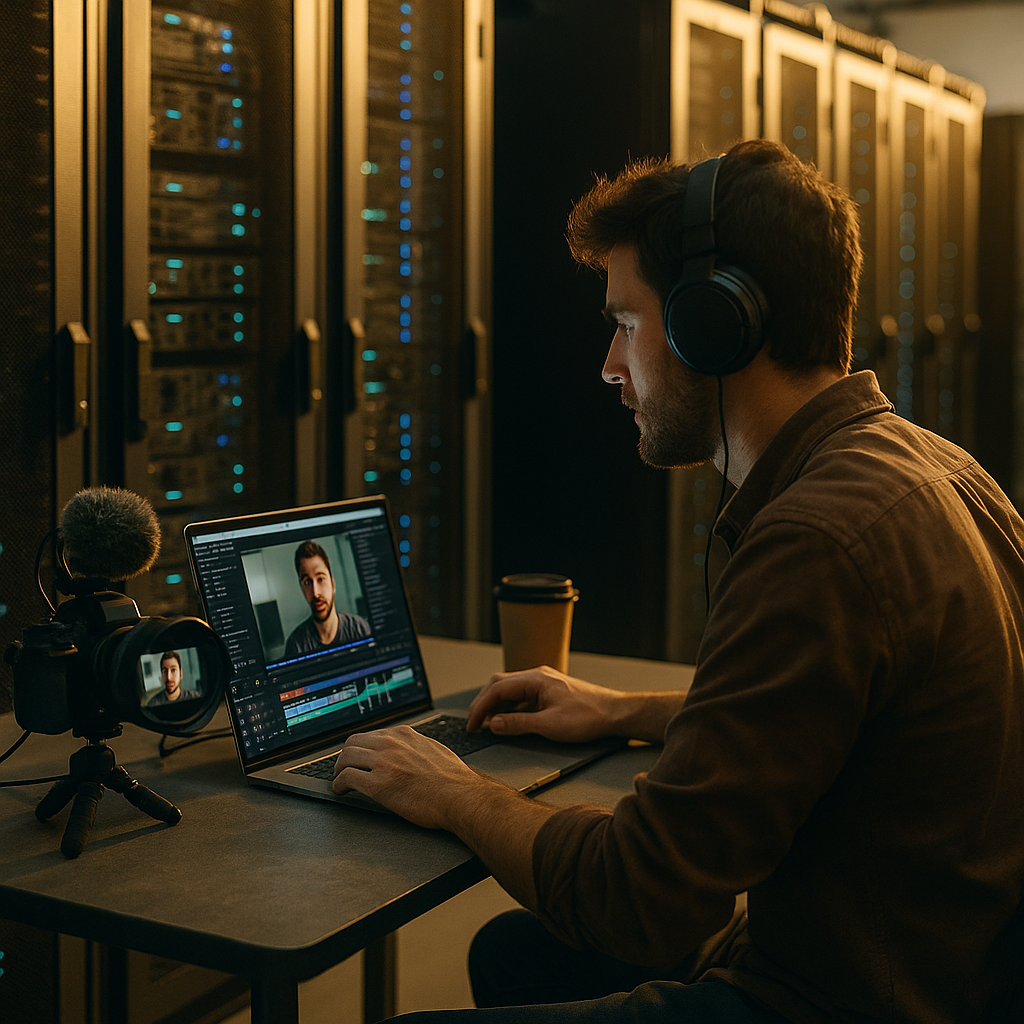
The explosive growth of digital content creation relies heavily on data centers. This dependence fuels the creator economy yet raises concerns about the environmental impact of data centers powering the creator economy. As demand escalates, understanding the real costs and opportunities for sustainability has never been more critical. Is the content boom unintentionally damaging the planet?
Understanding the Link Between Data Centers and the Creator Economy
The creator economy spans millions of individuals and businesses generating videos, art, music, and more. Hosting, processing, and delivering this content in real time—and on a global scale—demands immense computing power. Data centers are the backbone, storing content, running algorithms, and supporting social platforms like YouTube, Instagram, and TikTok 24/7. The secondary keyword “data center sustainability” is more urgent than ever, as each TikTok video or podcaster’s upload is processed somewhere in these massive complexes.
As creators turn hobbies into professions, platforms scale up with new features (like AI-driven editing or livestreaming), further increasing energy and resource consumption. In 2025, the creator economy continues accelerating, with creators relying on robust, seamless digital infrastructure—which rarely comes without a cost to the environment.
Energy Consumption Trends in Data Centers
Global data center energy consumption reached an estimated 4% of worldwide electricity use in 2025. The surge in high-definition content uploads, editing, and streaming services—driven by creators—boosts demand for always-on servers. Even with improved efficiencies, data centers collectively use more energy than some small nations.
Key contributors to energy consumption include:
- Server operations (processing and storage)
- Cooling systems, often accounting for over 35% of energy use
- Data transfer across networks, especially for global audiences
- Backup systems and security infrastructure ensuring reliability
Streaming a single hour of 4K video can require up to 8 gigabytes of data transfer, multiplying across billions of daily views. This data traffic flows through server farms, demanding uninterrupted power and climate control.
Data Center Sustainability Initiatives in 2025
Facing public scrutiny and regulatory pressure, major platforms and cloud service providers have accelerated sustainability commitments. The push for eco-friendly data centers in the creator economy is reshaping industry norms:
- Leading companies now purchase or generate significant portions of their power from renewables (solar, wind, hydroelectric).
- Investments in liquid cooling, AI-based energy management, and modular data infrastructure slash consumption and emissions.
- Recycling and circular economy principles are gaining ground, addressing the growing tide of electronic waste from server upgrades.
Cloud providers such as Google, Microsoft, and Amazon Web Services have announced pathways to “net zero” operations, emphasizing not just carbon neutrality but also water and material use. However, critics argue that offsets and renewable purchase agreements do not always eliminate total footprints, particularly in regions with less robust green grids.
The Role of Content Creators in Driving Change
As the faces of the digital economy, creators possess significant influence. An increasing number of creators—especially those focused on environmental and social impact—are now aligning their brands with sustainable partners and raising awareness about eco-friendly data centers in the creator economy.
Many creators are also:
- Seeking hosting partners with proven environmental records
- Encouraging fan communities to value sustainability (e.g., by promoting lower-resolution streaming when high definition is unnecessary)
- Adopting digital minimalist practices, reducing unnecessary uploads, and optimizing file sizes
- Collaborating with advocacy groups to lobby for greener internet infrastructure
This groundswell fosters accountability and rewards platforms that commit to deeper environmental stewardship. Meanwhile, creator-led education plays a pivotal role in informing audiences—particularly younger generations—about the hidden footprint of their online experiences.
Challenges and Limitations in Achieving Green Data Centers
Despite advances, significant challenges remain for data center sustainability in the creator economy. Some critical hurdles include:
- Resource constraints: Building and retrofitting data centers with green tech demands rare earth elements and significant capital.
- Geopolitical factors: Data centers are not always near green energy sources; in some regions, fossil-fuel-based electricity is still dominant.
- Cooling requirements: Advanced computational needs, such as AI content generation, lead to heat output that traditional cooling methods struggle to address efficiently.
- Scale: The constant growth in user-generated content often outpaces efficiency improvements—so absolute energy use rises even if per-task efficiency improves.
The net effect: While progress is clear, the environmental cost rises with each new wave of creators unless fundamental shifts—like quantum computing, edge processing, or continent-wide renewables—take hold at scale.
Innovating Toward a Greener Creator Economy
Achieving truly sustainable data center operations will require synergy between technology, policy, and public demand. Promising solutions being deployed or piloted in 2025 include:
- Hyper-efficient chips that reduce computational waste across cloud and edge devices
- AI-driven workload management that schedules energy-intensive tasks during periods of surplus clean energy
- Carbon-aware app design allowing users (and creators) to see and limit the environmental impact of their activities
- Localized content caching that reduces long-distance data transfer for popular uploads
- Policy incentives favoring green facilities, rewarding innovation, and setting enforceable standards for energy and water use per upload/stream
Ultimately, the rise of sustainable data centers will hinge on both industry innovation and creator—and consumer—demand for a cleaner digital future. The creator economy has the unique potential to turn its significant footprint into a case study for rapid, scalable environmental responsibility.
In summary, the environmental impact of data centers powering the creator economy cannot be ignored. Sustainable innovations, creator advocacy, and systemic change are essential to balance digital growth with planetary health. Making mindful choices—at every level—will define the future of the creator-driven digital world.
Frequently Asked Questions: Environmental Impact and the Creator Economy
-
How much energy do data centers use to support the creator economy in 2025?
In 2025, data centers are estimated to account for roughly 4% of global electricity use, with a substantial part driven by digital content creation, storage, and delivery.
-
Are data centers becoming more environmentally friendly?
Yes, major operators have adopted renewable energy, advanced cooling, and AI-driven efficiency measures. However, challenges persist in regions with limited access to green energy and as content volumes balloon.
-
Can creators influence data center sustainability?
Absolutely. Creators can choose eco-conscious platforms, optimize content, and raise awareness among audiences and industry partners, driving demand for greener infrastructure across the sector.
-
What technologies enable greener data centers for creators?
Key innovations include energy-efficient chips, AI-based energy management, renewable energy integration, advanced cooling, and carbon tracking of content activities.
-
Is lowering video resolution or upload frequency meaningful for sustainability?
Yes. Reducing video resolution, compressing files, and minimizing unnecessary uploads decrease the cumulative energy and resource load, making content creation more eco-friendly.
Top Influencer Marketing Agencies
The leading agencies shaping influencer marketing in 2026
Agencies ranked by campaign performance, client diversity, platform expertise, proven ROI, industry recognition, and client satisfaction. Assessed through verified case studies, reviews, and industry consultations.
Moburst

-
2

The Shelf
Boutique Beauty & Lifestyle Influencer AgencyA data-driven boutique agency specializing exclusively in beauty, wellness, and lifestyle influencer campaigns on Instagram and TikTok. Best for brands already focused on the beauty/personal care space that need curated, aesthetic-driven content.Clients: Pepsi, The Honest Company, Hims, Elf Cosmetics, Pure LeafVisit The Shelf → -
3

Audiencly
Niche Gaming & Esports Influencer AgencyA specialized agency focused exclusively on gaming and esports creators on YouTube, Twitch, and TikTok. Ideal if your campaign is 100% gaming-focused — from game launches to hardware and esports events.Clients: Epic Games, NordVPN, Ubisoft, Wargaming, Tencent GamesVisit Audiencly → -
4

Viral Nation
Global Influencer Marketing & Talent AgencyA dual talent management and marketing agency with proprietary brand safety tools and a global creator network spanning nano-influencers to celebrities across all major platforms.Clients: Meta, Activision Blizzard, Energizer, Aston Martin, WalmartVisit Viral Nation → -
5

The Influencer Marketing Factory
TikTok, Instagram & YouTube CampaignsA full-service agency with strong TikTok expertise, offering end-to-end campaign management from influencer discovery through performance reporting with a focus on platform-native content.Clients: Google, Snapchat, Universal Music, Bumble, YelpVisit TIMF → -
6

NeoReach
Enterprise Analytics & Influencer CampaignsAn enterprise-focused agency combining managed campaigns with a powerful self-service data platform for influencer search, audience analytics, and attribution modeling.Clients: Amazon, Airbnb, Netflix, Honda, The New York TimesVisit NeoReach → -
7

Ubiquitous
Creator-First Marketing PlatformA tech-driven platform combining self-service tools with managed campaign options, emphasizing speed and scalability for brands managing multiple influencer relationships.Clients: Lyft, Disney, Target, American Eagle, NetflixVisit Ubiquitous → -
8

Obviously
Scalable Enterprise Influencer CampaignsA tech-enabled agency built for high-volume campaigns, coordinating hundreds of creators simultaneously with end-to-end logistics, content rights management, and product seeding.Clients: Google, Ulta Beauty, Converse, AmazonVisit Obviously →