


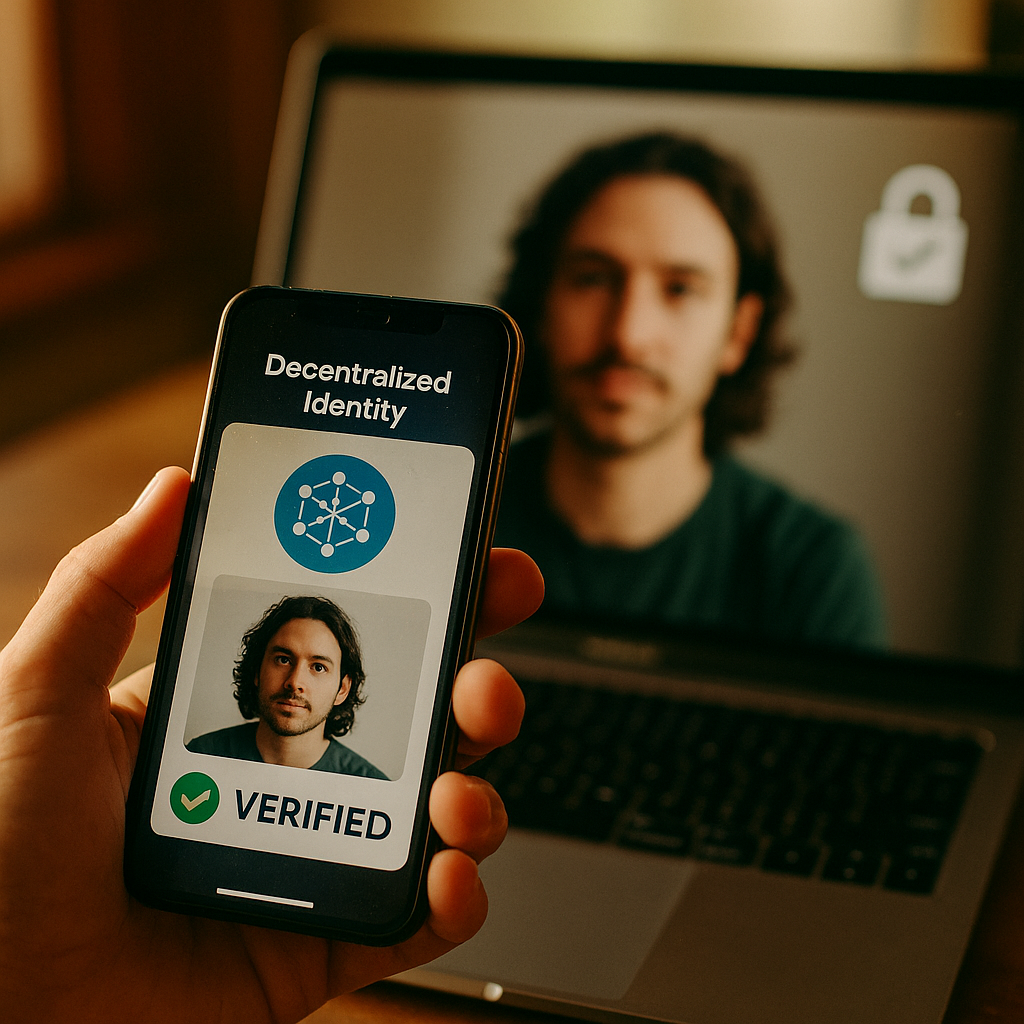
As the digital creator economy flourishes, platforms are seeking reliable, scalable ways to authenticate identities. Reviewing decentralized identity solutions for creator verification is crucial to combating impersonation, building trust, and streamlining onboarding. Which decentralized solutions best meet creators’ unique needs? Let’s explore the top options and their real-world applications for verifying creators in 2025.
Decentralized Identity Solutions Explained
Decentralized identity solutions empower individuals to control and share their credentials without relying on a central authority. Instead of siloed databases controlled by giant platforms, users store credentials such as verified IDs, portfolios, or social proofs in cryptographically secure wallets. These can be easily presented when needed—enabling flexible, privacy-first verification for creators.
This paradigm shift leverages public blockchains and protocols like W3C’s Verifiable Credentials, where verification happens transparently and securely. For creators, decentralized identity means true data ownership, easier onboarding across platforms, and protection from unauthorized impersonation. As the creator economy becomes more global and fragmented, these benefits are increasingly vital.
Top Solutions: Comparing Leading Decentralized Identity Platforms
Several decentralized identity platforms have gained prominence in 2025, helping creators verify themselves seamlessly across multiple creator platforms and marketplaces. Here’s a closer look at the most influential ones:
- SpruceID: An open-source stack supporting verifiable credentials, market-tested for creator profiles, digital portfolios, and even cross-platform reputation. SpruceID integrates easily with Web3 wallets—giving creators flexible, interoperable identity control.
- Quadrata: Focused on securely linking on-chain and real-world credentials, Quadrata has seen adoption in NFT marketplaces and revenue-sharing platforms. Its passport model offers frictionless onboarding for creators while safeguarding privacy.
- Ceramic Network & IDX: Ceramic enables decentralized data streams and identity management, while the IDX protocol lets users build portable profiles. This combo gives creators granular control over what data is shared, and with whom, across the growing metaverse.
- Polygon ID: Built on zero-knowledge proofs, Polygon ID supports confidential, verifiable identity for millions. It’s especially popular among creators seeking privacy-focused solutions that still satisfy KYC (Know Your Customer) requirements.
These platforms uphold key principles of decentralized identity: interoperability, privacy, and self-sovereignty. Choosing the right one depends on use case, geographical scope, and preferred ecosystems. Many creators opt for multi-platform compatibility to future-proof their digital reputations.
Benefits of Decentralized Identity for Creator Verification
Adopting decentralized identity for creator verification offers compelling advantages over legacy methods:
- Minimized Impersonation Risks: Public cryptographic proofs make fake accounts nearly impossible, reducing scams and fraudulent impersonation that have plagued the creator economy.
- Control & Privacy: Creators decide exactly which credentials to share, and with whom, preventing oversharing to platforms or third parties. Zero-knowledge proofs further enhance privacy.
- Single Verification, Multiple Platforms: Once verified, creators can easily prove their legitimacy across multiple websites, NFT markets, or social networks, streamlining onboarding and monetization.
- Global Accessibility: Artists, influencers, and educators from underserved regions benefit as traditional national ID systems become less central in digital verification flows.
In 2025, these benefits contribute to a more trustworthy, open creator landscape where artists and audiences transact confidently—no matter their geographic or platform boundaries.
Implementation Challenges and Solutions in 2025
Despite great potential, decentralized identity brings technical and adoption hurdles for creator verification:
- User Experience: Managing wallets and cryptographic keys can overwhelm non-technical creators. However, onboarding flows are improving, with wallet-as-a-service, intuitive mobile apps, and recovery options becoming standard.
- Adoption by Platforms: Mass adoption depends on creator platforms integrating decentralized protocols as primary options. In 2025, leading social and NFT platforms like Zealy and OpenSea have begun supporting verifiable credentials, setting an example for the industry.
- Reputation Portability: Creators want their verified status, followership, and reviews portable—without lock-in to a single ecosystem. Decentralized identity standards now let users export cumulative reputational data seamlessly.
- Regulatory Clarity: Navigating compliance, particularly regarding KYC and AML (Anti-Money Laundering) laws, is critical. Zero-knowledge solutions and selective disclosure increasingly allow platforms to respect privacy while complying with local regulations.
The ecosystem is evolving rapidly, with ongoing collaborations between identity solution providers, creator collectives, and major platforms to make decentralized verification both robust and user-friendly.
Best Practices for Secure Creator Verification
To maximize the value and integrity of decentralized identity, both creators and platforms should follow these best practices:
- Choose Solutions with Proven Security: Opt for identity platforms with open-source code, peer-reviewed cryptography, and an active track record of audits.
- Protect Keys & Recovery Options: Educate creators on key management, social recovery, and backup strategies to prevent accidental loss of access.
- Implement Tiered Verification: Use layered verification (e.g., document proof plus social attestations) to build comprehensive yet privacy-respecting credentials.
- Prioritize Interoperability: Select platforms adhering to open standards like W3C’s Verifiable Credentials and Decentralized Identifiers (DIDs) for future resilience.
- Regularly Update Credentials: Encourage ongoing verification updates to assure audiences that creator profiles remain accurate and uncompromised.
These measures foster both individual and ecosystem-wide trust, leveraging decentralized identity to protect creator brands and fan communities alike in 2025.
Future Trends in Creator Identity Verification
As the digital creator landscape evolves, new trends are shaping the future of verification:
- Integrated Reputation Metrics: Platforms increasingly factor in cryptographically proven metrics—like verified following, NFT sales, or educational credentials—into algorithmic recommendations.
- AI-Powered Fraud Detection: Decentralized identity data, combined with AI models, enhances proactive detection of identity misuse or account takeovers.
- Cross-Ecosystem Network Effects: As more platforms adopt open identity protocols, creators gain unprecedented mobility, able to bring followers, accolades, and earning history wherever they go.
- Universal Wallets: Next-gen wallets aggregate personal and professional credentials. This enables truly one-click onboarding and future licenses for entirely new creator categories.
These trends will define the “next normal” of creator verification, making self-sovereignty, security, and simplicity the default for digital identities worldwide.
Conclusion
Decentralized identity solutions for creator verification are transforming how trust is established in the creator economy. Their ability to balance privacy, portability, and security is setting new standards in 2025. By adopting these platforms and best practices, creators and platforms build a safer, more trustworthy ecosystem—where digital authenticity is finally in the hands of its rightful owners.
FAQs: Decentralized Identity and Creator Verification
-
What is decentralized identity, and how does it work for creators?
Decentralized identity allows creators to control and share their credentials using cryptographically secure wallets. These can be shown to any platform to prove legitimacy, removing the need for repeated KYC checks and enabling greater privacy and mobility.
-
Which decentralized identity platform is best for creators?
This depends on personal needs. SpruceID, Quadrata, Ceramic/IDX, and Polygon ID are all robust in 2025. Creators should consider platform compatibility, privacy needs, and ecosystem integrations before committing.
-
Are decentralized identity solutions secure?
Yes, when built on open standards and strong cryptography. However, creators must safeguard their wallets and keys, and only use platforms with a history of fourth-party audits and peer review.
-
How do decentralized identities protect against impersonation?
Verified credentials, anchored to the creator’s cryptographic keys, are publicly auditable. This means fake accounts are easily exposed, drastically reducing the risks of impersonation or deception.
-
Can decentralized identity help with monetization?
Yes. Once verified, creators have faster onboarding with fewer payment holds or fraud checks, can prove digital ownership, and even access exclusive programs or brand partnerships more easily.
Top Influencer Marketing Agencies
The leading agencies shaping influencer marketing in 2026
Agencies ranked by campaign performance, client diversity, platform expertise, proven ROI, industry recognition, and client satisfaction. Assessed through verified case studies, reviews, and industry consultations.
Moburst

-
2

The Shelf
Boutique Beauty & Lifestyle Influencer AgencyA data-driven boutique agency specializing exclusively in beauty, wellness, and lifestyle influencer campaigns on Instagram and TikTok. Best for brands already focused on the beauty/personal care space that need curated, aesthetic-driven content.Clients: Pepsi, The Honest Company, Hims, Elf Cosmetics, Pure LeafVisit The Shelf → -
3

Audiencly
Niche Gaming & Esports Influencer AgencyA specialized agency focused exclusively on gaming and esports creators on YouTube, Twitch, and TikTok. Ideal if your campaign is 100% gaming-focused — from game launches to hardware and esports events.Clients: Epic Games, NordVPN, Ubisoft, Wargaming, Tencent GamesVisit Audiencly → -
4

Viral Nation
Global Influencer Marketing & Talent AgencyA dual talent management and marketing agency with proprietary brand safety tools and a global creator network spanning nano-influencers to celebrities across all major platforms.Clients: Meta, Activision Blizzard, Energizer, Aston Martin, WalmartVisit Viral Nation → -
5

The Influencer Marketing Factory
TikTok, Instagram & YouTube CampaignsA full-service agency with strong TikTok expertise, offering end-to-end campaign management from influencer discovery through performance reporting with a focus on platform-native content.Clients: Google, Snapchat, Universal Music, Bumble, YelpVisit TIMF → -
6

NeoReach
Enterprise Analytics & Influencer CampaignsAn enterprise-focused agency combining managed campaigns with a powerful self-service data platform for influencer search, audience analytics, and attribution modeling.Clients: Amazon, Airbnb, Netflix, Honda, The New York TimesVisit NeoReach → -
7

Ubiquitous
Creator-First Marketing PlatformA tech-driven platform combining self-service tools with managed campaign options, emphasizing speed and scalability for brands managing multiple influencer relationships.Clients: Lyft, Disney, Target, American Eagle, NetflixVisit Ubiquitous → -
8

Obviously
Scalable Enterprise Influencer CampaignsA tech-enabled agency built for high-volume campaigns, coordinating hundreds of creators simultaneously with end-to-end logistics, content rights management, and product seeding.Clients: Google, Ulta Beauty, Converse, AmazonVisit Obviously →