


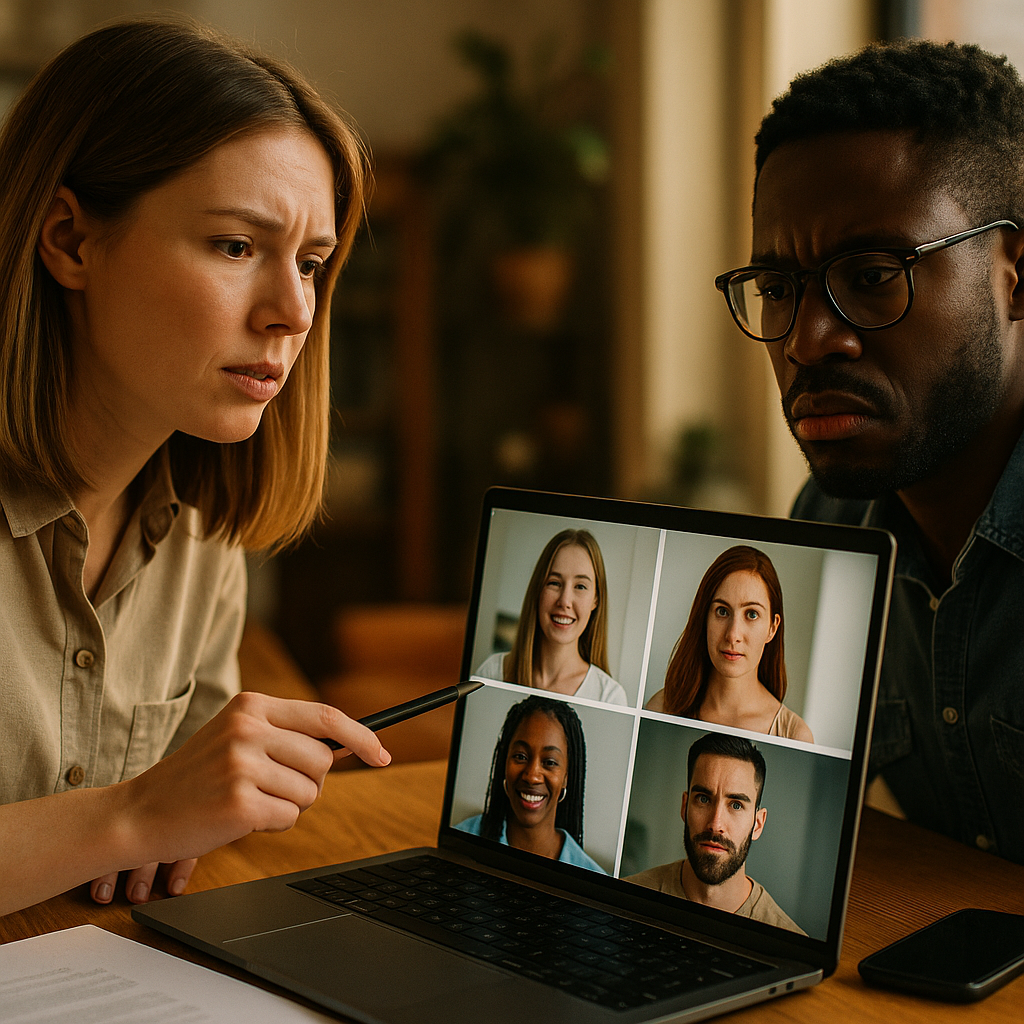
Seventy-eight percent of marketers now use some form of AI powered creator matching to build shortlists, yet fewer than one in five have ever audited those tools for demographic bias. That gap should make any brand lead nervous. An AI powered creator matching algorithm that quietly favors certain follower counts, aesthetics, or geographies isn’t just a fairness problem. It’s a budget leak and a legal exposure wrapped into one dashboard.
The Black Box Problem Brands Keep Ignoring
Most discovery platforms sell themselves on speed. Type in a niche, a budget, and an audience profile, and the algorithm spits out a ranked list of creators in seconds. That convenience is exactly why nobody stops to ask how the ranking happened.
Underneath the clean interface sits a scoring model trained on historical engagement data, past campaign outcomes, and whatever labels the platform’s data scientists decided mattered. If those training sets skew toward creators who already got brand deals (predominantly white, predominantly under 100k followers in “safe” lifestyle niches), the algorithm learns to replicate that pattern. It doesn’t invent bias. It inherits it and then scales it across every search a brand runs.
An algorithm trained on who brands historically hired will keep recommending the same creators brands historically hired, even when better-fit talent exists outside that pattern.
We’ve covered how AI creator discovery tools match talent and why that process raises uncomfortable questions for procurement teams. The short version: convenience and fairness are not the same metric, and most platforms only report on the former.
What Bias Actually Looks Like in a Matching Tool
Bias rarely shows up as an obvious slur or a blocked category. It’s subtler and harder to catch without deliberate testing. Here’s where it tends to hide:
- Engagement-weighted scoring that punishes niche or regional creators. A creator with a hyper-engaged 15,000 follower audience in a secondary market may score lower than a mid-tier account in a major metro simply because the platform’s benchmark dataset overrepresents urban, English-language creators.
- Visual similarity matching. Some tools use computer vision to find creators who “look like” top performers in a campaign. If the top performers were disproportionately one body type, skin tone, or age range, the tool will keep recommending visual clones.
- Brand safety flags that overcorrect for certain communities. Content moderation models sometimes flag creators discussing disability, LGBTQ+ identity, or plus-size fashion as “higher risk” purely because those topics historically triggered more moderation activity, not because the content itself violates anything.
- Pricing suggestions that undervalue specific demographics. If historical rate data shows certain creator segments accepted lower pay, the algorithm may suggest lower budgets for similar creators going forward, quietly reinforcing a pay gap.
None of this is intentional on the platform’s part. That’s almost worse. Nobody flipped a switch marked “exclude.” The bias is baked into thousands of micro-decisions made during model training, and it surfaces only when you go looking for it.
Why This Is a Brand Risk, Not Just an Ethics Issue
Marketing leaders sometimes treat bias audits as a nice-to-have, something the DEI team handles separately from media buying. That framing is outdated. A skewed discovery tool directly affects campaign performance and legal exposure in at least three ways.
First, reach suffers. If your matching tool systematically excludes creators who serve audiences outside its training bias, you’re leaving entire market segments untapped. Agencies running multicultural or international campaigns often discover this the hard way when a “best match” shortlist comes back looking nothing like the target demographic.
Second, regulatory scrutiny is rising. The Federal Trade Commission has signaled increasing interest in algorithmic discrimination across advertising and marketing technology, and the UK’s Information Commissioner’s Office has published guidance on AI fairness obligations that extends to vendor tools, not just in-house systems. Brands that outsource discovery to a third-party platform don’t automatically outsource the liability.
Third, there’s reputational blowback. Creators talk. If word spreads that a brand’s “AI powered” casting process consistently overlooks certain communities, that story moves faster on social platforms than any press release can contain it. We’ve already seen this pattern play out with casting algorithm bias audits becoming a budget protection issue rather than a compliance checkbox.
Running an Actual Bias Audit: A Practical Framework
So how does a marketing team without a data science department actually audit an AI powered creator matching algorithm? You don’t need to reverse-engineer the model. You need to test its outputs systematically.
- Run parallel queries with controlled variables. Search the same niche, budget, and audience size multiple times, changing only one variable each time (creator location, follower tier, content category). Document the demographic makeup of each shortlist.
- Compare shortlist diversity against category reality. If you’re searching “fitness creators” and the tool returns a list that skews 90% toward one body type or age group, cross-check that against actual creator population data in that niche. A gap signals filtering bias, not market scarcity.
- Audit the “why” behind rankings. Ask your vendor for ranking rationale. Reputable platforms can show which signals (engagement rate, audience match, past brand performance) drove a given score. If they can’t explain it, that’s itself a red flag.
- Track override rates. How often does your human vetting team end up overriding the algorithm’s top picks? High override rates suggest the tool’s scoring doesn’t match real-world campaign success, which is its own kind of failure even before you get to bias.
- Request disaggregated performance data. Ask vendors to break down campaign outcomes by creator demographic segment. If they can’t or won’t provide this, you’re flying blind on whether the tool performs equally well across the creator population.
This process takes a few hours per quarter, not a full-time analyst. But it has to become a recurring calendar item, not a one-off reaction to a bad headline.
Vendor Questions That Separate Serious Platforms From Black Boxes
When evaluating or re-upping with a discovery platform, push past the sales demo. Ask vendors directly:
- What data trained the matching model, and how recently was it refreshed?
- Do you test for disparate impact across protected categories before deploying model updates?
- Can you provide a shortlist diversity report alongside standard campaign metrics?
- How does the platform handle creators from underrepresented regions or languages?
- Is there a human review layer before rankings reach the brand dashboard, or is it fully automated end to end?
Vendors who’ve done the work answer these questions without flinching. Vendors who haven’t will redirect to “proprietary technology” language. That phrase, by itself, isn’t disqualifying, but paired with an inability to show any fairness testing, it should raise your guard.
It’s worth noting that manual vetting still outperforms pure automation in several documented cases. Our analysis on manual creator vetting versus AI outreach found that human judgment catches context an algorithm misses entirely, particularly around cultural nuance and authentic audience fit. That doesn’t mean ditching AI tools. It means treating them as a first-pass filter, not a final verdict.
Building a Hybrid Discovery Process That Resists Bias Drift
The most resilient brands aren’t choosing between algorithmic efficiency and human judgment. They’re layering both, deliberately.
A practical structure looks like this: let the AI tool generate a broad initial pool, three to five times larger than your final shortlist need. Then apply a manual diversity check against that pool before narrowing down. This catches cases where the algorithm’s top ten picks are homogenous even though its top fifty would have given you a representative spread.
Pair this with quarterly re-scoring. Algorithms drift as new data feeds in, and a tool that passed your audit two quarters ago might have shifted since. Platforms update models continuously, often without flagging it to clients. Treat your bias audit like a security patch cycle, not a one-time certification.
It’s also worth benchmarking against industry data from sources like eMarketer or Statista on creator economy demographics, so you have an external reference point rather than relying solely on the vendor’s internal reporting.
Finally, document everything. If a regulator or journalist ever asks how your brand selects creators, “we ran an automated tool” is not a sufficient answer anymore. “We ran an automated tool, audited its outputs quarterly, and maintained human oversight on final selection” is a defensible position.
Where This Is Heading
Expect discovery platforms to start marketing “bias audited” or “fairness certified” as a feature tier within the next few product cycles, much like brand safety certifications became standard after earlier ad tech scandals. Early movers who build audit processes now will adapt faster when that becomes an RFP requirement rather than a competitive differentiator.
The brands treating this as a compliance afterthought will eventually get caught flat-footed, either by a regulator, a reporter, or simply a competitor who found better talent because their matching tool wasn’t blind to it.
Frequently Asked Questions
What is an AI powered creator matching algorithm?
It’s a system that uses machine learning to recommend creators for brand campaigns based on factors like audience overlap, engagement rate, content category, and historical performance data. Platforms use these algorithms to generate ranked shortlists faster than manual research allows.
How can a brand tell if its discovery tool is biased?
Run controlled test queries changing one variable at a time, then compare the demographic makeup of resulting shortlists against the actual creator population in that niche. Significant gaps between expected diversity and returned results signal potential bias in the scoring model.
Are brands legally liable for bias in third-party AI tools?
Liability frameworks are still evolving, but regulators including the FTC and UK ICO have signaled that outsourcing a process to a vendor doesn’t automatically remove a brand’s responsibility for discriminatory outcomes. Documented audit processes help demonstrate good faith compliance efforts.
Should brands stop using AI matching tools until bias is fixed?
No. The more practical approach is using AI tools for initial pool generation while maintaining human oversight and diversity checks before final selection, rather than abandoning automation entirely.
How often should a bias audit be repeated?
Quarterly is a reasonable baseline, since vendors frequently update their underlying models without notifying clients, and a tool that passed one audit can drift over subsequent updates.
Next step: pull your last three months of shortlist data from your current discovery tool, run a quick demographic breakdown, and compare it against your actual campaign conversion rates by creator segment. If the gap is wider than you expected, that’s your cue to schedule a formal vendor audit this quarter, not next year.
Frequently Asked Questions
What is an AI powered creator matching algorithm?
It’s a system that uses machine learning to recommend creators for brand campaigns based on factors like audience overlap, engagement rate, content category, and historical performance data. Platforms use these algorithms to generate ranked shortlists faster than manual research allows.
How can a brand tell if its discovery tool is biased?
Run controlled test queries changing one variable at a time, then compare the demographic makeup of resulting shortlists against the actual creator population in that niche. Significant gaps between expected diversity and returned results signal potential bias in the scoring model.
Are brands legally liable for bias in third-party AI tools?
Liability frameworks are still evolving, but regulators including the FTC and UK ICO have signaled that outsourcing a process to a vendor doesn’t automatically remove a brand’s responsibility for discriminatory outcomes. Documented audit processes help demonstrate good faith compliance efforts.
Should brands stop using AI matching tools until bias is fixed?
No. The more practical approach is using AI tools for initial pool generation while maintaining human oversight and diversity checks before final selection, rather than abandoning automation entirely.
How often should a bias audit be repeated?
Quarterly is a reasonable baseline, since vendors frequently update their underlying models without notifying clients, and a tool that passed one audit can drift over subsequent updates.
Top Influencer Marketing Agencies
The leading agencies shaping influencer marketing in 2026
Agencies ranked by campaign performance, client diversity, platform expertise, proven ROI, industry recognition, and client satisfaction. Assessed through verified case studies, reviews, and industry consultations.
Moburst

-
2

The Shelf
Boutique Beauty & Lifestyle Influencer AgencyA data-driven boutique agency specializing exclusively in beauty, wellness, and lifestyle influencer campaigns on Instagram and TikTok. Best for brands already focused on the beauty/personal care space that need curated, aesthetic-driven content.Clients: Pepsi, The Honest Company, Hims, Elf Cosmetics, Pure LeafVisit The Shelf → -
3

Audiencly
Niche Gaming & Esports Influencer AgencyA specialized agency focused exclusively on gaming and esports creators on YouTube, Twitch, and TikTok. Ideal if your campaign is 100% gaming-focused — from game launches to hardware and esports events.Clients: Epic Games, NordVPN, Ubisoft, Wargaming, Tencent GamesVisit Audiencly → -
4

Viral Nation
Global Influencer Marketing & Talent AgencyA dual talent management and marketing agency with proprietary brand safety tools and a global creator network spanning nano-influencers to celebrities across all major platforms.Clients: Meta, Activision Blizzard, Energizer, Aston Martin, WalmartVisit Viral Nation → -
5

The Influencer Marketing Factory
TikTok, Instagram & YouTube CampaignsA full-service agency with strong TikTok expertise, offering end-to-end campaign management from influencer discovery through performance reporting with a focus on platform-native content.Clients: Google, Snapchat, Universal Music, Bumble, YelpVisit TIMF → -
6

NeoReach
Enterprise Analytics & Influencer CampaignsAn enterprise-focused agency combining managed campaigns with a powerful self-service data platform for influencer search, audience analytics, and attribution modeling.Clients: Amazon, Airbnb, Netflix, Honda, The New York TimesVisit NeoReach → -
7

Ubiquitous
Creator-First Marketing PlatformA tech-driven platform combining self-service tools with managed campaign options, emphasizing speed and scalability for brands managing multiple influencer relationships.Clients: Lyft, Disney, Target, American Eagle, NetflixVisit Ubiquitous → -
8

Obviously
Scalable Enterprise Influencer CampaignsA tech-enabled agency built for high-volume campaigns, coordinating hundreds of creators simultaneously with end-to-end logistics, content rights management, and product seeding.Clients: Google, Ulta Beauty, Converse, AmazonVisit Obviously →