


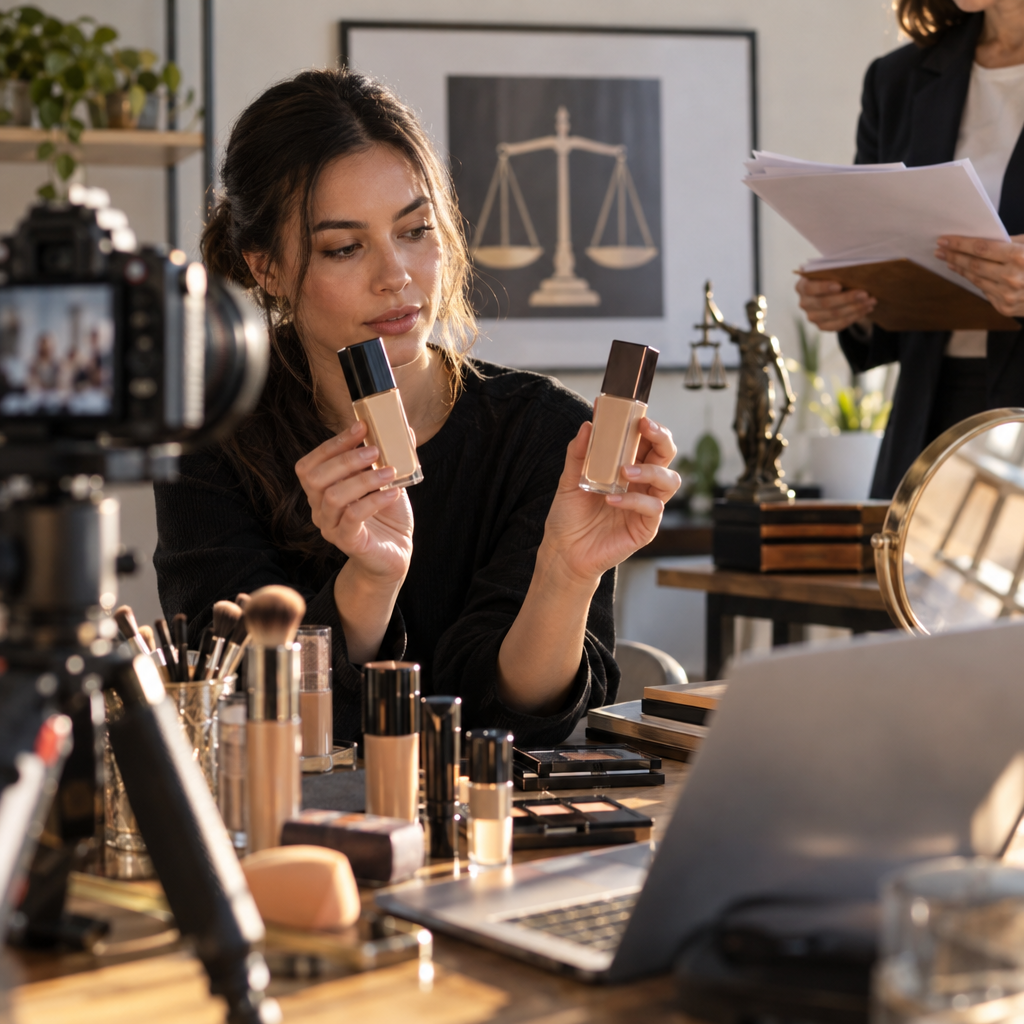
Dupe culture content is some of the highest-performing comparison video on TikTok and Instagram right now, and that is exactly why it scares legal teams. A single on-screen logo, one superiority claim without a test behind it, or a missing disclosure line can turn a viral “better than the original” video into a cease-and-desist letter. Brands do not need to avoid dupe culture content. They need a script that survives both the algorithm and the general counsel’s inbox.
What Dupe Culture Content Actually Is
Strip away the slang and dupe content is just comparative advertising wearing a ring light. A creator holds up a budget skincare serum next to a prestige brand, names both products on camera, and argues the cheaper one performs the same. It works because viewers trust a side-by-side over a brand’s own claims. It also works because TikTok’s engagement rate runs roughly seven times higher than Instagram’s, and comparison formats are some of the stickiest content the platform rewards. That reach is the upside. The downside is that naming a competitor, showing its logo, and claiming equivalence or superiority are precisely the activities trademark and advertising law were built to regulate.
For brands briefing creators on this format, the script is doing legal work whether you intend it to or not. Every claim, every product shot, and every word choice either builds a defensible comparison or hands a competitor’s lawyer a highlight reel.
Why Legal Teams Flinch at the Word “Dupe”
Three risks stack on top of each other in a typical dupe video: trademark infringement, false advertising under the Lanham Act, and FTC disclosure failures. None of them are theoretical. A competitor does not need to wait for a regulator to act. The Lanham Act gives a business the ability to sue another company directly over false or misleading advertising, which means the brand you name in your script is often the first legal reviewer your content gets, and the review happens after the video is already live.
That risk is compounded by trademark exposure. Showing a logo, naming a brand repeatedly, or styling your product to echo the original’s packaging all raise the stakes beyond simple comparison. For a deeper breakdown of how to structure claims that survive this kind of scrutiny, see our guide on claims that pass legal review.
The FTC does not discourage comparative advertising. Its own policy states that comparative advertising, when truthful and non-deceptive, gives consumers useful information and helps them make rational purchase decisions. The risk in dupe content almost never comes from naming a competitor. It comes from what the script implies that the brand cannot prove.
The FTC Actually Likes This Format. Read the Fine Print.
FTC policy in the area of comparative advertising encourages the naming of or reference to competitors, but it requires clarity and, if necessary, disclosure to avoid deceiving the consumer. That is good news for dupe content, because it means naming the premium brand by name is not the problem. The problem is what happens around that name.
The Commission has held that a seller can make truthful, non-deceptive statements about desirable qualities its product has that a competitor’s does not, even if that comparison disparages the competing product, since there is no rule of law preventing honest comparison. In practice, that means a creator can say “this costs a third of the price and the ingredient list is nearly identical” if that claim is actually true and documented. What they cannot do is imply the products are chemically identical, imply FDA approval equivalence, or suggest the dupe is manufactured in the same facility, unless that is substantiated fact.
The FTC evaluates comparative advertising the same way it evaluates any other advertising technique, asking only whether the ad has a tendency or capacity to mislead, a factual question decided case by case. Scriptwriters should treat every specific, measurable claim in a dupe video (price, SPF rating, ounce count, shade match) as something that needs a receipt before it goes in the script, not after a comment section starts asking for proof. That approach pairs naturally with a myth busting reel structure, where the creator states the skeptical question first and answers it with evidence on screen.
Nominative Fair Use: The Legal Guardrail Behind Every Safe Comparison
Trademark law has a specific carve-out for this exact situation, called nominative fair use. Courts generally require three things: the product or service in question cannot be readily identified without using the trademark, the defendant uses only as much of the mark as is reasonably necessary to identify it, and the defendant does nothing that would suggest sponsorship or endorsement by the trademark owner. A dupe video that names “the original” by its actual brand name, shows the product briefly for identification, and never implies a partnership is operating well inside this protection.
Trademark law generally permits using another’s mark as a means of comparison in advertising, including naming a competitor directly. Where creators get into trouble is scope creep: using the competitor’s logo as a thumbnail, tagging the brand’s official account as though it endorsed the comparison, or restyling packaging to mimic the original’s trade dress. High-risk uses include language implying approval, such as calling a product “official” or “authorized,” or marketing copy that suggests a collaboration exists, none of which belong in a script built on nominative fair use. If your format already leans on side-by-side visuals, our walkthrough of the split screen comparison format covers how to frame both products without blurring that endorsement line.
Five Scripting Rules for the Writers Room
Treat these as non-negotiable checkpoints before a dupe script goes into production, not suggestions for after the fact.
- Use the brand name, not the logo. Spoken or on-screen text identification satisfies nominative fair use far more cleanly than a lingering shot of someone else’s trademarked packaging or logo.
- Anchor every claim to a number. “Cheaper” needs a price. “Same formula” needs an ingredient comparison. Vague superiority language is exactly what invites an FTC inquiry or a competitor’s demand letter.
- Kill any phrase that implies partnership. Words like “official dupe,” “approved alternative,” or “made by the same lab” cross from comparison into endorsement claims you almost certainly cannot prove.
- Build the evidence file before the script, not after. Screenshot the competitor’s pricing page, date it, and keep the ingredient list on file the day you publish, because claims drift as competitors update formulas and pricing.
- Write the disclosure into the script, not the caption. If a creator is paid to make the comparison, that relationship needs to be on screen and spoken, not buried in a hashtag block.
Disclosure Still Applies, Even When You’re Comparing a Competitor’s Product
Brands sometimes assume that because a dupe video flatters their product and criticizes a rival’s, disclosure rules relax. They do not. If a creator is paid, gifted product, or otherwise connected to your brand, that material connection has to be disclosed regardless of whose product looks worse in the comparison. The same logic that governs any sponsored claim, covered in our breakdown of disclosure brands can’t skip, applies here: the disclosure travels with the endorsement, in the video itself, not just in the description.
A dupe script that nails the trademark and substantiation rules but skips disclosure has not actually reduced legal risk. It has just swapped one violation for another.
Brief creators in writing before filming: which claims are approved, which brand assets they can show, and exactly where the disclosure needs to sit in the final cut. That brief is cheaper than any legal review that happens after the video is already trending, and it is the difference between a dupe campaign that scales and one that gets pulled after a single complaint.
Next Step
Build a one-page claims and disclosure checklist into every dupe creative brief before a single frame gets shot, and require creators to submit proof for any price, ingredient, or performance claim before publishing. That single habit closes most of the legal exposure this format creates.
FAQs
Is it legal to name a competitor by brand name in a dupe comparison video?
Generally yes. Nominative fair use allows a creator to name a competitor’s product when necessary to identify it, provided only as much of the mark is used as needed and nothing implies the competitor sponsored or endorsed the content.
Can a creator say a dupe product is “the same formula” as a premium brand?
Only if that claim is substantiated with actual evidence, such as a verified ingredient comparison. Unsupported equivalence claims are one of the most common triggers for both FTC scrutiny and competitor false-advertising lawsuits.
Does showing a competitor’s logo in a dupe video create more legal risk than just saying the brand name?
Yes. Logos and packaging shots move closer to trademark use rather than nominative reference, and they increase the risk that a reasonable viewer could infer partnership or endorsement, which weakens a fair use defense.
Do brands need to disclose paid dupe content even when it criticizes a competitor?
Yes. Disclosure obligations are tied to the creator’s material connection to your brand, not to whether the content favors or criticizes a competitor’s product. Paid or gifted comparisons still require clear, on-screen disclosure.
What is the biggest scripting mistake brands make with dupe culture content?
Letting creators improvise specific, measurable claims (price, ingredients, performance) without a substantiation file ready before publishing. Vague enthusiasm is low risk; precise unverified claims are where most legal exposure starts.
Top Influencer Marketing Agencies
The leading agencies shaping influencer marketing in 2026
Agencies ranked by campaign performance, client diversity, platform expertise, proven ROI, industry recognition, and client satisfaction. Assessed through verified case studies, reviews, and industry consultations.
Moburst

-
2

The Shelf
Boutique Beauty & Lifestyle Influencer AgencyA data-driven boutique agency specializing exclusively in beauty, wellness, and lifestyle influencer campaigns on Instagram and TikTok. Best for brands already focused on the beauty/personal care space that need curated, aesthetic-driven content.Clients: Pepsi, The Honest Company, Hims, Elf Cosmetics, Pure LeafVisit The Shelf → -
3

Audiencly
Niche Gaming & Esports Influencer AgencyA specialized agency focused exclusively on gaming and esports creators on YouTube, Twitch, and TikTok. Ideal if your campaign is 100% gaming-focused — from game launches to hardware and esports events.Clients: Epic Games, NordVPN, Ubisoft, Wargaming, Tencent GamesVisit Audiencly → -
4

Viral Nation
Global Influencer Marketing & Talent AgencyA dual talent management and marketing agency with proprietary brand safety tools and a global creator network spanning nano-influencers to celebrities across all major platforms.Clients: Meta, Activision Blizzard, Energizer, Aston Martin, WalmartVisit Viral Nation → -
5

The Influencer Marketing Factory
TikTok, Instagram & YouTube CampaignsA full-service agency with strong TikTok expertise, offering end-to-end campaign management from influencer discovery through performance reporting with a focus on platform-native content.Clients: Google, Snapchat, Universal Music, Bumble, YelpVisit TIMF → -
6

NeoReach
Enterprise Analytics & Influencer CampaignsAn enterprise-focused agency combining managed campaigns with a powerful self-service data platform for influencer search, audience analytics, and attribution modeling.Clients: Amazon, Airbnb, Netflix, Honda, The New York TimesVisit NeoReach → -
7

Ubiquitous
Creator-First Marketing PlatformA tech-driven platform combining self-service tools with managed campaign options, emphasizing speed and scalability for brands managing multiple influencer relationships.Clients: Lyft, Disney, Target, American Eagle, NetflixVisit Ubiquitous → -
8

Obviously
Scalable Enterprise Influencer CampaignsA tech-enabled agency built for high-volume campaigns, coordinating hundreds of creators simultaneously with end-to-end logistics, content rights management, and product seeding.Clients: Google, Ulta Beauty, Converse, AmazonVisit Obviously →