


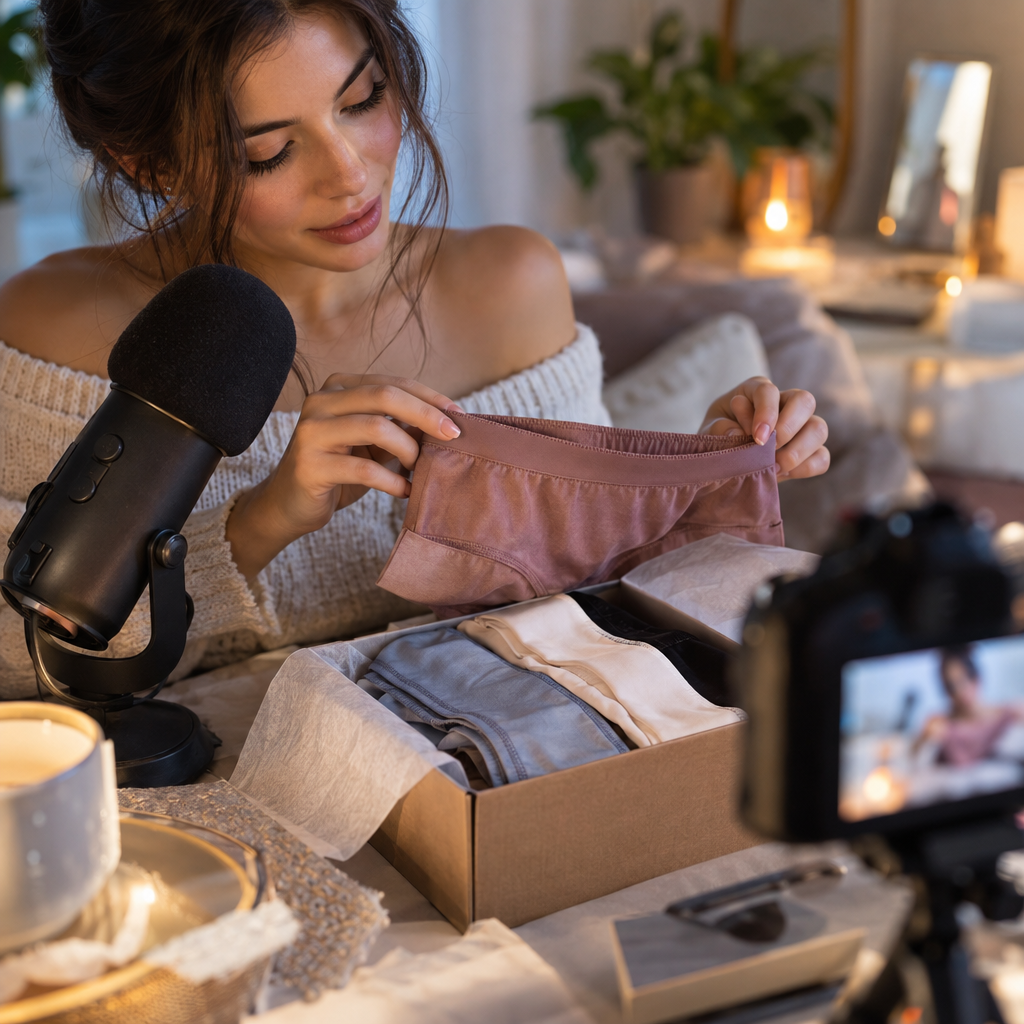
Here’s a number that should reorder your Q1 content calendar: ASMR related YouTube views hit 90 billion in a single year, and the format keeps climbing. ASMR unboxing isn’t a niche sideshow anymore. It’s a conversion engine that traditional “big reveal” product videos simply can’t match on watch time, trust, or shareability.
Why Whisper Quiet Beats Big Reveal Energy
Traditional product reveals are built on hype: fast cuts, upbeat music, a creator yelling “you guys, this is INSANE.” It works, until it doesn’t. Audiences have built an immunity to manufactured excitement. ASMR unboxing flips the script entirely, trading adrenaline for intimacy, and the research backs up why that matters for brand perception.
A controlled study comparing ASMR sponsorship messages against standard YouTube influencer endorsements found that researchers ran two consecutive experiments among 408 consumers comparing ASMR sponsorship messages from ASMR creators against two YouTube influencers, and the results showed ASMR could be induced even by short sponsored messages, positively influencing perception of both the advertised brand and the presenter. That’s a direct, peer-reviewed signal that whisper-quiet content isn’t just pleasant, it’s persuasive.
Separate academic work out of the University of Florida reinforces the same point from a different angle. Researchers found that people’s experience and understanding of ASMR content suggests new media like YouTube serve as better channels than traditional media such as television and radio, grabbing consumer attention more effectively than traditional advertisements. Brands chasing scroll-stopping energy through loud editing are, statistically, working against the grain of what actually holds attention.
ASMR unboxing doesn’t just hold attention longer. It changes how a viewer feels about the brand doing the talking, which is a harder thing for traditional reveal videos to earn.
The Formats Actually Scaling Right Now
Not all ASMR unboxing looks the same, and the format you choose should match your product category, not just what’s trending. The ones outperforming classic reveals tend to fall into a few repeatable buckets:
- Tactile crinkle and tap formats: box textures, tissue paper, foam inserts, each sound layered deliberately. These work best for beauty, candles, and packaging-forward CPG.
- Slow cinematic pan reveals: minimal talking, close focus pulls, often shot in natural light. This format borrows heavily from the lo-fi aesthetic that premium and heritage brands now pay up for, similar to the approach covered in our lo-fi phone aesthetic breakdown.
- Personal attention style unboxings: the creator addresses the viewer directly in a soft, close-mic tone while walking through each item, a format that borrows structure from the ordered reveal logic in what’s in my bag videos.
- Dialogue-free sound design: zero narration, just product sound. This leans directly on the mute-first viewing behavior brands now script for, the same principle behind silent vlogs and sound off viewing strategies.
Audience data shows why these formats earn disproportionate engagement. Across the broader unboxing category, ASMR unboxings see a 15% watch time retention boost compared to standard reveal content, and unboxing videos overall carry an average like rate of 4.2% on YouTube, both figures well above what most scripted brand videos pull.
Where the Money Actually Shows Up
Watch time is nice. Revenue is better. This is where ASMR unboxing stops being a “feel good” format and starts justifying budget against a brand’s hardest KPI, conversion.
Live unboxing and reveal formats are now a proven driver inside social commerce, not just an engagement play. TikTok Shop’s average conversion rate of 4.7% compares against roughly 1.9% for Instagram Shopping and 2.5 to 3.0% for traditional ecommerce, with that gap widening further during live shopping, where rates climb to 5 to 12%. Unboxing specifically sits inside that premium tier: live sessions built around unboxing and reveal content average a 7.2% conversion rate with roughly 19 minutes of average watch time, concentrated in beauty, electronics, and fashion categories.
That’s a meaningfully longer watch window than almost any other short-form ad unit a brand can buy, which changes how you should be staffing and briefing live commerce talent, a topic we go deeper on in creator hosted show formats.
On the category level, this tracks with what beauty and gadget marketers have quietly known for a year: slow, sensory-forward reveals sell better than loud ones, particularly when the creator is demonstrating real functionality rather than performing excitement.
Does ASMR Work for Every Product Category?
No, and pretending otherwise is how brands waste production budget. ASMR sensitivity is genuinely polarizing. Not every viewer responds the same way, and some find certain triggers irritating rather than soothing.
Academic content analysis of ASMR advertising found that outcomes split by execution quality, not just format choice. Both ASMR ads studied were mostly evaluated as relaxing and positive, generating behavioral attitudes like using the brand and voluntarily rewatching the ads, but the same research cautions that ASMR triggers should be used considerately to avoid irritability and discomfort among viewers. Translation for brand teams: test your trigger choices (tapping, whispering, crinkling) with a sample audience before committing media spend, the same way you’d test a headline.
Category fit matters too. High consideration, high price point items (enterprise software, financial products) rarely benefit from whisper-paced reveals. Lower involvement, sensory-rich categories (beauty, food, home goods, tech accessories) are where the format consistently earns its premium CPM.
Compliance Isn’t Optional, Even When the Creator Is Whispering
Here’s where legal and brand safety teams need to pay attention. A quiet, intimate format doesn’t exempt a creator from disclosure rules, and regulators have been explicit about this.
Updated FTC guidance makes clear that disclosures must match the sensory mode of the endorsement. If an endorsement is made through visual means, the disclosure must also be visual, and if made through audible means such as in videos, the disclosure must also be audible, with the disclosure unavoidable and easily understood by the target audience in all cases. For a whisper-pitched unboxing, that means a soft spoken “this was gifted by” line isn’t optional flavor text, it’s a legal requirement that has to be audible at the same volume as the rest of the ASMR track.
The FTC has also been explicit that platform shortcuts won’t cover a brand. Relying on hashtags like sponsored or ad, or built in paid partnership disclosure tools, is inadequate because they can be easily missed and do not sufficiently identify the sponsor of the posts. Build disclosure language directly into the unboxing script, at the same conversational cadence as everything else, rather than bolting it on as an afterthought caption.
A whisper-quiet ad is still an ad. If the disclosure isn’t as audible as the crinkle sounds around it, your legal exposure is identical to a loud, undisclosed reveal video.
A Production Checklist Before You Brief This Format
- Pick two or three trigger types (tapping, unwrapping, whispering) and test them with a small panel before full production.
- Script the disclosure into the dialogue itself, spoken at matched volume, not layered in post as a quiet aside.
- Match pacing to category: beauty and food reward slower pulls and close focus, tech and gadgets reward a slightly brisker demonstration beat.
- Brief creators on microphone proximity and room treatment. Bad audio kills ASMR content faster than bad lighting kills a traditional reveal.
- Plan for live commerce extensions. A pre-recorded ASMR unboxing can seed interest, then a live follow-up session converts at a materially higher rate.
FAQs
What makes ASMR unboxing different from a standard product reveal video?
Traditional reveals use fast editing, music, and vocal excitement to generate energy. ASMR unboxing removes most of that in favor of close-mic sound design, slower pacing, and minimal narration, which research shows builds stronger brand perception and parasocial trust with viewers.
Does ASMR content actually convert, or is it just a watch time play?
Both. Unboxing specific live formats convert at rates well above standard short form video, with live reveal and unboxing sessions averaging a 7.2% conversion rate alongside roughly 19 minutes of average watch time, a combination few other content formats can match.
Which product categories benefit most from ASMR unboxing formats?
Sensory rich, lower consideration categories perform best: beauty, skincare, food, home goods, and tech accessories. High consideration purchases like enterprise software or financial services rarely see the same lift from whisper-paced content.
Do FTC disclosure rules apply differently to ASMR content?
No. The disclosure standard is the same, but the execution has to match the format. Audible endorsements require an audible disclosure at a comparable volume, and brands cannot rely solely on hashtags or platform disclosure tools to meet that bar.
What’s the biggest risk in briefing an ASMR unboxing campaign?
Misjudging trigger sensitivity. Not every viewer responds positively to whispering, tapping, or crinkling sounds, so testing trigger types with a representative audience sample before full production spend is a safeguard most brands skip and later regret.
If you’re planning next quarter’s unboxing content, don’t default to the loudest reveal format on your mood board. Brief one ASMR cut alongside your standard version, run both through a small paid test, and let watch time and conversion data settle the argument before you commit full production budget.
Top Influencer Marketing Agencies
The leading agencies shaping influencer marketing in 2026
Agencies ranked by campaign performance, client diversity, platform expertise, proven ROI, industry recognition, and client satisfaction. Assessed through verified case studies, reviews, and industry consultations.
Moburst

-
2

The Shelf
Boutique Beauty & Lifestyle Influencer AgencyA data-driven boutique agency specializing exclusively in beauty, wellness, and lifestyle influencer campaigns on Instagram and TikTok. Best for brands already focused on the beauty/personal care space that need curated, aesthetic-driven content.Clients: Pepsi, The Honest Company, Hims, Elf Cosmetics, Pure LeafVisit The Shelf → -
3

Audiencly
Niche Gaming & Esports Influencer AgencyA specialized agency focused exclusively on gaming and esports creators on YouTube, Twitch, and TikTok. Ideal if your campaign is 100% gaming-focused — from game launches to hardware and esports events.Clients: Epic Games, NordVPN, Ubisoft, Wargaming, Tencent GamesVisit Audiencly → -
4

Viral Nation
Global Influencer Marketing & Talent AgencyA dual talent management and marketing agency with proprietary brand safety tools and a global creator network spanning nano-influencers to celebrities across all major platforms.Clients: Meta, Activision Blizzard, Energizer, Aston Martin, WalmartVisit Viral Nation → -
5

The Influencer Marketing Factory
TikTok, Instagram & YouTube CampaignsA full-service agency with strong TikTok expertise, offering end-to-end campaign management from influencer discovery through performance reporting with a focus on platform-native content.Clients: Google, Snapchat, Universal Music, Bumble, YelpVisit TIMF → -
6

NeoReach
Enterprise Analytics & Influencer CampaignsAn enterprise-focused agency combining managed campaigns with a powerful self-service data platform for influencer search, audience analytics, and attribution modeling.Clients: Amazon, Airbnb, Netflix, Honda, The New York TimesVisit NeoReach → -
7

Ubiquitous
Creator-First Marketing PlatformA tech-driven platform combining self-service tools with managed campaign options, emphasizing speed and scalability for brands managing multiple influencer relationships.Clients: Lyft, Disney, Target, American Eagle, NetflixVisit Ubiquitous → -
8

Obviously
Scalable Enterprise Influencer CampaignsA tech-enabled agency built for high-volume campaigns, coordinating hundreds of creators simultaneously with end-to-end logistics, content rights management, and product seeding.Clients: Google, Ulta Beauty, Converse, AmazonVisit Obviously →