


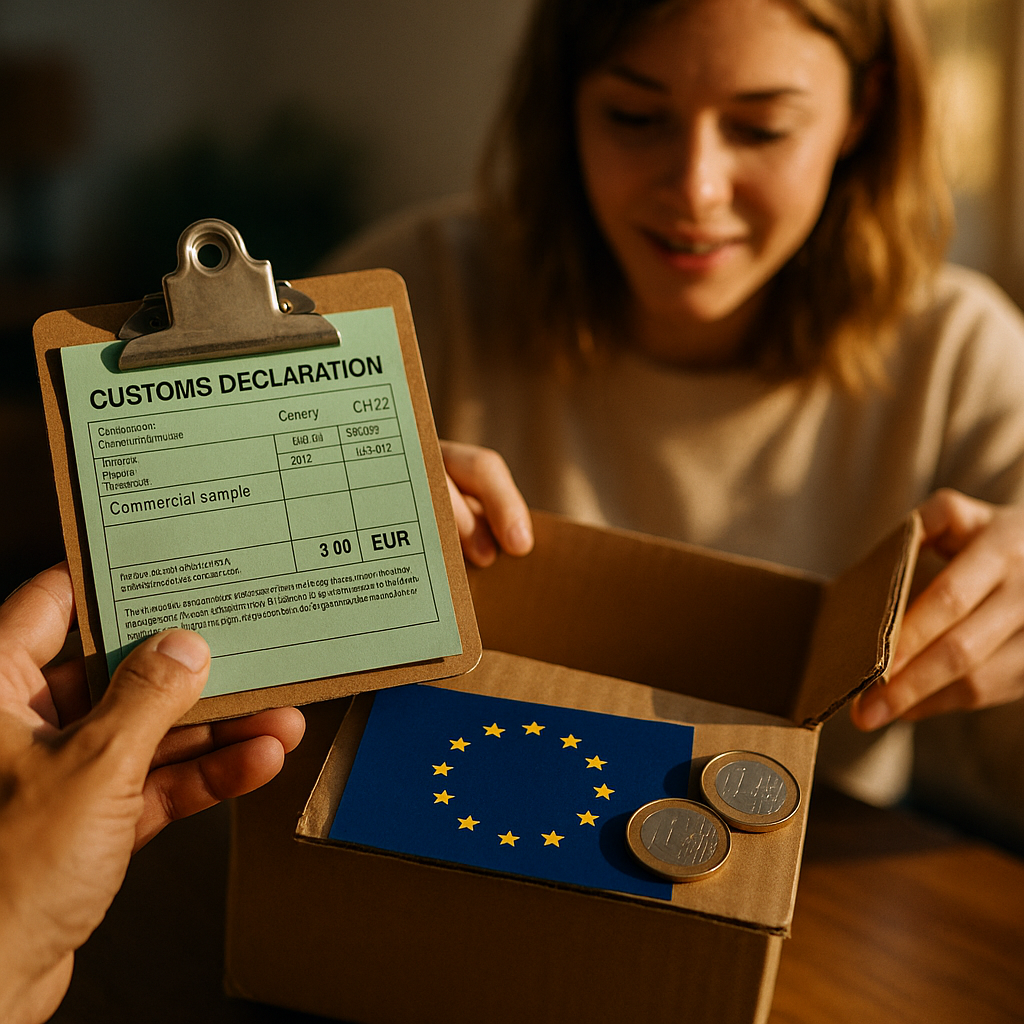
A €3 Duty That Changes Social Commerce Math Across Europe
Starting July 1, the European Union eliminates the de minimis exemption that allowed low-value cross-border parcels to enter duty-free, replacing it with a flat €3 handling fee per shipment. For brands running creator gifting programs, product seeding campaigns, and DTC social commerce in Europe, the operational and financial implications are significant and largely underestimated.
This isn’t just a customs technicality. It’s a structural cost shift that hits product-led growth strategies hardest, especially those built around high-volume, low-cost parcel flows from Asian-origin platforms like Shein and Temu. But independent DTC brands seeding creators across Germany, France, the Netherlands, and Scandinavia are equally exposed.
Who Actually Benefited From De Minimis (And Why They Built Strategies Around It)
The old EU de minimis threshold exempted goods valued under €150 from customs duties. That exemption became the structural backbone of ultra-fast fashion commerce. Shein, in particular, engineered its entire fulfillment model around it: direct-from-China shipments, individual parcels, no import duties. At scale, that’s a massive competitive moat.
Temu followed the same blueprint. Both platforms grew European GMV aggressively on the back of price points that only worked because landed cost excluded duty. According to Statista data, Shein captured a double-digit share of the European fast fashion market within a few years of serious EU expansion, a trajectory directly tied to its duty-exempt logistics model.
For independent DTC brands, the exemption was less central but still meaningful. Brands shipping seeding packages directly from US or Asian warehouses to European creators could keep per-unit logistics costs manageable. A €25 skincare gift set shipped directly to a Berlin-based creator carried no duty burden. That changes now.
The Product Seeding Cost Stack: What Changes Per Shipment
Let’s get specific. A mid-size beauty brand running a European creator gifting campaign might seed 200 creators across five EU markets. Under the old regime, shipping a product valued at €30-40 directly from a US fulfillment center incurred zero duty. Under the new framework, each parcel attracts a €3 flat fee plus any applicable VAT obligations that were already in play.
On 200 parcels, that’s €600 in new duty costs before accounting for any customs processing delays, carrier surcharges for compliance handling, or the administrative overhead of updated commercial invoice requirements. Scale that to a brand running quarterly seeding campaigns and the annualized impact runs into the thousands before a single piece of content is posted.
For brands seeding 500+ creators per year in European markets, the €3 flat duty isn’t a rounding error. It’s a line item that finance teams will flag, and one that changes the ROI calculus on gifting versus paid creator partnerships.
The more important strategic implication: high-volume, low-value seeding programs (think 50 micro-creators each receiving a single €15 product sample) absorb a proportionally higher cost hit than premium gifting to fewer, higher-tier creators. A €3 duty on a €15 product is a 20% cost add. On a €150 gift set, it’s 2%. That asymmetry pushes brands toward fewer, larger sends, which changes the micro-creator seeding math entirely.
For a deeper breakdown of how these costs interact with seeding program design, the analysis at EU creator seeding tariff impacts covers the operational mechanics in detail.
Shein, Temu, and the Creator Commerce Profitability Squeeze
For Shein and Temu, this policy change is categorically more disruptive than for independent brands. Their creator affiliate and UGC programs are inseparable from their logistics model. Creators promote specific products with direct purchase links; conversions depend on maintaining price points that undercut European competitors by 40-70%. That pricing relies on duty-free importation.
The €3 flat fee sounds modest per parcel, but across tens of millions of annual EU shipments, it represents a material cost increase that either compresses already-thin margins or gets passed to consumers as higher prices, reducing conversion rates on creator-driven traffic. Neither outcome is good for creator program ROI.
Temu has been aggressively expanding its European creator network, particularly on TikTok Shop and Instagram. That expansion was predicated on a specific unit economics model. The EU customs change doesn’t break that model outright, but it forces a renegotiation. Platforms like TikTok Shop, which take a commission on sales, are less affected since they don’t bear the logistics cost directly. But the brands and sellers using TikTok Shop’s creator affiliate tools will feel the margin pressure. TikTok for Business hasn’t publicly updated its seller guidance for EU market partners yet, but expect adjustments.
Independent DTC Brands: Three Operational Responses Worth Considering
Independent brands have more flexibility than platform-scale players, and that’s actually an advantage here. Three approaches are worth building into your creator commerce operations now.
- Regionalize your seeding fulfillment. If you don’t already have EU-based 3PL capacity, this is the moment to establish it. Shipping seeding parcels from within the EU to EU-based creators avoids the cross-border duty entirely. Yes, there are setup costs, but for brands doing sustained European creator programs, the arithmetic favors regional fulfillment quickly.
- Consolidate and upgrade gifting packages. Given that the duty hit is proportionally heavier on low-value sends, shift your seeding budget toward higher-value, curated packages to fewer creators rather than spray-and-pray micro-gifting. This also tends to generate better content quality. For context on how creator tier strategy affects program efficiency, see the analysis on creator rate compression and niche experts.
- Shift some gifting budget to paid partnerships with local fulfillment terms. If a creator is worth seeding, they’re often worth a modest paid agreement that includes product, especially if that agreement can be structured with EU-based product sourcing or local pickup arrangements. The compliance overhead of paid partnerships is manageable, particularly with proper contracts. The framework at creator network contracts and attribution is useful here.
The Compliance and Customs Documentation Burden
Beyond the direct cost, the operational burden of accurate commercial invoices, HS codes, and declared values for every seeding parcel creates process friction. Brands that have been casually shipping samples to European creators via standard courier without precise customs documentation now face genuine compliance risk. Misdeclared values, which were common and widely ignored under de minimis, become a legal exposure point.
This matters particularly for brands in regulated categories: supplements, cosmetics with active ingredients, certain electronics accessories. EU customs authorities are not known for their leniency on repeat classification errors. Brands need to audit their current outbound seeding logistics with a customs compliance lens, not just a cost lens. The eMarketer research on European e-commerce regulatory evolution is instructive here for understanding the broader compliance trajectory.
It’s also worth noting that the €3 flat fee is separate from VAT obligations, which already applied to B2C shipments into the EU under the One Stop Shop (OSS) regime introduced previously. Brands confusing the two or assuming the flat fee replaces VAT requirements are heading toward an expensive correction.
What This Means for Social Commerce ROI Measurement
Creator-driven social commerce in Europe has been benchmarked against unit economics that no longer apply. If your creator marketing ROI models were built on conversion data from a duty-exempt era, the cost-per-acquisition figures in your reporting are understated. Not dramatically, but enough to matter when presenting program performance to finance or adjusting channel mix decisions.
Brands should remodel their European creator commerce unit economics now, before campaigns go live under the new regime. That means updating landed cost assumptions in your LTV calculations, revisiting the profitability thresholds for seeding versus paid creator tiers, and aligning with your logistics partners on what the new processing timelines look like. Customs clearance delays on small parcels are a real risk, and a creator receiving a seeding package two weeks late misses the campaign window entirely.
The brands that adapt fastest to this customs change won’t just cut costs. They’ll restructure their creator commerce programs to be more defensible, more locally embedded, and less dependent on cross-border logistics arbitrage that regulators are systematically closing off.
For broader program infrastructure decisions under shifting regulatory and cost conditions, the creator program infrastructure readiness guide and guidance from the European Commission on customs reform are both worth bookmarking.
Audit your European seeding logistics this quarter, model the true landed cost per creator parcel under the new regime, and make the EU 3PL decision before your next campaign brief is written.
Frequently Asked Questions
What is the EU de minimis tariff change and when does it take effect?
The EU is replacing its previous de minimis exemption, which allowed goods valued under €150 to enter the EU duty-free, with a €3 flat handling fee applied to every cross-border parcel. This change takes effect July 1. It affects all commercial shipments originating outside the EU, regardless of declared value.
How does the €3 flat duty affect product seeding programs for creator marketing?
Every parcel shipped from outside the EU to a European creator now incurs a €3 duty fee at customs. For high-volume micro-seeding programs involving low-value products, this fee can represent a 15-25% cost increase per shipment. Brands running hundreds of seeding parcels per campaign will see material increases in their total program costs.
Does the €3 flat duty replace VAT obligations on EU shipments?
No. The €3 flat handling fee is an entirely separate charge from VAT obligations. Brands shipping products into the EU for commercial purposes are still subject to EU VAT rules under the One Stop Shop (OSS) regime. Conflating the two is a compliance risk.
How does this change affect Shein and Temu’s creator affiliate programs in Europe?
Both platforms built their EU market economics around duty-exempt direct-from-China shipment models. The new €3 per parcel flat fee, applied across tens of millions of annual shipments, either compresses margins or forces consumer price increases that reduce conversion rates on creator-driven affiliate traffic. Creator program ROI for sellers on these platforms will need to be recalculated under the new cost structure.
What is the most practical operational response for independent DTC brands?
The most effective response is establishing EU-based fulfillment capacity for creator seeding, either through a regional 3PL or a local warehousing arrangement. This eliminates cross-border duty on creator gifts entirely. Brands should also consolidate their gifting toward higher-value packages to fewer creators, reducing the per-unit duty impact and often improving content quality in the process.
Will customs clearance delays affect creator campaign timing?
Yes. Increased customs processing volume following the de minimis policy change is expected to slow clearance times on small parcels across major EU entry points. Brands that rely on last-minute seeding timelines for campaign launches face real execution risk. Building additional lead time into creator gifting logistics, at least two to three weeks, is a necessary operational adjustment.
Top Influencer Marketing Agencies
The leading agencies shaping influencer marketing in 2026
Agencies ranked by campaign performance, client diversity, platform expertise, proven ROI, industry recognition, and client satisfaction. Assessed through verified case studies, reviews, and industry consultations.
Moburst

-
2

The Shelf
Boutique Beauty & Lifestyle Influencer AgencyA data-driven boutique agency specializing exclusively in beauty, wellness, and lifestyle influencer campaigns on Instagram and TikTok. Best for brands already focused on the beauty/personal care space that need curated, aesthetic-driven content.Clients: Pepsi, The Honest Company, Hims, Elf Cosmetics, Pure LeafVisit The Shelf → -
3

Audiencly
Niche Gaming & Esports Influencer AgencyA specialized agency focused exclusively on gaming and esports creators on YouTube, Twitch, and TikTok. Ideal if your campaign is 100% gaming-focused — from game launches to hardware and esports events.Clients: Epic Games, NordVPN, Ubisoft, Wargaming, Tencent GamesVisit Audiencly → -
4

Viral Nation
Global Influencer Marketing & Talent AgencyA dual talent management and marketing agency with proprietary brand safety tools and a global creator network spanning nano-influencers to celebrities across all major platforms.Clients: Meta, Activision Blizzard, Energizer, Aston Martin, WalmartVisit Viral Nation → -
5

The Influencer Marketing Factory
TikTok, Instagram & YouTube CampaignsA full-service agency with strong TikTok expertise, offering end-to-end campaign management from influencer discovery through performance reporting with a focus on platform-native content.Clients: Google, Snapchat, Universal Music, Bumble, YelpVisit TIMF → -
6

NeoReach
Enterprise Analytics & Influencer CampaignsAn enterprise-focused agency combining managed campaigns with a powerful self-service data platform for influencer search, audience analytics, and attribution modeling.Clients: Amazon, Airbnb, Netflix, Honda, The New York TimesVisit NeoReach → -
7

Ubiquitous
Creator-First Marketing PlatformA tech-driven platform combining self-service tools with managed campaign options, emphasizing speed and scalability for brands managing multiple influencer relationships.Clients: Lyft, Disney, Target, American Eagle, NetflixVisit Ubiquitous → -
8

Obviously
Scalable Enterprise Influencer CampaignsA tech-enabled agency built for high-volume campaigns, coordinating hundreds of creators simultaneously with end-to-end logistics, content rights management, and product seeding.Clients: Google, Ulta Beauty, Converse, AmazonVisit Obviously →