


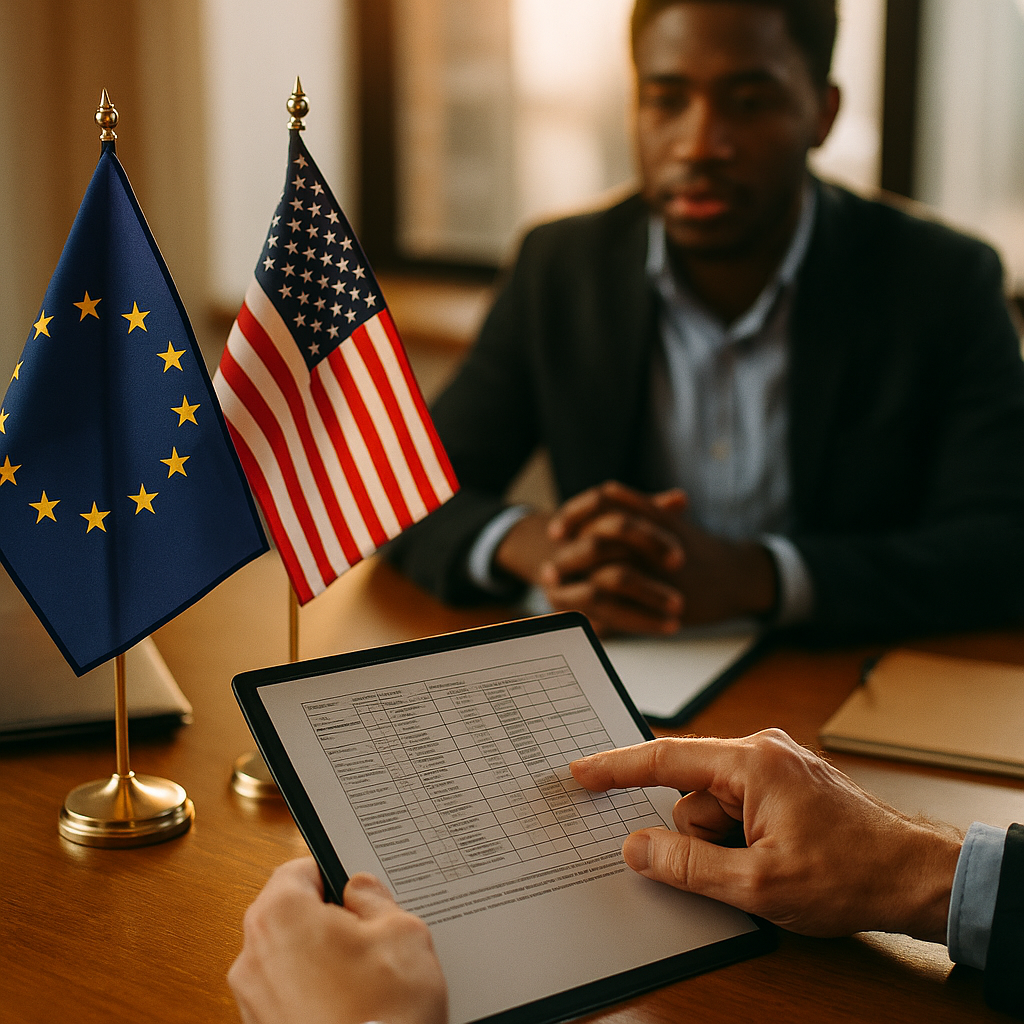
One AI-generated brand ambassador. Three jurisdictions. Zero unified compliance standard. If you’re running a global creator program in 2026 and treating EU AI Act compliance as a separate workstream from your US state deepfake obligations, you’re already behind — and probably duplicating legal spend on rules that could live in a single matrix.
Marketing and legal teams keep building parallel compliance tracks: one for Brussels, one for Sacramento, one for Albany. That’s expensive, slow, and prone to gaps. The smarter move is reconciling both frameworks into a single operational system before your next AI-influencer campaign goes live.
Two Regimes, One Synthetic Performer
The EU AI Act classifies AI systems by risk level: unacceptable, high, limited, and minimal. Synthetic performers and AI-generated endorsers mostly land in the “limited risk” tier, which triggers transparency obligations under Article 50 — you must disclose that content is AI-generated or manipulated, full stop. No nuance about audience size, no carve-out for nano-influencer budgets.
US state laws work differently. They’re not risk-tiered at all. California’s AB 2839 and AB 2655, New York’s proposed synthetic performer statutes, and Tennessee’s ELVIS Act each define specific triggers: election-adjacent content, likeness commercialization, voice cloning without consent. There’s no scaled response based on system risk — it’s binary. Either you triggered the statute or you didn’t.
That’s the core reconciliation problem. The EU asks “how risky is this AI system?” US states ask “did you use someone’s likeness or voice without a specific type of consent?” A single AI spokesperson campaign can be simultaneously low-risk under the EU framework and high-liability under Tennessee law.
A synthetic performer campaign compliant with the EU AI Act’s limited-risk disclosure rule can still trigger six-figure liability under a single US state’s right-of-publicity statute — the frameworks measure entirely different things.
Why Brands Can’t Just Pick the Stricter Standard
The lazy answer is “comply with whichever law is toughest and you’re covered everywhere.” It doesn’t work here because the two systems aren’t nested — they’re orthogonal. EU AI Act disclosure requirements are about labeling and transparency. US state laws are frequently about consent and commercial use rights, independent of whether you disclosed anything.
You can label an AI avatar perfectly under Article 50, satisfy every transparency requirement in the regulation, and still get sued in New York for using a deceased performer’s likeness without estate consent. Disclosure isn’t a defense to a right-of-publicity claim. Conversely, you could secure airtight consent for a synthetic voice clone in Tennessee and still violate EU transparency rules if you don’t label the content clearly enough for EU audiences.
Global brands running the same synthetic performer asset across US and EU markets need two independent compliance checks, not one blended standard. That’s the uncomfortable truth procurement teams don’t want to hear when they’re trying to cut legal review time.
Building the Matrix: What Actually Has to Live in One System
A working global compliance matrix for AI creators needs to track at least five variables per asset, per market:
- Risk classification under the EU AI Act — is the synthetic performer limited-risk (most marketing use cases) or does it cross into high-risk territory (biometric categorization, emotion recognition targeting minors)?
- Disclosure format compliance — EU transparency rules require clear, machine-readable-adjacent labeling; platform AI labels alone often don’t satisfy this, a gap covered in our piece on why platform AI labels won’t cover state deepfake laws.
- State-by-state trigger mapping — does the specific state where the audience sits require consent, disclosure, or both? Our state-by-state synthetic performer disclosure comparison is a useful baseline for this layer.
- Consent chain documentation — for likeness, voice, and performance rights, tracked separately from disclosure compliance.
- Minor-adjacent risk flags — synthetic performers used in campaigns with under-18 audience overlap need an additional compliance layer, similar to the logic in our under-16 creator marketing compliance matrix.
Notice none of these variables cancel each other out. A campaign can pass four of five checks and still fail on the fifth. That’s why a spreadsheet with a single “compliant/non-compliant” column is functionally useless for this. You need a matrix, not a checklist.
Where the EU AI Act’s Risk Tiers Actually Bite
Most brand-side synthetic performers — AI-generated spokesmodels, virtual influencers, voice-cloned narrators for ads — sit in the EU AI Act’s limited-risk tier. That means Article 50 transparency obligations apply: users must be informed they’re interacting with or viewing AI-generated content, “in a clear and distinguishable manner,” per the European Commission’s own guidance on the Act.
But watch the edge cases. If your synthetic performer campaign involves any biometric categorization (age estimation, emotion detection to tailor messaging), you’ve potentially jumped into high-risk territory, which brings conformity assessments, technical documentation, and human oversight requirements that dwarf a simple disclosure label. Retail media networks experimenting with AI-driven audience targeting should read this alongside our breakdown of who owns the risk in retail media in-house creative, because the targeting layer and the performer layer often get regulated by different provisions entirely.
The EU AI Act’s enforcement window has been rolling out in phases, with the bulk of transparency obligations for GPAI and limited-risk systems reaching full applicability through the mid-2020s rollout schedule. If your legal team is still treating this as “not yet enforceable,” that clock has largely run out.
US State Law Fragmentation Isn’t Slowing Down
While the EU operates one regulation across 27 member states, the US is adding synthetic performer statutes state by state, with no federal preemption in sight. That means your compliance matrix isn’t a fixed document — it’s a living one that needs quarterly review at minimum.
California requires clear disclosure for digitally altered political content and has separate provisions touching commercial synthetic media. Tennessee’s ELVIS Act extends voice protection well beyond traditional right-of-publicity statutes, specifically naming AI voice cloning. New York has been active on both deepfake disclosure and creator-specific labor protections. And that’s before you account for the states currently drafting new bills — expect more by year-end.
Compare this to how the FTC handles endorsement disclosure federally: broad principles, enforced case by case, without the granular statutory triggers states are writing. Our coverage of the FTC’s endorsement guide updates is a useful federal baseline, but it doesn’t substitute for state-level synthetic performer statutes — they operate on entirely separate legal theories (deceptive practices versus right-of-publicity and biometric consent).
The US doesn’t have a synthetic performer law. It has at least a dozen, each defining “synthetic,” “disclosure,” and “consent” slightly differently — and that number is growing every legislative session.
Operationalizing the Matrix Without Grinding Campaigns to a Halt
Here’s where most compliance efforts die: legal builds an airtight framework, then marketing ignores it because it adds three weeks to campaign launch. The fix isn’t a simpler framework — it’s a faster intake process built around the matrix.
Practical steps that actually get adopted:
- Tag every AI-performer asset at creation with intended markets, not just intended platforms. A TikTok video doesn’t respect borders, but your compliance obligations do.
- Build a pre-launch checklist modeled on the approach in our AI shopping agent disclosure checklist, adapted for synthetic performer content specifically.
- Separate script-level AI disclosure from performer-level disclosure. These are governed differently — see our analysis of why AI-written scripts need more than an ad label for the script side of this equation.
- Assign a single owner for matrix updates — legal, not marketing ops, because state legislative tracking is a legal research function, not a campaign management one.
- Build indemnification language into every AI vendor and platform contract that accounts for jurisdiction-specific liability, an approach covered in our piece on indemnification clauses for AI-driven media buying.
According to eMarketer, spending on AI-generated and virtual influencer content is projected to keep climbing through the back half of the decade, which means the compliance surface area only grows. Waiting for a unified global standard isn’t a strategy. It’s a bet that regulators will move slower than your media plan, and that bet has already lost more than once.
Brands running synthetic performers at scale should also track platform-level policy shifts, since Meta and TikTok’s own AI labeling systems increasingly interact with (but don’t replace) statutory obligations — see Meta’s business platform guidance and TikTok’s advertiser resources for current label mechanics. Neither satisfies EU Article 50 or state consent law on its own.
The Real Cost of Getting This Wrong
Non-compliance under the EU AI Act carries fines up to €35 million or 7% of global annual turnover for the most severe violations — a figure that dwarfs most US state statutory penalties, per guidance published by the ICO on overlapping AI and data protection enforcement. But US state suits carry something the EU fines don’t: individual plaintiff standing, class action exposure, and reputational damage that plays out in the same media cycle as your campaign launch.
Treat this as a single risk surface, not two separate compliance projects competing for the same legal budget.
FAQs
Frequently Asked Questions
Does EU AI Act compliance automatically satisfy US state synthetic performer laws?
No. The EU AI Act governs disclosure and risk classification, while most US state laws govern consent and likeness rights. A campaign can meet EU transparency standards and still violate a US state’s right-of-publicity or biometric consent statute.
Which US states currently have the strictest synthetic performer laws?
Tennessee’s ELVIS Act, California’s AB 2839 and AB 2655, and New York’s deepfake disclosure provisions are among the most active statutes as of now, with several other states drafting comparable bills.
What risk tier does most branded AI content fall into under the EU AI Act?
Most commercial synthetic performers and AI-generated endorsers fall into the “limited risk” category, triggering Article 50 transparency obligations rather than the stricter high-risk conformity assessment requirements.
Can platform AI labels (like Meta’s or TikTok’s) replace legal disclosure requirements?
No. Platform-native AI labels are a UX feature, not a legal compliance mechanism. They generally don’t satisfy EU Article 50 transparency standards or US state-specific consent and disclosure requirements on their own.
How often should a global creator compliance matrix be updated?
At minimum quarterly, given the pace of new US state legislation. Legal teams should treat state-level synthetic performer law tracking as an ongoing research function, not a one-time build.
Next step: Before your next AI-performer campaign crosses a border, run the asset through both a risk-tier check and a state-trigger check separately — then document both outcomes in one matrix, not two disconnected files that legal and marketing never actually compare.
Top Influencer Marketing Agencies
The leading agencies shaping influencer marketing in 2026
Agencies ranked by campaign performance, client diversity, platform expertise, proven ROI, industry recognition, and client satisfaction. Assessed through verified case studies, reviews, and industry consultations.
Moburst

-
2

The Shelf
Boutique Beauty & Lifestyle Influencer AgencyA data-driven boutique agency specializing exclusively in beauty, wellness, and lifestyle influencer campaigns on Instagram and TikTok. Best for brands already focused on the beauty/personal care space that need curated, aesthetic-driven content.Clients: Pepsi, The Honest Company, Hims, Elf Cosmetics, Pure LeafVisit The Shelf → -
3

Audiencly
Niche Gaming & Esports Influencer AgencyA specialized agency focused exclusively on gaming and esports creators on YouTube, Twitch, and TikTok. Ideal if your campaign is 100% gaming-focused — from game launches to hardware and esports events.Clients: Epic Games, NordVPN, Ubisoft, Wargaming, Tencent GamesVisit Audiencly → -
4

Viral Nation
Global Influencer Marketing & Talent AgencyA dual talent management and marketing agency with proprietary brand safety tools and a global creator network spanning nano-influencers to celebrities across all major platforms.Clients: Meta, Activision Blizzard, Energizer, Aston Martin, WalmartVisit Viral Nation → -
5

The Influencer Marketing Factory
TikTok, Instagram & YouTube CampaignsA full-service agency with strong TikTok expertise, offering end-to-end campaign management from influencer discovery through performance reporting with a focus on platform-native content.Clients: Google, Snapchat, Universal Music, Bumble, YelpVisit TIMF → -
6

NeoReach
Enterprise Analytics & Influencer CampaignsAn enterprise-focused agency combining managed campaigns with a powerful self-service data platform for influencer search, audience analytics, and attribution modeling.Clients: Amazon, Airbnb, Netflix, Honda, The New York TimesVisit NeoReach → -
7

Ubiquitous
Creator-First Marketing PlatformA tech-driven platform combining self-service tools with managed campaign options, emphasizing speed and scalability for brands managing multiple influencer relationships.Clients: Lyft, Disney, Target, American Eagle, NetflixVisit Ubiquitous → -
8

Obviously
Scalable Enterprise Influencer CampaignsA tech-enabled agency built for high-volume campaigns, coordinating hundreds of creators simultaneously with end-to-end logistics, content rights management, and product seeding.Clients: Google, Ulta Beauty, Converse, AmazonVisit Obviously →