


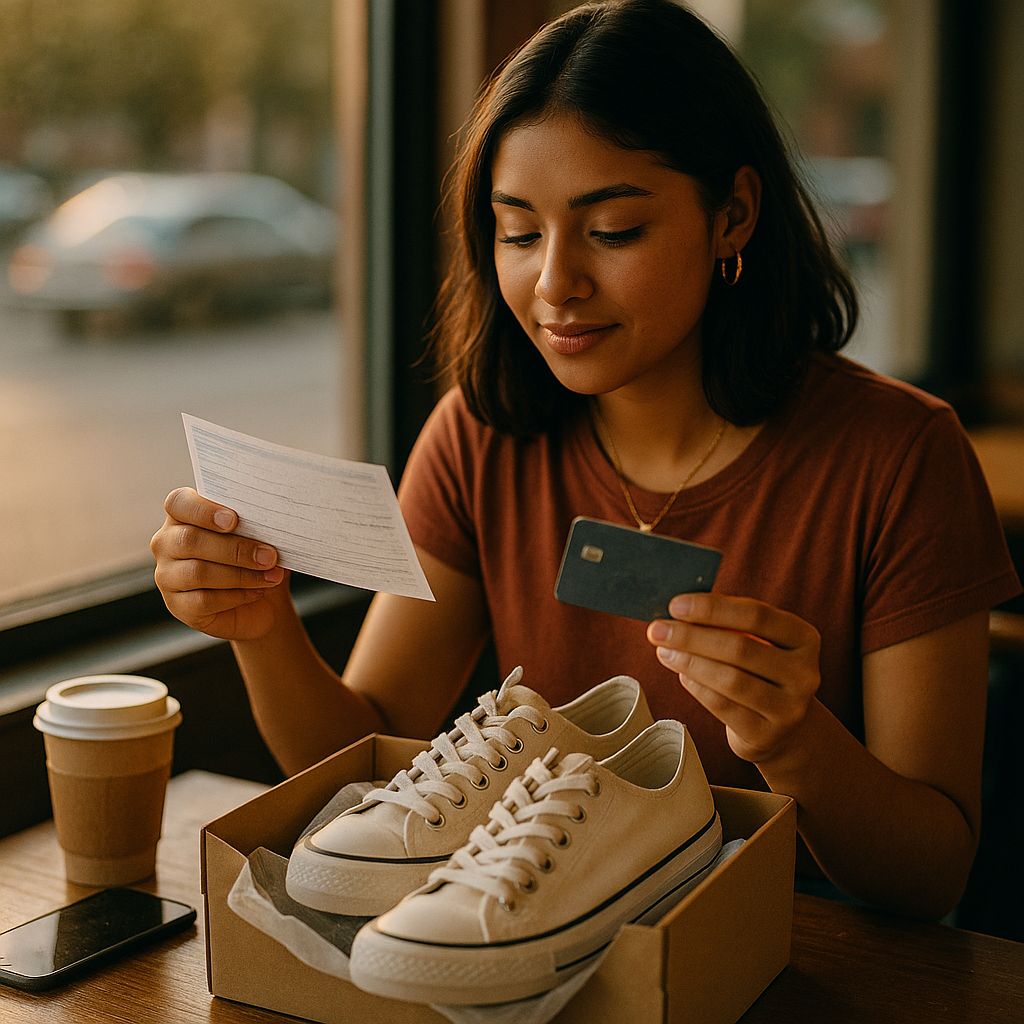
Gen Z workers cash their first “real” paycheck and, within 48 hours, roughly a third of it goes toward a single splurge purchase they’ve been eyeing for months. That’s not a guess — it’s a pattern showing up across TikTok Shop data and creator commerce reports, and it’s spawned a content genre brands are scrambling to brief correctly. The first-paycheck splurge format taps into a real financial and emotional milestone. Get the brief wrong, and it reads like exploitation. Get it right, and it’s some of the highest-converting aspirational content in the creator economy right now.
This isn’t another unboxing trend. It’s a narrative built on delayed gratification, self-reward psychology, and a very specific audience: 22-to-26-year-olds who just started earning real money and are deciding, often publicly, what that money is for. Brands that understand the emotional architecture of that moment — and brief creators accordingly — are seeing outsized engagement compared to generic product demos.
Why This Format Works on a Generation That Distrusts Ads
Gen Z is famously ad-skeptical. Sprout Social and other industry trackers have documented this cohort’s preference for peer recommendations over branded messaging for years running. So why does the first-paycheck splurge format cut through?
Because it’s not selling a product. It’s narrating a rite of passage. The purchase is incidental to the story — the real content is “I worked hard, I waited, and now I’m allowed to have this.” That’s a universal emotional beat, and Gen Z creators are unusually good at performing vulnerability around money, a subject older generations were taught to keep private.
The splurge format succeeds because it reframes a purchase as a milestone, not a transaction — and milestones get shared, saved, and re-watched in ways product demos never do.
There’s also a structural tailwind: this audience is entering the workforce during a period of intense financial anxiety. Student debt, rent inflation, gig-economy instability — all of it makes the “first paycheck splurge” feel earned rather than frivolous. Brands that position their product as the reward for financial discipline, not an impulsive indulgence, align with how this generation actually wants to see itself.
The Core Narrative Arc Brands Should Brief For
Every strong splurge-format video follows a loose four-beat structure. Deviate from it and the content starts to feel like a standard ad read, which is exactly the trust gap you’re trying to avoid.
- The wait: A quick establishing beat — “I’ve wanted this since my internship,” or “I told myself when I got my first paycheck.” This is where aspiration gets planted.
- The math: A brief, honest glimpse of the decision — rent, savings, bills, then the splurge line item. This beat builds credibility precisely because it’s unglamorous.
- The purchase moment: The unboxing, the try-on, the reveal. This is the emotional payoff and where your product needs to actually perform.
- The justification: A closing line that reframes the spend as earned, not impulsive. “I budgeted for this” lands very differently than “I couldn’t resist.”
Note what’s missing from that arc: a hard sell. There’s no CTA-heavy script, no “link in bio, use code FIRSTCHECK20” tacked onto the end. The commercial intent has to live in the product placement and the caption, not the narration. This is similar to the restraint required in silent subtitle story format briefs, where the product speaks through visuals rather than a pitch.
What Kind of Products Actually Fit This Format?
Not everything belongs in a splurge narrative. The format works best for products with a genuine price-to-aspiration gap — items that feel like a stretch purchase for someone on an entry-level salary. Think: a first designer bag, a nice espresso machine, wireless earbuds a notch above what they had in college, a weekend trip, a skincare device.
It works poorly for everyday consumables or low-consideration purchases. Nobody frames a grocery run as a life milestone (though the nano-creator aisle tours format handles those categories well). If your product doesn’t carry at least some price tension for a 24-year-old on a starting salary, this format will feel forced.
Briefing the Creator: What to Specify (and What to Leave Alone)
Here’s where most brands overcorrect. Because the format leans emotional, marketers sometimes try to script the vulnerability — dictating exact phrases like “I’ve been saving for three months” or “this is my reward for adulting.” Creators can smell inauthenticity in that language instantly, and so can their audience.
Instead, brief the structure and let the creator supply the specifics. Your brief should cover:
- Financial framing guardrails: Require creators to reference budgeting or saving in some form — this keeps the content from reading as reckless spending, which matters both for brand safety and for FTC disclosure contexts around financial claims.
- Disclosure placement: #ad or #sponsored needs to appear early and be unambiguous, per FTC endorsement guidelines. Splurge content’s confessional tone can tempt creators to bury disclosures — don’t let them.
- Product performance beat: At least one unscripted moment showing the product actually working or being used, not just unboxed. This is the difference between an aspirational story and a pure aesthetic flex.
- Tone boundary: No language implying the product is a “treat yourself” impulse buy if your brand doesn’t want to be associated with impulsive spending narratives — this matters more for financial services or big-ticket categories.
- Caption requirements: Where the actual commercial CTA lives, since the video narration should stay soft.
What you should not specify: exact dollar figures for the creator’s salary or savings, specific brand-name competitors they “almost bought instead,” or scripted dialogue attempting to sound like a diary entry. All of that reads as performed the moment an audience notices it.
Where This Intersects With FTC Risk
Splurge content sits in a slightly unusual compliance zone. It’s not making product claims in the traditional sense — there’s rarely a “this cured my skin” moment — but it often implies a financial decision-making process that could be read as advice. If a creator says “I saved for months and this was worth every dollar,” that’s an endorsement of value, and it needs the same disclosure rigor as any other sponsored claim.
Brands that have handled two-sided or claims-heavy formats before — see the discipline required in the two-truths-and-a-lie brief — already understand this instinct: build compliance into the creative structure, don’t bolt it on after the video’s cut. The same applies here. Put disclosure requirements in the brief’s first paragraph, not an appendix nobody reads.
Financial-milestone content carries implied endorsement risk even without explicit product claims — brief disclosure placement as a structural requirement, not an afterthought.
Platform and Format Mechanics
TikTok and Instagram Reels dominate this format, largely because both platforms’ algorithms reward the emotional hook in the first three seconds — and “I got my first paycheck and immediately bought this” is an efficient hook. Vertical video, 30-60 seconds, minimal text overlay beyond a caption line establishing the premise.
TikTok’s ad platform has leaned into creator-led commerce heavily enough that Shop-tagged splurge content routinely outperforms static product ads in click-through, according to internal platform benchmarks shared with advertisers. That’s consistent with broader eMarketer findings on creator content outperforming brand-owned social for younger demographics.
Structurally, this format pairs well with a two-part release: a “waiting/saving” teaser post followed by the actual splurge reveal days later. That mirrors the anticipation-building mechanics used in countdown-to-launch teasers, just reframed around personal finance instead of product launch dates. It also gives brands two content moments to seed instead of one, which matters for campaigns running on tight creator budgets.
Measuring Success Without Overreading Vanity Metrics
Splurge content tends to generate high saves and shares relative to likes — people bookmark it as aspiration, not just entertainment. That’s a meaningfully different engagement signature than, say, a comedic skit format, and brands should adjust KPIs accordingly. If you’re benchmarking this against standard UGC performance, saves-to-views ratio and comment sentiment (are people saying “I want this for my first paycheck too”?) matter more than raw view count.
Attribution is trickier. The purchase decision this content inspires is often delayed by weeks or months — nobody buys a designer bag the day they see a TikTok about it, they save it for when their own paycheck lands. HubSpot‘s guidance on multi-touch attribution is worth revisiting here; last-click models will systematically undervalue this format’s contribution.
Common Mistakes That Break the Format
- Over-scripting the emotional beats. Audiences catch fake vulnerability fast, and it torches trust in both the creator and the brand.
- Skipping the “math” beat entirely. Without some acknowledgment of budgeting, the content reads as tone-deaf during a cost-of-living squeeze.
- Casting the wrong creator. This format demands someone genuinely early in their earning journey, or at least able to perform that credibly. A creator with an obviously affluent lifestyle undercuts the entire premise.
- Weak disclosure placement. Given the financial-decision undertone, buried or ambiguous sponsorship disclosure is a bigger risk here than in lower-stakes formats.
- Ignoring category fit. Forcing low-consideration products into a high-aspiration narrative just looks desperate.
Brands that have run adjacent aspirational formats — the origin-story approach in origin-to-launch micro-documentaries, for instance — already know the core lesson: authenticity signals can’t be manufactured, only structured for. The first-paycheck splurge format is unforgiving of shortcuts because the entire premise is built on perceived sincerity.
FAQs
Frequently Asked Questions
What is the first-paycheck splurge format in influencer marketing?
It’s a creative format where creators, typically Gen Z, narrate buying an aspirational product using money from their first “real” paycheck, framing the purchase as a personal milestone rather than a straightforward product demo.
Which products work best for this format?
Products with a genuine price-to-aspiration gap for entry-level earners work best — items like a first designer accessory, a premium tech upgrade, or a splurge experience. Everyday low-consideration items generally don’t fit the narrative.
Does this format carry FTC compliance risks?
Yes. Even without explicit product claims, implying a value judgment (“worth every dollar I saved”) functions as an endorsement and requires clear, early disclosure per FTC guidelines. Brief disclosure placement as a non-negotiable structural element.
How should brands measure success for splurge-format content?
Prioritize saves-to-views ratio and comment sentiment over raw view counts, since this content tends to be bookmarked as aspiration rather than immediately acted on. Expect delayed conversion and use multi-touch attribution rather than last-click models.
What’s the biggest mistake brands make when briefing this format?
Over-scripting the emotional and financial details. Audiences can spot manufactured vulnerability quickly, which undermines both creator credibility and brand trust.
Start small: pick one product with real aspirational stretch, brief a single creator using the four-beat arc above, and measure saves before you scale spend. The format rewards restraint far more than production budget.
Top Influencer Marketing Agencies
The leading agencies shaping influencer marketing in 2026
Agencies ranked by campaign performance, client diversity, platform expertise, proven ROI, industry recognition, and client satisfaction. Assessed through verified case studies, reviews, and industry consultations.
Moburst

-
2

The Shelf
Boutique Beauty & Lifestyle Influencer AgencyA data-driven boutique agency specializing exclusively in beauty, wellness, and lifestyle influencer campaigns on Instagram and TikTok. Best for brands already focused on the beauty/personal care space that need curated, aesthetic-driven content.Clients: Pepsi, The Honest Company, Hims, Elf Cosmetics, Pure LeafVisit The Shelf → -
3

Audiencly
Niche Gaming & Esports Influencer AgencyA specialized agency focused exclusively on gaming and esports creators on YouTube, Twitch, and TikTok. Ideal if your campaign is 100% gaming-focused — from game launches to hardware and esports events.Clients: Epic Games, NordVPN, Ubisoft, Wargaming, Tencent GamesVisit Audiencly → -
4

Viral Nation
Global Influencer Marketing & Talent AgencyA dual talent management and marketing agency with proprietary brand safety tools and a global creator network spanning nano-influencers to celebrities across all major platforms.Clients: Meta, Activision Blizzard, Energizer, Aston Martin, WalmartVisit Viral Nation → -
5

The Influencer Marketing Factory
TikTok, Instagram & YouTube CampaignsA full-service agency with strong TikTok expertise, offering end-to-end campaign management from influencer discovery through performance reporting with a focus on platform-native content.Clients: Google, Snapchat, Universal Music, Bumble, YelpVisit TIMF → -
6

NeoReach
Enterprise Analytics & Influencer CampaignsAn enterprise-focused agency combining managed campaigns with a powerful self-service data platform for influencer search, audience analytics, and attribution modeling.Clients: Amazon, Airbnb, Netflix, Honda, The New York TimesVisit NeoReach → -
7

Ubiquitous
Creator-First Marketing PlatformA tech-driven platform combining self-service tools with managed campaign options, emphasizing speed and scalability for brands managing multiple influencer relationships.Clients: Lyft, Disney, Target, American Eagle, NetflixVisit Ubiquitous → -
8

Obviously
Scalable Enterprise Influencer CampaignsA tech-enabled agency built for high-volume campaigns, coordinating hundreds of creators simultaneously with end-to-end logistics, content rights management, and product seeding.Clients: Google, Ulta Beauty, Converse, AmazonVisit Obviously →