


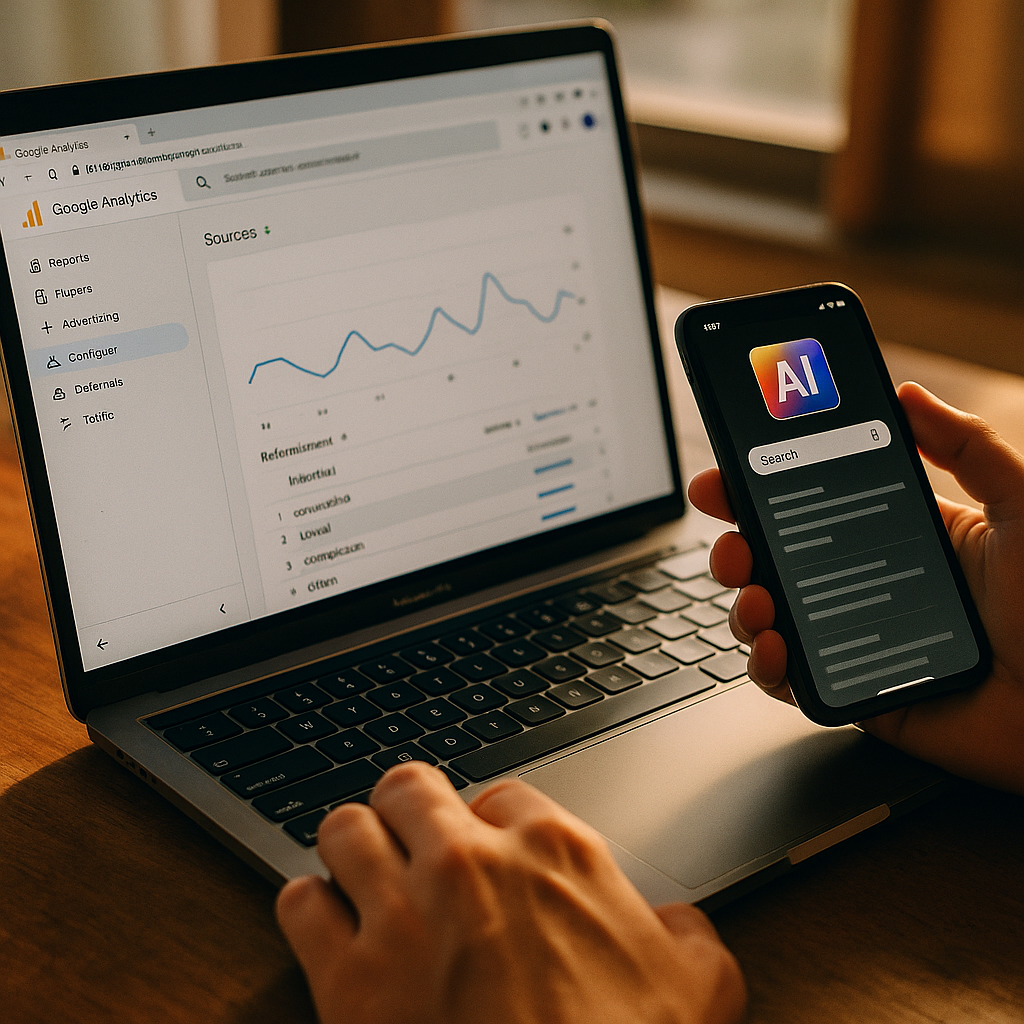
Check your GA4 property this week and you’ll likely see a channel that didn’t exist a year ago quietly pulling in double-digit percentages of new sessions. AI search referral traffic is no longer a rounding error buried inside “Organic Search” or “Referral.” Google gave it a name, a default grouping, and a seat at the reporting table. That single taxonomy change just made generative discovery visible to every brand that bothered to look.
Why GA4 Finally Split This Out
For the better part of two years, traffic from ChatGPT, Perplexity, Gemini, and Copilot got lumped into whatever bucket GA4’s pattern-matching rules assigned it. Sometimes it landed in Referral. Sometimes, confusingly, it showed up as Direct because there was no referrer header to parse. Marketers building attribution models were essentially guessing at a growing traffic source, which is a bad place to be when budget conversations depend on the numbers.
Google’s answer was to introduce a dedicated default channel grouping that isolates traffic arriving from AI chat interfaces and generative answer engines. It’s not a perfect science, source detection still relies on referrer strings and domain lists, but it’s a meaningful upgrade from the old catch-all approach. If you manage analytics for a brand or agency, this is the first time you can pull a semi-reliable number for “how much traffic came from someone asking an AI a question and clicking through.”
The point isn’t that AI search traffic suddenly appeared. It’s that GA4 finally admitted it was there all along, hiding inside Direct and Referral data that made attribution reporting quietly wrong for two years.
What the Numbers Actually Show
Early data pulled from properties across retail, SaaS, and publishing verticals shows AI referral sessions ranging from 2% to 15% of total site traffic, depending on category and content depth. Publishers and review sites skew higher. Ecommerce brands with strong product-page SEO are seeing smaller but faster-growing shares, often doubling quarter over quarter. That growth trajectory matters more than the raw percentage right now.
Compare that against the broader research already circulating in the industry. Half of consumers now start research in AI search, according to McKinsey findings covered here previously, and that behavioral shift is finally showing up in the analytics layer brands actually operate from. The consumer behavior data and the platform-level reporting are converging. That’s a strong signal, not a coincidence.
It also lines up with generational data. Gen Z’s documented preference for chat-based discovery over traditional search bars, explored in why Gen Z picks ChatGPT over Google, isn’t a fringe behavior anymore. It’s showing up in session-level data across GA4 properties that serve younger audiences, from DTC apparel to fintech apps.
The Attribution Problem Nobody’s Fully Solved
Here’s the uncomfortable part. Even with a dedicated channel grouping, AI referral data in GA4 remains incomplete. Large language models don’t always pass clean UTM parameters. Some answer engines strip referrer data entirely for privacy reasons. Others cite your content without ever sending a click, meaning your brand gets mentioned inside a Gemini or ChatGPT response and you never see a session at all in Google Analytics.
That last category, zero-click generative visibility, is arguably bigger than the referral traffic itself. You’re influencing a purchase decision with zero attribution trail. This is the same measurement blind spot that’s forced marketers to rethink content sequencing entirely, a challenge already broken down in fixing content sequencing for AI search research. GA4’s new grouping helps with the visible slice. It does nothing for the dark traffic sitting upstream of it.
So what do you do operationally? Three things, realistically:
- Stop treating GA4’s AI channel data as complete. Treat it as a directional floor, not a ceiling.
- Cross-reference with server-side logs or a CDP that can catch sessions GA4 misclassifies as Direct.
- Build a parallel tracking sheet for brand mentions inside AI answers, even without clicks, using tools built for generative visibility monitoring.
Which Verticals Are Feeling It First
B2B software and financial services are seeing outsized AI referral growth because buyers use chat interfaces to shortlist vendors before ever visiting a site. Health and wellness brands are next, largely because consumers trust conversational answers for symptom research more than they trust a page of ten blue links. Retail is more mixed. Product discovery still happens heavily on Amazon, TikTok, and retail media placements, a trend documented in retail media’s shoppable video shift, which pulls some discovery volume away from generative search entirely.
That vertical variance matters when you’re setting internal expectations. A CMO at a SaaS company should expect AI referral share to climb faster than a CMO running a grocery retail media program. Don’t benchmark against industry-wide averages pulled from eMarketer or Statista without adjusting for category. Generic benchmarks will mislead you here more than almost any other channel.
Budget Implications: Where This Actually Bites
Every marketing team eventually asks the same question once a new channel shows real numbers: do we need to shift spend? The honest answer is not yet, but you need to start instrumenting for it now. AI referral traffic today is roughly where mobile web traffic was in 2011, small, growing fast, and easy to dismiss until the quarter it isn’t.
Brands that already restructured their content and creator spend around AI-first discovery are ahead of this curve. The shift toward CFO-friendly, performance-tied creator arrangements, covered in why CFO-friendly creator deals now dominate brand budgets, reflects a broader pattern: finance leaders want spend tied to measurable channels, and AI search referral data finally gives them one more lever to justify content and creator investment against.
There’s also a compliance angle brands can’t ignore. As AI platforms increasingly surface branded content, sponsored placements, and creator recommendations inside chat answers, the same scrutiny applied to sponsored AI chatbot recommendations will extend to how brands report and disclose AI-driven traffic sources. The FTC has already signaled interest in disclosure standards around AI-generated commercial content, and it’s worth monitoring FTC guidance as this space matures.
How to Actually Use This Data This Quarter
Don’t overreact to a single month of GA4 numbers. Do these four things instead:
- Segment AI referral traffic by landing page to see which content formats generative engines actually cite. FAQ pages, comparison content, and structured data-rich pages tend to overperform.
- Audit your schema markup. Structured content remains the foundation AI crawlers rely on, a point reinforced in AI Overviews still rewarding classic SEO signals rather than shortcuts or keyword stuffing.
- Set a quarterly baseline for AI referral share by vertical and track the delta, not the absolute number. Trajectory tells you more than any single snapshot.
- Loop in your creator and content teams. If AI engines are citing third-party reviews and creator content more than owned brand pages, that changes where content investment should go next.
This is also a data governance conversation, not just a marketing one. Check with your analytics and legal teams about how AI referral segments interact with existing consent frameworks, particularly relevant if you operate in the UK or EU where the ICO has been active on automated data processing questions.
FAQs
Frequently Asked Questions
What counts as AI search referral traffic in GA4?
It’s session data GA4 classifies as arriving from generative AI platforms like ChatGPT, Perplexity, Gemini, or Copilot, based on referrer domain matching rather than traditional search engine or referral link patterns.
Is GA4’s new channel grouping fully accurate?
No. It relies on referrer strings and known domain lists, which means traffic without clean referrer data can still land in Direct or Referral instead of being correctly attributed to AI search.
How much traffic are brands actually seeing from AI search right now?
Early data shows a range of roughly 2% to 15% of total sessions depending on industry, with B2B, SaaS, and health content categories generally seeing higher shares than retail or grocery verticals.
Should brands shift budget toward AI search optimization based on this data?
Not dramatically yet, but brands should start tracking the trendline now. Waiting until AI referral share becomes impossible to ignore means starting content and structured data work from behind.
Does GA4 track brand mentions inside AI answers that don’t generate a click?
No. Zero-click mentions inside AI-generated answers aren’t captured by GA4 at all, which means real generative visibility is likely larger than referral session data suggests.
Frequently Asked Questions
What counts as AI search referral traffic in GA4?
It’s session data GA4 classifies as arriving from generative AI platforms like ChatGPT, Perplexity, Gemini, or Copilot, based on referrer domain matching rather than traditional search engine or referral link patterns.
Is GA4’s new channel grouping fully accurate?
No. It relies on referrer strings and known domain lists, which means traffic without clean referrer data can still land in Direct or Referral instead of being correctly attributed to AI search.
How much traffic are brands actually seeing from AI search right now?
Early data shows a range of roughly 2% to 15% of total sessions depending on industry, with B2B, SaaS, and health content categories generally seeing higher shares than retail or grocery verticals.
Should brands shift budget toward AI search optimization based on this data?
Not dramatically yet, but brands should start tracking the trendline now. Waiting until AI referral share becomes impossible to ignore means starting content and structured data work from behind.
Does GA4 track brand mentions inside AI answers that don’t generate a click?
No. Zero-click mentions inside AI-generated answers aren’t captured by GA4 at all, which means real generative visibility is likely larger than referral session data suggests.
Pull your GA4 AI referral segment this week, compare it against last quarter, and bring the trendline (not the raw number) into your next budget review. The brands that start tracking this now will be the ones making informed decisions when the channel stops being a rounding error.
Top Influencer Marketing Agencies
The leading agencies shaping influencer marketing in 2026
Agencies ranked by campaign performance, client diversity, platform expertise, proven ROI, industry recognition, and client satisfaction. Assessed through verified case studies, reviews, and industry consultations.
Moburst

-
2

The Shelf
Boutique Beauty & Lifestyle Influencer AgencyA data-driven boutique agency specializing exclusively in beauty, wellness, and lifestyle influencer campaigns on Instagram and TikTok. Best for brands already focused on the beauty/personal care space that need curated, aesthetic-driven content.Clients: Pepsi, The Honest Company, Hims, Elf Cosmetics, Pure LeafVisit The Shelf → -
3

Audiencly
Niche Gaming & Esports Influencer AgencyA specialized agency focused exclusively on gaming and esports creators on YouTube, Twitch, and TikTok. Ideal if your campaign is 100% gaming-focused — from game launches to hardware and esports events.Clients: Epic Games, NordVPN, Ubisoft, Wargaming, Tencent GamesVisit Audiencly → -
4

Viral Nation
Global Influencer Marketing & Talent AgencyA dual talent management and marketing agency with proprietary brand safety tools and a global creator network spanning nano-influencers to celebrities across all major platforms.Clients: Meta, Activision Blizzard, Energizer, Aston Martin, WalmartVisit Viral Nation → -
5

The Influencer Marketing Factory
TikTok, Instagram & YouTube CampaignsA full-service agency with strong TikTok expertise, offering end-to-end campaign management from influencer discovery through performance reporting with a focus on platform-native content.Clients: Google, Snapchat, Universal Music, Bumble, YelpVisit TIMF → -
6

NeoReach
Enterprise Analytics & Influencer CampaignsAn enterprise-focused agency combining managed campaigns with a powerful self-service data platform for influencer search, audience analytics, and attribution modeling.Clients: Amazon, Airbnb, Netflix, Honda, The New York TimesVisit NeoReach → -
7

Ubiquitous
Creator-First Marketing PlatformA tech-driven platform combining self-service tools with managed campaign options, emphasizing speed and scalability for brands managing multiple influencer relationships.Clients: Lyft, Disney, Target, American Eagle, NetflixVisit Ubiquitous → -
8

Obviously
Scalable Enterprise Influencer CampaignsA tech-enabled agency built for high-volume campaigns, coordinating hundreds of creators simultaneously with end-to-end logistics, content rights management, and product seeding.Clients: Google, Ulta Beauty, Converse, AmazonVisit Obviously →