


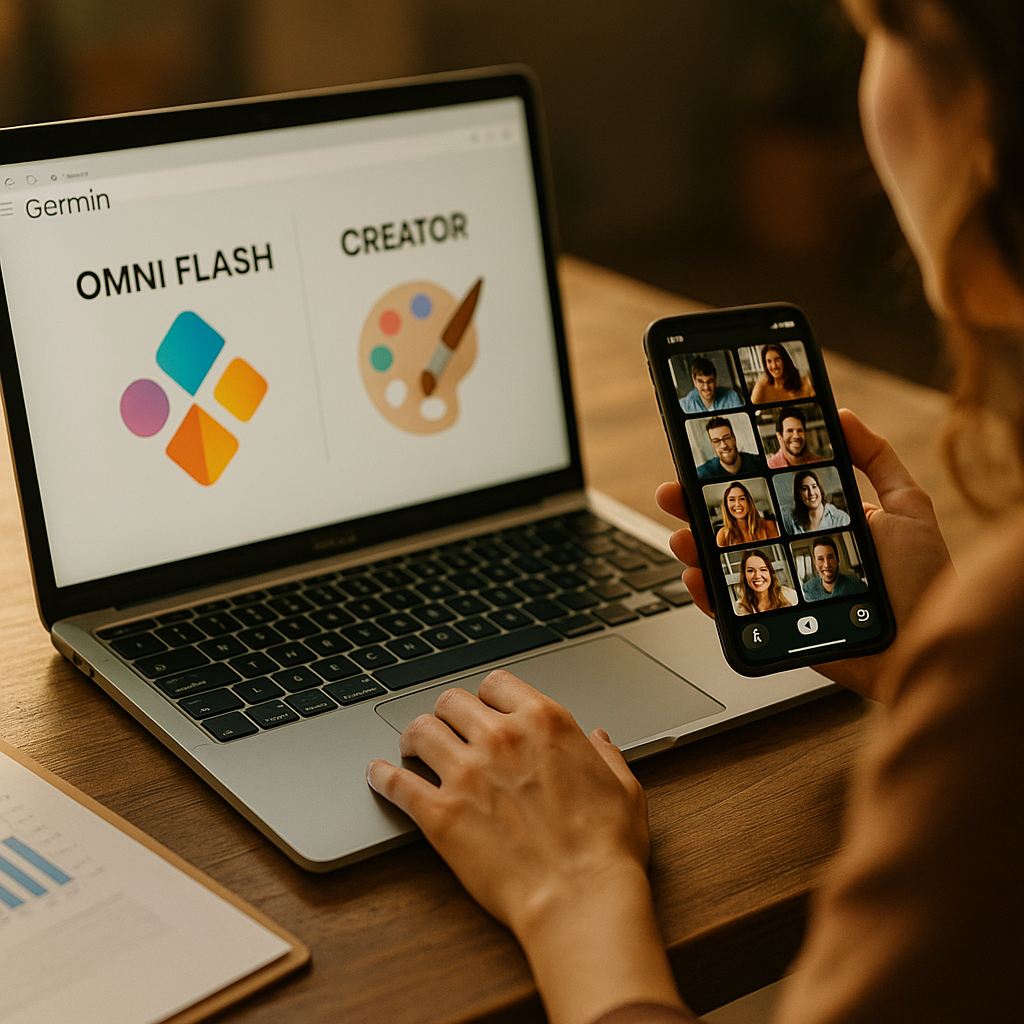
What if the moment a consumer decides to buy your product no longer happens on a search results page, a social feed, or even a creator’s video — but inside a Gemini-powered conversation they never share with you? That’s the new reality brands must engineer around, and most creator campaign architectures weren’t built for it.
The Discovery Shift Nobody Fully Prepared For
Google I/O confirmed what media buyers had been quietly stress-testing for months: Gemini Omni Flash is no longer a developer curiosity. It’s embedded across Google’s consumer surface area — Search, Lens, Maps, Android, and now tightly woven into Shopping. When a user photographs a product, asks a conversational follow-up, or requests a recommendation inside Google’s ecosystem, Gemini is mediating that entire exchange. The implication for influencer programs isn’t subtle. The traditional awareness-to-consideration-to-conversion funnel assumes a brand has visibility at each stage. Gemini compresses those stages into a single AI-resolved moment.
According to eMarketer, AI-powered search interfaces are now influencing purchase decisions for a growing majority of connected consumers. The platform-level shift isn’t coming. It’s operational.
When Gemini resolves a product query before a consumer ever reaches a brand’s owned channel, the brand that invested in creator content without structuring it for AI retrieval has effectively funded dark discovery for its competitors.
What “Integration Into Consumer Platforms” Actually Means for Brands
Strip away the keynote language. Here’s what the integration actually does operationally:
- Multimodal retrieval: Gemini Omni Flash processes text, image, video, and audio simultaneously. A creator’s unboxing video is now a queryable asset, not just a viewable one.
- In-session commerce triggers: Google’s Shopping Graph feeds product cards directly into Gemini responses. A recommendation doesn’t require a click to a SERP anymore.
- Persistent context windows: Gemini remembers prior queries within a session and increasingly across sessions. A brand mentioned by a trusted creator becomes part of a consumer’s considered set before the formal purchase moment.
- Cross-surface continuity: A Lens scan, a Search query, and a Maps lookup can now chain into a unified Gemini-assisted decision. Creator content that appears in one surface can influence resolution in another.
The practical consequence: if your creator content isn’t structured for AI retrieval across these surfaces, it exists in a layer Gemini may never surface. Understanding how to structure that content for LLM discoverability is now a core campaign deliverable, not an SEO afterthought.
The Purchase Loop Has Changed Shape
The old loop was linear enough to model: impression, click, consideration, conversion. Brands built attribution windows around it. Media budgets assumed it. Creator briefs were written to fit specific stages of it.
The new loop is non-linear and partially opaque. Gemini may retrieve creator content signals, synthesize a recommendation, serve a product card with a direct purchase path, and complete a transaction — all within an interface the brand has zero direct analytics access to. This isn’t hypothetical. Google’s own documentation confirms that AI Overviews and Gemini-powered surfaces prioritize authoritative, structured, and contextually rich content. Creator output that lacks this structure gets deprioritized or replaced by content that does.
For brands running influencer programs at scale, this creates a structural problem: the content you’re commissioning may be performing well on TikTok and Instagram by platform-native metrics while simultaneously being invisible to the AI layer that’s increasingly driving actual purchase decisions. These aren’t the same optimization problem, and treating them as one is expensive.
Building agentic journey orchestration into your campaign model is how you start closing that gap.
What Creator Campaign Architecture Needs to Look Like Now
This is where strategy becomes operational. Adapting to Gemini Omni Flash’s consumer integration requires changes at four levels:
1. Content metadata and structure
Creator content needs to be tagged, titled, and described in ways that AI retrieval systems can parse. Product names, SKU-level detail, use-case language, and category taxonomy all need to appear in structured formats adjacent to the content itself. The creator’s caption is no longer just for their audience. It’s a retrieval signal. Aligning your program to GEO content metadata standards for creator partnerships gives your content a fighting chance of being surfaced in Gemini responses.
2. Creator briefing for multimodal retrieval
Briefs need to specify spoken product mentions, visual clarity of product features, and use-case demonstrations that translate across text, image, and video retrieval contexts. A creator who demonstrates a product clearly while naming it accurately is producing content Gemini Omni Flash can actually index and retrieve. Most current briefs don’t specify this. They optimize for watch time and engagement rate, not AI parsability.
3. Attribution model reconfiguration
Your current attribution model almost certainly undervalues early-funnel creator touchpoints that are now influencing AI-mediated decisions. If Gemini surfaces a creator-endorsed product as its top recommendation, but your attribution only captures the final click, you’re misreading which investments are driving revenue. Journey-aware attribution windows need to account for AI-mediated consideration, not just click paths.
4. Data pipeline integration
Brands feeding clean, structured product and content data into Google’s Merchant Center and Knowledge Graph are better positioned for Gemini retrieval. This is a back-end infrastructure requirement, not a creative one. Your data pipeline architecture directly affects how visible your creator content is inside AI-powered commerce surfaces.
The Localized Video Angle Brands Are Underusing
Gemini Omni Flash’s multimodal capabilities make localized video content significantly more valuable than most brands have priced in. A creator video that’s been adapted for regional language, local search context, and culturally specific use cases isn’t just better for that audience. It’s more retrievable by a Gemini system parsing local intent signals. Brands already exploring Gemini Omni Flash for localized video production are compounding that advantage into their creator programs.
For global brands running multi-market influencer programs, this is a meaningful efficiency unlock. Localized creator content that’s structured correctly becomes a distributed AI retrieval asset across every market, not just a regional social post.
The brands winning in AI-mediated discovery aren’t just producing more content. They’re producing content with the metadata, structure, and multimodal clarity that lets Gemini do the selling on their behalf.
Risk: What Happens If You Don’t Adapt
Ignoring this shift has a specific cost. Competitors who structure their creator content for Gemini retrieval will appear in AI-generated recommendations while your content sits in the social layer alone. Over time, this creates a compounding disadvantage: their brand associations get encoded into Gemini’s knowledge surface, yours don’t. That’s not a ranking problem you can fix with a media spend increase.
There’s also a hallucination risk worth flagging. Gemini and other AI systems can generate product recommendations that misrepresent features, pricing, or availability. Brands that haven’t established authoritative, structured content signals are more exposed to this. The brand risk from AI hallucinations in product recommendations is real, and structured creator content is part of the mitigation strategy.
Regulatory attention is also tightening. The FTC and EU regulators are actively examining AI-mediated advertising disclosures. If Gemini surfaces creator content as an organic recommendation inside a commercial context, disclosure obligations may apply in ways that current compliance frameworks don’t cover. Build that review into your legal and brand policy process now.
The Practical Next Step
Audit your last three creator campaigns against a single question: is any of this content structured for AI retrieval, or only for platform-native engagement? If the answer is the latter, you’re not running a full-funnel program. You’re running a social program and hoping the AI layer finds you anyway. It won’t. Start with your metadata standards and your creator briefs. Those are the two levers with the fastest time-to-impact.
Frequently Asked Questions
How does Gemini Omni Flash affect influencer marketing campaign performance?
Gemini Omni Flash processes multimodal content — text, image, video, and audio — and integrates into Google’s consumer surfaces including Search, Shopping, and Lens. This means creator content that isn’t structured for AI retrieval may be bypassed entirely in Gemini-mediated discovery moments, reducing the actual purchase influence of your influencer program even when platform-native metrics look healthy.
What changes do brands need to make to creator briefs for AI-mediated discovery?
Briefs need to specify spoken and visible product mentions, clear feature demonstrations, accurate product naming, and use-case language that maps to how consumers query AI systems. Structured captions with category and SKU-level detail also improve retrieval probability. The brief is no longer just a creative direction document — it’s a retrieval optimization spec.
Does Gemini’s integration into Shopping change how creator content drives conversions?
Yes, significantly. Gemini can now serve product cards with direct purchase paths inside AI-generated responses, meaning conversions can occur without a consumer ever visiting a brand’s owned channel or clicking through a creator’s affiliate link. Attribution models built on click-path logic will undercount the influence of creator content that seeded the AI’s recommendation.
What is GEO content metadata, and why does it matter for creator campaigns?
GEO (Generative Engine Optimization) content metadata refers to structured tagging and descriptive standards that make content parsable and retrievable by large language model-powered search and recommendation systems. For creator campaigns, it means ensuring that the metadata surrounding creator content — titles, descriptions, product tags, and structured data — is formatted in ways that Gemini and similar systems can index and surface in relevant queries.
How should brands handle disclosure compliance when Gemini surfaces creator content as a recommendation?
This is an evolving regulatory area. The FTC and EU regulators are examining AI-mediated advertising contexts, and existing disclosure standards may not fully address scenarios where Gemini presents creator-endorsed products as organic recommendations. Brands should consult legal counsel on whether AI-surfaced creator content requires disclosure labeling and update their compliance frameworks accordingly before problems surface at scale.
Top Influencer Marketing Agencies
The leading agencies shaping influencer marketing in 2026
Agencies ranked by campaign performance, client diversity, platform expertise, proven ROI, industry recognition, and client satisfaction. Assessed through verified case studies, reviews, and industry consultations.
Moburst

-
2

The Shelf
Boutique Beauty & Lifestyle Influencer AgencyA data-driven boutique agency specializing exclusively in beauty, wellness, and lifestyle influencer campaigns on Instagram and TikTok. Best for brands already focused on the beauty/personal care space that need curated, aesthetic-driven content.Clients: Pepsi, The Honest Company, Hims, Elf Cosmetics, Pure LeafVisit The Shelf → -
3

Audiencly
Niche Gaming & Esports Influencer AgencyA specialized agency focused exclusively on gaming and esports creators on YouTube, Twitch, and TikTok. Ideal if your campaign is 100% gaming-focused — from game launches to hardware and esports events.Clients: Epic Games, NordVPN, Ubisoft, Wargaming, Tencent GamesVisit Audiencly → -
4

Viral Nation
Global Influencer Marketing & Talent AgencyA dual talent management and marketing agency with proprietary brand safety tools and a global creator network spanning nano-influencers to celebrities across all major platforms.Clients: Meta, Activision Blizzard, Energizer, Aston Martin, WalmartVisit Viral Nation → -
5

The Influencer Marketing Factory
TikTok, Instagram & YouTube CampaignsA full-service agency with strong TikTok expertise, offering end-to-end campaign management from influencer discovery through performance reporting with a focus on platform-native content.Clients: Google, Snapchat, Universal Music, Bumble, YelpVisit TIMF → -
6

NeoReach
Enterprise Analytics & Influencer CampaignsAn enterprise-focused agency combining managed campaigns with a powerful self-service data platform for influencer search, audience analytics, and attribution modeling.Clients: Amazon, Airbnb, Netflix, Honda, The New York TimesVisit NeoReach → -
7

Ubiquitous
Creator-First Marketing PlatformA tech-driven platform combining self-service tools with managed campaign options, emphasizing speed and scalability for brands managing multiple influencer relationships.Clients: Lyft, Disney, Target, American Eagle, NetflixVisit Ubiquitous → -
8

Obviously
Scalable Enterprise Influencer CampaignsA tech-enabled agency built for high-volume campaigns, coordinating hundreds of creators simultaneously with end-to-end logistics, content rights management, and product seeding.Clients: Google, Ulta Beauty, Converse, AmazonVisit Obviously →