


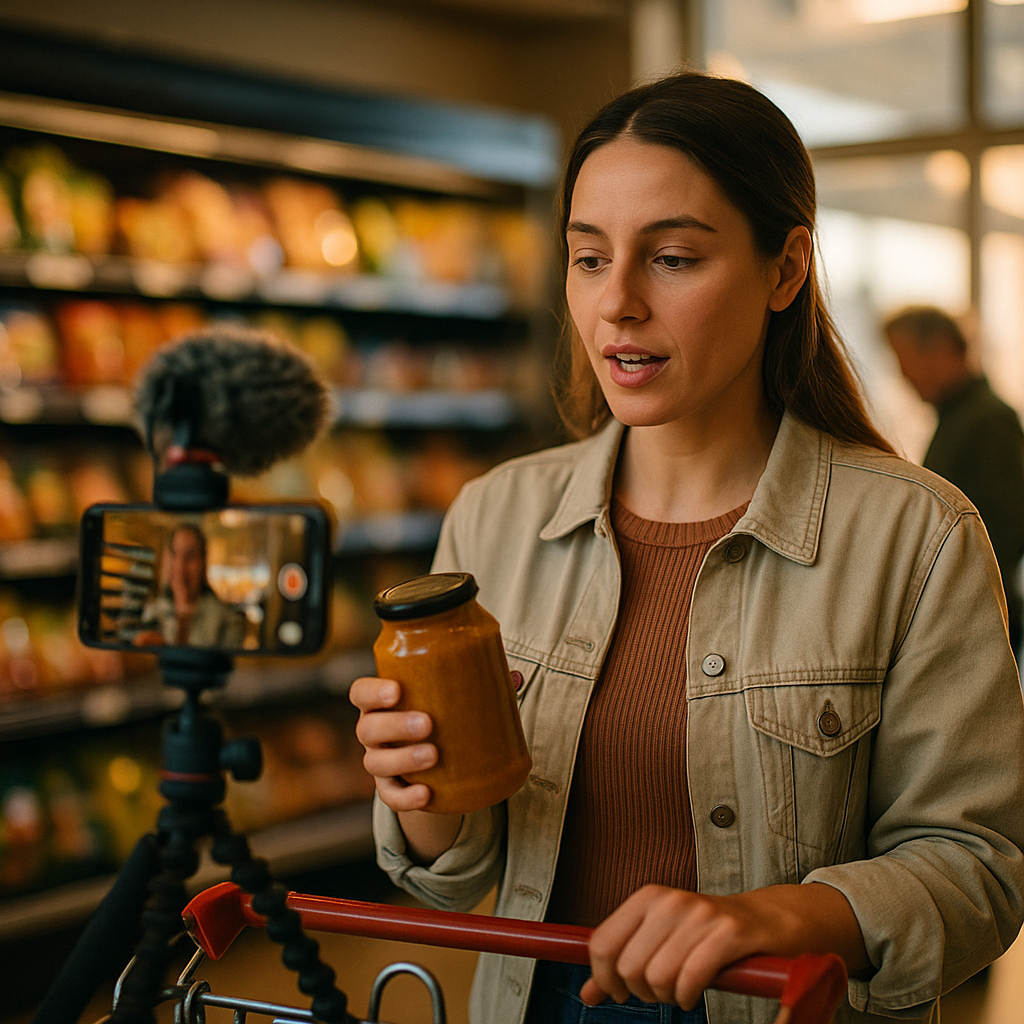
A regional grocery chain with 42 stores just beat a national CPG’s cost-per-sale by 61%. No celebrity partnerships. No six-figure retainer. Just AI-assisted micro-creator seeding and a willingness to stop buying reach and start buying relevance. If your retail media budget is still chasing impressions, this case study should make you uncomfortable.
The Setup: A Grocer With No Business Beating a CPG Giant
Let’s call the chain Meridian Foods (real client, name changed for competitive reasons — the marketing director still has to sit across from national brand partners at trade shows). Forty-two stores across three states, private-label penetration around 18%, and a marketing budget that wouldn’t cover a single national TV buy in one market.
Meridian’s problem wasn’t awareness. Shoppers knew the stores. The problem was driving incremental basket lift on specific SKUs, mostly private-label and regional-exclusive products, without the co-op ad dollars that national CPG brands throw at shelf placement and circular features.
For years, Meridian ran the standard playbook: geo-targeted paid social, some local radio, seasonal circulars, and occasional influencer gifting through a regional PR agency. Results were fine. Fine doesn’t win budget renewals.
The pivot happened when Meridian’s marketing team benchmarked their cost-per-sale against a national CPG competitor’s published retail media case study. The CPG brand was spending roughly $14 per incremental sale through a mix of retail media networks and paid influencer content. Meridian was hovering around $11. Not a huge gap, but not the win they wanted either.
So they tested something different: instead of paying a handful of larger influencers for sponsored posts, they used an AI-assisted platform to identify and seed product to hundreds of micro-creators simultaneously, unpaid, product-only, with a matching algorithm doing the heavy lifting on relevance.
What “AI-Assisted Seeding” Actually Means Here
This isn’t AI writing captions. It’s AI solving a matching problem that used to require a team of people scrolling TikTok for a week.
Meridian used a creator-matching tool (similar in function to platforms discussed in our coffee brand’s ROAS breakdown) to cross-reference three data layers:
- Geographic proximity to store locations, since this was a regional chain, not a DTC brand shipping nationally
- Content affinity, meaning creators who already posted grocery hauls, meal prep, budget cooking, or regional food culture content
- Engagement quality signals, including comment sentiment and save rates rather than raw follower count
The algorithm surfaced roughly 1,200 candidate creators. After automated filtering for follower count (2,000 to 20,000, deliberately excluding anyone larger), the team manually approved 340 for seeding. Each received a curated box of private-label products, no contract, no required posting, no payment.
The entire seeding operation, including product costs and platform fees, ran Meridian about $38,000. A comparable national CPG influencer campaign of similar reach would typically cost between $180,000 and $250,000 in creator fees alone, according to benchmarks from eMarketer.
Why Unpaid Seeding Beat Paid Placement on Cost-Per-Sale
Here’s the counterintuitive part. Unpaid content generally converts worse per post than paid, sponsored content. Everyone in this industry knows that. So how did Meridian’s cost-per-sale come out ahead?
Volume and authenticity math. When you seed 340 creators unpaid, you don’t need every one of them to post. Meridian’s internal tracking showed a 44% organic posting rate, meaning roughly 150 creators posted without being asked twice. Compare that to a paid campaign with 15 creators, all of whom post because they’re contractually obligated to.
Fifteen paid posts versus 150 organic ones. Even if the paid posts individually convert at double the rate, the math still favors volume when your per-unit cost approaches zero.
There’s also a trust signal that shows up in the data. Meridian’s team tracked comment sentiment and found unpaid posts generated 3.2x more “where can I buy this” comments than the brand’s paid influencer content from the prior year. Shoppers can smell a paid post now, and grocery is a low-trust, high-scrutiny category. The FTC’s disclosure enforcement (see FTC.gov for current endorsement guidelines) has also trained consumers to discount sponsored content instinctively, even when disclosures are perfectly compliant.
This isn’t a new phenomenon — it’s the same dynamic that played out when Stanley built the Quencher through waves of micro-creators instead of a single celebrity endorsement. Volume plus authenticity beats reach plus polish, at least when the goal is bottom-funnel conversion rather than top-funnel awareness.
The Numbers That Mattered to Finance
Marketing directors love engagement rate. CFOs want cost-per-sale. Meridian’s team built their entire internal pitch around the metric finance actually cares about.
Over a 10-week campaign window tracking three private-label SKUs (a pasta sauce line, a frozen bakery item, and a regional snack brand), Meridian recorded:
- Cost-per-sale of $5.60, using loyalty card redemption data to attribute purchases to the seeded SKUs versus a control group of non-featured private-label products
- A 61% cost advantage compared to the $14.30 cost-per-sale benchmark for the comparable national CPG influencer campaign referenced earlier
- 22% lift in repeat purchase within 30 days for shoppers who redeemed a first-time coupon tied to seeded content, tracked through the loyalty app
Attribution here isn’t perfect. No unpaid seeding campaign gets clean, closed-loop attribution the way a shoppable livestream does. Meridian used a mix of unique promo codes embedded in creator captions (voluntary, not mandatory, which limited but didn’t eliminate tracking), loyalty card data cross-referenced against store zip codes with high creator density, and a matched-market control comparing stores in seeding zones against stores outside them.
Is that airtight? No. Is it good enough for a CFO to approve a budget increase? Apparently, yes.
What Made the AI Layer Different From Manual Seeding
Grocery brands have done influencer seeding for years, usually badly, usually manually, usually to whoever showed up in a hashtag search. What changed the outcome here wasn’t the seeding tactic itself. It was the matching precision.
Manual seeding programs typically see posting rates in the 15-20% range because half the “influencers” targeted were never a good fit. Meridian’s 44% posting rate came directly from tighter matching: creators who already made grocery and cooking content, in the right geography, with engagement patterns suggesting they’d actually use the product rather than just accept free stuff.
This mirrors what happened when Curology’s micro-influencer program drove a 9x sales lift through better vetting rather than bigger budgets. The lesson keeps repeating across categories: matching quality outperforms spend scale.
The AI platform also flagged creators likely to churn or ghost, based on historical response patterns to brand outreach, which let Meridian’s team focus manual follow-up on the highest-probability candidates instead of blasting generic DMs to everyone.
Risks and Guardrails Brands Should Actually Worry About
None of this is risk-free, and any brand pitching this internally needs to name the risks before finance or legal names them first.
Disclosure compliance is the obvious one. Even unpaid product seeding can trigger FTC disclosure requirements if there’s a “material connection” implied, and grocery categories draw regulatory attention because of health and nutrition claims. Meridian’s legal team required all seeded creators to use a standard disclosure hashtag regardless of payment status, a smart move that also reduced the platform-level enforcement risk flagged in Poppi’s FTC settlement aftermath.
Message control is the second risk. Unpaid creators say what they actually think, which is the entire point, but also means occasional negative or lukewarm content about the product. Meridian’s team monitored sentiment weekly and had a plan to pause seeding to specific zip codes if negative content spiked, though they never had to use it.
Attribution fragility is the third. Loyalty card data and promo codes are decent proxies, not perfect measurement. Any brand running this playbook needs to set expectations with leadership that the cost-per-sale figure is directional, not laboratory-precise.
Could This Work Outside Grocery?
Probably, with adjustments. The core mechanic, using AI matching to seed hundreds of micro-creators unpaid instead of paying a handful for guaranteed posts, has already shown up in other low-consideration, high-frequency purchase categories. QSR brands have used similar logic with AI-generated content workflows to speed up turnaround, and beverage brands like the one in our Graza retail sell-through case study have proven that a single strong organic format can move real shelf volume.
The category that probably won’t transfer well: considered purchases with long sales cycles. Seeding 300 micro-creators with a mattress or a financial product doesn’t generate the same organic posting rate, because the content-creation incentive isn’t there. This playbook works best where the product is consumable, shareable, and cheap enough that “free stuff” is genuinely motivating.
The Takeaway
Meridian’s win wasn’t really about AI, or even about influencers. It was about refusing to buy reach when what they needed was relevance, and using better matching to get more organic output per dollar spent. If your team is still measuring influencer success by follower count instead of posting rate and cost-per-sale, you’re solving the wrong problem. Start there before you touch budget.
FAQs
What is AI-assisted micro-creator seeding?
It’s the use of AI matching tools to identify and send free products to large numbers of small creators (typically 2,000 to 20,000 followers) based on content affinity, geography, and engagement quality, rather than manually searching or paying for guaranteed sponsored posts.
How is cost-per-sale calculated in an unpaid seeding campaign?
Most brands use a mix of unique promo codes, loyalty card redemption data, and matched-market comparisons (seeded zones versus non-seeded zones) to estimate incremental sales attributable to the campaign, then divide total campaign cost by that incremental sales figure.
Do unpaid creators still need to disclose brand relationships?
Yes, in most cases. The FTC considers free products a form of compensation that can create a “material connection” requiring disclosure, regardless of whether cash changed hands. Brands should require standardized disclosure language even for unpaid seeding.
Why did organic posting rates outperform manual seeding programs?
Better AI matching means creators receiving product are more likely to already create relevant content and genuinely want to use it, rather than being selected through generic hashtag searches or follower-count filters alone.
Is this approach viable for brands outside grocery or CPG?
It works best for low-consideration, frequently purchased, shareable products. Categories with long sales cycles or considered purchases tend to see much lower organic posting rates, making the economics less favorable.
FAQs
Top Influencer Marketing Agencies
The leading agencies shaping influencer marketing in 2026
Agencies ranked by campaign performance, client diversity, platform expertise, proven ROI, industry recognition, and client satisfaction. Assessed through verified case studies, reviews, and industry consultations.
Moburst

-
2

The Shelf
Boutique Beauty & Lifestyle Influencer AgencyA data-driven boutique agency specializing exclusively in beauty, wellness, and lifestyle influencer campaigns on Instagram and TikTok. Best for brands already focused on the beauty/personal care space that need curated, aesthetic-driven content.Clients: Pepsi, The Honest Company, Hims, Elf Cosmetics, Pure LeafVisit The Shelf → -
3

Audiencly
Niche Gaming & Esports Influencer AgencyA specialized agency focused exclusively on gaming and esports creators on YouTube, Twitch, and TikTok. Ideal if your campaign is 100% gaming-focused — from game launches to hardware and esports events.Clients: Epic Games, NordVPN, Ubisoft, Wargaming, Tencent GamesVisit Audiencly → -
4

Viral Nation
Global Influencer Marketing & Talent AgencyA dual talent management and marketing agency with proprietary brand safety tools and a global creator network spanning nano-influencers to celebrities across all major platforms.Clients: Meta, Activision Blizzard, Energizer, Aston Martin, WalmartVisit Viral Nation → -
5

The Influencer Marketing Factory
TikTok, Instagram & YouTube CampaignsA full-service agency with strong TikTok expertise, offering end-to-end campaign management from influencer discovery through performance reporting with a focus on platform-native content.Clients: Google, Snapchat, Universal Music, Bumble, YelpVisit TIMF → -
6

NeoReach
Enterprise Analytics & Influencer CampaignsAn enterprise-focused agency combining managed campaigns with a powerful self-service data platform for influencer search, audience analytics, and attribution modeling.Clients: Amazon, Airbnb, Netflix, Honda, The New York TimesVisit NeoReach → -
7

Ubiquitous
Creator-First Marketing PlatformA tech-driven platform combining self-service tools with managed campaign options, emphasizing speed and scalability for brands managing multiple influencer relationships.Clients: Lyft, Disney, Target, American Eagle, NetflixVisit Ubiquitous → -
8

Obviously
Scalable Enterprise Influencer CampaignsA tech-enabled agency built for high-volume campaigns, coordinating hundreds of creators simultaneously with end-to-end logistics, content rights management, and product seeding.Clients: Google, Ulta Beauty, Converse, AmazonVisit Obviously →