


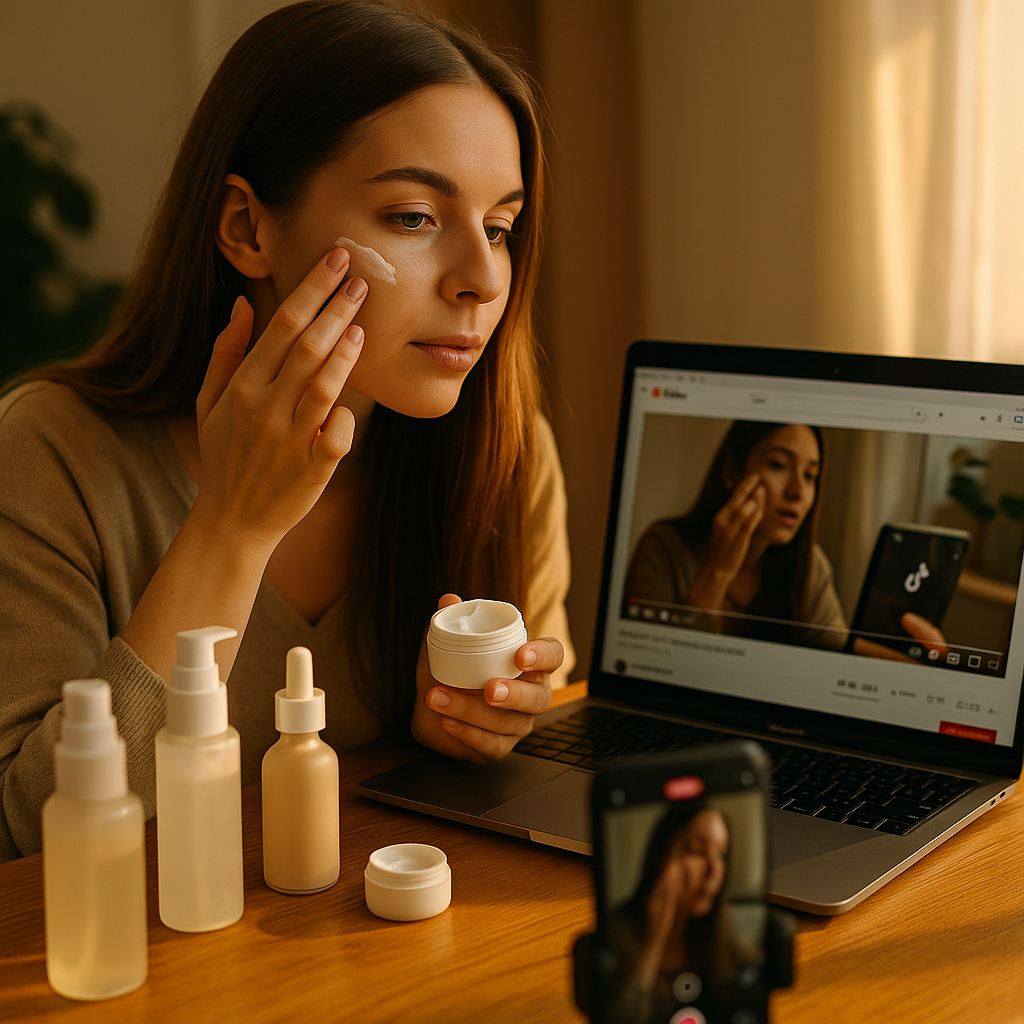
Most skincare brands can get a TikTok video to go viral. Almost none can explain why the sale didn’t happen three days later. One founder-led DTC skincare brand cracked that gap by pairing dedicated YouTube videos with TikTok Shop integration — and turned a 40% mid-funnel drop-off into a repeatable revenue engine.
This is the story of how they did it, what broke along the way, and what any brand running a lean influencer budget can steal from the playbook.
The Problem: Great Awareness, Leaky Middle
The brand — a barrier-repair skincare line doing roughly $18M in annual revenue — had no trouble generating top-of-funnel buzz. TikTok creators loved their hero serum. Views were strong, comments were flooded with “does this actually work?” questions, and the brand’s TikTok Shop storefront had decent traffic. But conversion was stuck below 1.5%, well under the category benchmarks emarketer tracks for skincare social commerce.
The internal data told an uncomfortable story. People were watching, wishlisting, even adding to cart — then vanishing. Retargeting ads weren’t closing the gap either. The brand’s CMO called it “the interested-but-unconvinced problem.” Short-form content sparked curiosity but didn’t answer the deeper questions serious skincare buyers ask: What’s actually in this? How is it different from the dupe everyone’s talking about? Will it break me out?
TikTok drove discovery, but discovery isn’t the same as decision-readiness — and skincare buyers, more than most categories, need to feel decision-ready before they’ll spend.
Why Dedicated YouTube Videos Became the Missing Middle Layer
The team’s hypothesis: mid-funnel skincare buyers don’t need more hype, they need depth. So instead of running 15-second TikTok ads that repeated the same claims, they commissioned dedicated YouTube videos — 8 to 14 minutes long — with a rotating bench of dermatology-adjacent creators and longtime skincare reviewers.
These weren’t sponsored mentions bolted onto unrelated content. Each video was built around a single core question the brand’s customer service team flagged as a recurring objection: sensitivity concerns, ingredient comparisons versus a popular drugstore alternative, “does this work if you have rosacea,” that kind of thing. Creators got raw product, unscripted testing time, and editorial independence to say if something didn’t work for their skin.
That independence mattered. A creator who says “this broke me out slightly in week one but calmed down by week three” is more persuasive than one who says nothing negative at all. HubSpot’s research on trust and content has consistently shown that perceived authenticity outperforms polish once a buyer is past initial awareness — which tracks with what this brand saw in their funnel data.
YouTube’s format advantage here is structural, not just stylistic. Search intent on YouTube skews toward comparison and “is this worth it” queries, which is exactly the mindset of a mid-funnel shopper. A viewer searching “best serum for rosacea skin” is closer to purchase than someone scrolling TikTok’s For You feed. The brand leaned into this by optimizing video titles and descriptions around those exact long-tail queries, turning YouTube into an owned search asset rather than a one-off placement.
Connecting the Dots: TikTok Shop as the Close
Here’s where most brands stop — they make the long-form trust-building video and assume it’ll “support” conversion somewhere downstream. This brand didn’t leave it to chance. Every YouTube video ended with a specific, trackable path back into TikTok Shop, not a generic “link in bio.”
The mechanism looked like this:
- Creators referenced a TikTok Shop bundle by name, created specifically for that video’s topic (e.g., a “sensitive skin starter set” for the rosacea video)
- The brand ran a parallel TikTok Shop livestream schedule timed to spike within 48 hours of each YouTube video’s publish, giving warm viewers a live, lower-friction place to ask final questions
- Pinned comments and TikTok Shop product tags used matching language to the YouTube video, so the mental thread wasn’t broken between platforms
This cross-platform sequencing is similar in spirit to what worked for Chobani’s livestream commerce approach — using one channel to build context and another to remove friction at the point of decision. The difference here is the funnel stage: Chobani leaned on livestream urgency, while this skincare brand used YouTube for education and TikTok Shop purely as the transactional close.
The brand’s growth lead put it bluntly in an internal review deck (later shared at a creator economy panel): “TikTok Shop is a checkout counter. YouTube is the salesperson who actually answers your questions before you get there.”
What the Numbers Actually Showed
Over a 90-day test period comparing “YouTube-assisted” TikTok Shop bundles against control bundles with no long-form support, the brand tracked three core metrics:
- Conversion rate on YouTube-assisted bundles hit 4.1%, nearly triple the 1.5% baseline
- Average order value rose 22%, largely because YouTube viewers were more likely to buy the full bundle rather than a single product
- Return rate dropped by roughly a third, which the brand attributed to viewers having realistic expectations set by unscripted, longer-form reviews
That last stat matters more than it might seem. Returns are a silent margin killer in DTC skincare, and a lot of them stem from mismatched expectations rather than product failure. When a creator spends 10 minutes explaining who the product is and isn’t for, self-selection improves. Fewer wrong-fit buyers means fewer returns and fewer one-star reviews from people who never should have bought in the first place.
A 90-second TikTok can create a sale. A 10-minute YouTube video can create the right sale — and that distinction shows up directly in return rates and repeat purchase behavior.
Attribution Was the Hard Part
None of this works if you can’t prove it, and cross-platform attribution in influencer marketing remains genuinely messy. The brand used a mix of UTM-tagged TikTok Shop links referenced verbally in YouTube videos, unique discount codes per creator, and post-purchase survey data (“how did you hear about us”) to triangulate impact rather than rely on a single source of truth.
This mirrors the approach detailed in L’Oréal Luxe’s attribution modeling work, where no single platform’s native analytics were trusted in isolation. Native TikTok Shop analytics will tell you what happened inside TikTok. They won’t tell you that a customer watched a 12-minute YouTube video four days earlier and that’s what actually moved them to buy. Brands that only measure last-click will systematically undervalue exactly the kind of mid-funnel content this case study is built around.
The team also used Google’s official ad and analytics documentation to properly configure YouTube conversion tracking alongside their Shopify and TikTok Shop data feeds, which sounds mundane but was, in the brand’s own words, “the unglamorous 20% of work that made the other 80% measurable.”
What Other DTC Brands Get Wrong Trying to Copy This
The instinct after reading a case study like this is to immediately book a YouTube creator and slap a TikTok Shop link in the description. That’s not the lesson. Three things made this specific approach work, and skipping any of them tends to break the model:
- The YouTube content answered real objections, not brand talking points. The brand mined customer service tickets and TikTok comments to find actual hesitations before briefing creators — similar to how Function of Beauty’s quiz-to-creator engine uses customer input to shape content direction rather than guessing at it.
- Creators kept editorial control. Scripted perfection reads as an ad. Honest, slightly messy reviews read as research.
- The TikTok Shop offer matched the video’s specific angle, not a generic “shop now” push. Bundle names, pinned comments, and livestream timing all reinforced the same narrative thread.
Brands running whitelisting or paid amplification on top of this kind of content should also think about how far they push it before it starts to feel like an ad again — a tension well covered in Gymshark’s whitelisting strategy, where paid distribution was carefully layered on top of organic-feeling creator content rather than replacing it.
Compliance Wasn’t an Afterthought
Because these were paid partnerships discussing product efficacy and (in some cases) skin conditions, the brand ran every script and disclosure through a compliance check aligned with FTC endorsement guidelines, including clear “paid partnership” disclosures on both YouTube and TikTok Shop-linked content. Skincare sits close to health claims territory, and regulators have shown they’re paying attention. Brands operating in this space should treat disclosure and claims review as a pre-production step, not a legal afterthought bolted on before publish — a lesson also reflected in Ollie’s approach to credentialed nano-creator compliance.
The Takeaway
If your TikTok Shop conversion rate is stuck despite healthy traffic, the fix probably isn’t a better hook — it’s a missing middle. Build one or two dedicated, objection-answering YouTube videos per quarter, link them directly to a matching TikTok Shop bundle, and measure with post-purchase surveys since native analytics won’t connect the dots for you.
FAQs
Why did YouTube outperform TikTok for mid-funnel conversion in this case?
YouTube’s longer format let creators address specific objections — ingredient safety, skin type fit, comparisons to competitors — that short-form TikTok content couldn’t cover in depth. That depth built the trust needed to move buyers from interested to ready-to-purchase.
How long should a dedicated product-review YouTube video be for this strategy to work?
The brand in this case study used videos in the 8-to-14-minute range, long enough to cover a single objection thoroughly without padding. Shorter videos didn’t leave room for the unscripted, credible detail that drove trust.
Can smaller DTC brands with limited budgets replicate this model?
Yes, though scale matters less than specificity. A single well-briefed creator video addressing one real customer objection, linked to a matching TikTok Shop bundle, can outperform a dozen generic sponsored posts even on a modest budget.
How should brands track results across YouTube and TikTok Shop?
Use a combination of UTM-tagged links, unique discount codes per creator, and post-purchase attribution surveys. Relying solely on native platform analytics will understate the impact of cross-platform influence.
What compliance steps matter most for skincare influencer content?
Clear “paid partnership” disclosures on both platforms and a pre-publish claims review are essential, especially when creators discuss skin conditions or comparative efficacy, given FTC scrutiny of endorsement and health-adjacent claims.
Top Influencer Marketing Agencies
The leading agencies shaping influencer marketing in 2026
Agencies ranked by campaign performance, client diversity, platform expertise, proven ROI, industry recognition, and client satisfaction. Assessed through verified case studies, reviews, and industry consultations.
Moburst

-
2

The Shelf
Boutique Beauty & Lifestyle Influencer AgencyA data-driven boutique agency specializing exclusively in beauty, wellness, and lifestyle influencer campaigns on Instagram and TikTok. Best for brands already focused on the beauty/personal care space that need curated, aesthetic-driven content.Clients: Pepsi, The Honest Company, Hims, Elf Cosmetics, Pure LeafVisit The Shelf → -
3

Audiencly
Niche Gaming & Esports Influencer AgencyA specialized agency focused exclusively on gaming and esports creators on YouTube, Twitch, and TikTok. Ideal if your campaign is 100% gaming-focused — from game launches to hardware and esports events.Clients: Epic Games, NordVPN, Ubisoft, Wargaming, Tencent GamesVisit Audiencly → -
4

Viral Nation
Global Influencer Marketing & Talent AgencyA dual talent management and marketing agency with proprietary brand safety tools and a global creator network spanning nano-influencers to celebrities across all major platforms.Clients: Meta, Activision Blizzard, Energizer, Aston Martin, WalmartVisit Viral Nation → -
5

The Influencer Marketing Factory
TikTok, Instagram & YouTube CampaignsA full-service agency with strong TikTok expertise, offering end-to-end campaign management from influencer discovery through performance reporting with a focus on platform-native content.Clients: Google, Snapchat, Universal Music, Bumble, YelpVisit TIMF → -
6

NeoReach
Enterprise Analytics & Influencer CampaignsAn enterprise-focused agency combining managed campaigns with a powerful self-service data platform for influencer search, audience analytics, and attribution modeling.Clients: Amazon, Airbnb, Netflix, Honda, The New York TimesVisit NeoReach → -
7

Ubiquitous
Creator-First Marketing PlatformA tech-driven platform combining self-service tools with managed campaign options, emphasizing speed and scalability for brands managing multiple influencer relationships.Clients: Lyft, Disney, Target, American Eagle, NetflixVisit Ubiquitous → -
8

Obviously
Scalable Enterprise Influencer CampaignsA tech-enabled agency built for high-volume campaigns, coordinating hundreds of creators simultaneously with end-to-end logistics, content rights management, and product seeding.Clients: Google, Ulta Beauty, Converse, AmazonVisit Obviously →