


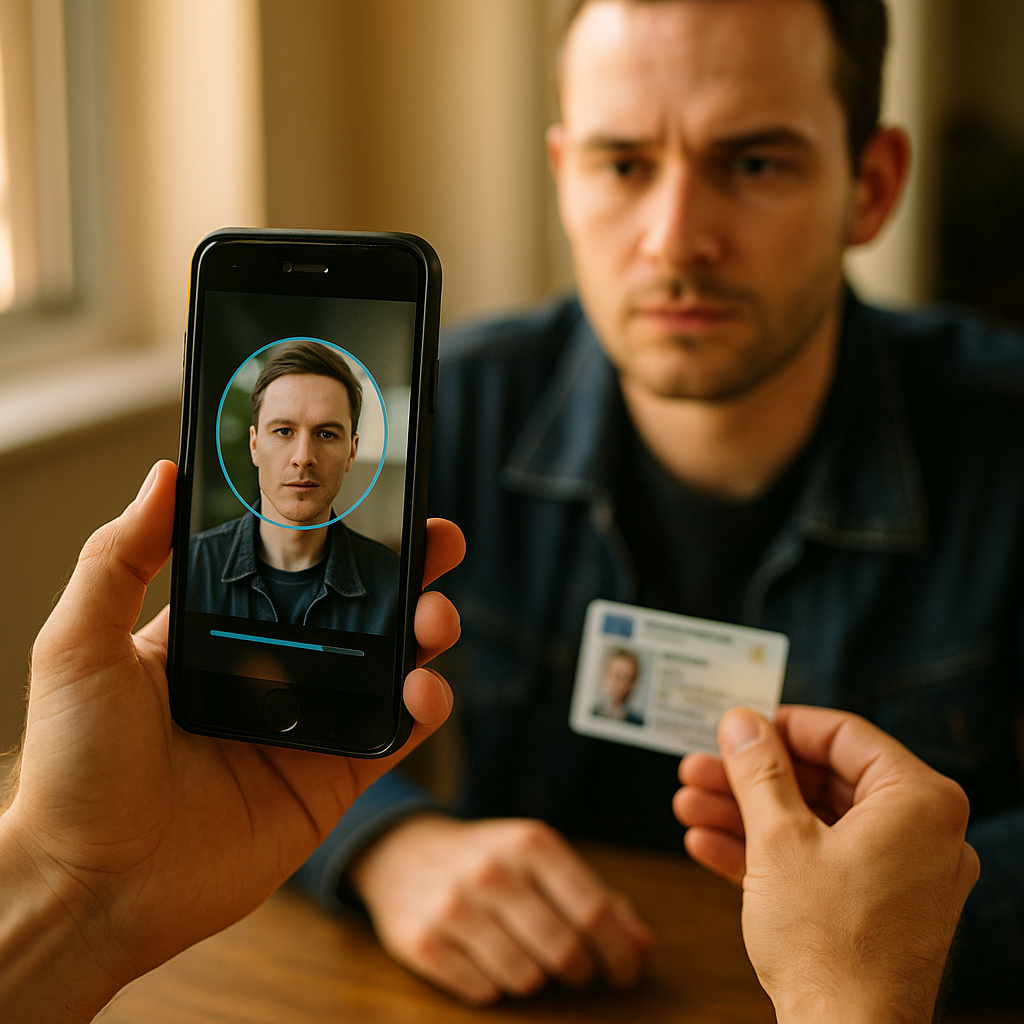
Sixty one percent of marketers now use some form of AI to identify and vet creators, yet fraud losses tied to bad creator matches keep climbing anyway. Why? Because AI driven identity resolution is only as good as its blind spots, and nobody is watching those blind spots except a human. Building a human verification layer for AI driven identity resolution in creator targeting isn’t a nice to have anymore. It’s the difference between a defensible media plan and a line item your CFO flags in Q3.
The Identity Resolution Promise, and Where It Breaks
Identity resolution tools promise something simple: stitch together a creator’s cross platform footprint, scrape engagement history, cross reference audience demographics, and spit out a confidence score. In theory, this replaces weeks of manual vetting with a dashboard query. In practice, the models are trained on public signals that bad actors have learned to game.
Fake follower farms now mimic organic growth curves. Engagement pods coordinate likes within tight windows that look statistically plausible. Deepfaked profile photos pass facial consistency checks. None of this is theoretical. Platforms have documented synthetic identity clusters that fooled automated screening for months before manual review flagged them. AI is excellent at pattern matching against known fraud signatures. It’s far weaker at catching novel fraud that hasn’t been labeled yet in a training set.
An identity resolution model can tell you a creator “looks real” with 94% confidence. It cannot tell you whether that confidence score was built on data a fraud ring designed specifically to pass the test.
That gap is exactly where a human verification layer earns its keep. Not as a replacement for automation, but as a check on it.
What “Human Verification Layer” Actually Means
This isn’t about staffing an army of interns to eyeball every creator profile. That doesn’t scale, and it defeats the purpose of adopting AI in the first place. A proper human verification layer is a targeted intervention: it sits at specific decision points in the pipeline where AI confidence is low, stakes are high, or both.
- Threshold triggers: Any creator match scoring below a defined confidence band (say, under 80%) routes automatically to a human reviewer before budget commits.
- Spend gates: Deals above a certain dollar threshold require human sign off regardless of AI confidence, because the downside of a bad match scales with spend.
- Spot audits: A rotating sample of high confidence matches gets manually re checked monthly to catch model drift before it becomes systemic.
- Escalation paths: Reviewers flag patterns back to the data science team, closing the loop so the model actually learns from human overrides instead of repeating the same error.
The point is precision, not brute force. You’re inserting judgment exactly where the machine is most likely to be wrong.
Why Brands Can’t Just Trust the Score
Marketers under pressure to move fast lean on confidence scores because they’re clean, quantifiable, and easy to defend in a status meeting. “The tool said 92%” sounds like due diligence. It isn’t, not on its own.
Consider audience overlap fraud, where a creator buys followers that statistically resemble a brand’s target demo closely enough to pass automated screening but never actually engage with content. Or consider the rise of AI generated virtual creators, whose entire persona can be fabricated end to end, including backstory, past brand deals, and a fake engagement history built to spec. Deepfake detection before signing has become its own discipline precisely because identity resolution models weren’t built with synthetic personas in mind.
There’s also a subtler failure mode: legitimate creators who get misidentified because of name collisions, platform migration, or inconsistent handle history across TikTok, Instagram, and YouTube. A human reviewer catches “wait, this isn’t the same person” in about thirty seconds. An automated system might not catch it at all, because the pattern still resembles a coherent identity.
None of this means the technology is broken. It means the technology was never designed to be the final word. eMarketer’s research on AI adoption in marketing consistently shows the highest performing teams pair automation with human review rather than choosing one over the other.
Building the Layer: A Practical Framework
Start with a four layer structure, similar in spirit to the approach outlined in this framework for defensible creator spend. Layer one is automated identity resolution: the AI does the heavy lifting on scale, running through thousands of potential matches and scoring them. Layer two is deterministic cross checking, matching creator IDs against known platform data rather than probabilistic inference, an approach detailed in deterministic ID mapping. Layer three is the human review gate. Layer four is the feedback loop that feeds human corrections back into model retraining.
Practically, here’s what implementation looks like for a mid sized brand running fifty plus creator partnerships a quarter:
- Define your confidence thresholds explicitly. Don’t leave this to individual account managers’ judgment. Write it into the SOP: below 80% confidence, mandatory human review. Between 80 and 95%, spot check one in five. Above 95%, automated approval with quarterly audit sampling.
- Assign ownership, not just a task. Someone on your team needs to own verification decisions, sign their name to overrides, and be accountable when a flagged creator turns out fine or a cleared one turns out fraudulent. Diffuse responsibility kills verification programs within two quarters.
- Document every override. When a human reverses an AI decision, capture why. This becomes training data and also becomes your paper trail if a partnership goes wrong and someone asks what due diligence looked like.
- Budget for the layer as a cost center, not overhead. Treat verification headcount or agency hours the same way you’d treat a media audit function: a cost that prevents larger losses downstream.
This mirrors what’s already happening in adjacent parts of the AI marketing stack. Predictive matching speeds up vetting, but manual review is what catches nuance the algorithm can’t quantify. The same logic applies whether you’re vetting creator authenticity or checking generated ad copy before it ships, as covered in this piece on generative copy risk.
What Happens When You Skip This Step?
Skip the human layer and you’re one bad quarter away from a very uncomfortable board conversation. Fabricated creator content at scale isn’t a hypothetical, it’s documented behavior that automated systems have historically struggled to catch until damage was already done, as explored in this analysis of AI fraud detection. Brands that ran fully automated creator sourcing without a verification checkpoint have paid out against fabricated engagement, only discovering the fraud during post campaign attribution reconciliation, well after the invoice cleared.
There’s also a regulatory angle that too many teams underweight. The FTC has made clear that brands bear responsibility for disclosure and authenticity in influencer partnerships, regardless of whether an AI tool or a human made the sourcing decision. “The algorithm picked them” is not a defense in an enforcement action. If anything, an undocumented AI decision with no human sign off looks worse under scrutiny, because it suggests nobody at the brand was actually accountable for the choice.
A verification layer isn’t just risk mitigation. It’s the paper trail that proves you exercised reasonable diligence, which matters enormously if a partnership ever gets questioned publicly or regulatorily.
Making the Business Case Internally
Finance teams don’t fund “vibes based diligence.” If you’re pitching a verification layer to leadership, frame it in terms they already use: cost avoidance, not cost addition. Model the average loss from a single fraudulent creator partnership, factor in wasted media spend, potential brand safety fallout, and the opportunity cost of a campaign that underperforms because its core audience assumption was wrong. Compare that against the marginal cost of adding review headcount or an agency retainer for verification.
Most brands find the math is not close. A single six figure creator deal gone wrong, whether from fraud or simple misidentification, costs more than a year of dedicated verification review. This is the same logic that’s driving investment in confidence scoring dashboards and internal audit functions for martech risk, covered in more depth in this piece on catching risk before contracts sign.
Consider also the operational efficiency angle. Teams that build a clean verification layer actually move faster over time, not slower, because they’re not re litigating creator legitimacy after a campaign underperforms. The upfront friction of human review is smaller than the downstream friction of a dispute, a clawback negotiation, or a PR cleanup. Sprout Social’s ongoing research into influencer marketing trust gaps backs this up: audiences increasingly reward brands that visibly vet who they work with.
Tooling Considerations Worth Flagging
Not every AI vendor in this space is built the same, and brands should push vendors on specifics rather than accepting marketing claims at face value. Ask what data sources feed the identity resolution model. Ask how the vendor handles edge cases like virtual creators or cross platform identity collisions. Ask whether the tool supports a human override workflow natively, or whether you’ll need to build that layer yourself on top of their API.
Vertical specific AI tools built for creator marketing often outperform generalist platforms here, but they also tend to charge a premium. The right move, as covered in this piece on piloting before paying, is running a limited pilot against your existing manual process before committing budget. If the vendor’s confidence scores consistently align with your human reviewers’ judgment, you’ve found a tool worth scaling. If they diverge often, you’ve found a tool that needs more human oversight than its pricing tier suggests.
FAQs
Frequently Asked Questions
What is a human verification layer in creator targeting?
It’s a structured checkpoint where a person reviews AI generated creator matches before budget commits, typically triggered by low confidence scores, high spend thresholds, or random audit sampling. It’s designed to catch fraud, misidentification, and edge cases that automated identity resolution models miss.
Does adding human review slow down creator sourcing significantly?
Not if it’s built with clear thresholds. Most brands only route a minority of matches (those below a defined confidence score or above a spend threshold) to human review, so the majority of sourcing still moves at AI speed. The slowdown is targeted, not blanket.
How do I know if my current AI identity resolution tool needs a verification layer?
If your tool has never flagged a false positive, that’s a warning sign, not a reassurance. Run a pilot where humans manually re check a sample of “high confidence” matches. If discrepancies show up, you need the layer.
Who should own the verification process internally?
A named individual or small team, not a shared responsibility across account managers. Clear ownership ensures overrides get documented and decisions are auditable if a partnership is later questioned.
Is this relevant for smaller brands with limited creator budgets?
Yes, arguably more so. Smaller brands have less room to absorb a fraud loss or a bad match, and often lack the legal and PR resources to manage fallout quickly. A lightweight verification process scaled to budget size still protects against outsized losses.
Start small: pick your highest spend creator category, apply a mandatory human review gate for matches under 85% confidence, and track how many get flagged in the first thirty days. That number alone will tell you whether your current AI stack needs this layer more urgently than you thought.
Top Influencer Marketing Agencies
The leading agencies shaping influencer marketing in 2026
Agencies ranked by campaign performance, client diversity, platform expertise, proven ROI, industry recognition, and client satisfaction. Assessed through verified case studies, reviews, and industry consultations.
Moburst

-
2

The Shelf
Boutique Beauty & Lifestyle Influencer AgencyA data-driven boutique agency specializing exclusively in beauty, wellness, and lifestyle influencer campaigns on Instagram and TikTok. Best for brands already focused on the beauty/personal care space that need curated, aesthetic-driven content.Clients: Pepsi, The Honest Company, Hims, Elf Cosmetics, Pure LeafVisit The Shelf → -
3

Audiencly
Niche Gaming & Esports Influencer AgencyA specialized agency focused exclusively on gaming and esports creators on YouTube, Twitch, and TikTok. Ideal if your campaign is 100% gaming-focused — from game launches to hardware and esports events.Clients: Epic Games, NordVPN, Ubisoft, Wargaming, Tencent GamesVisit Audiencly → -
4

Viral Nation
Global Influencer Marketing & Talent AgencyA dual talent management and marketing agency with proprietary brand safety tools and a global creator network spanning nano-influencers to celebrities across all major platforms.Clients: Meta, Activision Blizzard, Energizer, Aston Martin, WalmartVisit Viral Nation → -
5

The Influencer Marketing Factory
TikTok, Instagram & YouTube CampaignsA full-service agency with strong TikTok expertise, offering end-to-end campaign management from influencer discovery through performance reporting with a focus on platform-native content.Clients: Google, Snapchat, Universal Music, Bumble, YelpVisit TIMF → -
6

NeoReach
Enterprise Analytics & Influencer CampaignsAn enterprise-focused agency combining managed campaigns with a powerful self-service data platform for influencer search, audience analytics, and attribution modeling.Clients: Amazon, Airbnb, Netflix, Honda, The New York TimesVisit NeoReach → -
7

Ubiquitous
Creator-First Marketing PlatformA tech-driven platform combining self-service tools with managed campaign options, emphasizing speed and scalability for brands managing multiple influencer relationships.Clients: Lyft, Disney, Target, American Eagle, NetflixVisit Ubiquitous → -
8

Obviously
Scalable Enterprise Influencer CampaignsA tech-enabled agency built for high-volume campaigns, coordinating hundreds of creators simultaneously with end-to-end logistics, content rights management, and product seeding.Clients: Google, Ulta Beauty, Converse, AmazonVisit Obviously →