


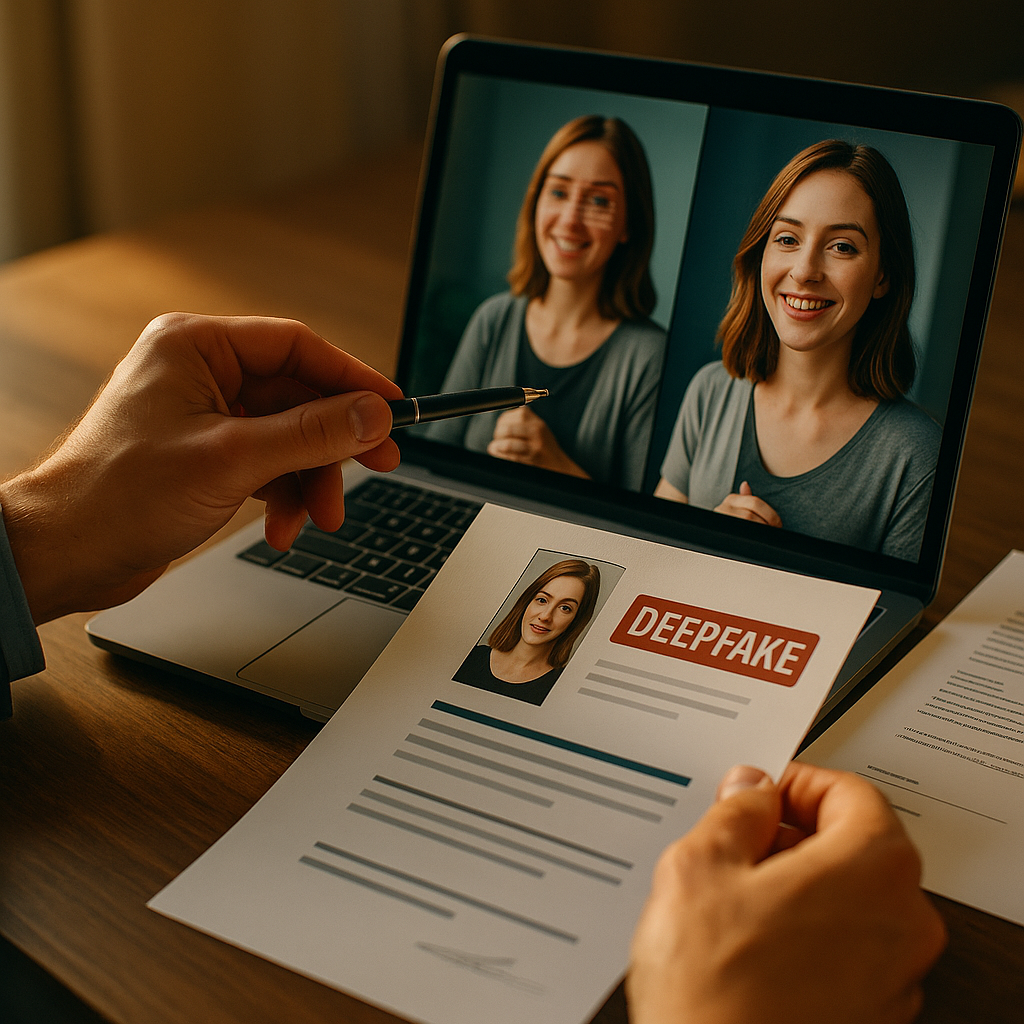
A synthetic influencer with 2 million followers just signed a six-figure brand deal. Nobody on the client side verified whether the “creator” behind the account was ever real, or whether the footage used to pitch the partnership was generated without consent. That is not a hypothetical. Deepfake detection has quietly become a prerequisite for virtual creator contracts, and brands that skip it are underwriting a risk they cannot see until it lands in a headline or a lawsuit.
Virtual influencers like Lil Miquela, Aitana Lopez, and a growing wave of AI-generated brand ambassadors have moved from novelty to line item in creator marketing budgets. But the same generative tools that make virtual creators possible also make it trivially easy to fabricate endorsements, clone real people’s likenesses without permission, or splice a creator’s face onto content they never approved. Signing a deal without verification tooling is like wiring payment before checking if the invoice is real.
Why Detection Belongs in Procurement, Not Just PR Crisis Response
Most brands still treat deepfake risk as a reputational fire drill: something legal handles after a video goes viral. That’s backwards. The verification work needs to happen before the contract is signed, during creator vetting, not after a fabricated clip forces a statement.
Here’s the practical problem. Virtual creator agencies and management firms often license likeness rights from a mix of sources: original 3D models, licensed voice actors, motion capture performers, and sometimes AI-trained composites pulled from real people’s public content. If a brand can’t verify the provenance of that likeness, it’s exposed to right-of-publicity claims, FTC disclosure violations, and consumer backlash if the “creator” turns out to be a stitched-together fabrication using someone’s face without consent.
Deepfake detection isn’t about catching bad actors after the fact. It’s about confirming, before money changes hands, that the digital asset you’re licensing is what the contract says it is.
The Detection Stack Brands Actually Need
There’s no single tool that solves this. Effective deepfake vetting for virtual creator deals layers several detection types, each catching a different failure mode.
- Facial forensics tools that flag inconsistencies in lighting, blink patterns, and pixel-level artifacts common in GAN-generated or diffusion-model video. Tools like Reality Defender and Hive Moderation specialize in this layer and are increasingly used by agencies for pre-signing checks.
- Voice authentication software that detects synthetic audio splicing, particularly important as voice cloning becomes cheap enough to fake endorsement audio at scale. This matters even more once dubbing and localization enter the picture, a risk we broke down in our look at voice cloning disclosure gaps.
- Provenance and watermarking checks using standards like C2PA, which embeds metadata showing how and when content was created or edited. If a virtual creator’s studio can’t produce C2PA-compliant provenance data, that’s a red flag worth escalating.
- Likeness rights documentation audit, essentially a paper trail confirming every real person whose face, voice, or mannerisms contributed to the virtual model has signed off, and that the license terms extend to your specific campaign use case.
- Ongoing monitoring tools that scan for unauthorized deepfake use of your campaign assets after launch, since a legitimate virtual creator deal can still be hijacked by bad actors who clone the model for scam content.
None of this is exotic anymore. Marketing ops teams comfortable evaluating MarTech stacks should treat deepfake detection the same way they’d treat a security audit for a new SaaS vendor. Some brands have started folding this directly into their broader martech risk review process, an approach detailed in how internal AI audit functions catch risk before contracts get signed.
What Happens When Nobody Checks?
Look at the pattern in past incidents. Brands have unknowingly run campaigns featuring likeness clones of real people who never consented, only discovering the issue when the actual person went public. The financial exposure isn’t hypothetical: right-of-publicity lawsuits, FTC enforcement for deceptive endorsement practices, and the harder-to-quantify cost of a brand’s name attached to a fabricated identity. Regulators have not been shy about this territory. The FTC’s endorsement guidelines already require clear disclosure when content is not what it appears, and enforcement attention on synthetic media is only increasing.
Building Verification Into the Contract, Not Just the Vetting Process
Detection tools catch what humans miss, but contracts determine who’s liable when something slips through. Every virtual creator agreement should include specific clauses that didn’t exist in standard influencer contracts five years ago.
Start with representations and warranties language requiring the creator’s management entity to affirm that all likenesses, voices, and performance data used in the virtual model were licensed with documented consent. Add indemnification clauses that shift liability back to the studio if a likeness turns out to be unauthorized. And build in audit rights, meaning your brand can request provenance documentation on demand, not just at signing.
This is exactly the kind of nuance that pure automation misses. AI drafting tools can generate a contract template in seconds, but they won’t know to flag a missing likeness warranty unless a human trained in this risk area reviews it. That’s the gap covered in how AI contract drafting still needs human negotiation.
If your virtual creator contract doesn’t name a specific detection standard (C2PA compliance, third-party forensic review, or equivalent), you have no enforceable definition of what “verified” means when a dispute arises.
Confidence Scoring: Borrowing a Page From Creator Matching
Brands running influencer programs at scale have already built confidence scoring systems to catch bad creator matches before they become campaign failures, as covered in confidence scoring dashboards for creator matching. The same logic applies to virtual creator verification. Rather than a binary pass/fail on authenticity, forward-thinking marketing ops teams are building weighted scores that combine forensic detection results, provenance documentation completeness, and licensing chain clarity into a single risk number before a deal moves to legal.
This matters because virtual creator partnerships often move fast. Agencies pitching AI-generated brand ambassadors know speed is part of the sales pitch, less scheduling friction, no burnout, infinite content variations. But speed without verification checkpoints is how brands end up signing something they can’t defend later. A scoring framework forces the pause that a purely relationship-driven pitch process skips.
What About Predictive Fit and ROI Data?
Detection tools solve the authenticity question, but brands still need to know if a virtual creator will actually perform. This is where the industry’s shift away from vanity metrics matters. Predictive fit scoring, the same methodology increasingly used to evaluate human creators in predictive fit scores beating follower count, applies equally to virtual talent. A synthetic creator with a large following but no verified engagement authenticity, or worse, a following partially inflated by bot networks, is a bad investment regardless of how clean the likeness rights are.
Combine that with lifetime value modeling. If your team is already tracking which creators drive retained customers versus one-time purchasers, per the approach outlined in predictive LTV models for creator retention, apply the identical rigor to virtual partnerships. Authenticity verification and performance verification are two separate gates, and both need to clear before budget commits.
A Quick Reality Check on Cost
Detection tooling isn’t free, and neither is the legal review time. Expect forensic scanning services to run per-asset or subscription fees depending on volume, with enterprise packages from vendors like Hive or Reality Defender scaling based on monthly content review needs. Weigh that against the average settlement or reputational cost of a mishandled synthetic media incident, and the math favors prevention every time. Brands already tracking rising AI infrastructure costs across their content operations, a trend detailed in rising AI compute costs squeezing content budgets, should fold detection tooling into that same line item rather than treating it as a surprise expense.
Industry data backs the urgency. Statista’s research on synthetic media growth shows detection and generation technology advancing in parallel, meaning the tools brands used last year to spot fakes may already be outdated. Pair that with guidance from platforms themselves; Meta’s business policies and TikTok’s advertising guidelines both now address synthetic and AI-generated content disclosure requirements that brands need baked into campaign briefs from day one.
The Next Step
Before your next virtual creator deal reaches legal review, require the agency to hand over provenance documentation and a third-party forensic scan report, not just a media kit. If they can’t produce it, that’s your answer.
FAQs
What is deepfake detection in the context of virtual creator deals?
It’s the process of verifying that a virtual creator’s likeness, voice, and content were generated with proper consent and licensing, using forensic tools that detect synthetic media artifacts, provenance metadata, and audio splicing before a brand signs a partnership agreement.
Which deepfake detection tools do brands typically use?
Common tools include facial forensic platforms like Reality Defender and Hive Moderation, voice authentication software for synthetic audio detection, and provenance standards like C2PA that verify how content was created and edited.
Do virtual creator contracts need different clauses than standard influencer agreements?
Yes. Virtual creator contracts should include representations and warranties on likeness licensing, indemnification clauses shifting liability to the creator’s management entity, and audit rights letting the brand request provenance documentation on demand.
What happens if a brand unknowingly uses an unauthorized deepfake likeness?
The brand faces potential right-of-publicity claims from the person whose likeness was used without consent, FTC scrutiny for deceptive endorsement practices, and reputational damage once the issue becomes public.
How does deepfake detection fit into broader creator vetting processes?
It functions as one layer in a larger risk framework, alongside confidence scoring for creator fit and predictive performance modeling, ensuring brands verify both authenticity and expected ROI before committing budget.
Top Influencer Marketing Agencies
The leading agencies shaping influencer marketing in 2026
Agencies ranked by campaign performance, client diversity, platform expertise, proven ROI, industry recognition, and client satisfaction. Assessed through verified case studies, reviews, and industry consultations.
Moburst

-
2

The Shelf
Boutique Beauty & Lifestyle Influencer AgencyA data-driven boutique agency specializing exclusively in beauty, wellness, and lifestyle influencer campaigns on Instagram and TikTok. Best for brands already focused on the beauty/personal care space that need curated, aesthetic-driven content.Clients: Pepsi, The Honest Company, Hims, Elf Cosmetics, Pure LeafVisit The Shelf → -
3

Audiencly
Niche Gaming & Esports Influencer AgencyA specialized agency focused exclusively on gaming and esports creators on YouTube, Twitch, and TikTok. Ideal if your campaign is 100% gaming-focused — from game launches to hardware and esports events.Clients: Epic Games, NordVPN, Ubisoft, Wargaming, Tencent GamesVisit Audiencly → -
4

Viral Nation
Global Influencer Marketing & Talent AgencyA dual talent management and marketing agency with proprietary brand safety tools and a global creator network spanning nano-influencers to celebrities across all major platforms.Clients: Meta, Activision Blizzard, Energizer, Aston Martin, WalmartVisit Viral Nation → -
5

The Influencer Marketing Factory
TikTok, Instagram & YouTube CampaignsA full-service agency with strong TikTok expertise, offering end-to-end campaign management from influencer discovery through performance reporting with a focus on platform-native content.Clients: Google, Snapchat, Universal Music, Bumble, YelpVisit TIMF → -
6

NeoReach
Enterprise Analytics & Influencer CampaignsAn enterprise-focused agency combining managed campaigns with a powerful self-service data platform for influencer search, audience analytics, and attribution modeling.Clients: Amazon, Airbnb, Netflix, Honda, The New York TimesVisit NeoReach → -
7

Ubiquitous
Creator-First Marketing PlatformA tech-driven platform combining self-service tools with managed campaign options, emphasizing speed and scalability for brands managing multiple influencer relationships.Clients: Lyft, Disney, Target, American Eagle, NetflixVisit Ubiquitous → -
8

Obviously
Scalable Enterprise Influencer CampaignsA tech-enabled agency built for high-volume campaigns, coordinating hundreds of creators simultaneously with end-to-end logistics, content rights management, and product seeding.Clients: Google, Ulta Beauty, Converse, AmazonVisit Obviously →