


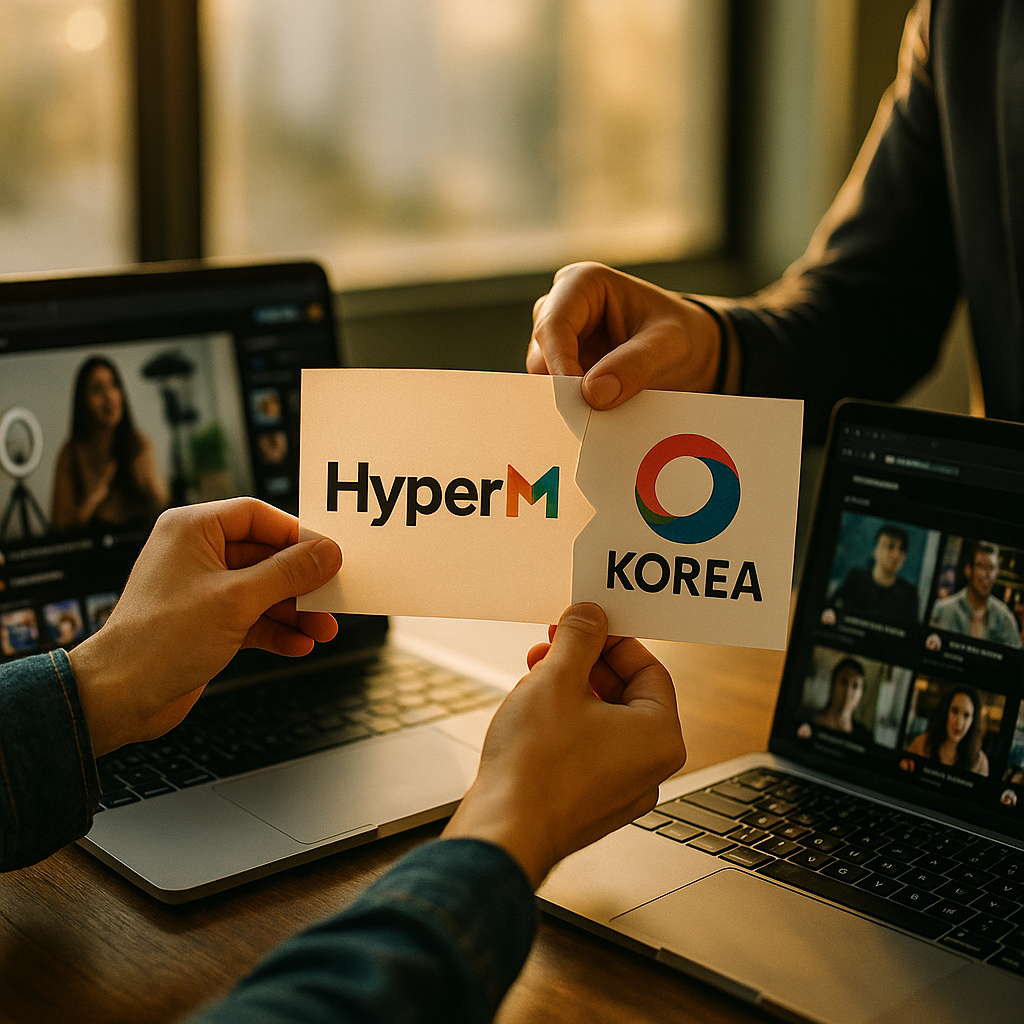
Three AI powered creator marketing platforms have merged or been acquired in the past six months. The latest, the HyperM Korea merger with a regional influencer analytics rival, isn’t an isolated deal. It’s a signal. When venture funded point solutions start combining balance sheets instead of competing for them, brands should ask one question: is my current platform about to disappear?
What Actually Happened With HyperM Korea
HyperM, the Seoul based AI matching and campaign analytics platform that built its name pairing K-beauty and lifestyle brands with micro and nano creators across Naver, YouTube, and Instagram, has merged with a competing creator intelligence firm operating across South Korea and Southeast Asia. The combined entity now controls a meaningfully larger share of AI driven creator discovery tools in a region where influencer spend has outpaced traditional media growth for several years running.
Terms weren’t fully disclosed, which is typical for this stage of creator tech consolidation. What matters more than the dollar figure is the rationale: both firms cited overlapping AI infrastructure, redundant data licensing costs, and the need for scale to compete against larger global platforms entering the APAC market. That’s a polite way of saying neither company could justify its burn rate alone.
Consolidation Isn’t a Korea Only Story
Zoom out and the pattern is global. Point solution fatigue has been building across the creator marketing stack for a while now, and enterprise buyers have already started voting with their procurement budgets. Brands increasingly prefer fewer, deeper platform relationships over a patchwork of specialized tools, a shift covered in detail in our piece on why enterprise brands pick platforms over fragmented vendor stacks.
The economics are straightforward. Every AI powered creator discovery, vetting, or payment tool requires its own data pipeline, its own compliance overhead, its own integration with your CRM and finance systems. Marketers running five or six vendors end up paying for the same creator data multiple times, reconciling conflicting performance numbers, and training teams on redundant dashboards. That’s not efficiency. That’s operational drag dressed up as “best of breed” tooling.
When two AI creator platforms merge, the real casualty is rarely the technology. It’s the brand teams left holding contracts, data, and workflows built around a company that no longer exists in its original form.
Why AI Infrastructure Costs Are Forcing This
Here’s the part most trade coverage glosses over: running a credible AI matching engine for creator discovery isn’t cheap. You need licensed social data feeds, continuously retrained models to catch fraud and fake engagement, and compute costs that scale with every new market you enter. Smaller regional players built strong niche products but lack the capital to keep pace with model training costs as larger competitors from the US and China push into the same territory.
That capital gap is exactly why HyperM’s merger makes sense on paper. Combining two mid-sized firms creates shared infrastructure, a larger creator database, and enough scale to negotiate better data licensing terms. It also, not coincidentally, creates a stronger asset to sell to a larger acquirer down the line. Consolidation at this tier often isn’t the end state. It’s a stepping stone toward a bigger buyout, something we’ve already seen play out with event and conference brands in the space, as detailed in our coverage of VidCon joining LIONS.
The Brand Side Risk Nobody Budgets For
If your influencer program runs on a platform that just merged, acquired, or got acquired, you’re exposed to risks that rarely show up in a vendor’s sales deck:
- Data portability gaps. Creator performance history, vetting scores, and historical campaign data may not transfer cleanly to a merged entity’s new infrastructure.
- Pricing resets. Combined firms frequently renegotiate contracts upward once competitive pressure eases, especially if the merger reduces the number of viable alternatives in your region.
- Feature deprecation. Tools you rely on daily might get sunset if they overlap with the acquiring company’s existing product.
- Compliance continuity. Disclosure tracking and FTC style compliance workflows built around one platform’s rules may need re-validation under the merged entity.
None of these are hypothetical. They’re the standard playbook whenever martech vendors consolidate, and creator marketing tech is no exception.
How This Changes Vendor Selection
If you’re currently evaluating AI powered creator platforms, or renewing a contract with one, the HyperM Korea merger should change your due diligence checklist. Ask vendors directly about funding runway, data ownership terms, and what happens to your historical campaign data in an acquisition scenario. Most sales teams aren’t prepared for that question, which tells you something.
This is also why platform risk now sits alongside ROI metrics like GMV and conversion tracking when brands build a business case for their influencer tech stack. A platform that delivers strong attribution today but folds into a competitor next quarter isn’t a stable foundation for a program that’s supposed to scale. Smart procurement teams are now building “vendor continuity” clauses into influencer platform contracts, requiring advance notice of ownership changes and guaranteed data export rights regardless of merger activity.
Platform stability is becoming as important a selection criterion as feature set. A brilliant AI matching algorithm is worthless if the company behind it gets absorbed and the product roadmap changes overnight.
What Survives Consolidation, and What Doesn’t
Not every AI creator marketing firm is vulnerable. The ones most likely to get acquired or forced into mergers share a few traits: narrow geographic focus, single platform dependency (say, exclusively Instagram or exclusively Naver), and thin differentiation beyond “we use AI to match creators faster.” Firms that survive independently tend to offer deeper operational value, things like compliance automation, multi-market data licensing, or integration with broader marketing operations tied to measurable outcomes like CAC payback rather than vanity engagement scores.
This mirrors a broader maturity shift in the creator economy. Programs that treat influencer marketing as a systematized, finance accountable function are pulling ahead of those still running it as a creative side project, a gap we’ve tracked in our breakdown of the creator marketing maturity curve. Vendors serving the mature end of that curve are harder to displace, which makes them less likely acquisition bait and more likely acquirers themselves.
What This Means for Your Next Platform Decision
Treat the HyperM merger as an early warning rather than a one-off headline. More consolidation is coming across AI powered creator marketing firms globally, driven by the same forces at play in Korea: rising AI infrastructure costs, thinning margins on subscription tools, and bigger players buying their way into regional markets instead of building from scratch. Industry data from eMarketer and Statista has tracked accelerating creator economy spend for several consecutive years, and capital tends to follow that spend, which means more M&A activity, not less.
Before renewing any influencer platform contract, run a quick stress test. Ask what happens to your data, your pricing, and your workflows if the vendor gets acquired tomorrow. If the sales rep can’t answer confidently, that’s your answer about long-term viability. This kind of scrutiny matters even more as brands lean harder on automated vetting to avoid reputational blowups, the kind outlined in our analysis of programs without strategy.
For reference on how platform level compliance expectations continue to evolve, the FTC’s disclosure guidance remains the baseline brands should hold every vendor to, merged or not.
FAQs
Common questions from brand and agency teams tracking the HyperM Korea merger and what it signals for the broader market.
What is the HyperM Korea merger?
The HyperM Korea merger refers to the combination of HyperM, a Seoul based AI creator discovery and analytics platform, with a competing regional influencer intelligence firm, forming a larger entity with broader data and infrastructure resources across the APAC creator marketing market.
Why are AI powered creator marketing firms consolidating?
Consolidation is driven by rising costs of running AI infrastructure, including licensed social data feeds and model training, combined with thinning margins on subscription tools and pressure from larger global platforms expanding into regional markets.
How does a vendor merger affect brands using that platform?
Brands can face data portability issues, unexpected pricing changes, feature deprecation, and compliance continuity gaps when a creator marketing vendor merges with or is acquired by another firm.
What should brands ask vendors before signing a new contract?
Brands should ask about the vendor’s funding runway, data ownership and export rights, and contractual protections if the company is acquired or merges with a competitor.
Is more consolidation expected in the creator marketing tech space?
Yes. Rising AI infrastructure costs and increased competition from larger global platforms make further mergers and acquisitions among regional and mid-sized creator marketing firms likely.
Next step: audit your current creator marketing vendor contracts this quarter for data export rights and ownership change clauses, before the next merger announcement forces you to do it under pressure.
FAQs
What is the HyperM Korea merger?
The HyperM Korea merger refers to the combination of HyperM, a Seoul based AI creator discovery and analytics platform, with a competing regional influencer intelligence firm, forming a larger entity with broader data and infrastructure resources across the APAC creator marketing market.
Why are AI powered creator marketing firms consolidating?
Consolidation is driven by rising costs of running AI infrastructure, including licensed social data feeds and model training, combined with thinning margins on subscription tools and pressure from larger global platforms expanding into regional markets.
How does a vendor merger affect brands using that platform?
Brands can face data portability issues, unexpected pricing changes, feature deprecation, and compliance continuity gaps when a creator marketing vendor merges with or is acquired by another firm.
What should brands ask vendors before signing a new contract?
Brands should ask about the vendor’s funding runway, data ownership and export rights, and contractual protections if the company is acquired or merges with a competitor.
Is more consolidation expected in the creator marketing tech space?
Yes. Rising AI infrastructure costs and increased competition from larger global platforms make further mergers and acquisitions among regional and mid-sized creator marketing firms likely.
Top Influencer Marketing Agencies
The leading agencies shaping influencer marketing in 2026
Agencies ranked by campaign performance, client diversity, platform expertise, proven ROI, industry recognition, and client satisfaction. Assessed through verified case studies, reviews, and industry consultations.
Moburst

-
2

The Shelf
Boutique Beauty & Lifestyle Influencer AgencyA data-driven boutique agency specializing exclusively in beauty, wellness, and lifestyle influencer campaigns on Instagram and TikTok. Best for brands already focused on the beauty/personal care space that need curated, aesthetic-driven content.Clients: Pepsi, The Honest Company, Hims, Elf Cosmetics, Pure LeafVisit The Shelf → -
3

Audiencly
Niche Gaming & Esports Influencer AgencyA specialized agency focused exclusively on gaming and esports creators on YouTube, Twitch, and TikTok. Ideal if your campaign is 100% gaming-focused — from game launches to hardware and esports events.Clients: Epic Games, NordVPN, Ubisoft, Wargaming, Tencent GamesVisit Audiencly → -
4

Viral Nation
Global Influencer Marketing & Talent AgencyA dual talent management and marketing agency with proprietary brand safety tools and a global creator network spanning nano-influencers to celebrities across all major platforms.Clients: Meta, Activision Blizzard, Energizer, Aston Martin, WalmartVisit Viral Nation → -
5

The Influencer Marketing Factory
TikTok, Instagram & YouTube CampaignsA full-service agency with strong TikTok expertise, offering end-to-end campaign management from influencer discovery through performance reporting with a focus on platform-native content.Clients: Google, Snapchat, Universal Music, Bumble, YelpVisit TIMF → -
6

NeoReach
Enterprise Analytics & Influencer CampaignsAn enterprise-focused agency combining managed campaigns with a powerful self-service data platform for influencer search, audience analytics, and attribution modeling.Clients: Amazon, Airbnb, Netflix, Honda, The New York TimesVisit NeoReach → -
7

Ubiquitous
Creator-First Marketing PlatformA tech-driven platform combining self-service tools with managed campaign options, emphasizing speed and scalability for brands managing multiple influencer relationships.Clients: Lyft, Disney, Target, American Eagle, NetflixVisit Ubiquitous → -
8

Obviously
Scalable Enterprise Influencer CampaignsA tech-enabled agency built for high-volume campaigns, coordinating hundreds of creators simultaneously with end-to-end logistics, content rights management, and product seeding.Clients: Google, Ulta Beauty, Converse, AmazonVisit Obviously →