


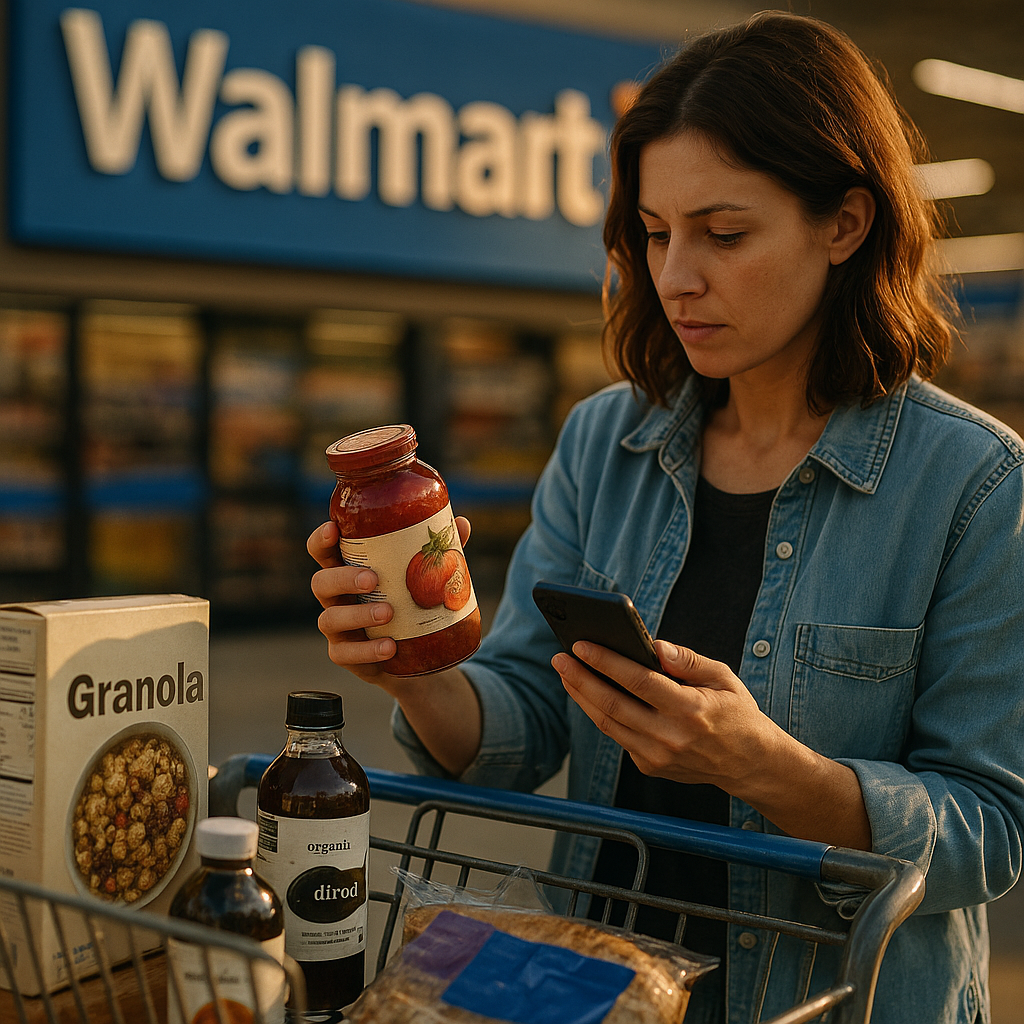
More than 40 creator-founded brands now sell through Walmart.com’s third-party marketplace, and almost none of their launch content carries an ownership disclosure. That’s not a minor oversight. When a creator reviews, unboxes, or “discovers” a product they co-own and sell on Walmart.com, the FTC doesn’t see a review. It sees an undisclosed material connection, and the creator owned brands on Walmart.com dynamic is quietly becoming one of the messiest compliance zones in retail media.
When the Creator Is Also the Retailer
Walmart’s marketplace expansion and its Walmart Creator affiliate program have made it trivially easy for a creator to launch a product line, list it through a third-party seller account, and drive traffic to that listing from their own channels. Think protein brands from fitness influencers, skincare lines from beauty creators, or snack brands riding the Feastables model. The structure is appealing: no retail buyer gatekeeping, instant distribution, and a direct commission loop through Walmart’s affiliate infrastructure.
But the business model collapses the usual line between “endorser” and “advertiser.” In a standard sponsorship, a brand pays a creator to talk about someone else’s product. Here, the creator is the brand. They’re reviewing their own equity position, and viewers have no way of knowing that unless it’s spelled out.
The FTC’s Material Connection Test Doesn’t Care About Ownership Structure
The FTC’s Endorsement Guides define a material connection broadly: any relationship that could affect the weight or credibility a viewer gives to an endorsement. Payment is one kind of connection. Free product is another. Equity ownership, founder status, and profit share from sales are all squarely inside that definition, arguably more material than a flat sponsorship fee, because the creator’s financial upside scales directly with how convincingly they sell the product.
That means a TikTok video from a creator saying “I use this every day” about their own Walmart-listed supplement line needs a disclosure just as clear as a paid partnership post, even though no brand paid them to say it. The absence of a third-party sponsor doesn’t remove the obligation. It just removes the paper trail brands usually rely on to prove compliance.
Ownership is a material connection in its own right. If a creator profits from every unit sold, “I’m the founder” belongs in the first three seconds, not buried in a bio link.
Where Walmart.com Disclosure Gets Messy
Three overlapping content types create friction points that most creator-owned brand teams haven’t mapped:
- Walmart marketplace listing content. Product descriptions, founder videos embedded on the listing page, and “brand story” modules often use creator-voiced copy that reads like a testimonial rather than a seller’s product description. Walmart’s own marketplace policies require accurate representation, but they don’t enforce FTC-style disclosure language.
- Social content driving traffic to the listing. This is the highest-risk category. A creator posting an Instagram Reel that links to their own Walmart storefront is simultaneously an advertiser, an affiliate, and an owner. Each role carries its own disclosure trigger, and viewers deserve all three signals, not just a hashtag.
- Affiliate and UGC amplification. Once a creator-owned brand recruits other creators to promote the Walmart listing through Walmart Creator commissions, you’ve layered a second disclosure obligation on top of the first. Those affiliate creators need to disclose the commission relationship, separate from whatever the founder discloses about ownership.
Brands that treat these as one disclosure problem instead of three are the ones that end up with FTC inquiry letters. For a deeper look at how commission structures complicate disclosure obligations on retail platforms, see our coverage of TikTok Shop affiliate disclosure gaps, which maps almost directly onto Walmart’s creator-affiliate model.
Four Overlap Scenarios Brands Need to Map
If you’re an agency or in-house team managing a creator-founder relationship that touches Walmart.com, run the content through these four scenarios before anything ships:
- Founder posts about their own product, no paid media behind it. Requires an ownership disclosure (“I own this brand” or equivalent), even without a #ad tag, because the financial interest exists regardless of payment.
- Founder runs paid social ads featuring themselves. Requires both an ownership disclosure and standard ad-platform labeling (Meta’s branded content tool, TikTok’s paid partnership label), since the ad itself is a separate material fact from the ownership stake.
- Third-party affiliate creator promotes the Walmart listing for commission. Requires a commission disclosure under FTC rules, separate from anything the founder does. This creator isn’t an owner, so the disclosure language differs: “I earn a commission on sales” rather than “I own this brand.”
- UGC or customer reviews seeded by the brand through gifting. Requires disclosure of the free product relationship, a category the FTC has scrutinized heavily in recent enforcement actions. Our breakdown of high-volume gifting disclosure rules covers the mechanics of this obligation in more detail.
Each scenario needs its own disclosure template, its own review checkpoint, and ideally its own line item in a compliance tracker. Treating “creator-owned brand content” as a single bucket is how gaps form.
Why This Is Riskier Than a Standard Brand Deal
In a typical influencer partnership, the brand’s legal team drafts the disclosure language, trains the creator, and reviews content before it posts. When the creator owns the brand, that oversight structure often doesn’t exist. There’s no separate legal department pushing back on the founder’s own marketing instincts. The founder is marketing, product, and talent all at once, which means disclosure compliance depends entirely on whether that one person built the habit in from day one.
This is exactly the kind of structural gap that state attorneys general have started targeting outside of federal FTC action. Enforcement at the state level has moved faster than federal rulemaking in several categories, and creator-owned brand disclosure sits right in that enforcement gap. Our analysis of state AG enforcement trends is worth reading if your legal team is still treating FTC guidance as the only exposure point.
There’s also a reputational dimension that outlasts any fine. Audiences have gotten sharper about spotting undisclosed founder equity, especially after several high-profile creator brand controversies where fans felt misled about “unbiased” reviews that were actually sales pitches for the creator’s own company. Trust, once a creator’s core asset, erodes fast when followers feel like they were sold to without being told.
Building an Audit Trail Before the FTC Asks
Retail media teams managing creator-owned brand partnerships on Walmart.com should build documentation now, not after an inquiry letter arrives. That means:
- A written disclosure policy specific to founder-talent, distinct from your standard influencer contract template.
- Screenshots and timestamps of every founder video, ad, and listing update, stored with the disclosure language visible in frame.
- A separate review process for affiliate creators promoting the brand, since their disclosure obligations differ from the founder’s.
- Performance data tied to disclosure compliance, so legal and marketing can both see which content variants carried proper labeling.
Substantiation matters here too. If the FTC or a state regulator asks how a brand verified its disclosure practices across dozens of founder posts and affiliate pushes, “we trusted the creator” isn’t an answer that holds up. The same substantiation logic that’s reshaping blended CPM reporting standards applies directly to disclosure audits: you need a record, not a memory.
According to eMarketer’s creator commerce research, retail marketplace sales attributed to creator affiliate links have grown sharply over the past two years, which means the volume of at-risk content is only expanding. Pair that with Statista’s data on influencer marketing spend and it’s clear this isn’t a niche compliance issue, it’s a structural one that scales with every new creator brand launch.
What Walmart Won’t Do for You
Walmart’s marketplace terms focus on product safety, listing accuracy, and seller conduct. They are not a substitute for FTC compliance, and Walmart has no obligation to flag an undisclosed founder relationship in a creator’s social content. That responsibility sits entirely with the brand and the creator. Agencies structuring these deals need to build disclosure review into the launch timeline the same way they’d build in photography or packaging approval, not as an afterthought bolted on after legal flags it.
If your team is also navigating AI-generated content from creator-owned brands, whether that’s synthetic founder avatars or AI-assisted product demos, the disclosure stack gets even more layered. Our piece on FTC rules on AI creator content is a useful companion read if your founder talent is experimenting with generative tools for product marketing.
Frequently Asked Questions
Quick answers to the questions brand and legal teams ask most often about this overlap.
Do creators have to disclose ownership of a brand sold on Walmart.com?
Yes. Ownership is a material connection under FTC guidance, independent of whether the creator received payment for a specific post. Any content that could be seen as an endorsement, review, or recommendation of the product needs clear, upfront disclosure of the founder’s financial stake.
Is an “ad” or “#sponsored” tag enough for a founder’s own product content?
Not necessarily. Standard sponsorship tags imply a paid third-party relationship. Ownership disclosure should be explicit, something like “I own this brand” or “full disclosure, this is my company,” since the audience needs to understand the nature of the connection, not just that some relationship exists.
Does Walmart’s Creator affiliate program change the disclosure requirements?
No. Affiliate commissions through Walmart Creator are a separate material connection from ownership. A non-owning creator earning commission still needs to disclose the commission relationship, while a founder promoting their own listing through the same program needs both an ownership disclosure and any applicable commission disclosure.
What happens if a creator-owned brand fails to disclose properly?
Potential outcomes include FTC inquiry letters, consent orders, civil penalties for repeat or knowing violations, and increasingly, state attorney general action. Reputational damage, including creator backlash from followers who feel misled, often outlasts any regulatory penalty.
Who is responsible for disclosure compliance when the creator owns the company?
The brand entity itself, meaning the creator’s company, carries primary responsibility, along with any agency or marketing team managing the content calendar. Walmart’s marketplace terms do not cover FTC disclosure compliance, so there’s no platform-level backstop if the obligation is missed.
Visible FAQ Recap
For reference, the questions above summarized: ownership disclosure requirements, whether standard ad tags suffice, how affiliate programs layer onto ownership disclosure, consequences of noncompliance, and who holds responsibility. Treat each as a checklist item before any founder content goes live.
Next step: audit every piece of founder-voiced content tied to your Walmart.com listings this quarter, flag anything missing explicit ownership language, and fix the template before you scale the next product drop.
Top Influencer Marketing Agencies
The leading agencies shaping influencer marketing in 2026
Agencies ranked by campaign performance, client diversity, platform expertise, proven ROI, industry recognition, and client satisfaction. Assessed through verified case studies, reviews, and industry consultations.
Moburst

-
2

The Shelf
Boutique Beauty & Lifestyle Influencer AgencyA data-driven boutique agency specializing exclusively in beauty, wellness, and lifestyle influencer campaigns on Instagram and TikTok. Best for brands already focused on the beauty/personal care space that need curated, aesthetic-driven content.Clients: Pepsi, The Honest Company, Hims, Elf Cosmetics, Pure LeafVisit The Shelf → -
3

Audiencly
Niche Gaming & Esports Influencer AgencyA specialized agency focused exclusively on gaming and esports creators on YouTube, Twitch, and TikTok. Ideal if your campaign is 100% gaming-focused — from game launches to hardware and esports events.Clients: Epic Games, NordVPN, Ubisoft, Wargaming, Tencent GamesVisit Audiencly → -
4

Viral Nation
Global Influencer Marketing & Talent AgencyA dual talent management and marketing agency with proprietary brand safety tools and a global creator network spanning nano-influencers to celebrities across all major platforms.Clients: Meta, Activision Blizzard, Energizer, Aston Martin, WalmartVisit Viral Nation → -
5

The Influencer Marketing Factory
TikTok, Instagram & YouTube CampaignsA full-service agency with strong TikTok expertise, offering end-to-end campaign management from influencer discovery through performance reporting with a focus on platform-native content.Clients: Google, Snapchat, Universal Music, Bumble, YelpVisit TIMF → -
6

NeoReach
Enterprise Analytics & Influencer CampaignsAn enterprise-focused agency combining managed campaigns with a powerful self-service data platform for influencer search, audience analytics, and attribution modeling.Clients: Amazon, Airbnb, Netflix, Honda, The New York TimesVisit NeoReach → -
7

Ubiquitous
Creator-First Marketing PlatformA tech-driven platform combining self-service tools with managed campaign options, emphasizing speed and scalability for brands managing multiple influencer relationships.Clients: Lyft, Disney, Target, American Eagle, NetflixVisit Ubiquitous → -
8

Obviously
Scalable Enterprise Influencer CampaignsA tech-enabled agency built for high-volume campaigns, coordinating hundreds of creators simultaneously with end-to-end logistics, content rights management, and product seeding.Clients: Google, Ulta Beauty, Converse, AmazonVisit Obviously →