


A shopper sees a creator’s unboxing video, then walks into Target three days later and buys the product off the shelf, never clicking a link, never using a promo code. Did that sale need a disclosure? The FTC says yes, and most phygital campaigns are built as if the answer were no.
That gap is where enforcement risk lives right now.
What Counts As a Phygital Campaign Anyway
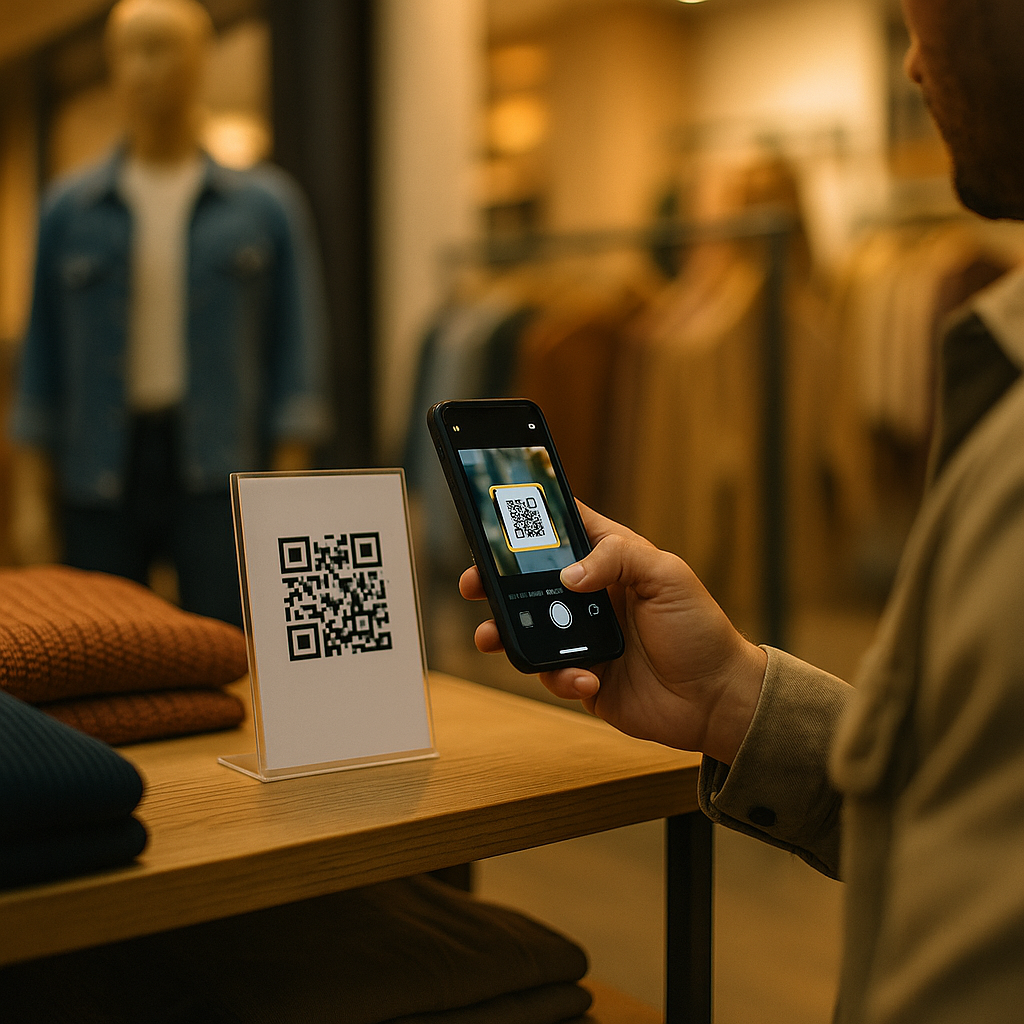
Phygital marketing fuses digital content with physical retail moments. Think QR codes on endcaps that trigger creator videos, in-store screens looping TikTok Shop clips, or a creator’s Instagram Reel driving foot traffic to a Sephora pop-up. The whole point is to collapse the distance between seeing content and buying the product. Brands love it because it closes the loop between awareness and conversion without forcing everything through an app or a link.
But that collapsed distance is exactly what regulators are watching. The FTC’s Endorsement Guides don’t care whether the purchase happens on a phone screen or at a register. If a creator’s content materially influences a purchase decision and there’s a connection between the creator and the brand, that connection has to be disclosed, clearly and conspicuously, at the point where the audience encounters the endorsement. Not at the point of sale. At the point of exposure.
The disclosure obligation attaches to the content, not the transaction. A sale happening offline doesn’t erase the FTC’s interest in how that sale was influenced.
Why Proof of Purchase Complicates Everything
Marketers have gotten decent at tracking disclosure compliance for trackable links, affiliate codes, and in-app checkouts. Phygital campaigns break that tracking model entirely. When the proof of purchase is a receipt scan, a loyalty app check-in, or a QR redemption at a physical register, the content that triggered the sale often lives somewhere brands can’t audit after the fact.
Here’s the uncomfortable part. Many brands running phygital activations can’t actually produce the exact piece of content a given customer saw before buying. That’s a problem for attribution. It’s a bigger problem for compliance, because if the FTC investigates and a brand can’t show the disclosure was present, conspicuous, and unavoidable, “we think it was probably there” doesn’t hold up.
Retail media networks have made this worse in a useful way, meaning they’ve forced the issue into the open. Walmart Connect, Kroger Precision Marketing, and similar networks now serve creator content directly into store displays and connected carts. That content frequently gets repurposed from its original social post, sometimes stripped of captions, sometimes cropped to fit a screen aspect ratio. Guess what gets cut first when a video gets resized for a 9:16 kiosk display? The disclosure text sitting in the caption, that’s what.
The Disclosure Has to Survive the Format Change
This is the operational heart of the problem. A disclosure that’s compliant on Instagram isn’t automatically compliant once that same clip gets pulled into a retail screen loop, a QR landing page, or a digital shelf tag. The FTC’s guidance is explicit that disclosures must be understandable in the context they appear in. A spoken “thanks to Brand X for sponsoring this” works fine in a fifteen-second Reel. It’s useless on a silent in-store loop with no audio.
So what actually works across formats?
- Burned-in text overlays that survive cropping and resizing, placed in the upper third of frame where kiosk displays rarely crop.
- Static disclosure cards appended to the front of any clip repurposed for retail screens, not relying on captions that get stripped during export.
- QR landing pages that re-state the material connection before the redemption flow, not buried in a footer.
- Receipt-linked campaigns that log which version of content a shopper interacted with, so there’s an audit trail if a complaint surfaces later.
None of this is complicated. What’s complicated is building it into the workflow before the content gets handed off to a retail media team that’s never heard of the Endorsement Guides. This is the same structural problem showing up across the industry when content gets repurposed across formats without disclosure traveling with it, something CTV creator disclosure rules have already forced brands to confront in streaming contexts.
Material Connection Doesn’t Need a Transaction to Exist
A lot of brand teams still operate on an outdated assumption: if there’s no affiliate link, no commission, no trackable sale, disclosure isn’t really necessary. Wrong. Material connection under FTC rules covers free product, payment, family relationships, employment, and any other benefit that could affect how an audience weighs the endorsement. A creator who received a free product specifically to film an in-store haul video has a material connection, full stop, whether or not that video ever generates a traceable sale.
This matters enormously for phygital campaigns because the entire premise is driving offline behavior that’s hard to trace. Brands sometimes treat that untraceability as a loophole. It isn’t. It’s actually the opposite: the harder a sale is to trace back to content, the more important it becomes that the disclosure itself did its job up front, because there’s no retroactive fix.
Where State Regulators Are Adding Pressure
The FTC isn’t the only enforcement body paying attention anymore. State attorneys general have started pursuing influencer disclosure cases independently, sometimes moving faster than federal regulators and applying stricter interpretations of what counts as adequate disclosure. This state AG enforcement surge means brands can’t assume federal compliance is the ceiling. A disclosure that satisfies FTC guidance might still trigger a state consumer protection claim if a state AG decides the format wasn’t conspicuous enough for the medium.
Retail partners add another layer. Target, Walmart, and CVS all have their own creator content policies for in-store digital signage, and those policies increasingly require documented proof of disclosure compliance before content gets approved for screens. Brands that can’t produce that documentation are getting campaigns rejected at the retail partner level, independent of any regulatory action.
Building an Audit Trail That Actually Holds Up
If you’re running phygital activations, you need a record that connects three things: the original content and its disclosure, every repurposed version and whether disclosure survived the edit, and where each version got deployed. Most brands have none of this. They have a content calendar and a retail media insertion order, and those two things never talk to each other.
Fixing it doesn’t require new software, usually. It requires a checklist built into the handoff between social and retail media teams, verifying disclosure presence before any asset moves into a physical retail environment. It also requires creator contracts that explicitly address repurposing rights and disclosure obligations across formats, something brands have had to get more precise about generally as multi platform disclosure requirements have tightened across the industry.
If disclosure compliance depends on a format surviving an export unchanged, you don’t have a compliance program. You have a hope.
Brands should also build in periodic internal audits, pulling a sample of in-store creator content quarterly and checking it against the original FTC-compliant version. This isn’t glamorous work. It’s also exactly the kind of substantiation the FTC expects brands to have on hand if questioned, a standard that’s come up repeatedly in discussions around FTC substantiation requirements for performance claims tied to creator content.
What Agencies Should Be Telling Clients Right Now
Agencies running phygital programs are often the only party in the chain who can see both the creative side and the retail deployment side. That puts them in a position to catch disclosure gaps before they become liability. A few things worth pushing clients on:
- Require disclosure elements to be embedded as burned-in visual assets, not reliant on captions or audio that formats might strip.
- Build disclosure verification into the retail media insertion order process, not as an afterthought after creative is locked.
- Negotiate creator contracts that cover repurposing across physical retail formats explicitly, with disclosure survival as a deliverable, not an assumption.
- Keep dated screenshots or video captures of every deployed version, tied to retail media flight dates, for at least the FTC’s typical lookback window.
None of this is expensive relative to the cost of a retail partner pulling a campaign mid-flight, or worse, an FTC inquiry that surfaces inconsistent disclosure across a multi-format rollout. According to eMarketer, retail media spend continues climbing faster than most other channels, and creator content is an increasingly large share of that inventory. The volume alone means enforcement attention is only going to grow, not shrink.
For brands wanting a sense of how fast this space is moving on the platform side, TikTok’s advertising resources and Meta’s business tools both now include retail integration features that push creator content into physical commerce flows, often with disclosure formatting left entirely to the brand’s discretion. That’s a gap worth closing proactively, not after a complaint.
FAQs
The questions below come up constantly from brand and agency teams building phygital programs, and the answers matter more now that enforcement has broadened beyond purely digital transactions.
Frequently Asked Questions
Does the FTC require disclosure if the purchase happens in a physical store?
Yes. The obligation to disclose a material connection attaches to the content and the endorsement itself, not to where or how the resulting purchase takes place. A sale happening offline doesn’t remove the disclosure requirement.
What happens if a disclosure gets cropped out when content is repurposed for retail screens?
The repurposed version is noncompliant even if the original social post was fully disclosed. Each deployed version needs to be evaluated independently, and disclosures should be burned into the visual frame to survive cropping and resizing.
Do QR code campaigns need their own disclosure, separate from the social post that generated the scan?
Generally yes. The landing page or redemption flow triggered by the QR code should restate the material connection, especially if the original disclosure isn’t visible at the point the shopper is making a final purchase decision.
Who is liable if a retail partner strips disclosure from creator content during its own editing process?
Liability can extend to both the brand and the creator depending on the circumstances, which is why contracts need explicit language requiring disclosure verification before any third party, including retail partners, repurposes the content.
How long should brands retain proof of disclosure compliance for phygital campaigns?
Most compliance teams retain dated records for at least the FTC’s typical enforcement lookback period, though state attorney general actions can sometimes extend relevant timeframes, so longer retention is generally safer.
Visible FAQ (HTML)
Frequently Asked Questions
Does the FTC require disclosure if the purchase happens in a physical store?
Yes. The obligation to disclose a material connection attaches to the content and the endorsement itself, not to where or how the resulting purchase takes place. A sale happening offline doesn’t remove the disclosure requirement.
What happens if a disclosure gets cropped out when content is repurposed for retail screens?
The repurposed version is noncompliant even if the original social post was fully disclosed. Each deployed version needs to be evaluated independently, and disclosures should be burned into the visual frame to survive cropping and resizing.
Do QR code campaigns need their own disclosure, separate from the social post that generated the scan?
Generally yes. The landing page or redemption flow triggered by the QR code should restate the material connection, especially if the original disclosure isn’t visible at the point the shopper is making a final purchase decision.
Who is liable if a retail partner strips disclosure from creator content during its own editing process?
Liability can extend to both the brand and the creator depending on the circumstances, which is why contracts need explicit language requiring disclosure verification before any third party, including retail partners, repurposes the content.
How long should brands retain proof of disclosure compliance for phygital campaigns?
Most compliance teams retain dated records for at least the FTC’s typical enforcement lookback period, though state attorney general actions can sometimes extend relevant timeframes, so longer retention is generally safer.
The next phygital campaign on your calendar should have disclosure verification built into the retail media handoff before a single asset goes to print or screen, not after a complaint forces the question.
Top Influencer Marketing Agencies
The leading agencies shaping influencer marketing in 2026
Agencies ranked by campaign performance, client diversity, platform expertise, proven ROI, industry recognition, and client satisfaction. Assessed through verified case studies, reviews, and industry consultations.
Moburst

-
2

The Shelf
Boutique Beauty & Lifestyle Influencer AgencyA data-driven boutique agency specializing exclusively in beauty, wellness, and lifestyle influencer campaigns on Instagram and TikTok. Best for brands already focused on the beauty/personal care space that need curated, aesthetic-driven content.Clients: Pepsi, The Honest Company, Hims, Elf Cosmetics, Pure LeafVisit The Shelf → -
3

Audiencly
Niche Gaming & Esports Influencer AgencyA specialized agency focused exclusively on gaming and esports creators on YouTube, Twitch, and TikTok. Ideal if your campaign is 100% gaming-focused — from game launches to hardware and esports events.Clients: Epic Games, NordVPN, Ubisoft, Wargaming, Tencent GamesVisit Audiencly → -
4

Viral Nation
Global Influencer Marketing & Talent AgencyA dual talent management and marketing agency with proprietary brand safety tools and a global creator network spanning nano-influencers to celebrities across all major platforms.Clients: Meta, Activision Blizzard, Energizer, Aston Martin, WalmartVisit Viral Nation → -
5

The Influencer Marketing Factory
TikTok, Instagram & YouTube CampaignsA full-service agency with strong TikTok expertise, offering end-to-end campaign management from influencer discovery through performance reporting with a focus on platform-native content.Clients: Google, Snapchat, Universal Music, Bumble, YelpVisit TIMF → -
6

NeoReach
Enterprise Analytics & Influencer CampaignsAn enterprise-focused agency combining managed campaigns with a powerful self-service data platform for influencer search, audience analytics, and attribution modeling.Clients: Amazon, Airbnb, Netflix, Honda, The New York TimesVisit NeoReach → -
7

Ubiquitous
Creator-First Marketing PlatformA tech-driven platform combining self-service tools with managed campaign options, emphasizing speed and scalability for brands managing multiple influencer relationships.Clients: Lyft, Disney, Target, American Eagle, NetflixVisit Ubiquitous → -
8

Obviously
Scalable Enterprise Influencer CampaignsA tech-enabled agency built for high-volume campaigns, coordinating hundreds of creators simultaneously with end-to-end logistics, content rights management, and product seeding.Clients: Google, Ulta Beauty, Converse, AmazonVisit Obviously →