


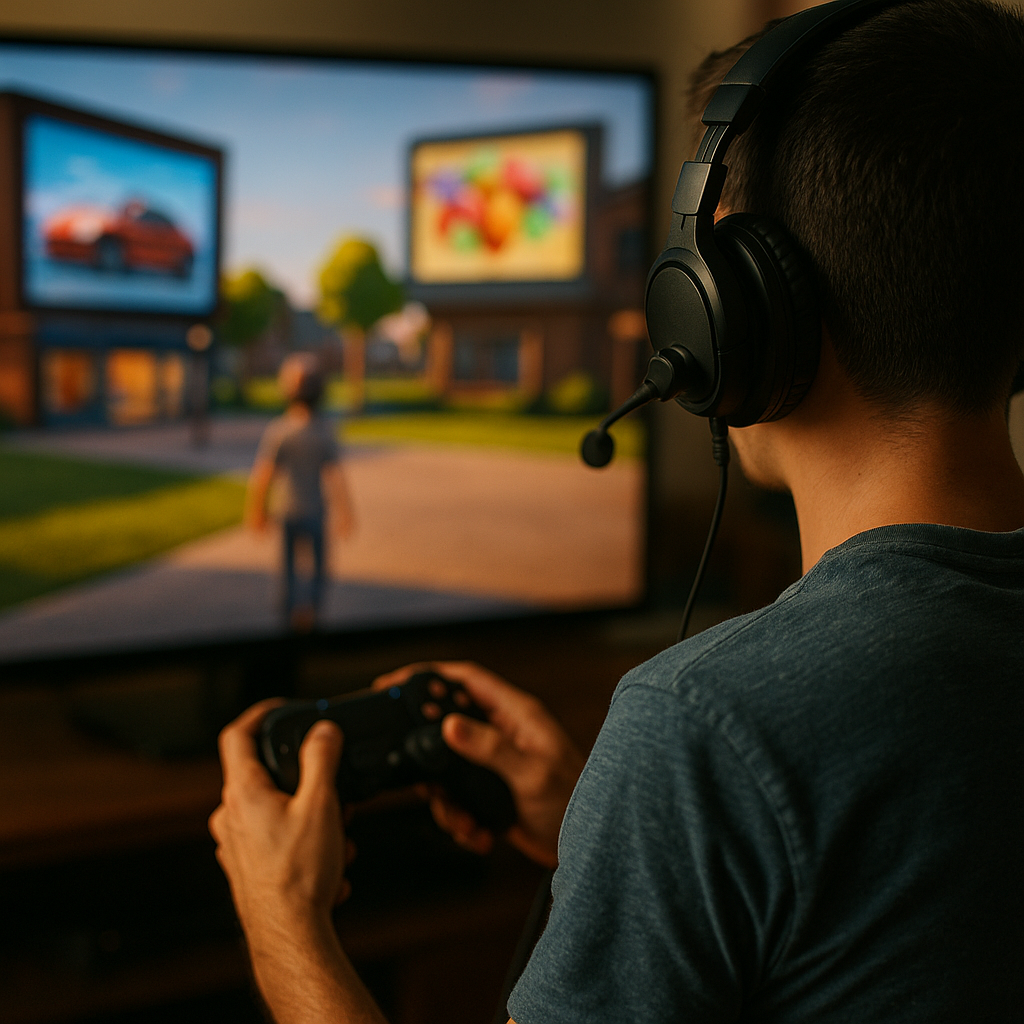
In 2025, brands want attention without breaking immersion, and virtual worlds offer a rare chance to earn it. In game billboards in non combat virtual worlds can feel like part of the scenery when they respect context, pacing, and player goals. This playbook explains where billboards belong, how to measure impact, and how to avoid backlash—starting with one overlooked decision that shapes everything.
Non-combat virtual worlds: defining the environment and player mindset
Non-combat virtual worlds include social hubs, roleplay cities, creative sandboxes, simulation worlds, and exploration-first experiences where players are not primarily focused on winning fights. The difference matters because attention works differently: players scan environments for navigation cues, social signals, and aesthetic detail rather than threat detection or competitive advantage.
That mindset creates both an opportunity and a responsibility. The opportunity is time: players linger, talk, shop, build, and travel. The responsibility is tone: anything that feels like an intrusive ad can disrupt the world’s promise of comfort, creativity, or community. Your billboard strategy should start with a clear answer to three questions:
- Why are players here today? (socializing, building, roleplay, collecting, exploring)
- What do they value? (self-expression, calm, belonging, discovery, creativity)
- What would feel “native” in this world? (signage, posters, transit ads, storefront displays, event banners)
When you map billboard placements to authentic world functions—directions, venue promotion, public service-style messaging, event listings—you reduce ad resistance and raise recall. If the world has lore, align with it. If it has a “real-world city” vibe, you can mirror real outdoor formats. If it is fantastical, lean into themed creative that still communicates the brand clearly.
In-game billboard placement strategy: high-intent locations and frequency control
Billboard performance depends more on where and when players see it than on how loud the creative looks. Use an intentional placement strategy that matches traffic flow, dwell time, and camera behavior. In non-combat worlds, players often move at a slower pace and are more likely to stop, making certain placements disproportionately valuable.
Prioritize these placement categories:
- Spawn and arrival zones: Great for broad reach, but keep frequency low and creative simple to avoid “ad wall” fatigue.
- Transit corridors: Trains, ferries, elevators, portals, and walking paths deliver repeated views with predictable angles.
- Social congregation points: Plazas, stages, markets, cafés, and community boards offer high dwell time and social sharing potential.
- Questless “pause” moments: Loading-like waits, matchmaking lobbies (if any), museum exhibits, or scenic overlooks.
- Commerce-adjacent areas: Near cosmetic shops, customization mirrors, housing districts, or crafting stations where purchase intent is naturally higher.
Control frequency to protect experience: set a cap per session (for example, a maximum number of billboard impressions per user per 10 minutes) and rotate creatives thoughtfully. In non-combat spaces, repetition can feel more aggressive because players are not distracted by survival pressure. If your platform supports it, use contextual rotation: show event creatives near venues, brand storytelling near scenic areas, and offer-based messages near shops.
Answer the follow-up question: should you use 3D billboards? Use them sparingly. 3D or animated signage can fit worlds with neon, nightlife, or futuristic themes, but it raises the risk of visual noise. Start with static or subtle motion, validate sentiment, then scale.
Brand safety and community trust: governance for virtual advertising
In non-combat worlds, community sentiment is a leading indicator of long-term ad success. Players talk, stream, and screenshot. A single placement that clashes with the world’s values can trigger backlash that costs more than the campaign is worth. Build a governance model before you scale inventory.
Create a brand safety framework tailored to the world:
- Content alignment rules: Define banned categories and restricted categories based on the audience and setting. For example, a family-friendly world may restrict alcohol or gambling messaging.
- Visual standards: Set limits on brightness, flashing frequency, color contrast, and audio (if any). In calm spaces, avoid strobe-like motion.
- Placement exclusions: No ads in memorial areas, roleplay “sacred” spaces, onboarding tutorials, or accessibility-critical signage zones.
- Disclosure and labeling: Ensure players can identify advertising without feeling tricked. Clear labeling often reduces distrust.
- Community feedback loop: Provide an in-world reporting mechanism and a moderation SLA for ad-related complaints.
Privacy and targeting in 2025: avoid sensitive targeting. If the platform allows demographic or behavioral segmentation, use it in a way that a reasonable player would expect. Prefer contextual targeting (place ads where they make sense) over overly personal targeting that can feel invasive in social worlds. Document data handling, ensure consent where required, and work with platform policies rather than attempting workarounds.
Answer the follow-up question: how do you protect creators? If the world relies on user-generated spaces, implement an approval process so creators can opt in or out of ad placements and understand revenue share terms. Transparent economics improve trust and reduce controversy.
Creative best practices: billboard design that feels native and drives action
Good billboard creative in virtual worlds behaves like environmental design: it supports the scene first and sells second. Players will still notice and remember it, but only if it respects their attention.
Use a “native first” creative checklist:
- Legibility at distance: Large type, high contrast, minimal text. Assume players see it while moving.
- One message per billboard: A single promise, product, or event. Avoid stacking multiple offers.
- World-consistent art direction: Match lighting, materials, and style. A hyper-real photo can look out of place in stylized worlds.
- Meaningful call to action: “Visit the waterfront stage at 8,” “Try the new skin,” or “Teleport to the showroom.” Use in-world verbs.
- Interactive affordances (when appropriate): QR codes are often useless in-headset; instead use clickable panels, teleport buttons, or map pins.
- Accessibility: Avoid tiny fonts and low-contrast color pairs; keep key info readable for color-vision differences.
Build creative variants for context: The same campaign should have versions for daylight vs nighttime scenes, busy plazas vs quiet galleries, and high-speed transit vs slow stroll zones. If dynamic insertion is available, rotate variants based on location rather than personal data.
Answer the follow-up question: should you include pricing? Include pricing only when it is stable and relevant. In fast-moving virtual economies, stale price messaging frustrates players. If you must include a price, keep it updated through a feed and include a “starting at” framing where appropriate.
Measurement and attribution: KPIs that work in virtual worlds
Billboards are often judged using web-era metrics that do not translate cleanly to immersive spaces. In non-combat worlds, you should combine attention signals with behavior outcomes and sentiment. Set expectations early: some campaigns are for awareness and world-building, others are for conversions like event attendance or shop visits.
Use a KPI stack with three layers:
- Exposure quality: viewable impressions, average view duration, screen share of viewport, distance and angle thresholds, and repeat exposure per session.
- Engagement: interactions (click/teleport), saves to map, follows of brand spaces, photo mode captures near placements, and voluntary opt-ins.
- Outcomes: visits to branded destinations, time spent in brand space, purchases, event attendance, newsletter sign-ups (if supported), and creator affiliate conversions.
Define “viewability” for the platform: A reasonable starting standard is that the billboard is within the player’s viewport at a readable size for a minimum duration. Calibrate thresholds by running small tests and correlating with recall surveys.
Attribution that players accept: In-world journeys are multi-step. Use platform-native attribution methods such as teleport source tracking, coupon codes redeemable in-world, or “visit after exposure” windows that do not rely on cross-app fingerprinting. If you run brand spaces, instrument them like a venue: entry counts, dwell time, repeat visits, and conversion events.
Answer the follow-up question: do brand lift studies work here? Yes, if you recruit from exposed and control groups inside the world, keep surveys short, and measure outcomes like ad recall, favorability, and intent to visit. Pair lift with behavioral data to avoid relying on self-report alone.
Operations and rollout: building an in-world media program that scales
A billboard program succeeds when it is repeatable: clear inventory definitions, consistent QA, and a pipeline for creative updates. Treat it like a product, not a one-off sponsorship.
Operational steps for a scalable program:
- Inventory map: Document each billboard unit with location, format, dimensions, lighting conditions, and expected traffic patterns.
- Technical specs: File formats, resolution, animation limits, safe zones, and performance budgets so ads do not hurt frame rate.
- QA checklist: Verify legibility, clipping, z-fighting, brightness, and that ads do not block navigation signs or community content.
- Creative approval workflow: Include platform moderation, brand review, and world-owner review with defined turnaround times.
- Rotation and pacing: Plan a calendar: evergreen creatives, seasonal events, and limited-time activations with explicit start/stop controls.
- Incident response: A process to pause or swap creatives quickly if community issues arise.
Rollout plan that reduces risk: Start with a pilot in one district or hub. Run two to three creative variants and one control area with no ads. Monitor performance, sentiment, and performance metrics like frame rate. Expand only after you can show that ads are not degrading the world experience.
Answer the follow-up question: how do you price inventory? Use a hybrid: base pricing on traffic and dwell time, then add premiums for high-dwell social zones, exclusive takeovers, or interactive units. As measurement matures, shift toward outcome-linked pricing for campaigns with clear conversion events.
FAQs: in game billboards in non combat virtual worlds
Are in-game billboards effective in non-combat virtual worlds?
Yes, because players spend more time exploring and socializing, which increases dwell time and repeat exposure. Effectiveness improves when placements feel like natural signage and when you measure outcomes such as venue visits, event attendance, or in-world purchases.
How many billboards should a hub area have?
Enough to be discoverable without becoming visual clutter. A practical approach is to start with a small number of premium placements in high-traffic corridors and one social focal point, then add inventory only if sentiment stays positive and viewability remains strong.
Should billboards be static or animated?
Start with static or low-motion creative. Use animation only when it matches the world’s style and does not distract from navigation or social interaction. Subtle motion can lift attention; aggressive motion can cause complaints.
How do you keep ads from breaking immersion?
Match the world’s art style, use in-world language for calls to action, avoid overly personal targeting, and place ads where signage would naturally exist, such as transit, venues, and marketplaces.
What metrics matter most for billboard campaigns?
Track viewable impressions and view duration, then connect exposure to in-world actions like teleports, visits to brand spaces, dwell time, and purchases. Pair behavioral metrics with lightweight brand lift surveys for a fuller picture.
What are common mistakes to avoid?
Overloading spawn areas, using unreadable text, ignoring accessibility, running creatives that clash with the world’s tone, and lacking a fast takedown process when community sentiment turns negative.
In 2025, in-world advertising works best when it earns its place in the environment, not when it fights for attention. Treat billboards like urban design: place them where players naturally look, keep creative legible and native, and protect trust with clear governance. Measure view quality and real in-world outcomes, then scale carefully. The takeaway: optimize for immersion first, and performance follows.
Top Influencer Marketing Agencies
The leading agencies shaping influencer marketing in 2026
Agencies ranked by campaign performance, client diversity, platform expertise, proven ROI, industry recognition, and client satisfaction. Assessed through verified case studies, reviews, and industry consultations.
Moburst

-
2

The Shelf
Boutique Beauty & Lifestyle Influencer AgencyA data-driven boutique agency specializing exclusively in beauty, wellness, and lifestyle influencer campaigns on Instagram and TikTok. Best for brands already focused on the beauty/personal care space that need curated, aesthetic-driven content.Clients: Pepsi, The Honest Company, Hims, Elf Cosmetics, Pure LeafVisit The Shelf → -
3

Audiencly
Niche Gaming & Esports Influencer AgencyA specialized agency focused exclusively on gaming and esports creators on YouTube, Twitch, and TikTok. Ideal if your campaign is 100% gaming-focused — from game launches to hardware and esports events.Clients: Epic Games, NordVPN, Ubisoft, Wargaming, Tencent GamesVisit Audiencly → -
4

Viral Nation
Global Influencer Marketing & Talent AgencyA dual talent management and marketing agency with proprietary brand safety tools and a global creator network spanning nano-influencers to celebrities across all major platforms.Clients: Meta, Activision Blizzard, Energizer, Aston Martin, WalmartVisit Viral Nation → -
5

The Influencer Marketing Factory
TikTok, Instagram & YouTube CampaignsA full-service agency with strong TikTok expertise, offering end-to-end campaign management from influencer discovery through performance reporting with a focus on platform-native content.Clients: Google, Snapchat, Universal Music, Bumble, YelpVisit TIMF → -
6

NeoReach
Enterprise Analytics & Influencer CampaignsAn enterprise-focused agency combining managed campaigns with a powerful self-service data platform for influencer search, audience analytics, and attribution modeling.Clients: Amazon, Airbnb, Netflix, Honda, The New York TimesVisit NeoReach → -
7

Ubiquitous
Creator-First Marketing PlatformA tech-driven platform combining self-service tools with managed campaign options, emphasizing speed and scalability for brands managing multiple influencer relationships.Clients: Lyft, Disney, Target, American Eagle, NetflixVisit Ubiquitous → -
8

Obviously
Scalable Enterprise Influencer CampaignsA tech-enabled agency built for high-volume campaigns, coordinating hundreds of creators simultaneously with end-to-end logistics, content rights management, and product seeding.Clients: Google, Ulta Beauty, Converse, AmazonVisit Obviously →