


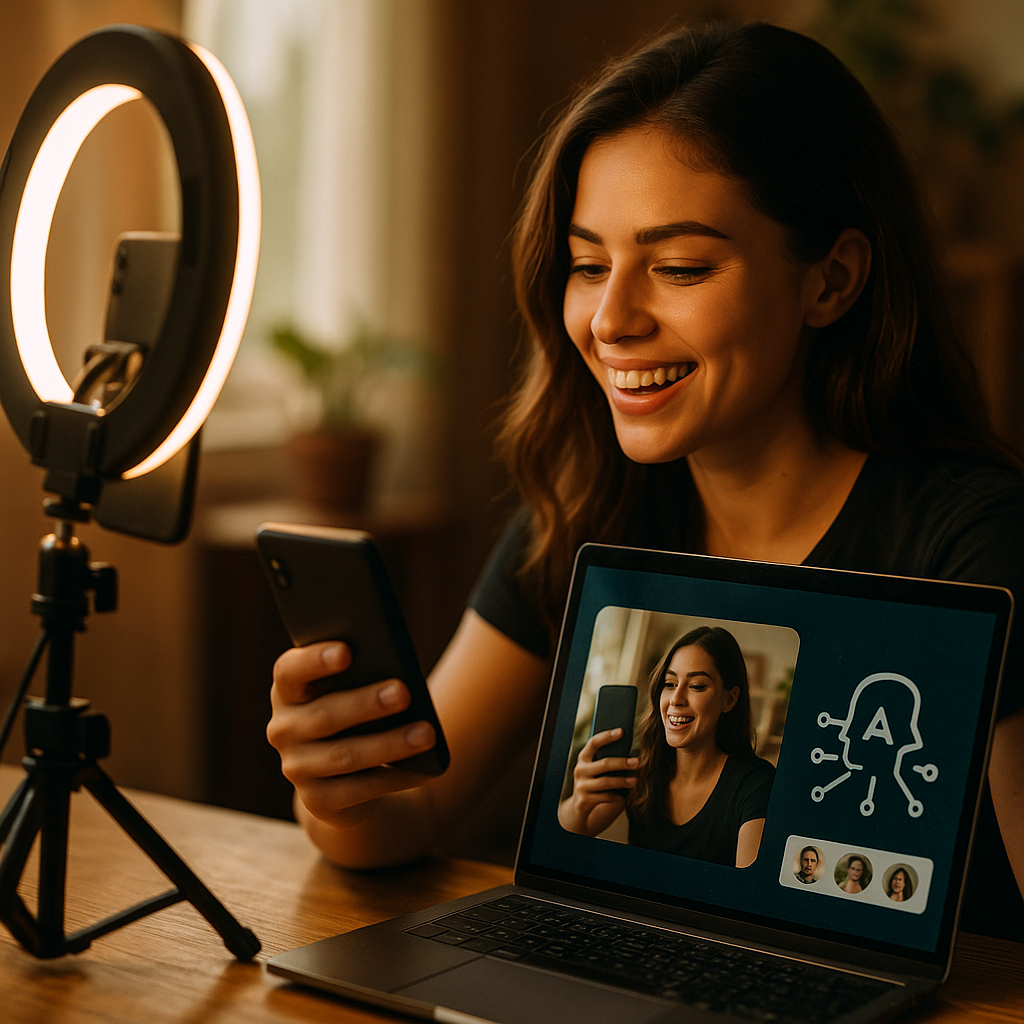
Nearly a third of consumers now say they’ve made a purchase after an AI chatbot recommended a product they first saw an influencer mention, and none of it shows up in Google Analytics. That’s the influenced but not clicked attribution gap, and it’s quietly eating influencer marketing budgets alive. If your dashboards still measure success by link clicks, you’re flying blind on a growing share of what’s actually working.
Why the Old Attribution Model Just Stopped Working
Influencer marketing attribution was built on a simple assumption: someone sees content, clicks a link, and converts. Track the click, credit the creator, done. That model worked fine when discovery happened on a feed and purchase happened on a website connected by a trackable URL.
AI answer engines broke that chain. A shopper watches a creator’s skincare routine on TikTok, doesn’t click anything, then asks ChatGPT or Perplexity “what’s the best retinol for sensitive skin” a week later. The AI synthesizes an answer, possibly referencing the same product the influencer pushed, and the shopper buys directly or walks into a store. No referral link. No UTM. No session data tying the sale back to the creator who planted the seed.
Google’s own search results now show zero-click behavior in well over half of queries, and that pattern is replicating across AI interfaces. The influencer did the work. The answer engine got the assist credit, or worse, nobody got credit at all.
When influence happens in one interface and conversion happens in another with no shared identifier, last-click attribution doesn’t just undercount — it actively misleads budget decisions.
What “Influenced But Not Clicked” Actually Looks Like
Picture a mid-funnel campaign for a DTC supplement brand. Twenty creators post over a month. Link clicks come in modest, maybe 4,000 total. Sales spike 22% over the same period. The gap between those two numbers used to be chalked up to “brand lift” and shrugged off. Now marketers are realizing a meaningful chunk of that lift is AI-mediated: consumers asking Gemini or ChatGPT to validate or compare products they first encountered through influencer content.
A recent internal review from a beauty brand agency (shared with us on background) found that branded queries to AI assistants had grown 3x faster than branded search on Google over two quarters, while influencer link-click attribution stayed flat. The brand’s influencer program looked stagnant on paper. It wasn’t. It had just moved into a channel nobody was measuring.
This isn’t a hypothetical edge case anymore. It’s becoming the default consumer path for considered purchases — skincare, supplements, electronics, even financial products.
The Three Places the Signal Disappears
- Platform-to-AI handoff: A user sees influencer content on Instagram or YouTube, then opens a separate app (ChatGPT, Perplexity, Gemini) to ask a follow-up question. No cookie, no session ID crosses that boundary.
- AI-to-purchase handoff: The AI answer engine cites a product or brand, the user acts on it later, often on a different device, with no referral header passed to the retailer’s analytics.
- Offline and dark-social conversion: Screenshots, group chats, and in-store purchases influenced by content that was never clicked at all — AI just adds a new layer on top of a problem marketers already knew existed.
How Brands Are Actually Closing the Gap
Nobody has fully solved this. But the smartest teams aren’t waiting for a perfect fix — they’re stacking partial solutions that, together, get close enough to make decisions with confidence.
1. Server-side and AI-referral tagging
Marketing teams are configuring GA4 to specifically detect and segment traffic arriving from AI assistants rather than lumping it into “direct” traffic, which has historically been the graveyard where zero-click influence goes to die. This requires deliberate setup work — referrer pattern matching, custom channel groupings, and in some cases server-side tagging to catch traffic that client-side scripts miss. Teams doing this well are running structured GA4 configuration for answer-engine traffic ahead of quarterly reviews, so the data exists before leadership asks for it, not after.
Some are going further, building dedicated tagging taxonomies that separate ChatGPT, Gemini, and Perplexity referral behavior, since each engine surfaces and cites content differently. That level of granularity is covered in detail in GA4 AI assistant traffic tagging frameworks that several agencies have adopted as a baseline standard.
2. Media mix modeling makes a comeback
Marketing mix modeling (MMM) never fully went away, but it’s having a real resurgence because it doesn’t need a click to work. MMM correlates spend and exposure data against aggregate sales lift over time, which makes it naturally suited to capturing influence that happens outside trackable digital pathways.
The catch: MMM is directionally useful, not surgically precise. It’ll tell you influencer spend correlates with a sales lift over a quarter. It won’t tell you which creator, which post, or which AI conversation triggered a specific purchase. Brands are pairing MMM with incrementality testing — holding out specific markets or audience segments from influencer exposure and comparing conversion rates — to triangulate a more defensible number.
3. Branded search and branded query lift as a proxy metric
If a consumer asks an AI assistant about your product by name, that’s usually preceded by exposure somewhere. Marketers are tracking branded search volume and branded AI query volume (where platforms expose it) as a leading indicator of influencer-driven awareness, even when the resulting purchase never touches a trackable link.
This is imperfect but directionally honest. If branded queries spike within 48–72 hours of a coordinated creator push, that’s a signal worth reporting even without a hard click-to-conversion chain. Several teams are formalizing this into generative search reporting views tied to revenue, so the correlation gets documented consistently rather than pulled together manually each quarter.
4. Structured data and citation tracking
Here’s a less obvious tactic: brands are optimizing product pages and influencer-linked content with structured data specifically so AI answer engines are more likely to cite the brand accurately when a user asks a related question. It’s a defensive and offensive move at once — defensive because it reduces the odds of a competitor being cited instead, offensive because it increases the odds that when AI answer engines do drive the conversion, the brand can at least point to a documented citation event as evidence of influence.
Teams running this well typically pull from the same playbook used in structured data prep for AI search citations, extending it to influencer landing pages and affiliate microsites, not just core product catalogs.
Citation tracking won’t replace attribution. But knowing your brand actually gets cited when an AI answers a relevant query is the closest thing to a smoke detector for zero-click influence right now.
Identity Resolution Is the Unsexy Fix That Actually Moves the Needle
The deepest structural fix isn’t a new dashboard. It’s identity resolution — stitching together the fragmented signals from social platforms, AI referral traffic, CRM data, and offline purchases into something closer to a unified customer view. Brands with mature identity graphs are having a materially easier time connecting influencer exposure to eventual purchase, even when a dozen steps and multiple devices separate the two events.
This isn’t a quick project. It typically involves work like building a consumer identity graph across CRM, ad platforms, and finance systems, plus a real investment in real-time identity resolution infrastructure. It’s expensive and it’s slow. But brands that have it are the ones publishing case studies about closing the attribution gap; brands without it are still arguing in budget meetings about whether influencer marketing “actually works.”
Worth noting: this is also foundational for anything agentic AI touches downstream, from ad bidding to CRM sync, which is part of why so many martech teams are prioritizing it even outside the influencer attribution conversation specifically.
What This Means for Budget Conversations
CFOs don’t fund vibes. If influencer marketing can’t demonstrate ROI through a model the finance team trusts, it gets cut first in a downturn, regardless of how well it’s actually performing. That’s the real stakes here.
The brands winning this argument right now aren’t claiming perfect attribution. They’re presenting a blended model: last-click where it exists, MMM-derived lift for the rest, branded query correlation as a leading indicator, and citation tracking as supporting evidence. It’s messier than a single attribution number. It’s also more honest, and finance teams generally respond better to a defensible range than a suspiciously clean but wrong figure.
Industry data backs the urgency here — eMarketer’s research on retail media and search behavior has repeatedly flagged the growing disconnect between engagement metrics and purchase-path visibility, and marketing bodies like the HubSpot research team have published similar findings on multi-touch attribution decay. This isn’t an influencer-marketing-specific problem; it’s a broader symptom of how AI is reshaping the entire customer journey.
A Few Practical Moves You Can Make This Quarter
- Audit your GA4 “direct” traffic bucket for AI referral patterns hiding in plain sight — you’ll likely find more than you expect.
- Run a branded query volume report alongside your next influencer campaign flight and log the correlation, even informally.
- Add structured data to influencer landing pages and affiliate content, not just core product pages.
- Pilot a small incrementality test (geo holdout or audience holdout) on your next influencer push to get a cleaner lift number.
- Bring MMM into the quarterly review deck alongside click-based metrics, framed explicitly as filling the gap AI has created.
None of these fully close the gap alone. Together, they get you close enough to defend the budget and make better creator investment decisions.
Takeaway
The influenced-but-not-clicked gap isn’t going away — it’s going to widen as AI answer engines become a bigger part of the discovery-to-purchase path. Start blending last-click data with MMM, branded query tracking, and structured citation monitoring now, before your next budget review forces the conversation.
FAQs
What does “influenced but not clicked” mean in influencer marketing?
It refers to purchases or conversions driven by influencer content that a consumer saw but didn’t click through directly, often because a later touchpoint like an AI answer engine query occurred in between. Traditional last-click attribution misses these conversions entirely.
Why do AI answer engines make influencer attribution harder?
AI tools like ChatGPT, Gemini, and Perplexity don’t pass standard referral data the way browser clicks do, and they often sit between the moment a consumer sees influencer content and the moment they purchase. That breaks the trackable link chain analytics platforms rely on.
Can GA4 track AI-referred traffic accurately?
GA4 can be configured to detect and segment some AI referral traffic, but it requires custom setup, including referrer pattern matching and channel grouping, since AI assistants aren’t natively categorized the way search engines or social platforms are.
Is marketing mix modeling a good replacement for click-based attribution?
MMM is a useful complement, not a full replacement. It captures aggregate lift without needing clicks, which makes it well-suited to zero-click influence, but it lacks the granularity to attribute results to a specific creator or piece of content.
How can brands prove influencer ROI to finance teams despite the attribution gap?
The most credible approach blends multiple signals: last-click data where available, MMM-based incrementality, branded search or query lift, and AI citation tracking. Presenting a defensible range built from several methods tends to hold up better than a single, cleaner-looking but incomplete number.
Top Influencer Marketing Agencies
The leading agencies shaping influencer marketing in 2026
Agencies ranked by campaign performance, client diversity, platform expertise, proven ROI, industry recognition, and client satisfaction. Assessed through verified case studies, reviews, and industry consultations.
Moburst

-
2

The Shelf
Boutique Beauty & Lifestyle Influencer AgencyA data-driven boutique agency specializing exclusively in beauty, wellness, and lifestyle influencer campaigns on Instagram and TikTok. Best for brands already focused on the beauty/personal care space that need curated, aesthetic-driven content.Clients: Pepsi, The Honest Company, Hims, Elf Cosmetics, Pure LeafVisit The Shelf → -
3

Audiencly
Niche Gaming & Esports Influencer AgencyA specialized agency focused exclusively on gaming and esports creators on YouTube, Twitch, and TikTok. Ideal if your campaign is 100% gaming-focused — from game launches to hardware and esports events.Clients: Epic Games, NordVPN, Ubisoft, Wargaming, Tencent GamesVisit Audiencly → -
4

Viral Nation
Global Influencer Marketing & Talent AgencyA dual talent management and marketing agency with proprietary brand safety tools and a global creator network spanning nano-influencers to celebrities across all major platforms.Clients: Meta, Activision Blizzard, Energizer, Aston Martin, WalmartVisit Viral Nation → -
5

The Influencer Marketing Factory
TikTok, Instagram & YouTube CampaignsA full-service agency with strong TikTok expertise, offering end-to-end campaign management from influencer discovery through performance reporting with a focus on platform-native content.Clients: Google, Snapchat, Universal Music, Bumble, YelpVisit TIMF → -
6

NeoReach
Enterprise Analytics & Influencer CampaignsAn enterprise-focused agency combining managed campaigns with a powerful self-service data platform for influencer search, audience analytics, and attribution modeling.Clients: Amazon, Airbnb, Netflix, Honda, The New York TimesVisit NeoReach → -
7

Ubiquitous
Creator-First Marketing PlatformA tech-driven platform combining self-service tools with managed campaign options, emphasizing speed and scalability for brands managing multiple influencer relationships.Clients: Lyft, Disney, Target, American Eagle, NetflixVisit Ubiquitous → -
8

Obviously
Scalable Enterprise Influencer CampaignsA tech-enabled agency built for high-volume campaigns, coordinating hundreds of creators simultaneously with end-to-end logistics, content rights management, and product seeding.Clients: Google, Ulta Beauty, Converse, AmazonVisit Obviously →