


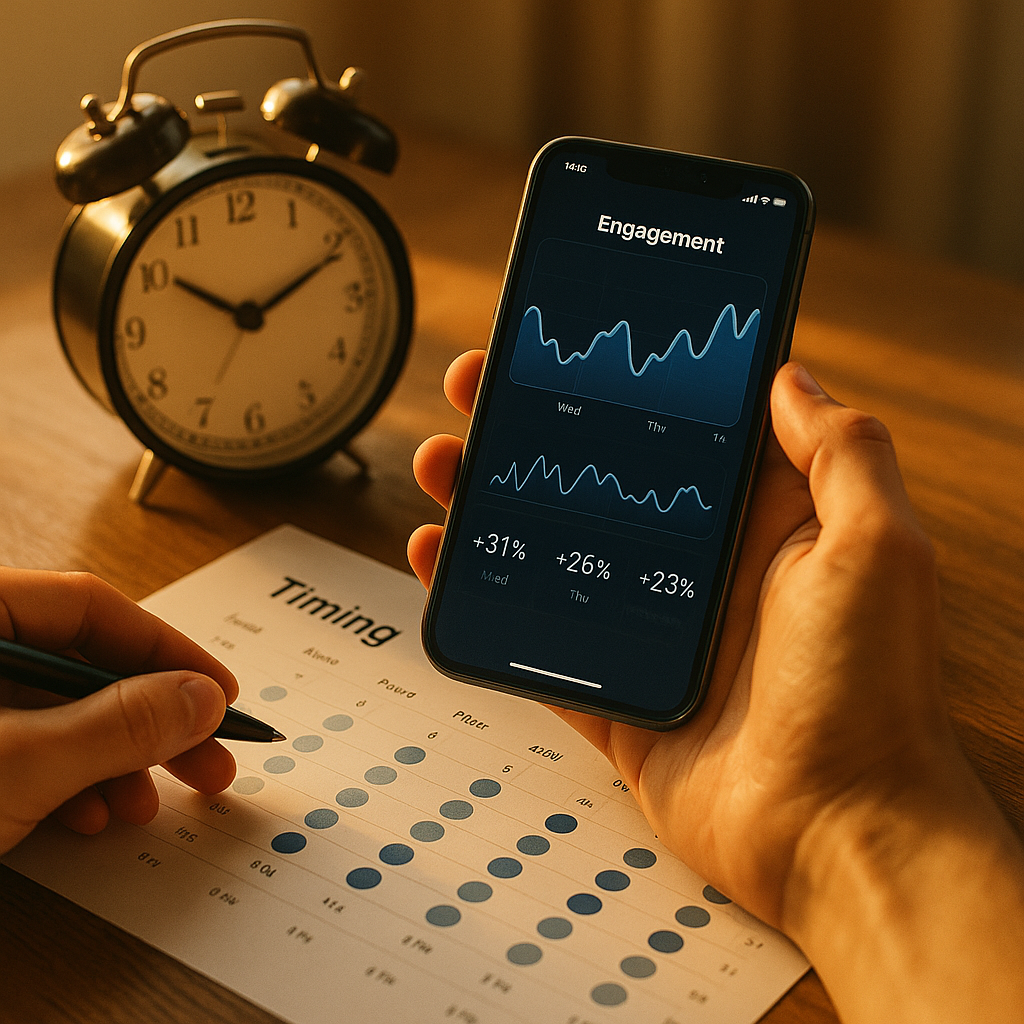
In 2025, creators and marketers still debate whether “dayparting” influencer content — timing posts for peak audience hours — truly increases reach and engagement. With social algorithms evolving quickly, does post timing matter as much as it once did? Unlock the answer as we explore data, strategies, and expert opinions on this timely topic.
Understanding Dayparting in Influencer Marketing
Dayparting influencer content means strategically scheduling posts for specific times of day to capture peak attention from target audiences. Traditionally, this tactic has been compared to TV or radio scheduling, designed to capitalize on when the most viewers or listeners are active. In influencer marketing, dayparting has involved analyzing an audience’s location, demographics, time zones, and online habits.
Before, it was almost axiomatic: post at lunchtime or just after work hours for higher engagement. Tools offered granular scheduling recommendations. Brands prized influencers who could show they posted “at the right time.” But how relevant is strict dayparting in today’s algorithm-dominated social media landscape?
How Social Platform Algorithms Affect Post Timing
Most leading platforms — Instagram, TikTok, X (formerly Twitter), and YouTube — now use complex algorithms to personalize what users see. These algorithms don’t just show posts in chronological order, but also factor in content relevance, historical engagement, and even predicted user interests. So, does this diminish the role of time-of-day posting?
- Instagram’s 2025 algorithm ranks posts by a mix of recentness, relationship, and activity — time is considered, but not solely decisive.
- TikTok surfaces content dynamically, serving users videos the algorithm deems most engaging, regardless of original post time.
- LinkedIn and Facebook still bake in recency, but also prioritize connection strength and content type.
Data from Sprout Social’s 2025 report shows that while timing alone no longer determines reach, posts published when followers are active still see a 6-13% engagement lift versus off-peak times. So, timing isn’t everything, but algorithms may still indirectly reward strategic scheduling by boosting initial post performance, which then feeds further reach.
Best Practices: When Does Post Timing Still Matter?
Despite evolving algorithms, several scenarios exist in which post timing in influencer campaigns continues to matter:
- Real-Time Relevance: Posts tied to live events, trending topics, or news cycles perform best when timed with audience attention peaks.
- Initial Engagement: Early likes, comments, and shares within the first hour of posting can still help trigger broader algorithmic reach on most platforms.
- International Audiences: For global brands, understanding the dayparting habits of different markets (e.g., US mornings vs. Asia evenings) remains crucial.
- Platform-Specific Audiences: B2B influencers find peak visibility midweek and midday on LinkedIn, while Gen Z creators see upticks in the late evenings on TikTok.
Successful creators blend historic timing data, audience analytics, and platform trends to schedule with precision — not guesswork. Yet, they also diversify: posting at various times to reach “long-tail” audiences and gather insight for future dayparting optimization.
Data-Driven Strategies for Optimal Scheduling
Maximizing influencer marketing ROI with scheduling analytics hinges on gathering and interpreting first-party data. Here’s how top creators and brands approach the process in 2025:
- Leverage Platform Insights: Use Instagram’s Audience Analytics or TikTok’s Follower Activity to identify when your unique followers are online and most active.
- Test & Learn: Run A/B tests by publishing similar content at different times. Compare engagement, saves, shares, and impressions to spot high-performing dayparts.
- Monitor Campaign-Specific Factors: For trends- or event-driven campaigns, monitor hashtag or topic spikes to post in sync with engagement surges.
- Collaborate with Influencers: Tap into creators’ firsthand audience knowledge and let them share their own highest-engagement windows.
- Embrace Automation: Scheduling tools with AI-powered recommendations (like Later or Buffer, now in 2025 offering predictive insights) streamline optimal posting across time zones and platforms.
Data is only actionable when it’s tailored — avoid falling for generic “best times to post” charts that lack relevance to your audience. Consistent, ongoing review of analytics is essential for continuous improvement.
Beyond Timing: Quality and Consistency Trump All
In a world obsessed with hacks and shortcuts, it’s vital to remember: content quality and ongoing engagement outshine timing tactics alone. Algorithms reward authentic, valuable content that sparks meaningful conversation and repeat engagement — factors that cannot be scheduled. Here’s how to future-proof your approach:
- Consistency matters: Posting regularly, rather than in unpredictable bursts, trains the algorithm and audience to expect and value your presence.
- Engage quickly: Respond to early comments and shares — algorithms still track creator responsiveness to audience interactions.
- Quality attracts quality: Originality, relevance, and utility drive sharing and saves, helping your posts survive beyond initial timing windows.
- Optimize, don’t obsess: Use dayparting as one tool among many, not a crutch or distraction from great storytelling and community building.
Expert marketers in 2025 believe the sweet spot blends informed timing, creative bravery, and consistent, audience-first strategy.
Case Studies: Real-World Dayparting Results in 2025
Recent campaigns illustrate the nuanced power — and limitation — of dayparting influencer content:
- Fashion Brand Launch: An influencer campaign for a global apparel brand tested identical posts at 9 AM, 12 PM, and 8 PM (local time) across three major cities. The midday drop saw a 15% initial engagement spike, but the evening post attracted more sustained impressions over 48 hours, as the algorithm “surfaced” it to late-night scrollers.
- B2B SaaS Product: Professional creators on LinkedIn found that posts scheduled Tuesday and Wednesday mornings reached C-suite decision-makers more reliably, aligning with platform analytics.
- Real-Time Event: During a live sports final, influencer posts timed moments before kickoff achieved double the engagement rate, revealing that for event-based content, timing can momentarily override algorithmic curation.
The through-line: strategic timing enhances opportunity, but is maximized when paired with exceptional content and an understanding of algorithmic behaviors.
Conclusion: Does Dayparting Still Matter for Influencer Content?
Dayparting influencer content is not obsolete in 2025, but it is no longer a silver bullet for engagement. Success means blending smart timing with algorithm-aware strategies and a relentless focus on quality. Marketers and creators who test, learn, and adapt will gain the edge in influencer marketing’s ever-evolving landscape.
FAQs: Dayparting and Influencer Post Timing
-
Does posting at certain times always improve influencer post engagement?
No, but it often helps. While good timing can improve your odds with early engagement signals, algorithms and content quality ultimately determine long-term reach.
-
How can I find the best time to post for my audience?
Use each platform’s analytics to assess when your specific followers are most active. Regularly test timing windows and measure resulting engagement to refine your strategy.
-
Is dayparting more important on some platforms than others?
Yes; for example, real-time platforms like X or Threads can still favor recency, while TikTok and Instagram use personalization algorithms that reduce the impact of timing somewhat.
-
Should I stop worrying about post timing?
No, but don’t over-prioritize it. Balance strategic scheduling with content quality, consistency, and engagement — that’s the formula for influencer success in 2025.
Top Influencer Marketing Agencies
The leading agencies shaping influencer marketing in 2026
Agencies ranked by campaign performance, client diversity, platform expertise, proven ROI, industry recognition, and client satisfaction. Assessed through verified case studies, reviews, and industry consultations.
Moburst

-
2

The Shelf
Boutique Beauty & Lifestyle Influencer AgencyA data-driven boutique agency specializing exclusively in beauty, wellness, and lifestyle influencer campaigns on Instagram and TikTok. Best for brands already focused on the beauty/personal care space that need curated, aesthetic-driven content.Clients: Pepsi, The Honest Company, Hims, Elf Cosmetics, Pure LeafVisit The Shelf → -
3

Audiencly
Niche Gaming & Esports Influencer AgencyA specialized agency focused exclusively on gaming and esports creators on YouTube, Twitch, and TikTok. Ideal if your campaign is 100% gaming-focused — from game launches to hardware and esports events.Clients: Epic Games, NordVPN, Ubisoft, Wargaming, Tencent GamesVisit Audiencly → -
4

Viral Nation
Global Influencer Marketing & Talent AgencyA dual talent management and marketing agency with proprietary brand safety tools and a global creator network spanning nano-influencers to celebrities across all major platforms.Clients: Meta, Activision Blizzard, Energizer, Aston Martin, WalmartVisit Viral Nation → -
5

The Influencer Marketing Factory
TikTok, Instagram & YouTube CampaignsA full-service agency with strong TikTok expertise, offering end-to-end campaign management from influencer discovery through performance reporting with a focus on platform-native content.Clients: Google, Snapchat, Universal Music, Bumble, YelpVisit TIMF → -
6

NeoReach
Enterprise Analytics & Influencer CampaignsAn enterprise-focused agency combining managed campaigns with a powerful self-service data platform for influencer search, audience analytics, and attribution modeling.Clients: Amazon, Airbnb, Netflix, Honda, The New York TimesVisit NeoReach → -
7

Ubiquitous
Creator-First Marketing PlatformA tech-driven platform combining self-service tools with managed campaign options, emphasizing speed and scalability for brands managing multiple influencer relationships.Clients: Lyft, Disney, Target, American Eagle, NetflixVisit Ubiquitous → -
8

Obviously
Scalable Enterprise Influencer CampaignsA tech-enabled agency built for high-volume campaigns, coordinating hundreds of creators simultaneously with end-to-end logistics, content rights management, and product seeding.Clients: Google, Ulta Beauty, Converse, AmazonVisit Obviously →