


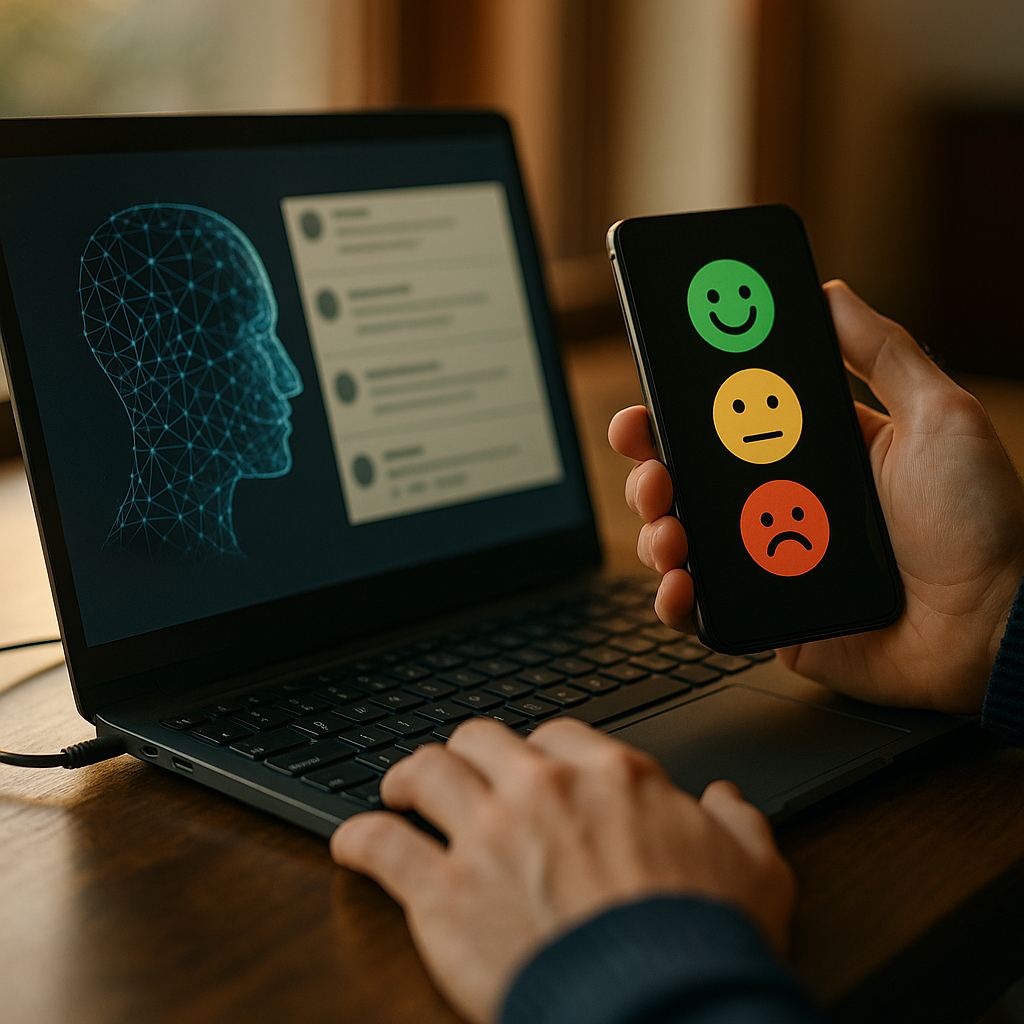
Using AI to analyze comment sentiment for early crisis detection has become a transformative tool for brands and organizations. By tapping into real-time insights from user-generated content, companies can spot emerging issues before they escalate. In a digital landscape where reputation can shift in hours, understanding online sentiment is crucial — let’s explore how AI is reshaping crisis management.
Understanding Comment Sentiment Analysis with Artificial Intelligence
Comment sentiment analysis uses natural language processing (NLP) and machine learning to evaluate the tone and emotional meaning behind comments on digital platforms. This technology goes beyond basic data scraping; it interprets nuanced language, slang, context, and even sarcasm across platforms such as social media, forums, review sites, and news comment sections.
Today’s advanced AI models can process millions of data points in real time. For example, transformers and LLMs like GPT-4 Turbo, released by OpenAI in 2024, have demonstrated the ability to contextualize complex human conversations. Instead of merely flagging negative keywords, these models analyze context, historical data, and sudden shifts in communication patterns to score sentiment accurately.
This evolution makes AI an invaluable early warning system for detecting reputational hazards before they snowball into full-blown crises.
Why Early Crisis Detection Matters in 2025
Early crisis detection has never been more essential for brands, governments, and public figures. Today’s interconnected audiences mobilize rapidly; a minor complaint can morph into a viral controversy or flash boycott within hours.
- Brand reputation: Negative comment sentiment can erode trust quickly, costing businesses revenue and loyalty.
- Proactive crisis response: Spotting trouble early empowers organizations to respond before situations escalate and media attention intensifies.
- Competitive edge: Companies that master real-time sentiment monitoring react faster than competitors.
Gartner’s 2024 Brand Trust Report found that 72% of companies that responded to early warning signs avoided major PR incidents, saving millions in crisis management and brand rebuilding expenses. In 2025, the cost of inaction is steeper than ever.
How AI Detects Shifting Comment Sentiment Trends
Traditional manual monitoring teams cannot match the speed and scalability of AI-driven sentiment analysis. Here’s how AI identifies and tracks trends to enable early intervention:
- Data Collection: AI scrapes comments across key platforms, including Reddit, X (formerly Twitter), Instagram, TikTok, YouTube, and niche forums.
- Sentiment Scoring: Each comment receives a positive, negative, or neutral score, with advanced models providing granular emotions like anger, fear, or support.
- Trend Detection: Algorithms detect sudden spikes in negative sentiment, recurring complaint themes, or the emergence of new hashtags associated with a brand or topic.
- Contextual Analysis: LLMs compare current sentiment to historical baselines, flagging anomalies that might signal the beginning of a crisis.
- Automated Alerts: When alarming patterns are detected, dashboards trigger real-time notifications for communications teams.
By automating these steps, AI liberates human analysts to focus on crafting effective responses rather than sifting through millions of comments manually.
Key Use Cases: Brands, Governments, and NGOs
AI-powered comment sentiment analysis is used across industries in 2025. These are some top scenarios making a tangible impact:
- Consumer Brands: Retailers and service providers monitor customer feedback to preempt product recalls, public outrage over service gaffes, or influencer-driven scandals.
- Financial Institutions: Banks and fintechs track social sentiment for signs of fraud rumors, financial instability concerns, or regulatory compliance issues before they reach mainstream media.
- Government Agencies: Public health and safety organizations analyze constituent sentiment to gauge response to new regulations, identify misinformation, or detect early unrest regarding public policy.
- NGOs: Nonprofits monitor online conversations for potential backlash to campaigns, shifts in donor enthusiasm, or coordination of harmful misinformation campaigns.
Each use case underscores the value of real-time detection in a digital-first world, where public sentiment changes at lightning speed.
Best Practices for Implementing AI in Crisis Detection Workflows
Organizations looking to leverage AI for sentiment analysis should follow best practices in 2025 to ensure effectiveness and ethics:
- Choose reliable AI platforms: Select tools with proven accuracy, transparency, and scalability. Evaluate vendors based on data privacy, model explainability, and integration capabilities.
- Define clear alert thresholds: Collaborate across PR, risk, and legal teams to set sentiment thresholds that trigger meaningful alerts — avoiding both alert fatigue and false negatives.
- Continual model training: Retrain AI models regularly on new slang, pop culture references, and adversarial tactics to maintain accuracy.
- Prioritize data privacy: Only process public data and follow local regulations, especially concerning user consent and data storage.
- Human-in-the-loop: Have skilled professionals validate AI findings and develop empathetic, brand-aligned responses. AI provides speed; humans provide nuance.
Ethical deployment establishes trust with audiences and ensures that crisis detection efforts do not inadvertently escalate issues or breach privacy boundaries.
Future Trends: The Evolving Role of AI in Mitigating Reputational Risks
Looking ahead, AI for comment sentiment analysis will continue to evolve. Key advancements anticipated in late 2025 include:
- Multilingual Sentiment Mastery: Next-generation models will deliver nuanced sentiment detection across diverse languages and cultural dialects.
- Cross-Platform Synthesis: AI tools will better aggregate sentiment signals from audio, video, and multimedia content in addition to text.
- Predictive Analytics: New AI capabilities will not only flag current sentiment shifts, but also predict future crises and suggest actionable steps based on scenario modeling.
- Ethical & Transparent AI: Increased demand for AI explainability and responsible data handling will reshape vendor offerings and regulation.
To stay ahead, organizations must continually invest in both technology and staff capabilities to turn sentiment data into decisive action.
FAQs on Using AI for Comment Sentiment and Crisis Detection
-
What platforms can AI analyze for comment sentiment?
AI tools can scrape and analyze comments from social networks (like X, Facebook, and Instagram), video platforms (YouTube, TikTok), review sites, news media, forums, and even private communities, depending on accessibility and permissions.
-
How accurate is AI sentiment analysis in 2025?
Top commercial tools now achieve 85–92% accuracy in sentiment classification, with ongoing improvements thanks to deep learning and transfer learning techniques. Human validation remains recommended for high-stakes responses.
-
Can AI detect sarcasm or slang in online comments?
Modern models, especially those fine-tuned on current slang and internet subcultures, are increasingly adept at catching sarcasm, irony, and subtle sentiment. However, edge cases may still require human review.
-
Is it legal to analyze comment sentiment online?
Analyzing publicly available comments is largely legal as long as you comply with platform terms and privacy regulations. Always handle personal data with care and seek expert advice on local compliance.
-
Does using AI in crisis detection replace human PR teams?
AI empowers but does not replace PR professionals. Technology accelerates detection, but skilled teams must interpret findings, craft tailored responses, and maintain empathy in communications.
In summary, using AI to analyze comment sentiment for early crisis detection empowers organizations to stay ahead of reputational risks. By integrating advanced technology with thoughtful human oversight, brands can respond to emerging threats proactively and uphold public trust in an ever-evolving digital landscape.
Top Influencer Marketing Agencies
The leading agencies shaping influencer marketing in 2026
Agencies ranked by campaign performance, client diversity, platform expertise, proven ROI, industry recognition, and client satisfaction. Assessed through verified case studies, reviews, and industry consultations.
Moburst

-
2

The Shelf
Boutique Beauty & Lifestyle Influencer AgencyA data-driven boutique agency specializing exclusively in beauty, wellness, and lifestyle influencer campaigns on Instagram and TikTok. Best for brands already focused on the beauty/personal care space that need curated, aesthetic-driven content.Clients: Pepsi, The Honest Company, Hims, Elf Cosmetics, Pure LeafVisit The Shelf → -
3

Audiencly
Niche Gaming & Esports Influencer AgencyA specialized agency focused exclusively on gaming and esports creators on YouTube, Twitch, and TikTok. Ideal if your campaign is 100% gaming-focused — from game launches to hardware and esports events.Clients: Epic Games, NordVPN, Ubisoft, Wargaming, Tencent GamesVisit Audiencly → -
4

Viral Nation
Global Influencer Marketing & Talent AgencyA dual talent management and marketing agency with proprietary brand safety tools and a global creator network spanning nano-influencers to celebrities across all major platforms.Clients: Meta, Activision Blizzard, Energizer, Aston Martin, WalmartVisit Viral Nation → -
5

The Influencer Marketing Factory
TikTok, Instagram & YouTube CampaignsA full-service agency with strong TikTok expertise, offering end-to-end campaign management from influencer discovery through performance reporting with a focus on platform-native content.Clients: Google, Snapchat, Universal Music, Bumble, YelpVisit TIMF → -
6

NeoReach
Enterprise Analytics & Influencer CampaignsAn enterprise-focused agency combining managed campaigns with a powerful self-service data platform for influencer search, audience analytics, and attribution modeling.Clients: Amazon, Airbnb, Netflix, Honda, The New York TimesVisit NeoReach → -
7

Ubiquitous
Creator-First Marketing PlatformA tech-driven platform combining self-service tools with managed campaign options, emphasizing speed and scalability for brands managing multiple influencer relationships.Clients: Lyft, Disney, Target, American Eagle, NetflixVisit Ubiquitous → -
8

Obviously
Scalable Enterprise Influencer CampaignsA tech-enabled agency built for high-volume campaigns, coordinating hundreds of creators simultaneously with end-to-end logistics, content rights management, and product seeding.Clients: Google, Ulta Beauty, Converse, AmazonVisit Obviously →