


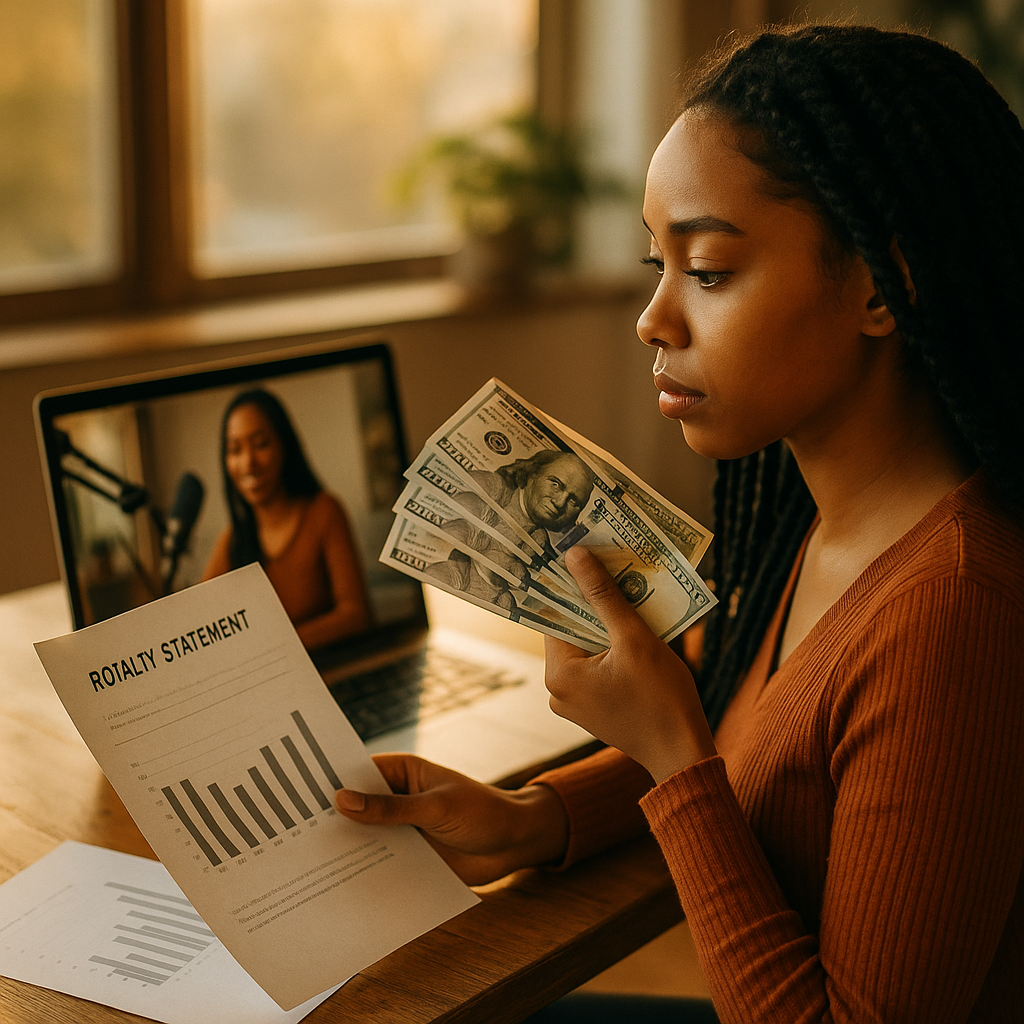
Structuring royalties for an influencer-designed, co-branded product line is now a pivotal consideration for brands seeking to leverage social reach in 2025. Striking the right balance between fair compensation and sustained collaboration requires strategy. Let’s explore how brands and influencers can create a royalty structure that incentivizes both sides—and maximizes mutual success.
Understanding Influencer Royalties in Co-Branded Agreements
The rise of influencer marketing has transformed the product development landscape. Today, influencer-designed, co-branded product lines allow companies to tap into dedicated fanbases and authentic storytelling. In these partnerships, royalties—the percentage of revenue paid to influencers for every sale—form the backbone of ongoing collaboration.
It’s essential to set royalties transparently. Influencers contribute their creativity, personal brand equity, and loyal audience, while businesses provide manufacturing, distribution, and marketing resources. As the influencer’s involvement and reach increase, so should the value proposition—and thus, the royalty rate.
Key Elements to Include in a Royalty Structure
To ensure an equitable agreement, both parties should clearly define these key royalty structure components:
- Royalty Rate: The specific percentage (commonly ranging from 3% to 15% of net sales, depending on industry and influence) given to the influencer per unit sold.
- Calculation Basis: Is the royalty paid on net revenue (after returns, discounts, and taxes) or gross sales?
- Sales Channels: Does the royalty cover all channels (D2C, retail, e-commerce)? Are there higher rates for direct sales?
- Territory: Is the product line global, or limited to specific regions?
- Exclusivity: Does the influencer have an exclusive partnership for a category, impacting the royalty?
- Duration and Renewals: Define how long royalties are paid and renewal terms if the product line succeeds.
- Advance Payments: Will there be an upfront payment against future royalties, especially for top-tier talent?
Clarity on these components prevents miscommunication and potential disputes as the collaboration progresses.
Determining a Fair Royalty Rate for Influencer Partnerships
Calculating a fair royalty rate is both art and science. Rates can vastly differ across product categories (apparel, beauty, tech, etc.) and influencer tiers (nano, micro, macro, celebrity). As of 2025, the following factors influence royalty determination:
- Influencer’s Audience Size and Engagement: Higher engagement rates and niche authority often command increased royalties over raw follower counts.
- Brand Alignment: If the influencer’s values and aesthetic fit closely with the brand, a long-term relationship is more likely—potentially meriting a better royalty rate.
- Involvement Level: Deeper participation in product ideation, design, and launch campaigns may justify a higher rate than surface-level endorsements.
- Projected Sales Volume: If the brand anticipates high sales based on influencer traction, a slightly lower rate balanced by greater volume can benefit both sides.
- Market Benchmarks: In 2025, apparel collaborations average 5–10% royalties, while beauty and tech can reach 10–15%, according to recent industry surveys.
It’s advantageous to benchmark against similar deals and, if possible, consult recent public agreements or utilize influencer marketing platforms with licensing rate data.
Structuring Performance-Based Incentives and Bonus Tiers
Offering performance-based royalties encourages continuous influencer participation beyond the initial launch. For co-branded product lines, consider integrating:
- Sales Milestone Bonuses: Increased royalty rates after surpassing a pre-set revenue or units-sold threshold.
- Revenue Sharing Pools: Additional bonuses if total campaign sales hit stretch targets before an agreed deadline.
- Longevity Clauses: Maintaining royalties for repeat sales or renewals if the product achieves “evergreen” status post-launch.
- Creative Bonuses: Reward for designing multiple successful SKUs or contributing to marketing content that significantly impacts sales.
This approach creates healthy incentives for influencers to remain actively engaged in promotion and product innovation throughout the collaboration lifecycle.
Legal and Contractual Safeguards in Royalty Agreements
Legal transparency underpins a sustainable influencer-brand partnership. When drafting royalty agreements for influencer-designed, co-branded product lines, ensure the contract addresses:
- Detailed Payment Schedules: Specify royalty payment frequency (monthly, quarterly), reporting formats, and audit provisions.
- IP Rights: Clarify ownership of creative assets. Does the influencer retain rights to design elements or only receive compensation?
- Approval Rights: Outline who has final say on product modifications or branding decisions.
- Termination Clauses: Define conditions for early termination and how royalties are handled post-termination.
- Noncompete and Confidentiality: Protect brand IP and ensure influencers avoid direct competitor collaborations during the contract term.
Brands and influencers should seek guidance from legal professionals specializing in intellectual property and influencer marketing law, ensuring all aspects are compliant and enforceable.
Real-World Examples and Trends in 2025
The past year has seen a surge in data-driven royalty structures tailored to influencer reach and influence. In 2025, beauty brands frequently partner with micro- and macro-influencers on limited-edition lines, offering 8–12% royalties plus milestone bonuses tied to social engagement metrics. Apparel brands have used multichannel royalty schemes, where D2C sales (higher margin) yield larger influencer royalties than wholesale channels.
Brands like Glossier and Gymshark, for instance, make data-backed decisions by tracking influencer-driven conversion rates and social media buzz. Tech-forward brands employ blockchain-powered royalty tracking, assuring transparent, real-time payouts. Staying responsive to evolving industry standards and tech keeps collaborations profitable and equitable.
FAQs: How to Structure Royalties for an Influencer-Designed, Co-Branded Product Line
- What is a typical royalty rate for influencer-designed product lines?
Royalty rates typically range from 3–15%, depending on the industry, influencer audience, product type, and their involvement level. Apparel and accessories hover around 5–10%, while beauty and tech products may approach or exceed 10%. - Should royalties be calculated from net sales or gross sales?
Royalties are most often calculated from net sales—after deductions for returns, discounts, and taxes—but always clarify the definition in your agreement. - How do performance incentives work in royalty structures?
Performance incentives reward influencers for reaching sales milestones, launching additional products, or prolonging successful campaigns with higher royalty tiers or bonuses. - Who owns the intellectual property in a co-branded product line?
The contract should specify IP ownership. Influencers may license their name or designs, but brands often retain manufacturing and distribution IP rights. - Why do some brands offer upfront advances against future royalties?
Advances can secure influencer commitment, cover creative development costs, and bridge initial cash flow while the product ramps up—especially for high-profile talent partnerships.
To structure royalties for an influencer-designed, co-branded product line successfully in 2025, prioritize clear royalty rates, transparent legal agreements, and adaptable performance-based incentives. Fair and forward-thinking royalty structures align influencer and brand interests—paving the way for lucrative, enduring collaborations. Invest in mutual clarity for partnership success.
Top Influencer Marketing Agencies
The leading agencies shaping influencer marketing in 2026
Agencies ranked by campaign performance, client diversity, platform expertise, proven ROI, industry recognition, and client satisfaction. Assessed through verified case studies, reviews, and industry consultations.
Moburst

-
2

The Shelf
Boutique Beauty & Lifestyle Influencer AgencyA data-driven boutique agency specializing exclusively in beauty, wellness, and lifestyle influencer campaigns on Instagram and TikTok. Best for brands already focused on the beauty/personal care space that need curated, aesthetic-driven content.Clients: Pepsi, The Honest Company, Hims, Elf Cosmetics, Pure LeafVisit The Shelf → -
3

Audiencly
Niche Gaming & Esports Influencer AgencyA specialized agency focused exclusively on gaming and esports creators on YouTube, Twitch, and TikTok. Ideal if your campaign is 100% gaming-focused — from game launches to hardware and esports events.Clients: Epic Games, NordVPN, Ubisoft, Wargaming, Tencent GamesVisit Audiencly → -
4

Viral Nation
Global Influencer Marketing & Talent AgencyA dual talent management and marketing agency with proprietary brand safety tools and a global creator network spanning nano-influencers to celebrities across all major platforms.Clients: Meta, Activision Blizzard, Energizer, Aston Martin, WalmartVisit Viral Nation → -
5

The Influencer Marketing Factory
TikTok, Instagram & YouTube CampaignsA full-service agency with strong TikTok expertise, offering end-to-end campaign management from influencer discovery through performance reporting with a focus on platform-native content.Clients: Google, Snapchat, Universal Music, Bumble, YelpVisit TIMF → -
6

NeoReach
Enterprise Analytics & Influencer CampaignsAn enterprise-focused agency combining managed campaigns with a powerful self-service data platform for influencer search, audience analytics, and attribution modeling.Clients: Amazon, Airbnb, Netflix, Honda, The New York TimesVisit NeoReach → -
7

Ubiquitous
Creator-First Marketing PlatformA tech-driven platform combining self-service tools with managed campaign options, emphasizing speed and scalability for brands managing multiple influencer relationships.Clients: Lyft, Disney, Target, American Eagle, NetflixVisit Ubiquitous → -
8

Obviously
Scalable Enterprise Influencer CampaignsA tech-enabled agency built for high-volume campaigns, coordinating hundreds of creators simultaneously with end-to-end logistics, content rights management, and product seeding.Clients: Google, Ulta Beauty, Converse, AmazonVisit Obviously →