


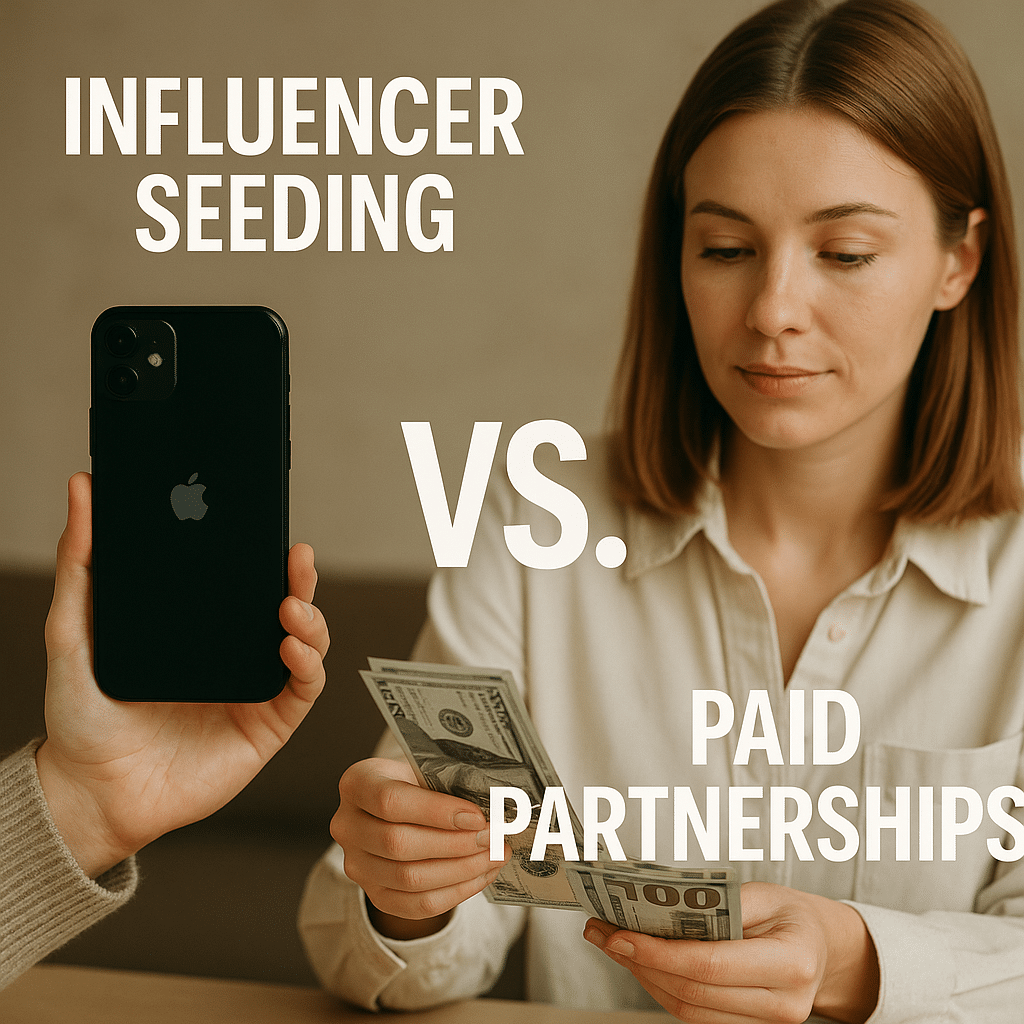
As brands navigate the social landscape in 2025, choosing between influencer seeding and paid partnerships becomes critical to campaign success. The right strategy enhances brand credibility, reach, and return on investment. Which tactic aligns with your objectives—seeding’s organic buzz or the precision of paid collaborations? Discover the key differences and which approach can fuel your brand’s growth in 2025.
Understanding Influencer Seeding: The Power of Authentic Recommendations
Influencer seeding, a cornerstone in influencer marketing, leverages authenticity by providing influencers with free products—with no obligation to post. In 2025, this grassroots approach remains popular for brands aiming to spark genuine excitement and integrate seamlessly into influencers’ everyday content. Influencers are free to organically endorse, review, or ignore the product based on their true experience.
Why does seeding work? Social media audiences increasingly value authenticity. When influencers showcase products without paid incentives, their endorsements feel more trustworthy. According to a 2024 study by Influencer Marketing Hub, 67% of consumers are more likely to trust content they perceive as unsponsored or unfiltered.
Advantages of influencer seeding:
- Cost-effectiveness: Send products in exchange for honest exposure, reducing upfront costs.
- Authentic content: Unscripted reactions resonate with followers, sparking organic engagement.
- Wider reach: Fewer restrictions enable influencers to tailor posts to their unique style—often leading to more shareable moments.
However, influencer seeding doesn’t guarantee content in return, making tracking and forecasting results complex. In 2025, brands that excel in seeding campaigns research carefully, select genuinely aligned creators, and foster reciprocal relationships to maximize ROI.
Paid Partnerships: Strategic Collaboration and Predictable Results
Paid partnerships, or sponsored collaborations, involve formal agreements compensating influencers for specific deliverables and messaging. In 2025, this method gives brands precise control over campaign timing, messaging, and desired outcomes—ideal for major launches or rapid brand awareness initiatives.
Why opt for paid collaborations? Paid partnerships establish clear expectations, deliverables, and performance metrics. Brands can request post timing, review content before publication, and track results with analytics tools. This method helps brands scale their campaigns and ensure a measurable return.
Advantages of paid partnerships:
- Guaranteed exposure: Contracts ensure influencers create and post campaign content.
- Consistent messaging: Brands direct key talking points, maintaining alignment with overall marketing strategy.
- Performance tracking: Measure with campaign links, hashtags, and analytics dashboards for clear reporting.
However, paid collaborations can be perceived by some audiences as less authentic. In 2025, successful paid partnerships prioritize creative freedom, ensuring influencers’ voices remain genuine.
Budgeting Considerations: Making Every Marketing Dollar Count
In 2025’s competitive digital landscape, budget allocation plays a pivotal role in choosing between influencer seeding and paid partnerships. Each strategy presents distinct costs—and potential returns—depending on campaign goals, market, and influencer tiers.
When is influencer seeding ideal from a budget perspective? Brands with smaller budgets or those in early stages often favor seeding for its low upfront costs. Product gifting minimizes financial risk, enabling brands to experiment with various influencer types before scaling up.
When does paid partnership investment make sense? Established brands or those launching new products—where guaranteed reach and specific messaging are non-negotiable—tend to allocate a larger share of spend to paid collaborations. This approach is also effective for high-value or regulated goods where messaging accuracy is paramount.
Key budgeting strategies in 2025:
- Start with a hybrid approach, tracking which influencers deliver the best blend of authenticity and results.
- Consider influencer tiers—micro-influencers may offer stronger ROI per dollar, whether seeded or paid.
- Factor in non-monetary costs: shipping, product value, creative input, and long-term relationship potential.
Measuring Campaign Success and ROI in 2025
Measurement is at the heart of effective influencer marketing. In 2025, brands employ advanced analytics platforms and AI-driven tools to track trends, engagement, and sales outcomes across both influencer seeding and paid partnerships.
How do you measure seeding campaigns? Focus on earned media value (EMV), engagement rates, new followers, and organic brand mentions. Consistently review who posts, the quality of content received, and whether seeding efforts lead to ongoing relationships or future paid partnerships.
How do you assess paid partnership performance? Monitor predefined KPIs such as click-through rates, branded hashtag usage, conversions, and sales lift. Use campaign-specific UTM links, promo codes, and post-campaign surveys to determine direct impact.
Modern analytics insights:
- Leverage AI tools for sentiment analysis, identifying how influencer content shifts consumer perception in real time.
- Track both short-term metrics (sales spikes, engagement rates) and long-term metrics (brand favorability, share of voice).
- Regularly recalibrate your strategy: Campaigns that begin as seeding successes can evolve into ongoing paid partnerships for continuous value.
Choosing the Right Strategy: Decision Factors for Brands in 2025
With the landscape more sophisticated than ever, choosing between influencer seeding and paid partnerships depends on your unique goals, resources, and target audience.
Consider influencer seeding if:
- Your brand values organic growth and long-term relationship building.
- You’re launching a new product or want genuine feedback from niche communities.
- Your budget is limited, or testing influencer fit before larger investments.
Opt for paid partnerships if:
- You require guaranteed exposure and clear brand messaging.
- Your campaign is time-sensitive, such as a product drop or season-specific launch.
- You need robust reporting, performance forecasts, and measurable ROI.
Many 2025 campaigns use a blend: seeding to generate initial excitement, followed by paid partnerships with top-performing influencers for scale and precision. Regularly review goals, test approaches, and optimize based on authentic creator relationships and actionable data.
FAQs about Influencer Seeding vs. Paid Partnerships in 2025
-
Is influencer seeding effective for small brands in 2025?
Yes. Influencer seeding remains a cost-efficient entry strategy for small brands seeking authentic exposure and organic growth, especially when budgets are limited.
-
How do I know if an influencer is right for my seeding campaign?
Assess the influencer’s audience demographics, engagement quality, and alignment with your brand values. Start broad and refine based on which influencers drive the most authentic buzz and brand affinity.
-
What are typical payment structures for paid partnerships in 2025?
Common structures include flat fees per post, performance-based bonuses tied to engagement or sales, and longer-term ambassador deals. Ensure contracts outline deliverables and timelines clearly.
-
Can I combine seeding and paid partnerships?
Absolutely. Many brands seed products to a group of influencers first, then transition successful creators into paid partnerships. This maximizes authenticity and ROI.
-
Which influencer tier works best—micro or macro?
Both have benefits. Micro-influencers often drive higher engagement and trust, while macro-influencers deliver greater reach. Your choice should align with campaign objectives and available resources.
In 2025, the best influencer marketing results stem from a thoughtful mix of influencer seeding and paid partnerships tailored to your unique goals. Prioritize authenticity, measure consistently, and let data—and creator relationships—guide your evolving strategy for standout brand impact.
Top Influencer Marketing Agencies
The leading agencies shaping influencer marketing in 2026
Agencies ranked by campaign performance, client diversity, platform expertise, proven ROI, industry recognition, and client satisfaction. Assessed through verified case studies, reviews, and industry consultations.
Moburst

-
2

The Shelf
Boutique Beauty & Lifestyle Influencer AgencyA data-driven boutique agency specializing exclusively in beauty, wellness, and lifestyle influencer campaigns on Instagram and TikTok. Best for brands already focused on the beauty/personal care space that need curated, aesthetic-driven content.Clients: Pepsi, The Honest Company, Hims, Elf Cosmetics, Pure LeafVisit The Shelf → -
3

Audiencly
Niche Gaming & Esports Influencer AgencyA specialized agency focused exclusively on gaming and esports creators on YouTube, Twitch, and TikTok. Ideal if your campaign is 100% gaming-focused — from game launches to hardware and esports events.Clients: Epic Games, NordVPN, Ubisoft, Wargaming, Tencent GamesVisit Audiencly → -
4

Viral Nation
Global Influencer Marketing & Talent AgencyA dual talent management and marketing agency with proprietary brand safety tools and a global creator network spanning nano-influencers to celebrities across all major platforms.Clients: Meta, Activision Blizzard, Energizer, Aston Martin, WalmartVisit Viral Nation → -
5

The Influencer Marketing Factory
TikTok, Instagram & YouTube CampaignsA full-service agency with strong TikTok expertise, offering end-to-end campaign management from influencer discovery through performance reporting with a focus on platform-native content.Clients: Google, Snapchat, Universal Music, Bumble, YelpVisit TIMF → -
6

NeoReach
Enterprise Analytics & Influencer CampaignsAn enterprise-focused agency combining managed campaigns with a powerful self-service data platform for influencer search, audience analytics, and attribution modeling.Clients: Amazon, Airbnb, Netflix, Honda, The New York TimesVisit NeoReach → -
7

Ubiquitous
Creator-First Marketing PlatformA tech-driven platform combining self-service tools with managed campaign options, emphasizing speed and scalability for brands managing multiple influencer relationships.Clients: Lyft, Disney, Target, American Eagle, NetflixVisit Ubiquitous → -
8

Obviously
Scalable Enterprise Influencer CampaignsA tech-enabled agency built for high-volume campaigns, coordinating hundreds of creators simultaneously with end-to-end logistics, content rights management, and product seeding.Clients: Google, Ulta Beauty, Converse, AmazonVisit Obviously →