


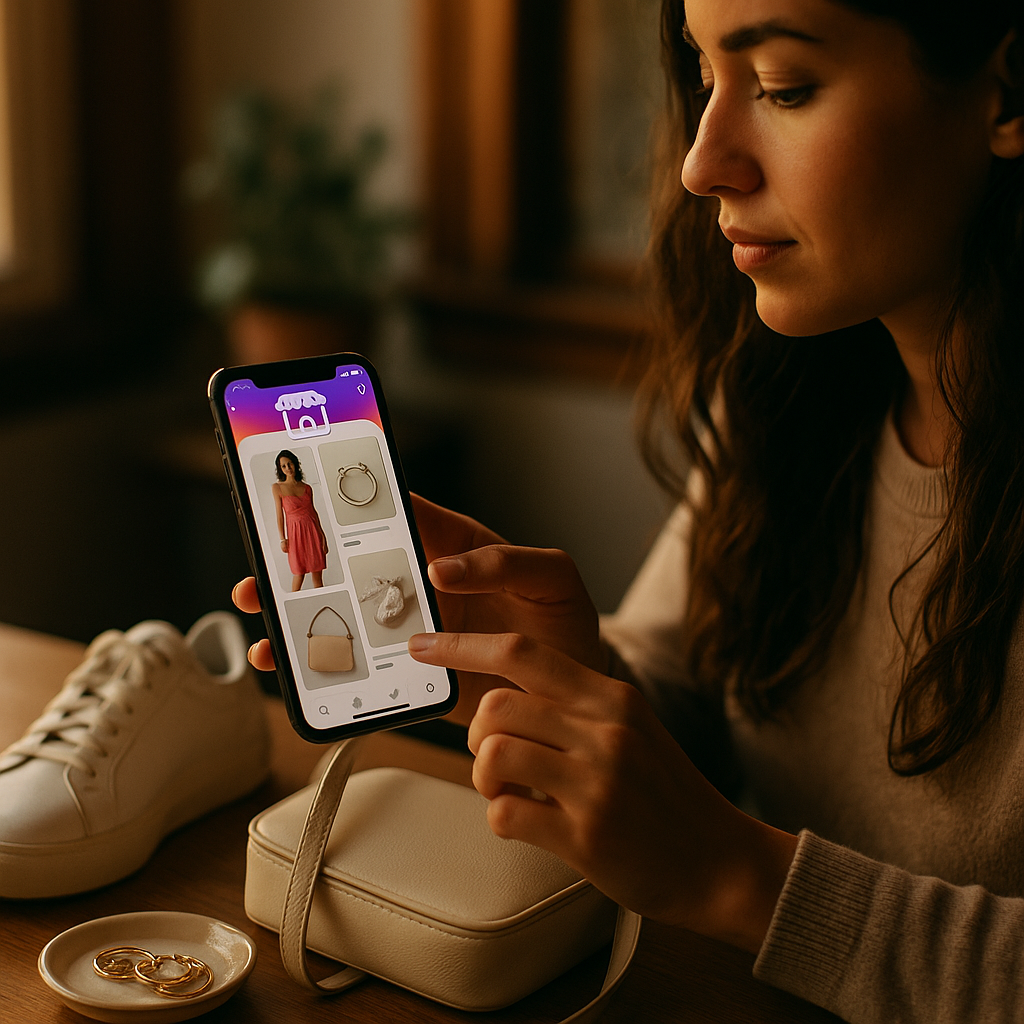
Instagram now pays creators a cut of sales through Affiliate Collections, and most brands still treat the feature like an afterthought bolted onto their ambassador program. That’s a mistake. Storefronts convert browsers into buyers without a single outbound link, and the brands ignoring them are leaving margin on the table for competitors who aren’t. This is the Instagram Affiliate Collections playbook for brands that want shoppable creator storefronts to actually move product, not just look good on a slide.
What Are Instagram Affiliate Collections, Exactly?
Affiliate Collections let a creator curate a grid of products, tagged directly to a brand’s catalog, inside their own Instagram Shop tab. A follower taps the creator’s profile, browses the collection, and checks out without leaving the app. The creator earns a commission on whatever sells, tracked automatically through Meta’s commerce infrastructure rather than a third party link like LTK or ShopMy.
It’s different from a single tagged product in a Reel. A collection is persistent. It sits on the creator’s profile like a mini storefront, gets refreshed seasonally, and keeps earning long after the original post scrolls out of the feed. Think of it as the creator’s own boutique, stocked with your SKUs, open twenty four hours a day.
Why Brands Are Shifting Budget Here
Flat fee sponsorships are getting harder to justify to finance teams who want to see cost per acquisition, not just reach. Affiliate structures flip the risk model: you pay for performance, not promise. Given that emarketer has tracked steady growth in social commerce spend, brands are naturally gravitating toward formats where payout is tied to a completed sale rather than a view count.
A storefront that converts at even 2% against a creator’s engaged audience often outperforms a flat fee post on cost per sale, and it keeps generating revenue for months instead of days.
There’s also a discovery angle. Instagram’s shopping surfaces (Explore, Reels, and the Shop tab) increasingly favor content tied to tagged products. If you’re already investing in Reels watch depth, pairing that content with an affiliate collection gives the algorithm a commerce signal, not just an engagement one.
The Real Reason Retention Beats Reach
A one off post disappears. A storefront compounds. Creators who keep their collection updated with new arrivals, restocks, and seasonal edits build a habit loop with their audience, the same way a favorite boutique earns repeat visits. Brands that treat collections as a “set it and forget it” asset waste most of the upside.
Setting Up Collections That Actually Convert
Getting the mechanics right matters more than people expect. A few operational basics separate a storefront that sells from one that sits empty:
- Catalog hygiene first. If your product feed has broken images, missing sizes, or out of stock items, the collection inherits every flaw. Clean the catalog before you invite a single creator.
- Curate, don’t dump. Collections with 8 to 15 hand picked items outperform ones with an entire catalog thrown in. Shoppers want a point of view, not a warehouse.
- Refresh on a cadence. Quarterly refreshes at minimum, monthly for fast moving categories like beauty or apparel.
- Pair with content. A collection with no supporting Reels or Stories is invisible. Every storefront needs at least one piece of native content driving traffic to it weekly.
This overlaps heavily with how brands structure Meta’s broader creator commerce tools. If you haven’t locked down usage rights and ad permissions yet, review the setup steps in our partnership ads setup guide before layering affiliate collections on top. You don’t want a legal gap between what a creator can post organically and what you can boost later.
Commission Structures: What the Data Says Works
There’s no universal commission rate, but patterns are emerging across categories. Beauty and wellness brands tend to run 10 to 20 percent, apparel sits closer to 8 to 15 percent, and home goods often land lower, in the 5 to 10 percent range, because average order values are higher. The math has to work for both sides: too low and creators won’t bother curating, too high and you erode margin on your best selling SKUs.
A tiered structure often performs better than a flat rate. Offer a base commission for standard products and a bonus tier for hero items you’re trying to push, or for creators who hit a monthly sales threshold. This mirrors the margin control logic brands already use in affiliate margin planning on other platforms. The principle carries over: protect your margin on volume, incentivize the behavior you actually want.
Don’t ignore return rates when setting commissions either. Apparel with high return rates should carry a slightly lower commission, or a commission that pays out post return window, to avoid paying creators on sales that get reversed a week later.
The Attribution Problem Nobody Talks About
Here’s the uncomfortable truth: Instagram’s native attribution window is generous to the platform, not to you. Sales get credited to whichever creator collection a shopper last touched, which means a customer who discovered a product through a paid search ad but purchased via a creator’s storefront gets fully attributed to the creator. That’s not necessarily wrong, but it distorts your view of what’s actually driving demand.
Run parallel tracking wherever possible. Unique discount codes per creator, even alongside the native affiliate link, give you a cross check. If a creator’s collection shows strong sales but their unique code shows almost no redemptions elsewhere, you know the storefront itself is doing the work, not spillover from other channels.
Treat Instagram’s built in attribution as directional, not gospel. Layer in your own tracking or you’ll end up renewing deals with creators whose numbers look better than their actual incremental impact.
This is where a lot of brands get burned comparing platforms. If you’re also running TikTok Shop storefronts alongside Instagram collections, resist the urge to compare raw revenue numbers across platforms without normalizing for how each one handles attribution windows and last touch logic. They’re not measuring the same thing the same way.
Compliance Isn’t Optional
An affiliate relationship is a material connection, full stop. The FTC’s endorsement guidance requires clear disclosure whenever a creator earns commission from products they’re promoting, and “shop my collection” without any disclosure language doesn’t cut it. Instagram’s built in paid partnership label helps, but it’s not automatically applied to affiliate collections the way it is to sponsored posts, so brands need to confirm creators are adding disclosure manually.
This connects directly to issues we’ve covered around paid partnership labeling on Reels. The same enforcement risk applies here: regulators don’t care whether the sale happened through a tagged Reel or a persistent storefront. If money changes hands based on a recommendation, disclosure is required. Build a compliance checklist into your creator onboarding, not as a one time email but as a recurring audit every quarter.
Choosing Creators for Storefronts, Not Just Posts
Not every creator who’s good at a sponsored Reel is good at running a storefront. Storefront performance rewards a different skill set: consistency, product knowledge, and a genuine point of view on curation. Someone who posts once a month but has an incredibly loyal, high intent niche audience might outsell a creator with ten times the followers but a general lifestyle feed.
Look for creators who already talk about product recommendations organically, the ones whose comment sections are full of “where’s this from” questions. That’s a signal their audience trusts their taste enough to buy without a hard sell. Pair that qualitative read with hard data from Sprout Social’s engagement benchmarks or your own influencer platform’s analytics before locking in a roster.
Small and mid tier creators often make better storefront partners than mega influencers precisely because their audience feels more like a community than a broadcast. That dynamic shows up across platforms, not just Instagram: our breakdown of creator referral programs found the same pattern in B2B, where niche trust outperformed raw reach almost every time.
FAQs
Frequently Asked Questions
What’s the difference between Instagram Affiliate Collections and tagging a single product?
A single tagged product lives inside one post or Reel and disappears from view as the content ages. A collection is a persistent, curated storefront on the creator’s profile that keeps generating sales over weeks or months without new content required.
How much commission should brands offer creators on Instagram storefronts?
Rates vary by category, but most brands land between 5 and 20 percent depending on margin and average order value. Beauty and wellness tend toward the higher end, home goods toward the lower end, and tiered structures work well for pushing specific SKUs.
Do Affiliate Collections require FTC disclosure?
Yes. Any commission based promotion counts as a material connection under FTC guidance, and creators must disclose it clearly, regardless of whether Instagram automatically applies a paid partnership label.
Can brands track sales from Instagram collections separately from other channels?
Instagram provides native attribution, but it can overcredit last touch interactions. Brands should layer in unique discount codes or their own tracking links to cross check platform reported numbers.
Are Instagram Affiliate Collections better than TikTok Shop for creator sales?
Neither is universally better. Instagram collections tend to favor curated, trust driven purchases from niche audiences, while TikTok Shop often drives impulse purchases through short form video discovery. Many brands run both and compare performance by category rather than picking one exclusively.
Start with five creators, a clean 10 item collection, and a 90 day tracking window before you scale. If the storefront outsells your average flat fee post on cost per acquisition, you’ve found your next always on channel, not just a seasonal experiment.
Top Influencer Marketing Agencies
The leading agencies shaping influencer marketing in 2026
Agencies ranked by campaign performance, client diversity, platform expertise, proven ROI, industry recognition, and client satisfaction. Assessed through verified case studies, reviews, and industry consultations.
Moburst

-
2

The Shelf
Boutique Beauty & Lifestyle Influencer AgencyA data-driven boutique agency specializing exclusively in beauty, wellness, and lifestyle influencer campaigns on Instagram and TikTok. Best for brands already focused on the beauty/personal care space that need curated, aesthetic-driven content.Clients: Pepsi, The Honest Company, Hims, Elf Cosmetics, Pure LeafVisit The Shelf → -
3

Audiencly
Niche Gaming & Esports Influencer AgencyA specialized agency focused exclusively on gaming and esports creators on YouTube, Twitch, and TikTok. Ideal if your campaign is 100% gaming-focused — from game launches to hardware and esports events.Clients: Epic Games, NordVPN, Ubisoft, Wargaming, Tencent GamesVisit Audiencly → -
4

Viral Nation
Global Influencer Marketing & Talent AgencyA dual talent management and marketing agency with proprietary brand safety tools and a global creator network spanning nano-influencers to celebrities across all major platforms.Clients: Meta, Activision Blizzard, Energizer, Aston Martin, WalmartVisit Viral Nation → -
5

The Influencer Marketing Factory
TikTok, Instagram & YouTube CampaignsA full-service agency with strong TikTok expertise, offering end-to-end campaign management from influencer discovery through performance reporting with a focus on platform-native content.Clients: Google, Snapchat, Universal Music, Bumble, YelpVisit TIMF → -
6

NeoReach
Enterprise Analytics & Influencer CampaignsAn enterprise-focused agency combining managed campaigns with a powerful self-service data platform for influencer search, audience analytics, and attribution modeling.Clients: Amazon, Airbnb, Netflix, Honda, The New York TimesVisit NeoReach → -
7

Ubiquitous
Creator-First Marketing PlatformA tech-driven platform combining self-service tools with managed campaign options, emphasizing speed and scalability for brands managing multiple influencer relationships.Clients: Lyft, Disney, Target, American Eagle, NetflixVisit Ubiquitous → -
8

Obviously
Scalable Enterprise Influencer CampaignsA tech-enabled agency built for high-volume campaigns, coordinating hundreds of creators simultaneously with end-to-end logistics, content rights management, and product seeding.Clients: Google, Ulta Beauty, Converse, AmazonVisit Obviously →