


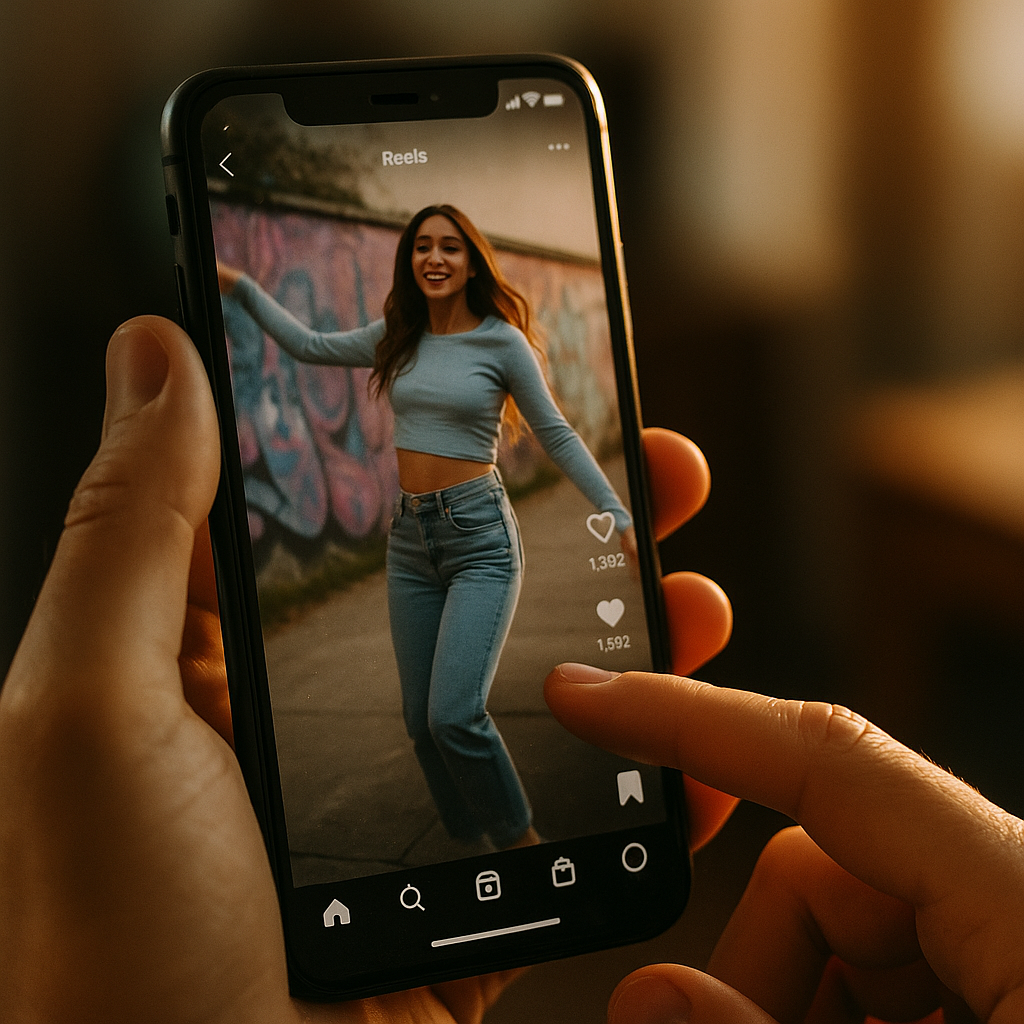
Meta engineers have said it plainly: a save or a DM share now carries more algorithmic weight than a like. If your Instagram Reels brief still optimizes for comments and likes, you’re building for a ranking signal that barely moves the needle anymore. The brands winning distribution right now are the ones who’ve rewritten their briefs around one question: will someone send this to a friend?
The Signal Shift Nobody Briefed For
For years, engagement briefs chased comments. Ask a question, spark debate, farm replies. That playbook is aging fast. Instagram’s recommendation system has quietly reprioritized private signals — saves, DM shares, and rewatches — because they correlate more strongly with genuine content value than a quick double-tap ever did.
Think about your own behavior. You like plenty of posts you’ll forget in ten minutes. But when do you actually send something to a friend? Usually when it’s useful, funny enough to reference later, or so relatable you need someone else to see it immediately. That’s a much higher bar than “engagement,” and it’s exactly the bar Meta is now optimizing for.
A comment costs a viewer three seconds of typing. A DM share requires them to think of a specific person who needs to see this — a far stronger vote of content quality.
This mirrors what we’ve already seen with Instagram’s GEM algorithm favoring tagged Reels and the platform’s broader push toward force-feeding Reels into non-follower feeds. The pattern is consistent: Meta keeps rewarding content that behaves like it deserves distribution, not content that’s merely liked.
Why Saves and Shares Outrank Likes Now
Meta’s own creator resources have referenced saves and shares as top-tier ranking inputs for over a year, but the weighting has intensified. Industry analysts at eMarketer have noted that platforms increasingly favor “utility” signals over vanity metrics, largely because private shares are harder to fake and better predict retention.
There’s also a business logic here. Likes are public and performative — people like things to signal identity, not necessarily because the content was useful. Saves and DM shares happen in private, which means they’re less influenced by social pressure and more reflective of actual value. Meta wants a feed people keep opening. Private-sharing behavior is the best proxy it has for “this kept someone on the app longer, and they’ll be back.”
For brands, this changes what “performing well” looks like in a report. A Reel with modest likes but a strong save rate might actually be your best distribution asset of the month.
What This Means for Your Metrics Dashboard
- Save rate (saves ÷ reach) should now sit alongside or above like rate in your weekly reporting.
- Share rate, especially DM shares, is a stronger predictor of organic reach than comment volume.
- Watch-through and rewatch behavior still matters — Meta has been explicit that completion signals feed the same ranking model.
- Comments haven’t disappeared as a signal, but they’ve been demoted relative to the other three.
If your agency reporting deck still leads with likes, it’s time to renegotiate the KPIs with your client or internal stakeholders before the next campaign cycle starts.
Structuring a Brief That Earns Saves, Not Just Views
Save-worthy content has a specific shape, and it’s not the same shape as scroll-stopping content. A hook can stop someone’s thumb, but it won’t necessarily make them tap the bookmark icon. Saves come from perceived future utility. Your brief needs to build that in deliberately, not hope it emerges.
Here’s the structural framework we’re seeing top-performing brand briefs adopt:
- Lead with a promise, not a punchline. “3 ways to fix this” outperforms a purely entertaining cold open because it signals the content is reference material.
- Front-load the payoff, then layer detail. Give the core answer in the first 8-10 seconds, then use the remaining runtime to add nuance a viewer would want to revisit.
- Use on-screen text as a save trigger. Numbered lists, step markers, and “save this for later” callouts measurably increase save rate — this isn’t a hack, it’s now table stakes.
- Design for a specific recipient. Briefs should explicitly name who the creator is making this for — “the friend who’s planning a trip,” “the coworker who always asks about this” — because that framing naturally produces share-triggering content.
- End with a reason to return. A closing line like “part two tomorrow” or “full breakdown in comments” nudges both save and revisit behavior.
This is a meaningfully different brief than the ones built for the raw, unpolished aesthetic that Instagram’s algorithm has favored over polished ads. Raw and save-worthy aren’t mutually exclusive, but your brief has to hold both intentions at once: authentic delivery, structured payoff.
The DM-Share Trigger Is Different From the Save Trigger
Don’t conflate the two. Saves are personal — “I want this for me later.” Shares are relational — “someone specific needs this.” A brief optimized purely for saves (how-to content, checklists, reference-style posts) won’t necessarily generate DM shares.
To engineer share behavior, briefs need an emotional or social hook layered on top of utility: humor that’s specific to a shared inside joke format, a relatable scenario that maps to “this is literally you and [tag a friend],” or content that makes the sender look thoughtful for sending it. Ask creators to script toward a moment of recognition — the “wait, this is so [name]” reaction — rather than just information density.
Brief Templates: Old vs. New
It helps to see this side-by-side. Here’s how a typical brand Reels brief line item might shift:
- Old: “Ask a question in the caption to drive comments.”
- New: “Structure content as a 3-step framework the viewer would want to reference again; include on-screen step markers.”
- Old: “Keep it fun and relatable to boost likes.”
- New: “Build toward a specific recognition moment that prompts tagging a friend by name.”
- Old: “CTA: comment your thoughts below.”
- New: “CTA: save this for [specific future occasion]; send to someone who needs to see it.”
None of this replaces good creative. It redirects it. Creators are still the ones who make content feel native and unforced — this is a companion shift to the guidance in Instagram’s Reels length update playbook for hooks and pacing, where structure and authenticity work together rather than against each other.
Compliance and Disclosure Still Apply Here
A quick but necessary note: optimizing for saves and shares doesn’t loosen your disclosure obligations. Paid partnerships still need clear, upfront disclosure under FTC guidelines, regardless of whether the content is engineered for private sharing. If anything, content designed to feel personal and organic requires more careful disclosure language, since the whole point is that it doesn’t read like an ad. Brief your creators to build disclosure into the hook or on-screen text naturally, not as an afterthought buried in the caption.
This matters more in DM-share contexts specifically. When a friend forwards a Reel, there’s no algorithmic caption or ad label riding along in some UI contexts — the disclosure needs to live inside the video itself to travel with the content wherever it lands.
Where This Fits in the Bigger Platform Picture
This isn’t an isolated Instagram quirk. Across platforms, we’re watching the same migration from public vanity metrics to private-utility signals. TikTok’s force-feed algorithm changes pushed brands toward completion-rate optimization for similar reasons — platforms want proxies for genuine value, not performative engagement.
For teams running budgets across Instagram, TikTok, and YouTube simultaneously, the practical move is standardizing your brief language around “utility signals” as a category, then customizing the specific tactics per platform. It keeps creative teams from relearning the wheel every quarter and makes cross-platform reporting far easier to defend to finance.
If your reporting still treats likes as the headline metric, you’re measuring the platform Instagram used to be, not the one it’s building toward.
Tools like Sprout Social and native Meta Business Suite analytics now surface save and share rate more prominently — use them. If your current dashboard buries these metrics three clicks deep, that’s a workflow problem worth fixing this quarter, not next year.
Next step: Audit your last five Reels briefs against the framework above, flag which ones had zero save or share triggers built in, and rewrite those before your next production cycle — not your next quarterly planning meeting.
FAQs
What are Instagram’s private-sharing signals?
Private-sharing signals refer to actions users take outside public view — primarily saves (bookmarking a Reel) and DM shares (sending a Reel directly to another user). Instagram’s algorithm now weighs these more heavily than public engagement like likes and comments when determining distribution.
Why does Instagram prioritize saves and shares over likes?
Saves and shares are harder to fake and more strongly correlated with genuine content value. A like is often performative or low-effort, while a save signals someone wants to revisit content, and a DM share means they thought specifically of another person who’d benefit from it.
How do I write a Reels brief optimized for saves?
Structure content around future utility: numbered steps, frameworks, or reference-style information delivered with clear on-screen text. Front-load the payoff early and give viewers an explicit reason to bookmark, such as “save this for later.”
Does optimizing for saves hurt reach or virality?
No — the opposite. Since Instagram’s ranking model now weights saves and shares heavily, content that earns these signals typically sees stronger organic distribution than content optimized purely for likes or comments.
Do disclosure requirements change for content designed to be shared privately?
The disclosure requirement itself doesn’t change, but the execution needs more care. Since DM-shared content often travels without surrounding captions or platform labels, disclosure should be built into the video itself so it stays visible wherever the content is forwarded.
FAQs
What are Instagram’s private-sharing signals?
Private-sharing signals refer to actions users take outside public view — primarily saves (bookmarking a Reel) and DM shares (sending a Reel directly to another user). Instagram’s algorithm now weighs these more heavily than public engagement like likes and comments when determining distribution.
Why does Instagram prioritize saves and shares over likes?
Saves and shares are harder to fake and more strongly correlated with genuine content value. A like is often performative or low-effort, while a save signals someone wants to revisit content, and a DM share means they thought specifically of another person who’d benefit from it.
How do I write a Reels brief optimized for saves?
Structure content around future utility: numbered steps, frameworks, or reference-style information delivered with clear on-screen text. Front-load the payoff early and give viewers an explicit reason to bookmark, such as “save this for later.”
Does optimizing for saves hurt reach or virality?
No — the opposite. Since Instagram’s ranking model now weights saves and shares heavily, content that earns these signals typically sees stronger organic distribution than content optimized purely for likes or comments.
Do disclosure requirements change for content designed to be shared privately?
The disclosure requirement itself doesn’t change, but the execution needs more care. Since DM-shared content often travels without surrounding captions or platform labels, disclosure should be built into the video itself so it stays visible wherever the content is forwarded.
Top Influencer Marketing Agencies
The leading agencies shaping influencer marketing in 2026
Agencies ranked by campaign performance, client diversity, platform expertise, proven ROI, industry recognition, and client satisfaction. Assessed through verified case studies, reviews, and industry consultations.
Moburst

-
2

The Shelf
Boutique Beauty & Lifestyle Influencer AgencyA data-driven boutique agency specializing exclusively in beauty, wellness, and lifestyle influencer campaigns on Instagram and TikTok. Best for brands already focused on the beauty/personal care space that need curated, aesthetic-driven content.Clients: Pepsi, The Honest Company, Hims, Elf Cosmetics, Pure LeafVisit The Shelf → -
3

Audiencly
Niche Gaming & Esports Influencer AgencyA specialized agency focused exclusively on gaming and esports creators on YouTube, Twitch, and TikTok. Ideal if your campaign is 100% gaming-focused — from game launches to hardware and esports events.Clients: Epic Games, NordVPN, Ubisoft, Wargaming, Tencent GamesVisit Audiencly → -
4

Viral Nation
Global Influencer Marketing & Talent AgencyA dual talent management and marketing agency with proprietary brand safety tools and a global creator network spanning nano-influencers to celebrities across all major platforms.Clients: Meta, Activision Blizzard, Energizer, Aston Martin, WalmartVisit Viral Nation → -
5

The Influencer Marketing Factory
TikTok, Instagram & YouTube CampaignsA full-service agency with strong TikTok expertise, offering end-to-end campaign management from influencer discovery through performance reporting with a focus on platform-native content.Clients: Google, Snapchat, Universal Music, Bumble, YelpVisit TIMF → -
6

NeoReach
Enterprise Analytics & Influencer CampaignsAn enterprise-focused agency combining managed campaigns with a powerful self-service data platform for influencer search, audience analytics, and attribution modeling.Clients: Amazon, Airbnb, Netflix, Honda, The New York TimesVisit NeoReach → -
7

Ubiquitous
Creator-First Marketing PlatformA tech-driven platform combining self-service tools with managed campaign options, emphasizing speed and scalability for brands managing multiple influencer relationships.Clients: Lyft, Disney, Target, American Eagle, NetflixVisit Ubiquitous → -
8

Obviously
Scalable Enterprise Influencer CampaignsA tech-enabled agency built for high-volume campaigns, coordinating hundreds of creators simultaneously with end-to-end logistics, content rights management, and product seeding.Clients: Google, Ulta Beauty, Converse, AmazonVisit Obviously →