


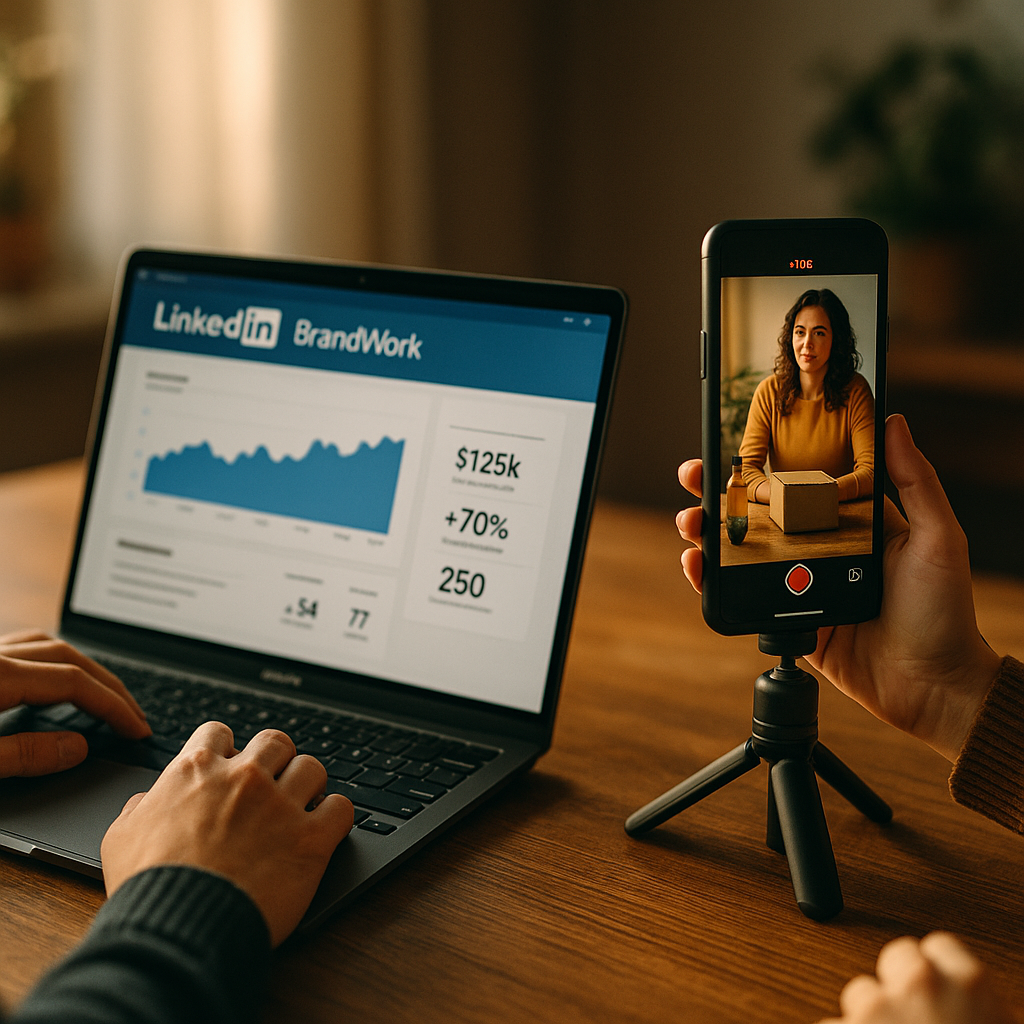
Only 22% of B2B marketers say they’re confident their LinkedIn influencer investment is generating pipeline — not just impressions. If you’re allocating six-figure budgets to the platform, that gap is a strategic problem. The LinkedIn BrandWorks Strategic Support Program positions itself as the fix, but is it the right call versus building your own creator marketplace stack?
What BrandWorks Actually Is (and Isn’t)
BrandWorks is LinkedIn’s managed service layer sitting above its self-serve Creator Marketplace. Instead of sourcing creators yourself, negotiating directly, and managing briefs through Campaign Manager, you hand significant campaign orchestration to LinkedIn’s in-house team. They handle creator matching, content strategy alignment, and some degree of performance optimization.
That sounds convenient. It is. But convenience has a cost, and it’s not just financial.
What BrandWorks is not: a guarantee of creator exclusivity, a replacement for your brand’s brief discipline, or a mechanism that gives you raw audience data at the granularity most enterprise demand-gen teams need. It’s a co-managed service, not a fully outsourced creative production unit.
Enterprise brands that treat BrandWorks as a turnkey solution often discover mid-flight that they’ve traded operational control for marginal convenience. The brands winning on LinkedIn are those who come to any managed service with tight briefs and clear success metrics already defined.
The DIY Creator Marketplace Route: Real Operational Overhead, Real Control
LinkedIn’s Creator Marketplace allows brands to search for and activate creators directly. For teams with in-house influencer operations or agency partners who already manage creator relationships elsewhere, this is legitimately viable. You control negotiation terms, content approval cadences, exclusivity windows, and brief fidelity.
The trade-off is operational load. You need:
- A structured discovery and vetting process (follower quality, audience demographics, past sponsored content performance)
- Legal infrastructure for creator contracts and FTC-compliant disclosure language
- Internal or agency bandwidth to manage brief iterations and approval cycles
- Attribution scaffolding to connect LinkedIn content to CRM data and pipeline stages
For brands already running influencer programs on TikTok or Instagram with this operational infrastructure in place, extending it to LinkedIn is a lower lift than it sounds. If you’re also exploring how B2B creator briefs and attribution work within LinkedIn’s ecosystem, the DIY path becomes more tractable with the right framework.
But if LinkedIn is your team’s first serious creator channel, standing up that infrastructure from scratch while simultaneously trying to hit quarterly pipeline targets is a real execution risk.
Cost Structure: Where the Numbers Get Uncomfortable
BrandWorks minimum commitments typically sit at the $50K-$150K threshold per campaign cycle, depending on creator tier and content volume. That’s not unusual for enterprise-level managed services, but the pricing model bundles LinkedIn’s platform margin into what you’d otherwise pay directly to creators.
In a DIY marketplace scenario, more of that budget flows to creator fees. You might negotiate 30-40% more creator touchpoints for the same spend, though your internal labor costs offset some of that gain.
The honest framing: BrandWorks makes financial sense when your marketing ops team’s hourly cost of managing a LinkedIn creator program outweighs the platform premium. For lean B2B teams or brands entering LinkedIn creator marketing for the first time, that math often favors BrandWorks. For enterprise teams with dedicated influencer operations, the math frequently inverts.
You should also factor in how BrandWorks integrates (or doesn’t) with your existing attribution windows and SQL benchmarks. If your demand-gen team measures success by sales-qualified leads, you need to know exactly what data BrandWorks surfaces versus what stays inside LinkedIn’s walled garden.
Creator Quality and Audience Fit: The Real Variable
This is where the decision gets nuanced. LinkedIn’s BrandWorks team has access to first-party performance data on creators that brands cannot see through the public marketplace. They can match against verified audience attributes like job title, seniority, company size, and industry at a depth that third-party platforms approximating LinkedIn data simply cannot replicate.
That’s a genuine advantage for B2B brands whose target persona is, say, VP-level procurement officers at mid-market manufacturing firms. Getting that audience match right on the first campaign cycle is worth real money.
The DIY marketplace is improving in this area, but it still requires you to interrogate creators’ audience analytics during vetting. Many creators are not forthcoming about audience quality metrics, and LinkedIn’s marketplace interface doesn’t yet surface everything a brand strategist needs to make a high-confidence selection.
For context on how LinkedIn’s video and creator algorithm affects organic reach for matched content, the BrandLink video CPM and algorithm data provides useful benchmarks to calibrate expectations before committing to either path.
Risk Vectors Most Enterprise Teams Underestimate
Content compliance is a real operational risk on LinkedIn in a way it isn’t on consumer platforms. B2B creators frequently discuss regulated industries, financial products, healthcare services, and enterprise software with specific regulatory considerations. BrandWorks includes some compliance review, but it does not replace your legal team’s review obligations.
On the DIY side, FTC disclosure requirements apply equally, and the enforcement risk lands on the brand, not the creator. Enterprise legal teams should be deeply involved in brief design regardless of which path you choose.
There’s also creator exclusivity risk. Unless explicitly contracted, creators activated through either path may simultaneously work with competitors. BrandWorks does not automatically enforce category exclusivity. That’s a negotiation, not a default setting.
One dimension brands often miss: creator authorship verification. As AI-generated content floods professional networks, understanding whether the thought leadership content you’re sponsoring actually reflects the creator’s genuine perspective is increasingly material to brand safety. The broader conversation about verifying creator authorship in an AI-saturated environment applies directly to LinkedIn’s professional content ecosystem.
Making the Decision: A Framework for Enterprise Teams
Run your evaluation against these four axes:
- Operational capacity: Does your team have bandwidth to manage creator discovery, contracts, briefs, and reporting independently? If not, BrandWorks pays for itself in avoided opportunity costs.
- Attribution maturity: Do you have CRM integrations and UTM discipline sophisticated enough to capture LinkedIn-sourced pipeline? If your attribution stack isn’t ready, managed services won’t fix the problem and may obscure it.
- Audience precision requirements: How narrow is your target persona? The narrower the ICP, the more BrandWorks’ first-party matching advantage is worth.
- Budget flexibility: Is your LinkedIn creator budget large enough that the BrandWorks premium is a rounding error, or does it meaningfully compress creator reach? For budgets under $75K, the math almost always favors the DIY path.
For deeper context on the full spectrum of LinkedIn’s creator tools and how they interact with organic strategy, the overview of LinkedIn Creator Marketplace and BrandWorks ROI covers the integration layer that enterprise teams need to understand before committing either direction.
Also worth reviewing: how LinkedIn’s Business Solutions portal describes BrandWorks eligibility and minimums, since the program has tiers that aren’t always surfaced in agency conversations. Similarly, eMarketer’s B2B ad spend data provides useful context for benchmarking your LinkedIn allocation against category norms. For broader influencer investment benchmarking, Sprout Social’s industry data and Statista’s creator economy metrics round out the picture.
The brands extracting the most value from LinkedIn’s creator ecosystem are not choosing between BrandWorks and DIY as a permanent commitment. They’re piloting BrandWorks for one to two campaigns to establish benchmarks, then migrating specific creator relationships in-house once they understand which audience segments and content formats are actually converting.
Start with a BrandWorks pilot scoped to one target segment, document the attribution data you do and don’t receive, and use that as your decision framework for year-two budget allocation. That’s the move.
Frequently Asked Questions
What is the LinkedIn BrandWorks Strategic Support Program?
LinkedIn BrandWorks is a managed service offering within LinkedIn’s marketing ecosystem that handles creator matching, campaign strategy, and content orchestration on behalf of enterprise brands. It sits above the self-serve Creator Marketplace and typically requires a minimum budget commitment, in exchange for LinkedIn’s team managing much of the operational workflow.
How does BrandWorks differ from the LinkedIn Creator Marketplace?
The Creator Marketplace is a self-serve discovery and activation tool where brands identify and contract creators directly. BrandWorks is a managed layer where LinkedIn’s team handles creator selection and campaign management using first-party data unavailable in the public marketplace. BrandWorks costs more but reduces internal operational overhead.
What budget threshold makes BrandWorks worth the investment?
Generally, brands with LinkedIn creator budgets above $75,000-$100,000 per campaign cycle begin to see BrandWorks’ premium offset by reduced internal management costs and superior audience matching. Below that threshold, the DIY Creator Marketplace typically delivers better ROI by routing more budget directly to creator fees.
Can BrandWorks guarantee category exclusivity with creators?
No. Exclusivity is not a default feature of BrandWorks. Brands that require creators to avoid competing brand partnerships must negotiate and contract exclusivity explicitly, regardless of whether they use BrandWorks or the self-serve marketplace.
How does attribution work in BrandWorks versus DIY creator partnerships?
BrandWorks provides LinkedIn’s native reporting, which includes engagement metrics and some audience demographic breakdowns. However, connecting LinkedIn creator content to downstream CRM data and pipeline attribution still requires the brand’s own UTM infrastructure and CRM integrations. Neither BrandWorks nor the DIY marketplace provides plug-and-play pipeline attribution without additional technical setup.
Is BrandWorks appropriate for brands new to LinkedIn influencer marketing?
Yes, often. For teams without existing creator marketing infrastructure, BrandWorks reduces the execution risk of a first LinkedIn creator campaign by handling discovery, vetting, and campaign management. It also surfaces benchmark performance data that informs smarter DIY decisions in subsequent campaign cycles.
Top Influencer Marketing Agencies
The leading agencies shaping influencer marketing in 2026
Agencies ranked by campaign performance, client diversity, platform expertise, proven ROI, industry recognition, and client satisfaction. Assessed through verified case studies, reviews, and industry consultations.
Moburst

-
2

The Shelf
Boutique Beauty & Lifestyle Influencer AgencyA data-driven boutique agency specializing exclusively in beauty, wellness, and lifestyle influencer campaigns on Instagram and TikTok. Best for brands already focused on the beauty/personal care space that need curated, aesthetic-driven content.Clients: Pepsi, The Honest Company, Hims, Elf Cosmetics, Pure LeafVisit The Shelf → -
3

Audiencly
Niche Gaming & Esports Influencer AgencyA specialized agency focused exclusively on gaming and esports creators on YouTube, Twitch, and TikTok. Ideal if your campaign is 100% gaming-focused — from game launches to hardware and esports events.Clients: Epic Games, NordVPN, Ubisoft, Wargaming, Tencent GamesVisit Audiencly → -
4

Viral Nation
Global Influencer Marketing & Talent AgencyA dual talent management and marketing agency with proprietary brand safety tools and a global creator network spanning nano-influencers to celebrities across all major platforms.Clients: Meta, Activision Blizzard, Energizer, Aston Martin, WalmartVisit Viral Nation → -
5

The Influencer Marketing Factory
TikTok, Instagram & YouTube CampaignsA full-service agency with strong TikTok expertise, offering end-to-end campaign management from influencer discovery through performance reporting with a focus on platform-native content.Clients: Google, Snapchat, Universal Music, Bumble, YelpVisit TIMF → -
6

NeoReach
Enterprise Analytics & Influencer CampaignsAn enterprise-focused agency combining managed campaigns with a powerful self-service data platform for influencer search, audience analytics, and attribution modeling.Clients: Amazon, Airbnb, Netflix, Honda, The New York TimesVisit NeoReach → -
7

Ubiquitous
Creator-First Marketing PlatformA tech-driven platform combining self-service tools with managed campaign options, emphasizing speed and scalability for brands managing multiple influencer relationships.Clients: Lyft, Disney, Target, American Eagle, NetflixVisit Ubiquitous → -
8

Obviously
Scalable Enterprise Influencer CampaignsA tech-enabled agency built for high-volume campaigns, coordinating hundreds of creators simultaneously with end-to-end logistics, content rights management, and product seeding.Clients: Google, Ulta Beauty, Converse, AmazonVisit Obviously →