


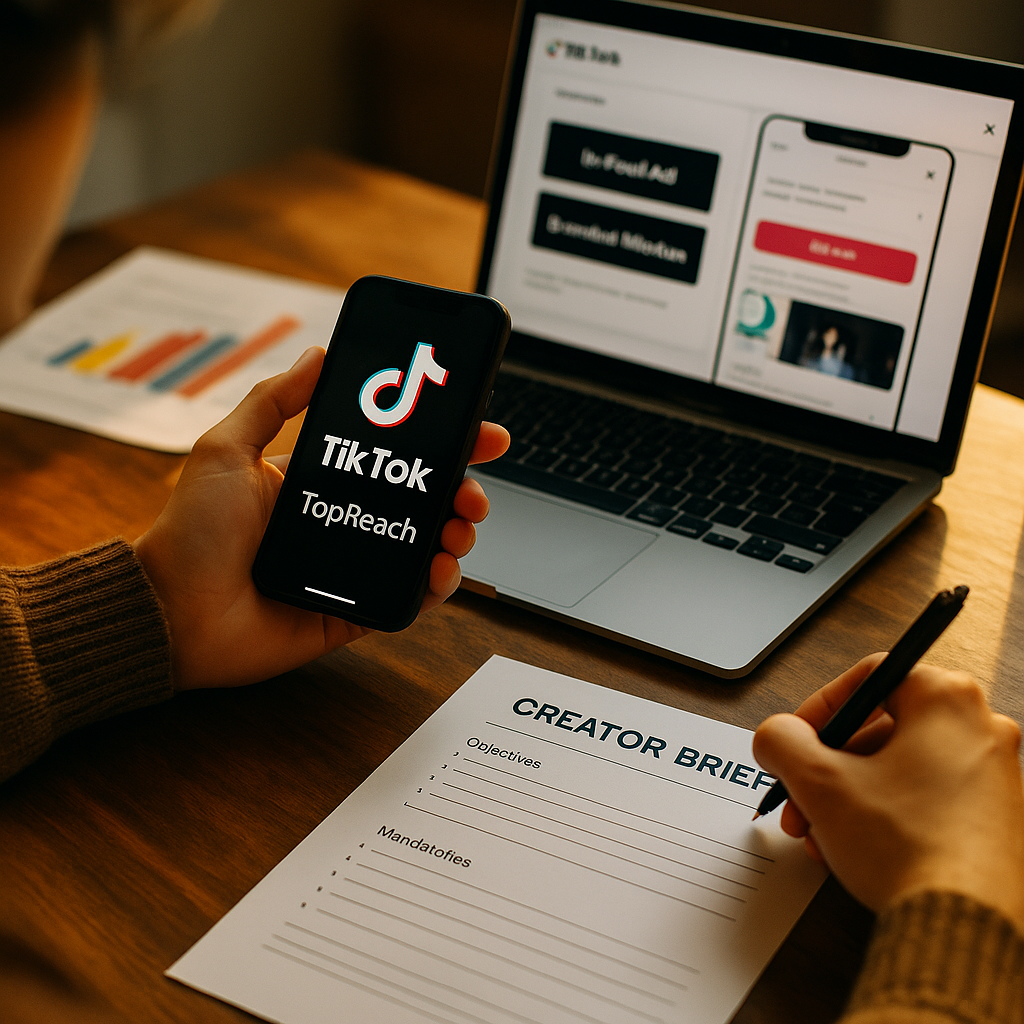
TikTok’s consolidation of TopFeed and TopView into a single product called TopReach isn’t a cosmetic rebrand. It’s a structural shift that forces brands to rethink how guaranteed-impression buys, creator content, and paid amplification connect inside a single campaign architecture. If your media plan still treats these as separate line items, you’re already behind.
What TopReach Actually Changes
TopView and TopFeed served different purposes in the old model. TopView delivered the first ad a user saw upon opening the app, a high-impact, full-screen moment with strong brand recall benchmarks. TopFeed placed ads at the top of the For You Page feed, acting as a discovery-layer impression. Brands often bought both, running parallel creative and treating them as complementary reach vehicles with separate briefs and separate measurement.
TopReach collapses that into a unified placement framework. TikTok now serves the highest-visibility inventory dynamically, optimizing delivery between the app-open moment and the first-scroll position based on real-time signals including user session behavior, audience segment, and creative performance data. The implication for media buyers is significant: you no longer control which slot your ad occupies. The algorithm decides. Your job is to ensure the creative works in either context.
TopReach shifts the planning question from “which premium slot do we buy?” to “does our creative earn the premium slot through performance?” That requires a fundamentally different brief.
For brands that have historically leaned on TopView as a brand awareness anchor and TopFeed as a performance-adjacent buy, the consolidation requires a unified creative strategy that can carry both mandates simultaneously. That’s a harder brief to write and a harder creative to produce.
Restructuring Your High-Visibility Media Buy
The first operational change most media teams need to make is budget unification. If your agency or internal team is still splitting TopView and TopFeed allocations across separate line items in your TikTok Ads Manager plan, that structure no longer reflects how inventory is actually being delivered. Consolidate under a single TopReach budget, then layer your targeting and creative rotation strategy from there.
Second, CPM benchmarking needs to be recalibrated. TopView CPMs have historically commanded a significant premium over TopFeed. Under TopReach, blended CPMs will vary based on delivery mix, and TikTok’s reporting will reflect aggregate impressions across both placements. Work with your TikTok rep to establish clear impression-by-placement breakouts in your reporting dashboard. Without that granularity, you can’t accurately assess cost efficiency against your awareness KPIs.
Third, frequency capping strategy shifts. TopView’s natural frequency limit (one per user per day, per session open) gave planners a predictable reach curve. TopReach complicates that. Users who engage heavily with the For You Page may see TopReach inventory multiple times across a session if the creative rotation algorithm determines a repeat exposure is warranted. Set explicit frequency caps at the campaign level, not just at the ad group level, and monitor reach curves weekly during flight.
For additional context on how TopReach connects to conversion pathways, the mechanics of the new product tie directly into TikTok’s broader commerce and discovery architecture.
Creator Content Integration: The Brief Has to Change
Here’s where most brands will feel the real operational pressure. TopReach is not just a paid media format. TikTok has been explicit that creator-generated content can be promoted through TopReach inventory via Spark Ads, meaning a creator’s native post can occupy the top-of-feed or app-open position if it’s whitelisted and boosted through the right campaign structure.
That’s a meaningful opportunity, but it demands a different creative brief. Standard creator briefs for mid-funnel discovery content are optimized for 2-4 second hook engagement within a scrolling context. TopReach placements, especially at app-open, behave more like broadcast impressions where the viewer is not yet in a scrolling mindset. The first frame needs to work as both a brand statement and a content hook simultaneously.
Practically, this means briefing creators on a two-layer opening: the first 1.5 seconds must function as a brand presence moment (logo visibility, recognizable visual identity, brand-associated audio cue), and seconds 2 through 5 must deliver the content hook that earns the continued watch. Most creators aren’t naturally briefed to structure content this way. You need to specify it explicitly, with reference frames, not just as a written instruction.
Teams already working with discovery and conversion creator briefs will recognize this dual-mandate structure, but TopReach adds the brand-moment layer that most discovery briefs don’t require.
There’s also a disclosure consideration. When creator content runs through Spark Ads in a TopReach placement, the “Paid Partnership” label placement and visibility shift based on the full-screen format. Teams should review their disclosure protocols against current FTC guidelines for full-screen video ads, specifically the guidance on label conspicuousness in immersive formats. This is not a grey area: label visibility in full-screen placements has to meet the same conspicuousness standard as any other format, and the visual weight of a full-screen creative can unintentionally push disclosure text to the margins.
Measurement Rethink: What Does “Premium Reach” Actually Mean Now?
The old model had a clean logic. TopView drove brand lift. You measured it with TikTok’s Brand Lift Study. TopFeed drove discovery and downstream engagement. You measured that with click-through, view-through, and downstream attribution. Two placements, two measurement frameworks, two sets of success metrics.
TopReach requires a unified measurement model. Brand lift and performance attribution need to coexist in your reporting structure. EMARKETER data consistently shows that brands running combined awareness and performance campaigns on TikTok see stronger lower-funnel outcomes than those siloing the two objectives, which supports the case for a blended measurement approach under TopReach.
Specifically, build your TopReach measurement framework around three concurrent data streams: TikTok Brand Lift Study (or third-party brand tracking via Kantar or Lucid) for awareness impact, platform-native attribution for click and view-through conversion, and organic amplification metrics to capture earned reach that TopReach placements generate when users reshare or engage with promoted creator content.
If your measurement model can’t account for the awareness-to-action arc within a single placement format, you’ll systematically undervalue TopReach in budget allocation reviews.
This also connects to how you present TikTok investment in broader media mix conversations. For teams working through short-form video budget justifications, having a unified TopReach metric that speaks to both reach quality and downstream conversion is a more defensible planning argument than two separate placement metrics.
Operational Priorities for the Next Campaign Cycle
Given the structural changes TopReach introduces, here’s where media and influencer teams should focus their next 60 days:
- Audit your current TikTok creative library against TopReach format requirements. Full-screen, sound-on, first-frame brand presence: how many of your current assets pass that test?
- Rebuild creator briefs for Spark Ads amplification into TopReach inventory. Brief for the placement context, not just the organic feed context.
- Consolidate budget line items in your media plan and establish blended CPM baselines with your TikTok rep before the next campaign launch.
- Set up unified measurement tracking that captures brand lift and performance attribution under a single campaign reporting structure.
- Review disclosure protocols for full-screen Spark Ad placements with your legal or compliance team before the next creator campaign goes live.
For brands with an active TikTok creator program, now is also the right moment to evaluate which creators in your roster produce content that can plausibly anchor a premium placement. Not every creator partner is right for TopReach. The content needs to function at broadcast-quality attention levels. Review engagement data and specifically examine completion rates and first-3-second retention to identify which creators’ content earns that kind of attention organically. That’s your TopReach creator shortlist.
Teams building systematic TikTok brand and creator strategies will find TopReach integration is a natural extension of a well-structured playbook rather than a disruption to it. The brands struggling are those still operating with siloed paid and organic TikTok strategies.
AI-generated and faceless creator content deserves specific attention here. TikTok has been increasingly aggressive about suppressing low-authenticity content in premium inventory, and TopReach placements are expected to be subject to higher-quality signals. If any of your creator activations involve AI-generated video, verify creator authorship and content authenticity before attempting to boost through TopReach. The risk isn’t just suppression: it’s wasted spend on inventory that underperforms because the algorithm de-prioritizes it.
For broader competitive context on platform-level premium ad products and where TikTok sits relative to Meta and YouTube in the premium video placement conversation, Statista’s social ad revenue data and Sprout Social’s engagement benchmarks both provide useful reference points for making the internal budget case.
Start with the creative audit. Everything else in the TopReach transition depends on whether your existing assets can actually carry the premium placement format.
Frequently Asked Questions
What is TikTok TopReach and how does it differ from TopView and TopFeed?
TopReach is TikTok’s consolidated high-visibility ad product that merges the former TopView and TopFeed placements into a single unified format. Where TopView guaranteed the first ad impression at app open and TopFeed placed ads at the top of the For You Page scroll, TopReach uses algorithmic optimization to dynamically deliver ads across both positions based on user behavior and creative performance signals. Brands no longer select a specific slot; instead, TikTok’s system determines the highest-value placement in real time.
How should brands restructure their media budgets after the TopReach merger?
Brands should consolidate what were previously separate TopView and TopFeed budget allocations into a single TopReach line item. The next step is establishing blended CPM baselines with your TikTok account rep, since delivery will now mix across both placement types. Frequency capping strategy also needs to be set at the campaign level, and reporting should be configured to provide impression breakouts by placement to allow accurate cost efficiency analysis.
Can creator content be promoted through TopReach inventory?
Yes. TikTok supports creator-generated content being amplified through TopReach placements via Spark Ads. When a creator’s native post is whitelisted and boosted using the appropriate Spark Ads campaign structure, it can qualify for TopReach inventory. However, the creative brief for this type of content must account for both the app-open brand presence moment and the content hook required to earn continued engagement, which demands more precise creative direction than a standard discovery brief.
What are the disclosure requirements for creator content in TopReach placements?
The FTC’s guidance on paid partnership disclosures applies to TopReach placements just as it does to any other format. Full-screen video ads require that the disclosure label be conspicuous and clearly visible given the visual weight of the creative. Brands should review their Spark Ads disclosure placement with legal or compliance teams before launching creator content through TopReach, as the immersive full-screen format can inadvertently reduce the visual prominence of standard disclosure overlays.
How should brands measure the performance of TopReach campaigns?
A unified measurement model is essential. Because TopReach serves content across both brand-awareness and discovery-layer placements, measurement needs to capture both brand lift and performance attribution concurrently. Recommended components include a TikTok Brand Lift Study or third-party brand tracking for awareness metrics, platform-native attribution for conversion data, and organic amplification tracking to capture earned reach from user engagement with promoted creator content. Running these as separate measurement tracks against a single campaign provides the most complete picture of TopReach’s actual contribution.
Top Influencer Marketing Agencies
The leading agencies shaping influencer marketing in 2026
Agencies ranked by campaign performance, client diversity, platform expertise, proven ROI, industry recognition, and client satisfaction. Assessed through verified case studies, reviews, and industry consultations.
Moburst

-
2

The Shelf
Boutique Beauty & Lifestyle Influencer AgencyA data-driven boutique agency specializing exclusively in beauty, wellness, and lifestyle influencer campaigns on Instagram and TikTok. Best for brands already focused on the beauty/personal care space that need curated, aesthetic-driven content.Clients: Pepsi, The Honest Company, Hims, Elf Cosmetics, Pure LeafVisit The Shelf → -
3

Audiencly
Niche Gaming & Esports Influencer AgencyA specialized agency focused exclusively on gaming and esports creators on YouTube, Twitch, and TikTok. Ideal if your campaign is 100% gaming-focused — from game launches to hardware and esports events.Clients: Epic Games, NordVPN, Ubisoft, Wargaming, Tencent GamesVisit Audiencly → -
4

Viral Nation
Global Influencer Marketing & Talent AgencyA dual talent management and marketing agency with proprietary brand safety tools and a global creator network spanning nano-influencers to celebrities across all major platforms.Clients: Meta, Activision Blizzard, Energizer, Aston Martin, WalmartVisit Viral Nation → -
5

The Influencer Marketing Factory
TikTok, Instagram & YouTube CampaignsA full-service agency with strong TikTok expertise, offering end-to-end campaign management from influencer discovery through performance reporting with a focus on platform-native content.Clients: Google, Snapchat, Universal Music, Bumble, YelpVisit TIMF → -
6

NeoReach
Enterprise Analytics & Influencer CampaignsAn enterprise-focused agency combining managed campaigns with a powerful self-service data platform for influencer search, audience analytics, and attribution modeling.Clients: Amazon, Airbnb, Netflix, Honda, The New York TimesVisit NeoReach → -
7

Ubiquitous
Creator-First Marketing PlatformA tech-driven platform combining self-service tools with managed campaign options, emphasizing speed and scalability for brands managing multiple influencer relationships.Clients: Lyft, Disney, Target, American Eagle, NetflixVisit Ubiquitous → -
8

Obviously
Scalable Enterprise Influencer CampaignsA tech-enabled agency built for high-volume campaigns, coordinating hundreds of creators simultaneously with end-to-end logistics, content rights management, and product seeding.Clients: Google, Ulta Beauty, Converse, AmazonVisit Obviously →