


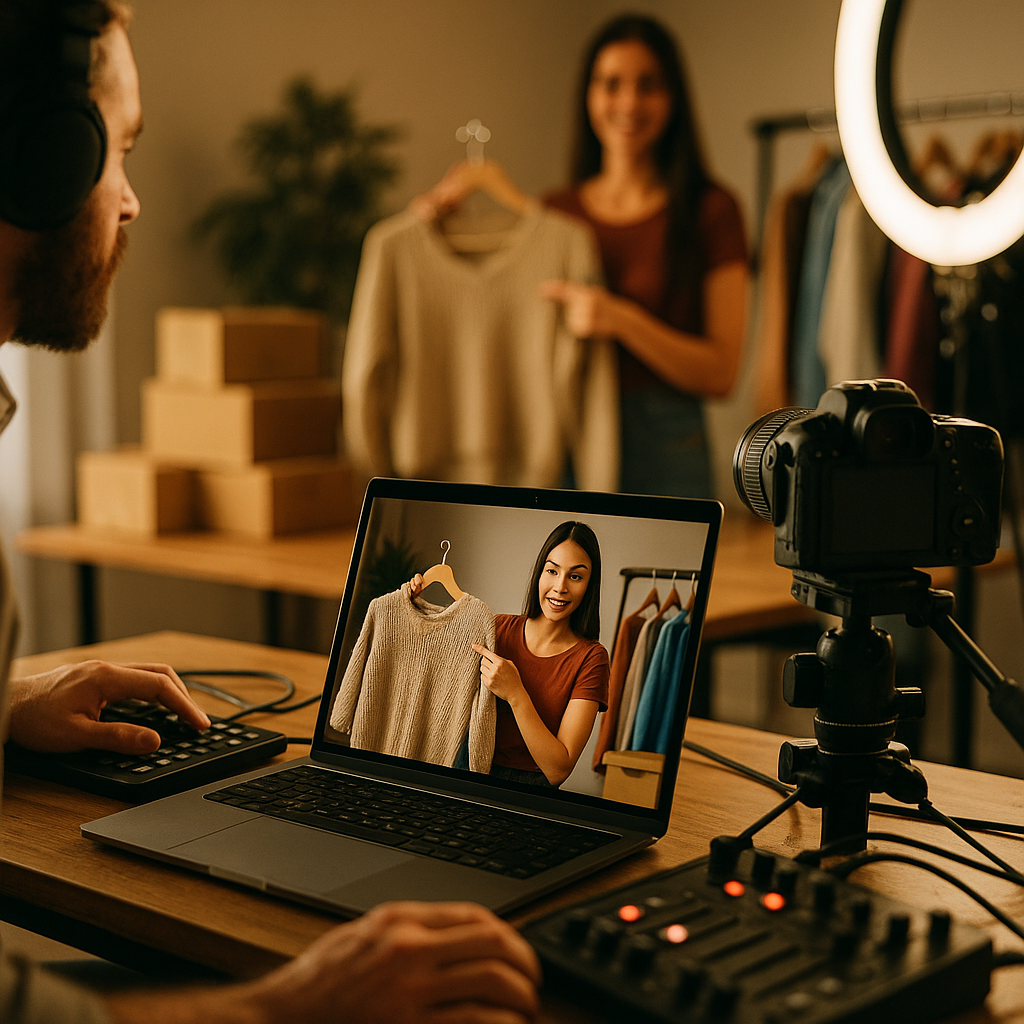
Live commerce still converts at rates traditional ecommerce can only dream about, yet most Western brands are running broadcasts with half a stack. They’ve got a platform. Maybe a host. No real production layer, no attribution, and a compliance process that lives in someone’s inbox. A proper live commerce broadcast stack isn’t optional anymore if you want repeatable results instead of one-off stunts.
Why Most Brands Get the Stack Wrong First
The instinct is to pick a platform and call it done. TikTok Shop LIVE or Amazon Live becomes the entire strategy, and everything else gets duct-taped around it. That works for a single campaign. It falls apart the moment you want to run five broadcasts a week across three platforms with consistent production quality and a clean data trail back to revenue.
A stack is different from a platform. It’s the combination of broadcast tools, host management, commerce integration, and measurement that lets a brand scale live selling the way it scales paid social. Chinese platforms like Taobao Live built this natively. Western brands are stitching it together from vendors, which is exactly why vendor selection matters so much right now.
The Four Layers Every Stack Needs
Think of it as a stack with four distinct jobs, each with its own vendor category:
- Broadcast and distribution: the software that streams the show and handles the checkout overlay.
- Host and production support: tools that coach talent, manage scripts, and keep pacing tight.
- Commerce integration: the plumbing that connects live inventory, pricing, and fulfillment to the stream in real time.
- Analytics and rights management: attribution, compliance logging, and content governance after the show ends.
Skip any layer and you get a broadcast that looks fine but can’t prove ROI, or worse, can’t survive an audit.
Brands that treat live commerce as a single-platform play consistently underreport revenue because they have no attribution layer connecting the stream to the checkout.
Broadcast and Distribution: Who’s Actually Winning Share
TikTok Shop LIVE remains the default entry point for most brands because the discovery engine does a lot of the audience-building work for you. Amazon Live is the safer bet for brands that already have Amazon storefronts and want to lean on existing traffic rather than build a new audience from scratch. Bambuser and Firework have carved out a niche serving brand-owned sites, letting retailers run shoppable video directly on their own domains instead of renting attention on someone else’s platform.
Whatnot deserves a mention too, even though it started in collectibles and resale. It’s now pulling in beauty, fashion, and home goods sellers who want an auction-style format with built-in payment rails. The lesson across all of these: pick your broadcast platform based on where your existing audience already spends time, not on which one has the flashiest case study.
Sourcing the talent to actually run these broadcasts is its own problem. Manual creator outreach doesn’t scale once you’re running multiple shows a week, which is why creator recruitment software has become a standard line item for brands serious about live commerce volume.
Host Coaching Is the Layer Nobody Budgets For
Here’s a stat worth sitting with: according to eMarketer, live shopping engagement drops sharply within the first 90 seconds if the host loses pacing or fumbles product details. That’s not a platform problem. That’s a talent problem, and it’s the one Western brands underinvest in the most.
Chinese live commerce built an entire industry around host training. Western brands are catching up with AI-assisted coaching tools that give real-time prompts on pacing, script adherence, and even tone. These tools don’t replace personality, they scaffold it, which matters when you’re running the same host across dozens of shows and need consistency without sounding robotic. If you’re scaling a host roster, it’s worth reading up on AI coaching tools for livestream hosts before you assume more headcount is the answer.
Commerce Integration: Where Broadcasts Actually Break
This is the layer that quietly kills more live shows than bad hosting ever will. A broadcast that shows a product as “in stock” when it sold out ninety seconds earlier is a trust problem, not a technical glitch, and viewers notice immediately.
Real-time inventory sync between your commerce platform and your broadcast tool is non-negotiable. CommentSold and Popshop Live built their businesses around solving exactly this for smaller retailers, offering tight integration between live video and cart logic. Larger brands running on Shopify Plus or Salesforce Commerce Cloud typically need a middleware layer, and this is where identity resolution and CRM stitching tools earn their keep. Getting creator and retail data talking to each other in real time is the difference between a broadcast that converts cleanly and one that generates a support ticket queue.
Analytics and Attribution: The Layer Brands Skip
Ask a brand how many broadcasts they ran last quarter and they’ll know instantly. Ask them what percentage of live commerce revenue came from repeat buyers versus first-time viewers, and you’ll usually get silence. That gap is the analytics layer, and it’s the one most stacks are missing entirely.
This matters more than it sounds. Budget owners are under pressure to justify live commerce spend against other channels, and “vibes were good” doesn’t survive a quarterly review. Real-time usage dashboards that track spend against performance in-stream, not just after the fact, are becoming table stakes for any team running multiple shows a month. It’s worth reviewing what a solid real-time usage dashboard checklist actually looks like before your live commerce budget quietly balloons without a matching revenue story.
According to Statista, live shopping in Western markets is still a fraction of the size it is in China relative to overall ecommerce, which means the measurement standards are still forming. Brands that build strong attribution now will have a data advantage over competitors still treating live commerce as a marketing stunt line item.
Compliance Isn’t Optional Anymore
Live commerce involves real-time claims, real-time pricing, and often UGC pulled straight from the stream for reuse in ads. Every one of those is a compliance surface. The FTC has been increasingly explicit about disclosure requirements for live shopping hosts, and getting caught flat-footed on this isn’t worth the risk to brand reputation or legal exposure.
Content governance tools that flag undisclosed claims or missing FTC labels in real time, rather than after the broadcast airs, are becoming part of the standard stack for brands running live commerce at volume. If your team is still manually reviewing broadcast footage after the fact, you’re already behind. It’s worth looking at how AI content governance platforms are cutting that review time down from hours to minutes.
Build vs Buy: A Fast Decision Framework
Not every brand needs a fully custom stack. Here’s a rough rule of thumb that’s held up across the brands we’ve talked to:
- Running fewer than two broadcasts a month: use a platform-native tool (TikTok Shop, Amazon Live) and skip the middleware entirely.
- Running weekly shows across one platform: add a dedicated commerce integration tool and basic host coaching software.
- Running multi-platform broadcasts at scale: build a full stack with dedicated attribution, governance, and identity resolution layers, because manual oversight simply won’t hold at that volume.
The mistake to avoid is over-building for a volume you don’t have yet. A five-layer stack for two broadcasts a month is wasted spend. Match the stack’s complexity to your actual broadcast cadence, not your ambitions for it.
Visible FAQ
Frequently Asked Questions
What is a live commerce broadcast stack?
It’s the combination of tools a brand uses to run live shopping shows, including broadcast and distribution software, host coaching tools, commerce integration middleware, and analytics or compliance layers. Together they replace what a single platform can’t do alone.
Do I need a separate platform for broadcasting and for selling?
Not always. Platforms like TikTok Shop LIVE and Amazon Live handle both in one place. Brands running shows on their own website typically need a separate broadcast tool like Bambuser or Firework connected to their existing commerce platform.
How important is host training in live commerce?
Very. Engagement drops fast when a host loses pacing or fumbles product details, and viewer attention in live shopping is far less forgiving than in pre-recorded video. AI coaching tools have become a practical way to scale host consistency without losing personality.
What’s the biggest compliance risk in live commerce?
Undisclosed claims made in real time during a broadcast, especially when that footage gets repurposed as UGC in paid ads afterward. The FTC has been explicit that live shopping hosts are held to the same disclosure standards as any other sponsored content.
How do brands measure ROI on live commerce broadcasts?
Through attribution tools that connect stream-level engagement to actual checkout and repeat purchase data, rather than just tracking viewer counts. Without this layer, most brands can only report vanity metrics instead of revenue impact.
Start by auditing which of the four layers your current live commerce setup is missing, then fix that one gap before adding anything else. A stack built one solid layer at a time will always outperform one assembled in a rush before Q4.
Top Influencer Marketing Agencies
The leading agencies shaping influencer marketing in 2026
Agencies ranked by campaign performance, client diversity, platform expertise, proven ROI, industry recognition, and client satisfaction. Assessed through verified case studies, reviews, and industry consultations.
Moburst

-
2

The Shelf
Boutique Beauty & Lifestyle Influencer AgencyA data-driven boutique agency specializing exclusively in beauty, wellness, and lifestyle influencer campaigns on Instagram and TikTok. Best for brands already focused on the beauty/personal care space that need curated, aesthetic-driven content.Clients: Pepsi, The Honest Company, Hims, Elf Cosmetics, Pure LeafVisit The Shelf → -
3

Audiencly
Niche Gaming & Esports Influencer AgencyA specialized agency focused exclusively on gaming and esports creators on YouTube, Twitch, and TikTok. Ideal if your campaign is 100% gaming-focused — from game launches to hardware and esports events.Clients: Epic Games, NordVPN, Ubisoft, Wargaming, Tencent GamesVisit Audiencly → -
4

Viral Nation
Global Influencer Marketing & Talent AgencyA dual talent management and marketing agency with proprietary brand safety tools and a global creator network spanning nano-influencers to celebrities across all major platforms.Clients: Meta, Activision Blizzard, Energizer, Aston Martin, WalmartVisit Viral Nation → -
5

The Influencer Marketing Factory
TikTok, Instagram & YouTube CampaignsA full-service agency with strong TikTok expertise, offering end-to-end campaign management from influencer discovery through performance reporting with a focus on platform-native content.Clients: Google, Snapchat, Universal Music, Bumble, YelpVisit TIMF → -
6

NeoReach
Enterprise Analytics & Influencer CampaignsAn enterprise-focused agency combining managed campaigns with a powerful self-service data platform for influencer search, audience analytics, and attribution modeling.Clients: Amazon, Airbnb, Netflix, Honda, The New York TimesVisit NeoReach → -
7

Ubiquitous
Creator-First Marketing PlatformA tech-driven platform combining self-service tools with managed campaign options, emphasizing speed and scalability for brands managing multiple influencer relationships.Clients: Lyft, Disney, Target, American Eagle, NetflixVisit Ubiquitous → -
8

Obviously
Scalable Enterprise Influencer CampaignsA tech-enabled agency built for high-volume campaigns, coordinating hundreds of creators simultaneously with end-to-end logistics, content rights management, and product seeding.Clients: Google, Ulta Beauty, Converse, AmazonVisit Obviously →