


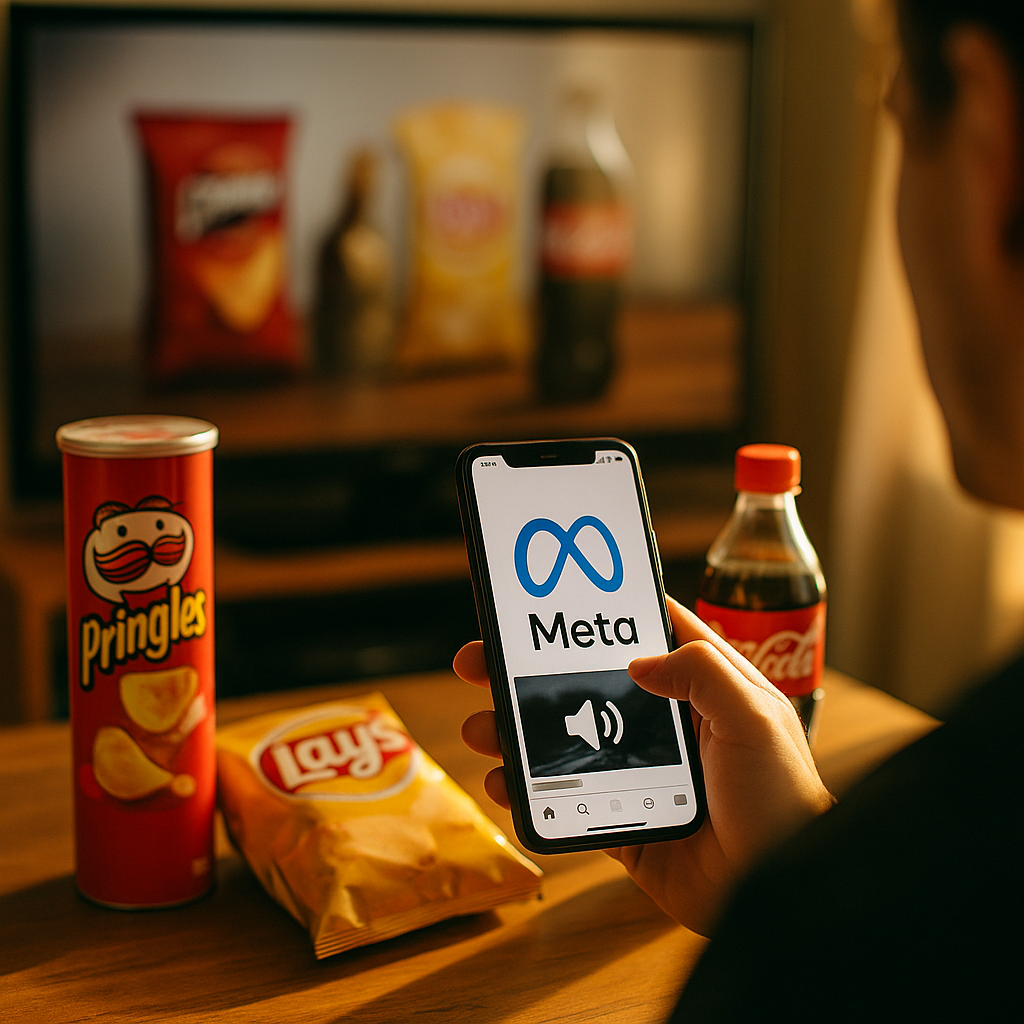
Ninety-five percent of the ads running through Meta’s system right now are essentially invisible to the algorithm. That’s not a typo, and it’s not hyperbole either. It’s the practical result of Meta’s Andromeda update, a ranking overhaul that’s quietly rewritten the rules for who wins the auction. If your CPG brand is still producing eight polished hero videos a quarter, you’re not competing. You’re donating impressions to someone else’s testing budget.
What Andromeda Actually Changed
Andromeda isn’t a single algorithm tweak. It’s a retrieval architecture shift Meta rolled out to improve how ad candidates get matched to users at scale. Instead of ranking a shortlist of creative options per auction, Andromeda uses a two-tower neural retrieval model that can evaluate a vastly larger pool of ad candidates for each impression, then serve the best-fit match in real time.
The practical upshot: Meta’s system now favors advertisers who feed it more creative variants, not fewer. More inputs mean more chances for the model to find a winning combination of hook, format, and audience signal. Fewer inputs mean the algorithm has less to work with, and it defaults to safe, average delivery.
This is where the “5% of ads win” stat comes from. Meta’s own performance data, echoed in commentary from ad-tech analysts, suggests that a small fraction of creative assets in any given account absorb the overwhelming majority of spend and impressions, while the rest sit dormant, technically live but functionally ignored by the delivery system.
Andromeda didn’t create the winner-take-most dynamic in paid social. It exposed it. Brands running low creative volume were already losing; they just couldn’t see it in the reporting.
Why CPG Feels This More Than Any Other Vertical
Consumer packaged goods brands have a structural problem: long approval chains, legal review on every claim, and creative teams optimized for TV-style production values. That worked when distribution was a media buy. It doesn’t work when distribution is an algorithmic bidding war that rewards volume and iteration speed.
Compare a CPG snack brand running four polished 30-second spots a quarter to a DTC supplement brand running 40 UGC-style clips a month. The DTC brand isn’t necessarily spending more. It’s just giving Andromeda more raw material to test. The algorithm rewards breadth of signal, and polished-but-scarce creative simply doesn’t generate enough signal to compete.
This mirrors a pattern already documented across the industry: talking-head video beats polished ads in performance testing precisely because it’s cheaper to produce at volume and reads as more authentic in-feed. CPG brands that cling to high-production creative are fighting the algorithm and their own budget cycles simultaneously.
It also explains why some CPG marketers are pulling back on creator spend altogether rather than adapting. The Go Zero creator budget freeze reflects a brand realizing its existing creative model can’t produce the volume Andromeda demands, and choosing to pause rather than restructure. That’s a defensible short-term move. It’s not a strategy.
The Creative-Volume Mandate, Defined
Call it what it is: a mandate, not a suggestion. Meta’s system architecture now requires a minimum viable creative volume to compete for premium placement. Falling below that threshold doesn’t just mean weaker performance. It means near-total invisibility in the auction.
What does “enough” volume actually look like in practice? Benchmarks vary by category and account size, but agency data circulating among performance marketers points to a few consistent patterns:
- Accounts running fewer than 10-15 active ad variants per campaign see dramatically reduced delivery share compared to accounts running 30-plus.
- Refresh cadence matters as much as raw count; stale creative, even in high volume, degrades in delivery within two to three weeks.
- Format diversity (static, short-form video, carousel, UGC-style clips) outperforms volume in a single format.
This isn’t just a Meta phenomenon. TikTok’s ranking systems reward similar behavior, particularly around proximity and freshness signals, as detailed in coverage of how the TikTok local feed turns proximity into a ranking signal. Platforms are converging on the same principle: feed the model constantly, or get starved of reach.
Is This Just a Budget Problem, or an Operating Model Problem?
Here’s the uncomfortable truth for a lot of CPG marketing leads: throwing more money at the same production process doesn’t fix this. You can’t buy your way out of a volume mandate with bigger budgets for fewer, better ads. You need a different operating model entirely.
That means shifting budget away from single hero productions and toward always-on creator pipelines that generate a continuous stream of testable assets. It’s part of why creator retainers are replacing one-off deals across the industry. A retainer model gives brands predictable, ongoing creative volume instead of episodic bursts that go stale within weeks of an Andromeda-driven delivery curve.
It also changes how brands should think about creator diversity in the pipeline. Micro-creators, once treated as a nice-to-have for authenticity, are now a volume lever. Research on how micro-creator pricing power beats follower count shows brands can commission dozens of smaller, cheaper assets from micro-creators for the cost of one polished production, feeding the algorithm exactly what it wants: variety, frequency, and authentic-reading content.
The Measurement Trap Nobody Talks About
Increasing creative volume without fixing attribution is how brands burn budget without knowing it. If you 5x your creative output but you’re still measuring performance with last-click attribution and a monthly reporting cadence, you’ll misread the data constantly. Winning assets get buried in aggregate reporting; losing assets get equal budget allocation because nobody’s watching daily.
This is exactly the gap explored in coverage of how creator ROI has no standard metric across the industry. Without a consistent way to isolate which of your 40 monthly assets are actually driving the 5% that win, volume alone won’t help you. It’ll just generate more noise to sort through.
Brands solving this well are pairing creative-volume programs with tighter, more frequent reporting: weekly (not monthly) creative refreshes tied to performance dashboards, and a hard rule to kill underperforming assets within the first 72 hours of delivery data. That’s a operational shift, not a creative one, and it’s arguably the harder half of adapting to Andromeda.
Volume without velocity in measurement just produces more waste, faster. The brands winning under Andromeda pair creative volume with weekly, not monthly, performance review cycles.
What Actually Changes in Budget Allocation
Andromeda forces a reallocation, not just an increase, in spend. Brands need to shift dollars out of production value and into three areas:
- Creator pipeline capacity: ongoing contracts or retainer arrangements that guarantee a steady flow of raw creative, not single-campaign bursts.
- Amplification budget: paid boosting behind organic-style creative is becoming as important as the production spend itself, a trend tracked in analysis showing amplification spend will match creator sponsorship fees within brand budgets.
- Testing infrastructure: tools and headcount dedicated to rapid creative iteration, tagging, and kill/scale decisioning, rather than one round of A/B testing per quarter.
None of this requires abandoning brand-safe, legally reviewed messaging. It requires building a modular creative system where core claims and compliance language stay fixed, while hooks, visuals, and formats rotate constantly. Think of it as message architecture plus creative velocity, not creative anarchy.
A Note on Platform Dependence and Risk
There’s a broader risk conversation CPG marketers shouldn’t skip. Building your entire creative strategy around one platform’s ranking model is inherently fragile. Meta can (and has, repeatedly) changed how its delivery system works with little warning. Brands over-indexed on Andromeda-optimized volume today could face another retooling next year.
The smarter play is treating creative volume as a portfolio discipline across platforms, not a Meta-specific hack. That’s consistent with broader industry guidance from bodies like the Interactive Advertising Bureau on diversifying creative and channel strategy rather than chasing a single platform’s algorithm. It’s also worth watching how creator economy consolidation affects your leverage here; as covered in analysis of how creator economy M&A is shrinking brand negotiating power, fewer independent creator agencies means less flexibility in how quickly you can scale a volume-based pipeline without paying a premium.
Third-party data on ad performance trends, including reporting from eMarketer and Statista, continues to show creative refresh rate as one of the strongest predictors of paid social efficiency, independent of platform. That’s a signal CPG brands should be building internal benchmarks around, not just reacting to Meta’s own documentation at Meta for Business.
Where This Leaves CPG Marketers
The 95% of ads not winning aren’t failing because they’re bad. They’re failing because the system was never given enough to work with. Andromeda rewards volume, format diversity, and refresh speed over polish. CPG brands built for quarterly hero productions are structurally mismatched to that reality, and the fix isn’t a bigger budget for the same process. It’s a different process altogether.
Next step: audit your last 90 days of Meta delivery data, identify what percentage of your active ad set actually received meaningful impressions, and if that number is anywhere near the 5% norm, stop planning your next hero shoot and start building a weekly creative pipeline instead.
FAQs
What is Meta’s Andromeda update?
Andromeda is a retrieval architecture update to Meta’s ad delivery system that allows the platform to evaluate a much larger pool of creative candidates per auction using neural retrieval models, rather than ranking a small shortlist. It rewards advertisers who supply more creative variants with better delivery and reach.
Why do only 5% of ads reportedly win under Andromeda?
Because the system favors accounts with high creative volume and format diversity, a small fraction of ad variants in any given account absorb the vast majority of impressions and spend. Accounts running too few creative assets fall below the threshold needed to compete meaningfully in the auction.
How much creative volume does a brand need to compete?
There’s no universal number, but performance data suggests campaigns running fewer than 10-15 active variants see significantly reduced delivery compared to those running 30 or more, refreshed on a rolling two-to-three week cycle at minimum.
Does this mean CPG brands should abandon high-production video?
No, but it means high-production assets should be a smaller share of the creative mix, supplemented heavily by lower-cost, faster-turnaround formats like UGC-style clips and creator content that can be produced at volume.
How does creative volume affect measurement and reporting?
Higher volume requires tighter measurement cycles. Brands still using monthly reporting will struggle to identify which assets are actually winning, since Andromeda-driven delivery shifts can happen within days. Weekly or even daily performance review is increasingly necessary.
Is this trend specific to Meta, or does it apply to other platforms?
Similar dynamics are emerging across TikTok and other ranking-driven platforms, where freshness, format diversity, and volume increasingly influence organic and paid reach. The underlying principle, feed the algorithm constantly or lose visibility, is becoming platform-agnostic.
FAQs
What is Meta’s Andromeda update?
Andromeda is a retrieval architecture update to Meta’s ad delivery system that allows the platform to evaluate a much larger pool of creative candidates per auction using neural retrieval models, rather than ranking a small shortlist. It rewards advertisers who supply more creative variants with better delivery and reach.
Why do only 5% of ads reportedly win under Andromeda?
Because the system favors accounts with high creative volume and format diversity, a small fraction of ad variants in any given account absorb the vast majority of impressions and spend. Accounts running too few creative assets fall below the threshold needed to compete meaningfully in the auction.
How much creative volume does a brand need to compete?
There’s no universal number, but performance data suggests campaigns running fewer than 10-15 active variants see significantly reduced delivery compared to those running 30 or more, refreshed on a rolling two-to-three week cycle at minimum.
Does this mean CPG brands should abandon high-production video?
No, but it means high-production assets should be a smaller share of the creative mix, supplemented heavily by lower-cost, faster-turnaround formats like UGC-style clips and creator content that can be produced at volume.
How does creative volume affect measurement and reporting?
Higher volume requires tighter measurement cycles. Brands still using monthly reporting will struggle to identify which assets are actually winning, since Andromeda-driven delivery shifts can happen within days. Weekly or even daily performance review is increasingly necessary.
Is this trend specific to Meta, or does it apply to other platforms?
Similar dynamics are emerging across TikTok and other ranking-driven platforms, where freshness, format diversity, and volume increasingly influence organic and paid reach. The underlying principle, feed the algorithm constantly or lose visibility, is becoming platform-agnostic.
Top Influencer Marketing Agencies
The leading agencies shaping influencer marketing in 2026
Agencies ranked by campaign performance, client diversity, platform expertise, proven ROI, industry recognition, and client satisfaction. Assessed through verified case studies, reviews, and industry consultations.
Moburst

-
2

The Shelf
Boutique Beauty & Lifestyle Influencer AgencyA data-driven boutique agency specializing exclusively in beauty, wellness, and lifestyle influencer campaigns on Instagram and TikTok. Best for brands already focused on the beauty/personal care space that need curated, aesthetic-driven content.Clients: Pepsi, The Honest Company, Hims, Elf Cosmetics, Pure LeafVisit The Shelf → -
3

Audiencly
Niche Gaming & Esports Influencer AgencyA specialized agency focused exclusively on gaming and esports creators on YouTube, Twitch, and TikTok. Ideal if your campaign is 100% gaming-focused — from game launches to hardware and esports events.Clients: Epic Games, NordVPN, Ubisoft, Wargaming, Tencent GamesVisit Audiencly → -
4

Viral Nation
Global Influencer Marketing & Talent AgencyA dual talent management and marketing agency with proprietary brand safety tools and a global creator network spanning nano-influencers to celebrities across all major platforms.Clients: Meta, Activision Blizzard, Energizer, Aston Martin, WalmartVisit Viral Nation → -
5

The Influencer Marketing Factory
TikTok, Instagram & YouTube CampaignsA full-service agency with strong TikTok expertise, offering end-to-end campaign management from influencer discovery through performance reporting with a focus on platform-native content.Clients: Google, Snapchat, Universal Music, Bumble, YelpVisit TIMF → -
6

NeoReach
Enterprise Analytics & Influencer CampaignsAn enterprise-focused agency combining managed campaigns with a powerful self-service data platform for influencer search, audience analytics, and attribution modeling.Clients: Amazon, Airbnb, Netflix, Honda, The New York TimesVisit NeoReach → -
7

Ubiquitous
Creator-First Marketing PlatformA tech-driven platform combining self-service tools with managed campaign options, emphasizing speed and scalability for brands managing multiple influencer relationships.Clients: Lyft, Disney, Target, American Eagle, NetflixVisit Ubiquitous → -
8

Obviously
Scalable Enterprise Influencer CampaignsA tech-enabled agency built for high-volume campaigns, coordinating hundreds of creators simultaneously with end-to-end logistics, content rights management, and product seeding.Clients: Google, Ulta Beauty, Converse, AmazonVisit Obviously →