


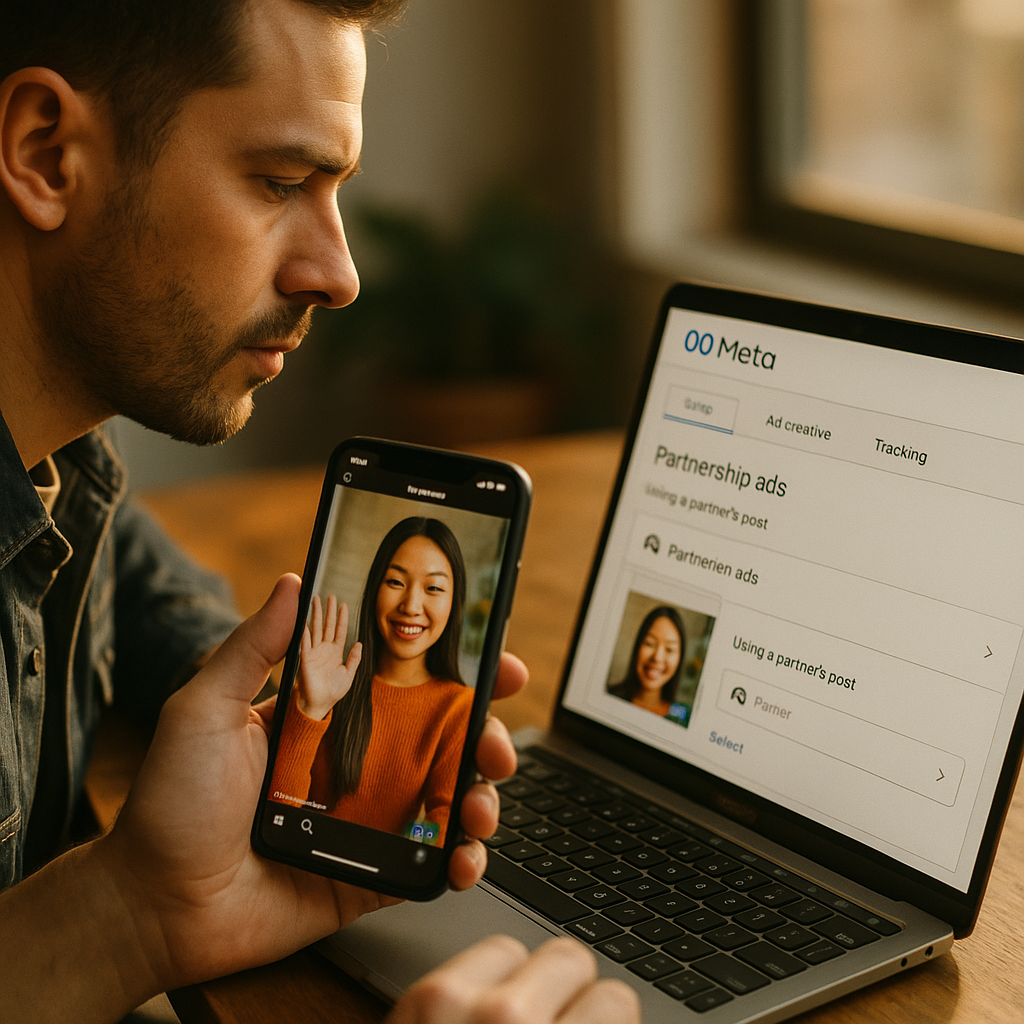
Meta’s Partnership Ads adoption jumped sharply after the brand content toggle became standard practice, and TikTok’s Spark Ads now regularly outperform standard in-feed creative on click-through rate. Yet most brand teams still treat organic creator posts and paid amplification as separate budgets, separate approvals, and separate workflows. That’s leaving performance on the table. This Partnership Ads setup guide walks through how to turn creator content you already paid for into paid media inventory, without renegotiating usage rights or waiting on a reshoot.
Why Organic Creator Content Is Sitting Idle
Here’s the uncomfortable math. A brand pays a creator $3,000 for a single TikTok video. It runs organically, gets 40,000 views, and then disappears into the feed’s history. Meanwhile, the brand’s paid media team is briefing a separate production budget for “creator style” ads because nobody connected the two workflows. That’s not a hypothetical. It’s the default state at most mid-market and enterprise brands running influencer programs today.
Partnership Ads (Meta’s branded content ad tool) and Spark Ads (TikTok’s native amplification format) exist specifically to close this gap. Both let brands run paid media using the creator’s actual handle, engagement history, and authentic post format, rather than stripping the content down into a generic ad unit. The result reads as organic in the feed even though it’s fully paid, which is precisely why it converts better.
Content that already earned organic engagement carries social proof into the paid environment. That’s a structural advantage no amount of studio production can replicate.
Partnership Ads vs. Spark Ads: Know the Mechanics Before You Build
These aren’t interchangeable terms, and conflating them is the most common early mistake. Meta’s Partnership Ads (the successor to the old “Branded Content Ads” toggle) require the creator to tag the brand as a business partner inside the original post, which then grants the brand permission to promote that post through Ads Manager under its own campaign objectives. TikTok’s Spark Ads work differently: the creator generates a video code or authorizes access through TikTok’s Creator Marketplace or Business Center, and the brand attaches that code directly to a Spark Ads campaign without needing to repost anything.
Both formats preserve the creator’s username, profile link, and existing comments and likes. Both also require explicit creator authorization before a single dollar of media spend goes live. Skip that step and you’re running an unauthorized ad, which on both platforms can trigger content takedowns and account-level penalties. If you’re also managing disclosure requirements across these campaigns, it’s worth cross-checking your workflow against disclosure compliance best practices before scaling spend.
The Setup Sequence: Meta Partnership Ads
Getting this right the first time saves you weeks of back-and-forth with creators who don’t understand why their content “isn’t showing up” in your ad account.
- Confirm the creator has a professional account. Personal accounts can’t tag branded content partners. This trips up more campaigns than any other step, especially with nano and micro creators who never converted their profile type.
- Have the creator publish with the Paid Partnership tag. Inside Instagram’s post composer, under Advanced Settings, the creator selects “Add Paid Partnership Label” and searches for your Business Manager. This is a manual step on the creator’s end, not something your team can do remotely.
- Accept the partnership inside Business Manager. Navigate to Brand Collabs Manager or the Partnership Ads hub and approve the tagged content. Until this happens, the post exists organically but isn’t eligible for promotion.
- Build the campaign in Ads Manager. Select the tagged post as your ad creative, choose your objective (conversions, traffic, reach), and apply your standard targeting and budget parameters.
- Set duration limits. Partnership Ads authorization typically lasts as long as the creator’s agreement specifies. Get this window written into your contract, not left to platform defaults.
One detail that catches brands off guard: the creator can revoke authorization at any time, and when they do, your live campaign gets paused instantly. Build revocation clauses and notice periods into every creator contract before you scale spend behind a post.
The Setup Sequence: TikTok Spark Ads
TikTok’s process is more streamlined but has its own friction points, particularly around authorization codes expiring mid-campaign.
- Request the video’s authorization code directly from the creator, or route it through TikTok Creator Marketplace if you sourced the creator there. The code generates from the creator’s own account settings under “Ad Settings” on the specific video.
- Codes expire after 30 days if unused. Build a tighter internal SLA than that. Waiting three weeks to activate a code you requested on day one is a common way campaigns quietly die in someone’s inbox.
- Paste the code into TikTok Ads Manager under the Spark Ads creative selection screen, then build your campaign around it using standard bidding and targeting tools.
- Layer in Smart+ or Automated Targeting if you want TikTok’s system to optimize delivery, though manual targeting still gives more control for brands running tight CPA targets.
Spark Ads also let you boost a video that’s still gaining organic momentum, which is the single highest-leverage move in this entire playbook. A post trending organically at hour six, boosted with paid spend at hour eight, compounds both signals simultaneously. Most brands miss this window entirely because their paid media approval chain takes days, not hours.
Which Content Actually Deserves the Ad Spend?
Not every organic post should get promoted. This is where a lot of budget gets wasted chasing follower counts instead of performance signals.
Look at save rate, share rate, and average watch time before you commit media dollars. A video with modest reach but a high save-to-view ratio is signaling strong purchase intent, and it will typically outperform a viral-reach post with shallow engagement once you put money behind it. If you need a framework for reading these signals before creative selection, the save and share signals guide breaks down exactly which metrics predict paid performance.
A post’s organic save rate is one of the strongest available predictors of how it will perform once boosted. Chasing raw reach numbers instead is how brands waste Spark Ads budget on content that never converts.
Watch time completion also matters more on TikTok Spark Ads than most media buyers assume. TikTok’s ad auction still weighs completion rate heavily when calculating delivery efficiency, so a 15-second video with a 90% completion rate can out-deliver a 45-second video that loses half its audience by the ten-second mark, even with identical spend.
Budgeting and Contract Terms Nobody Talks About
Your standard creator contract, the one written for a single organic deliverable, probably doesn’t cover paid amplification rights. This is the clause most brand legal teams overlook until a creator’s manager flags it mid-campaign and asks for additional compensation.
Build these terms into every creator agreement upfront:
- Usage window: How long can the brand run the content as a paid ad? 30 days, 90 days, or ongoing?
- Whitelisting scope: Does authorization cover Partnership Ads and Spark Ads specifically, or just generic “paid promotion”?
- Compensation structure: Flat fee, or a performance-based add-on tied to spend thresholds?
- Revocation notice: Minimum days’ notice before a creator can pull authorization on a live campaign.
Agencies negotiating at scale are increasingly building paid amplification rights into the base creator rate rather than treating it as a separate line item, since the operational overhead of a second negotiation round often costs more than the incremental fee itself. For context on how negotiation dynamics have shifted across the industry, the creator rate negotiation guide covers how rate cards are adjusting to reflect this bundled expectation.
Measuring What Actually Moved
Attribution gets messy fast when organic and paid signals blend into a single asset. Was that conversion driven by the original organic reach, or the paid boost layered on top three days later? Most brands can’t answer this cleanly without dedicated tracking.
Set up holdout comparisons where possible. Run Spark Ads or Partnership Ads on half your qualifying content and let the other half remain purely organic, then compare conversion lift on a like-for-like basis. This isn’t a perfect science, but it’s far better than assuming every dollar spent on amplification produced incremental value. Platforms like Sprout Social and native platform analytics dashboards both offer engagement breakdowns that help separate organic momentum from paid lift, though neither gives you a perfectly clean signal on its own.
If you’re running attribution across TikTok Shop and Instagram simultaneously, the reconciliation problem compounds. The TikTok Shop Instagram attribution guide walks through how commerce-layer platforms are starting to unify these cross-channel reporting gaps, which matters more once Spark Ads spend starts touching shoppable inventory directly.
Common Mistakes That Stall Campaigns
A few patterns show up repeatedly across brands adopting this workflow for the first time:
- Requesting authorization too late. By the time legal signs off and the creator generates a code, the content’s organic momentum has already faded.
- Ignoring disclosure requirements in paid contexts. The FTC’s endorsement guidance applies whether the content is organic or boosted, and regulators have made clear that paid amplification doesn’t reduce disclosure obligations. Review current guidance directly at the Federal Trade Commission site if your legal team needs a primary source.
- Treating every creator video as ad-ready. Some content simply wasn’t shot with a hook strong enough to survive the first three seconds of a cold-audience placement.
- Skipping platform-specific creative specs. A vertical TikTok video repurposed as a Partnership Ad on Instagram without cropping adjustments often underperforms simply due to framing mismatch.
Brands running high-volume Reels programs should also pair this workflow with a broader content signal strategy. The content signal optimization guide covers how discovery algorithms weigh early engagement, which directly affects which posts are worth escalating into paid Partnership Ads in the first place.
Next Step
Start by auditing your last 90 days of organic creator content for save rate and completion rate, then build the authorization request into your standard creator contract template so future campaigns don’t require a separate legal round every time you want to boost a high-performing post.
Frequently Asked Questions
What’s the difference between Partnership Ads and Spark Ads?
Partnership Ads is Meta’s tool for promoting Instagram and Facebook content that a creator has tagged as branded content, run through Ads Manager under the brand’s own account. Spark Ads is TikTok’s equivalent, using an authorization code the creator generates to let the brand boost the original video directly, preserving its likes, comments, and username.
Do I need a new contract for every piece of content I want to boost?
Not if you build amplification rights into your standard creator agreement upfront. Specify the usage window, platforms covered, and revocation notice period in the base contract so you’re not renegotiating every time a post performs well enough to justify paid spend.
Can a creator revoke authorization on a live campaign?
Yes, on both Meta and TikTok. Revocation pauses the ad immediately, which is why contracts should include a minimum notice period before a creator can pull authorization once media spend is live.
Which organic metrics predict good Spark Ads or Partnership Ads performance?
Save rate, share rate, and video completion rate are stronger predictors than raw view count or follower size. Content with high save-to-view ratios tends to signal purchase intent that carries through into paid performance.
Does boosting organic content still require FTC disclosure?
Yes. Paid amplification doesn’t remove or reduce disclosure obligations. The original paid partnership or sponsored tag needs to remain intact and visible regardless of whether the post is running organically or as a paid ad.
Top Influencer Marketing Agencies
The leading agencies shaping influencer marketing in 2026
Agencies ranked by campaign performance, client diversity, platform expertise, proven ROI, industry recognition, and client satisfaction. Assessed through verified case studies, reviews, and industry consultations.
Moburst

-
2

The Shelf
Boutique Beauty & Lifestyle Influencer AgencyA data-driven boutique agency specializing exclusively in beauty, wellness, and lifestyle influencer campaigns on Instagram and TikTok. Best for brands already focused on the beauty/personal care space that need curated, aesthetic-driven content.Clients: Pepsi, The Honest Company, Hims, Elf Cosmetics, Pure LeafVisit The Shelf → -
3

Audiencly
Niche Gaming & Esports Influencer AgencyA specialized agency focused exclusively on gaming and esports creators on YouTube, Twitch, and TikTok. Ideal if your campaign is 100% gaming-focused — from game launches to hardware and esports events.Clients: Epic Games, NordVPN, Ubisoft, Wargaming, Tencent GamesVisit Audiencly → -
4

Viral Nation
Global Influencer Marketing & Talent AgencyA dual talent management and marketing agency with proprietary brand safety tools and a global creator network spanning nano-influencers to celebrities across all major platforms.Clients: Meta, Activision Blizzard, Energizer, Aston Martin, WalmartVisit Viral Nation → -
5

The Influencer Marketing Factory
TikTok, Instagram & YouTube CampaignsA full-service agency with strong TikTok expertise, offering end-to-end campaign management from influencer discovery through performance reporting with a focus on platform-native content.Clients: Google, Snapchat, Universal Music, Bumble, YelpVisit TIMF → -
6

NeoReach
Enterprise Analytics & Influencer CampaignsAn enterprise-focused agency combining managed campaigns with a powerful self-service data platform for influencer search, audience analytics, and attribution modeling.Clients: Amazon, Airbnb, Netflix, Honda, The New York TimesVisit NeoReach → -
7

Ubiquitous
Creator-First Marketing PlatformA tech-driven platform combining self-service tools with managed campaign options, emphasizing speed and scalability for brands managing multiple influencer relationships.Clients: Lyft, Disney, Target, American Eagle, NetflixVisit Ubiquitous → -
8

Obviously
Scalable Enterprise Influencer CampaignsA tech-enabled agency built for high-volume campaigns, coordinating hundreds of creators simultaneously with end-to-end logistics, content rights management, and product seeding.Clients: Google, Ulta Beauty, Converse, AmazonVisit Obviously →