


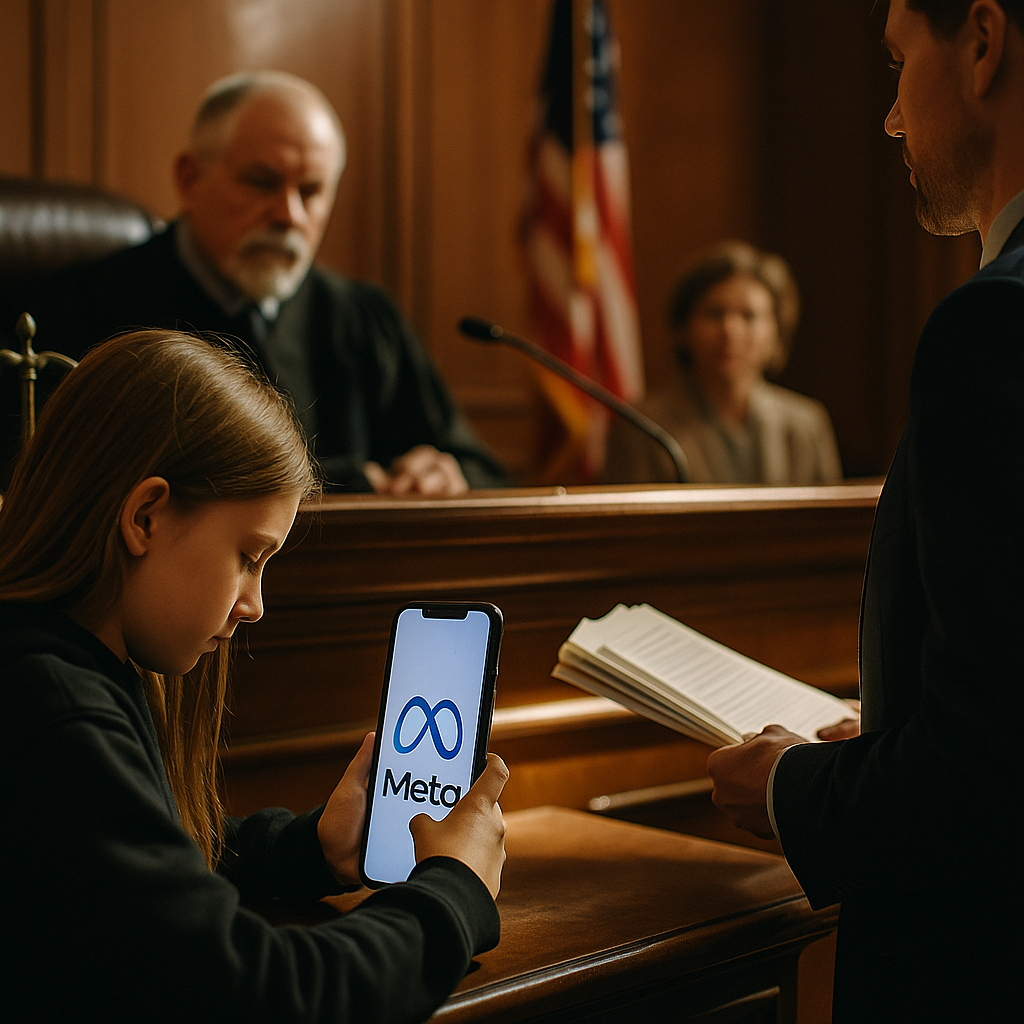
One settlement. Two continents. Zero grace period. Meta’s latest agreement over youth mental health harms didn’t just cost the company money, it handed regulators in Brussels, London, and a dozen US state attorneys general a template. If you run influencer programs, youth-adjacent campaigns, or platform-native content across the US and EU, the era of treating “youth safety” as a policy footnote is over. Global regulatory convergence on youth social media design is now the operating environment, not a future risk.
This isn’t a Meta problem. It’s a design problem, and design problems become procurement problems for every brand buying reach on these platforms.
What Meta’s Settlement Actually Signals
Strip away the headlines and the settlement boils down to a simple concession: platforms built engagement mechanics (infinite scroll, autoplay, algorithmic amplification, ephemeral content loops) that regulators now treat as inherently risky for minors, regardless of intent. Meta didn’t just agree to pay. It agreed to change default settings, restrict certain ad targeting for under-18 users, and submit to ongoing compliance audits.
That last part matters more than the dollar figure. Audits mean documentation. Documentation means brands running campaigns on these platforms will increasingly get pulled into disclosure requests, either directly or through their agency of record. If your influencer contracts don’t already specify age-verification standards for talent and audience segments, that gap just became a liability line item.
Regulators aren’t just fining platforms anymore. They’re rewriting the default settings brands have quietly relied on for a decade, and the audit trail now runs straight through advertiser accounts.
The EU Was Already There. The US Just Caught Up.
Here’s the part US-based CMOs keep underestimating: the EU’s Digital Services Act already mandates risk assessments for “systemic” platforms regarding minor safety, and the UK’s Online Safety Act enforced by the ICO has been forcing age-assurance rollouts since last year. Meta’s US settlement is the domestic market finally aligning with obligations European operations have absorbed for a while.
For brands running pan-Atlantic campaigns, this creates a compliance floor that’s no longer platform-specific. TikTok, YouTube, Snapchat, and Meta properties are all converging on similar mechanics: default private accounts for minors, restricted ad personalization, mandatory content warnings on certain categories, and age-verification gates that are getting harder, not easier, to bypass.
We’ve written before about how the TikTok settlement could bring Meta-style usage caps, and that pattern is now confirmed. Expect usage-limit defaults, not just content restrictions, to become the norm across every major platform your media plan touches.
Why This Isn’t Just a Legal Team Problem
Marketing leaders tend to route “regulatory” news straight to legal and forget about it. Bad move here. These design changes directly affect reach, targeting precision, and creator eligibility, three things that live squarely in the marketing budget.
Age-restricted ad targeting means your lookalike audiences built on under-18 engagement data are about to shrink or disappear. Default account privacy for minors means organic discoverability drops for any brand leaning on youth-skewing creators. And usage caps mean the addictive scroll behavior your media buy assumed will simply stop delivering the same frequency.
None of this is speculative. Statista’s platform usage data already shows measurable declines in teen daily active minutes on Meta properties following the first wave of default privacy changes rolled out ahead of the settlement. That trend line is the new baseline, not a blip.
What Brands Need to Audit Right Now
Don’t wait for your platform rep to explain this in a quarterly business review. Get ahead of it with an internal audit covering four areas:
- Creator age and audience verification. If a creator’s audience skews under 18, your campaign brief needs updated disclosure language and possibly a different platform entirely.
- Ad targeting parameters. Any campaign using interest-based or lookalike targeting that could sweep in minor audiences needs a manual review, not a set-and-forget automation.
- Contract language with agencies and creators. Standard influencer agreements rarely mention age-assurance compliance. That needs to change this quarter, not next year.
- Content format assumptions. Campaigns built around ephemeral, high-frequency posting (the exact mechanics regulators are targeting) need contingency plans if platforms throttle those formats for younger accounts.
This connects directly to the disclosure gaps we flagged in our coverage of the YouTube FTC probe on sponsored content. Regulators are no longer treating disclosure and design safety as separate enforcement tracks. They’re merging them, and the FTC’s own guidance increasingly references both in the same breath.
The Compliance Cost Is Real, But So Is the Opportunity
Here’s the contrarian take: brands that move first on age-assurance compliance and transparent youth-safe design get a trust dividend. Parents, regulators, and increasingly Gen Z consumers themselves are watching which brands scramble versus which brands were already built for this.
Compare this to what happened with programmatic buying transparency. Brands that got ahead of the trust gaps in programmatic influencer marketing built durable competitive advantage while slower movers spent budget on damage control.
The same pattern is playing out here. Compliance friction is a cost today. It’s a differentiator in eighteen months, once regulators start naming brands, not just platforms, in enforcement actions.
Age Verification Tech Is Becoming a Media Line Item
Platforms are rolling out third-party age-verification integrations (facial estimation, ID checks, parental consent flows) and some of that cost is quietly shifting to advertisers through reduced targeting inventory and higher CPMs on verified adult audiences. Meta’s advertiser resources already flag reduced audience sizes in youth-adjacent categories as a direct consequence.
Budget for this now. If your media plan assumes stable CPMs across youth-skewing content categories, model a 10 to 20 percent inventory contraction as verification gates tighten across US and EU markets simultaneously.
What This Means for Creator Vetting
Creator vetting processes built purely around engagement metrics and brand safety keyword filters are now insufficient. You need a layer that checks whether a creator’s content design (not just content topic) triggers youth-safety flags: autoplay-heavy formats, challenge content, or algorithmic bait mechanics that regulators are scrutinizing.
This is where the AI divide between cheap sourcing and costly vetting becomes a compliance issue, not just an efficiency one. Automated sourcing tools that don’t screen for design-pattern risk are going to surface creators who look brand-safe on paper but sit inside content formats regulators are actively targeting.
Brands leaning on micro-communities and niche creator pools have a natural advantage here. As we covered in our piece on how micro-communities beat mega-influencers on ROI, smaller, more contextual audiences are inherently easier to verify and less likely to trip the mass-scale engagement mechanics regulators are worried about.
The Next 12 Months: What to Watch
A few developments will determine how fast this convergence tightens further:
- Whether the EU’s DSA enforcement extends explicit design-mechanic bans (like infinite scroll defaults) beyond the platforms already under formal investigation.
- Whether US state attorneys general coordinate a multi-state standard rather than a patchwork of settlements, which would simplify compliance but raise the bar uniformly.
- How platforms like Snapchat and TikTok respond preemptively rather than reactively. Early movers on age-assurance design will likely face lighter scrutiny.
- Whether ad tech vendors build youth-safety compliance checks directly into DSP and influencer platform tooling, which would shift the burden from manual audits to automated flags.
None of these are hypothetical. Sprout Social’s platform trend tracking already shows every major network publishing youth-safety roadmap updates on a rolling quarterly basis, a cadence that didn’t exist eighteen months ago.
Frequently Asked Questions
FAQs
What does Meta’s settlement actually require the company to change?
Meta agreed to restrict certain ad targeting practices for users under 18, adjust default privacy and usage settings for minor accounts, and submit to ongoing third-party compliance audits, with findings subject to regulatory review.
Does this settlement apply to brands, or only to Meta?
The settlement legally binds Meta, but brands running campaigns on its platforms inherit operational effects: shrinking targeting inventory for youth audiences, new disclosure expectations, and potential exposure if campaign data intersects with minor user segments.
How does this connect to EU regulations like the Digital Services Act?
The DSA already requires systemic platforms to conduct risk assessments related to minor safety. Meta’s US settlement effectively aligns American enforcement with standards the EU has enforced for longer, creating a more uniform compliance floor across both markets.
What should brands do first to reduce regulatory risk?
Start with a four-part audit: creator and audience age verification, ad targeting parameter review, updated contract language with agencies and talent, and a reassessment of content formats that rely on high-frequency or ephemeral engagement mechanics.
Will youth-safety compliance increase media costs?
Likely yes. Reduced targeting inventory in youth-adjacent categories and new age-verification requirements are already contributing to inventory contraction, which brands should model into media plans rather than treat as a surprise.
Are smaller creator partnerships safer under these new rules?
Generally, yes. Micro-creator and niche community partnerships are easier to verify for audience composition and less likely to rely on the mass-scale algorithmic mechanics currently drawing regulatory scrutiny.
The brands that treat this convergence as a design brief, not just a legal memo, will keep their reach intact while competitors scramble to rebuild targeting models mid-quarter. Start the four-part audit this month, before the next settlement makes the decision for you.
Top Influencer Marketing Agencies
The leading agencies shaping influencer marketing in 2026
Agencies ranked by campaign performance, client diversity, platform expertise, proven ROI, industry recognition, and client satisfaction. Assessed through verified case studies, reviews, and industry consultations.
Moburst

-
2

The Shelf
Boutique Beauty & Lifestyle Influencer AgencyA data-driven boutique agency specializing exclusively in beauty, wellness, and lifestyle influencer campaigns on Instagram and TikTok. Best for brands already focused on the beauty/personal care space that need curated, aesthetic-driven content.Clients: Pepsi, The Honest Company, Hims, Elf Cosmetics, Pure LeafVisit The Shelf → -
3

Audiencly
Niche Gaming & Esports Influencer AgencyA specialized agency focused exclusively on gaming and esports creators on YouTube, Twitch, and TikTok. Ideal if your campaign is 100% gaming-focused — from game launches to hardware and esports events.Clients: Epic Games, NordVPN, Ubisoft, Wargaming, Tencent GamesVisit Audiencly → -
4

Viral Nation
Global Influencer Marketing & Talent AgencyA dual talent management and marketing agency with proprietary brand safety tools and a global creator network spanning nano-influencers to celebrities across all major platforms.Clients: Meta, Activision Blizzard, Energizer, Aston Martin, WalmartVisit Viral Nation → -
5

The Influencer Marketing Factory
TikTok, Instagram & YouTube CampaignsA full-service agency with strong TikTok expertise, offering end-to-end campaign management from influencer discovery through performance reporting with a focus on platform-native content.Clients: Google, Snapchat, Universal Music, Bumble, YelpVisit TIMF → -
6

NeoReach
Enterprise Analytics & Influencer CampaignsAn enterprise-focused agency combining managed campaigns with a powerful self-service data platform for influencer search, audience analytics, and attribution modeling.Clients: Amazon, Airbnb, Netflix, Honda, The New York TimesVisit NeoReach → -
7

Ubiquitous
Creator-First Marketing PlatformA tech-driven platform combining self-service tools with managed campaign options, emphasizing speed and scalability for brands managing multiple influencer relationships.Clients: Lyft, Disney, Target, American Eagle, NetflixVisit Ubiquitous → -
8

Obviously
Scalable Enterprise Influencer CampaignsA tech-enabled agency built for high-volume campaigns, coordinating hundreds of creators simultaneously with end-to-end logistics, content rights management, and product seeding.Clients: Google, Ulta Beauty, Converse, AmazonVisit Obviously →