


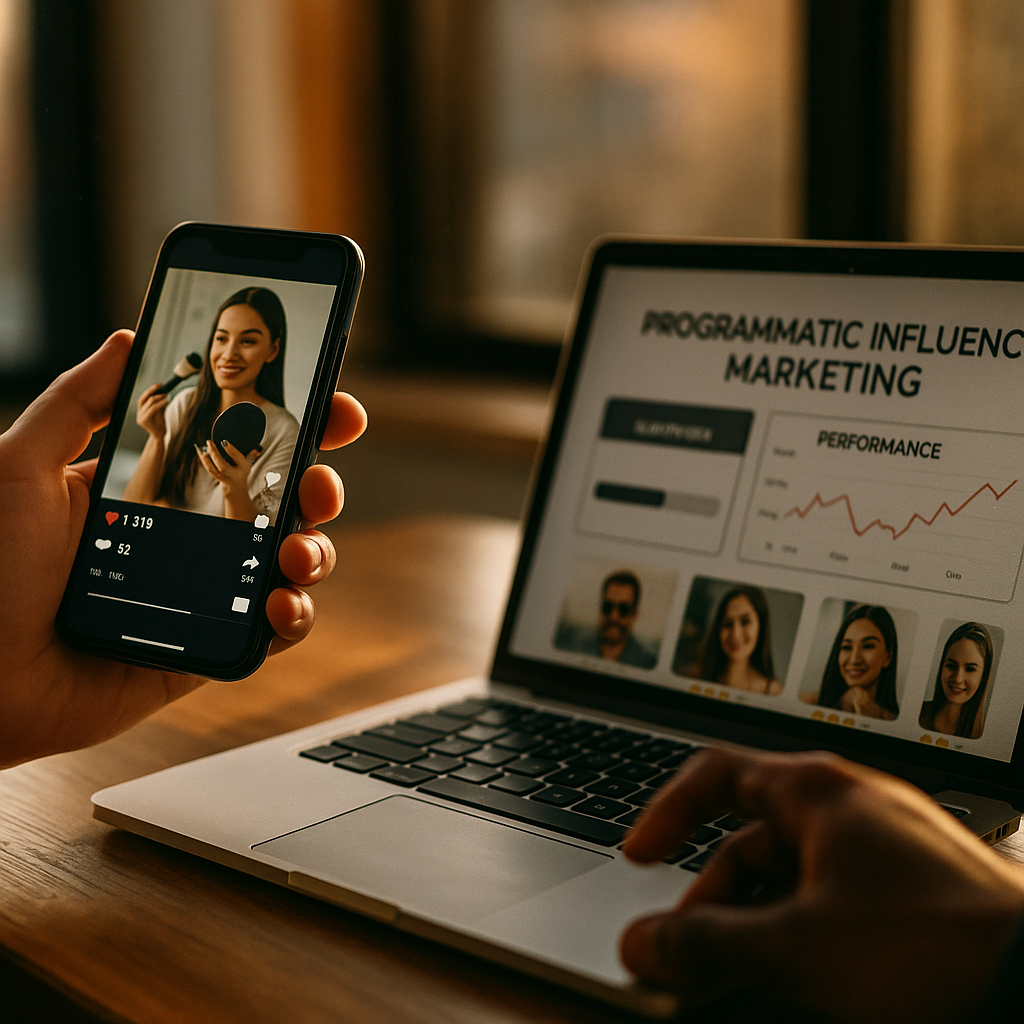
Nearly 40% of brands now use some form of automated matching to find creators, according to recent platform surveys, yet fewer than 15% let algorithms handle pricing or contracting without human review. That gap is the real story of programmatic influencer marketing right now. Everyone wants the speed. Almost nobody trusts the machine to close the deal.
What “Programmatic-ification” Actually Means Here
Borrowed from ad tech, the term describes software that discovers creators, benchmarks their rates, and generates contracts with minimal human intervention. Think of it as the influencer equivalent of a demand-side platform: you set parameters (audience, category, budget ceiling), and the system does the matching, negotiating, and paperwork.
Vendors like CreatorIQ, Aspire, and a wave of newer AI-native tools now offer some version of this stack. The pitch is seductive: cut sourcing time from weeks to hours, standardize pricing so nobody overpays, and eliminate the contract back-and-forth that stalls campaigns. For a brand running hundreds of creator relationships a quarter, that efficiency math is hard to ignore.
The Efficiency Case Brands Actually Care About
Let’s be fair to the automation side. Manual creator vetting is genuinely brutal at scale. A mid-size CPG brand running 300 micro-creator partnerships a year cannot have a human review every audience quality report, every past brand safety flag, every rate negotiation. That’s not romantic artisanal marketing, that’s a bottleneck.
Programmatic tools solve real operational pain: they compress sourcing timelines, they reduce duplicate outreach, and they create audit trails that compliance teams actually like. Our own reporting on how AI creator workflows cut campaign timelines found that discovery-to-outreach windows dropped from an average of nine days to under six hours in some tool stacks. That’s not marginal. That’s a structural shift in how fast a brand can move on a trend.
Speed to shortlist is no longer the differentiator it once was. The differentiator is whether the shortlist is actually right, and algorithms are far better at speed than at judgment.
Where Discovery Automation Genuinely Works
- Filtering large creator pools by audience demographics and engagement thresholds
- Flagging fake followers or suspicious engagement patterns at scale
- Surfacing lookalike creators based on past campaign performers
- Automating outreach sequencing and follow-up cadences
These are pattern-matching tasks. Machines are good at pattern matching. Nobody is arguing brands should hand-scroll Instagram anymore to find micro-creators in a niche category.
Where the Algorithm Runs Out of Judgment
Discovery is the easy part. Pricing and contracting are where programmatic systems start making promises they can’t keep. We’ve written before about why AI can’t fix influencer fee pricing friction, and the core issue hasn’t changed: creator rates aren’t a function of clean, comparable inputs the way programmatic ad inventory is. A 50,000-follower creator in beauty might command triple the rate of a similarly sized creator in B2B SaaS content, not because of any metric the algorithm can see, but because of brand fit, negotiating leverage, and the creator’s own sense of scarcity.
Algorithms benchmark against historical data. But creator rates are shifting fast, partly because of the widening creator income gap that’s changing who has leverage in a negotiation. A pricing model trained on last year’s deals will systematically underprice creators whose value just spiked, and overpay ones whose relevance just faded. That’s not a data problem you patch with more data. It’s a judgment problem.
There’s also a vetting gap that automation quietly papers over. Cheap, fast sourcing tools are great at finding creators who match a spreadsheet. They’re much worse at catching the reputational landmines: a controversial post from two years ago, a brand safety issue buried in a comment section, a creator whose audience skews wildly different from what their bio suggests. Our analysis of the creator economy’s AI divide between cheap sourcing and costly vetting found that brands using automation-only pipelines saw brand safety incident rates nearly double compared to hybrid human-AI review processes.
Contracting End-to-End: The Compliance Risk Nobody’s Pricing In
This is the part that should worry legal and compliance teams more than marketing. Automated contracting tools generate agreements from templates, populate deliverables, and route for e-signature. Fast, tidy, scalable. But contracts aren’t just paperwork, they’re the mechanism that assigns liability when something goes wrong.
The Federal Trade Commission has been increasingly aggressive about disclosure enforcement, and our coverage of the YouTube FTC probe into sponsored content disclosure gaps shows exactly how expensive a templated, unreviewed contract clause can become when it fails to account for platform-specific disclosure requirements. An algorithm generating boilerplate at scale doesn’t know that a state’s influencer marketing rules just changed, or that a specific platform tightened its branded content policy last quarter. Templates don’t update themselves for regulatory drift. People do.
A contract that scales perfectly but fails on one clause, disclosure, usage rights, or morality provisions, doesn’t fail small. It fails at the scale you built it for.
Usage rights are another quiet minefield. Automated contracts often default to standard terms (say, 90-day organic usage) that don’t account for a brand’s actual paid amplification plans. Given that amplification spend is now approaching sponsorship fees in many programs, a mismatched usage clause can mean renegotiating dozens of contracts mid-campaign, or worse, running paid media on content you never licensed properly. That’s not a hypothetical. It’s a recurring support ticket at agencies running high creator volumes.
Trust Is the Metric Automation Struggles to Show
There’s a broader pattern showing up across marketing AI generally, not just in influencer tooling. Our reporting on how AI agents underperform and widen the marketing trust gap found that even when automated systems hit their KPIs on paper, marketing leaders reported lower confidence in the outputs compared to human-reviewed work. The gap wasn’t performance, it was explainability. When a creator relationship goes sideways, someone needs to be able to explain why that creator was selected, at that rate, under those terms. “The algorithm chose it” is not an answer that satisfies a CMO, a legal team, or a creator who feels undervalued.
That trust deficit matters commercially too. Creators talk. A creator community that feels it’s being priced by a black box, with no room to negotiate or explain context, will quietly steer toward brands that still treat partnerships as relationships rather than line items. Given that platforms are shifting toward evergreen creator infrastructure instead of one-off bursts, the brands winning long-term access to top creators are the ones building reputations as fair, human-reviewed partners, not the fastest checkout counter in the market.
A Hybrid Framework That Actually Works
The realistic answer isn’t “automate everything” or “reject automation entirely.” It’s knowing which decisions tolerate machine judgment and which don’t.
- Automate: initial discovery, audience quality screening, outreach sequencing, deliverable tracking, and payment processing.
- Keep human: final creator selection for high-visibility campaigns, rate negotiation above a defined threshold, contract review for usage rights and disclosure clauses, and any partnership involving sensitive categories (health, finance, kids).
- Hybrid review: pricing benchmarks (let the algorithm suggest, let a human approve outliers), and brand safety flags (automated first pass, human final call on borderline cases).
This mirrors what’s happening broadly in the industry, where the creator economy is shifting from martech tools to managed services. Brands are realizing that buying software isn’t the same as buying outcomes. Someone still has to own judgment calls, and increasingly that’s becoming a managed service layer sitting on top of the automation, not a replacement for it.
Set a dollar threshold for human review. Anything under, say, $2,000 per creator deal can run through automated pricing and contracting with spot audits. Anything above gets a human negotiator and legal eyes on the contract. That single rule prevents the two most common programmatic failures: overpaying on high-value deals due to bad benchmarking, and under-protecting the brand on contracts that actually carry legal exposure.
Data on creator rate benchmarking is also worth tracking externally. Resources like eMarketer’s creator economy research and Statista’s influencer marketing data can help calibrate whether your automated pricing tool is actually tracking market reality or drifting from it. If your algorithm’s benchmarks haven’t been cross-checked against third-party data in six months, that’s a flag, not a feature.
FAQs
Is fully automated influencer contracting legally risky?
Yes, if contracts aren’t reviewed for jurisdiction-specific disclosure rules and platform policy updates. Template-based systems don’t automatically adjust for regulatory changes, so legal review of automated contract templates should happen at least quarterly.
Can algorithms set fair creator rates?
They can suggest a reasonable starting benchmark based on historical data, but they struggle with fast-moving leverage shifts, niche market premiums, and negotiation context. Most brands use algorithmic pricing as a floor, not a final number.
What’s the biggest risk of programmatic creator discovery?
Brand safety vetting gaps. Automated discovery tools are optimized for audience-fit matching, not deep reputational review, which means brands relying solely on automation see higher rates of brand safety incidents.
Should small brands avoid programmatic tools altogether?
No. Discovery automation actually helps smaller teams punch above their resourcing weight. The risk mostly shows up at the pricing and contracting stage, so smaller brands should automate sourcing but keep final approvals human.
How do I know if my automation vendor’s pricing data is reliable?
Ask how often their benchmarks are updated and whether they cross-reference third-party market data. If a vendor can’t explain their pricing methodology clearly, treat their numbers as a starting point, not a verdict.
Next step: Set a dollar threshold this quarter, automate everything below it, and route everything above it through human pricing and legal review. That single rule will do more to manage programmatic risk than any new tool purchase.
FAQs
Is fully automated influencer contracting legally risky?
Yes, if contracts aren’t reviewed for jurisdiction-specific disclosure rules and platform policy updates. Template-based systems don’t automatically adjust for regulatory changes, so legal review of automated contract templates should happen at least quarterly.
Can algorithms set fair creator rates?
They can suggest a reasonable starting benchmark based on historical data, but they struggle with fast-moving leverage shifts, niche market premiums, and negotiation context. Most brands use algorithmic pricing as a floor, not a final number.
What’s the biggest risk of programmatic creator discovery?
Brand safety vetting gaps. Automated discovery tools are optimized for audience-fit matching, not deep reputational review, which means brands relying solely on automation see higher rates of brand safety incidents.
Should small brands avoid programmatic tools altogether?
No. Discovery automation actually helps smaller teams punch above their resourcing weight. The risk mostly shows up at the pricing and contracting stage, so smaller brands should automate sourcing but keep final approvals human.
How do I know if my automation vendor’s pricing data is reliable?
Ask how often their benchmarks are updated and whether they cross-reference third-party market data. If a vendor can’t explain their pricing methodology clearly, treat their numbers as a starting point, not a verdict.
Top Influencer Marketing Agencies
The leading agencies shaping influencer marketing in 2026
Agencies ranked by campaign performance, client diversity, platform expertise, proven ROI, industry recognition, and client satisfaction. Assessed through verified case studies, reviews, and industry consultations.
Moburst

-
2

The Shelf
Boutique Beauty & Lifestyle Influencer AgencyA data-driven boutique agency specializing exclusively in beauty, wellness, and lifestyle influencer campaigns on Instagram and TikTok. Best for brands already focused on the beauty/personal care space that need curated, aesthetic-driven content.Clients: Pepsi, The Honest Company, Hims, Elf Cosmetics, Pure LeafVisit The Shelf → -
3

Audiencly
Niche Gaming & Esports Influencer AgencyA specialized agency focused exclusively on gaming and esports creators on YouTube, Twitch, and TikTok. Ideal if your campaign is 100% gaming-focused — from game launches to hardware and esports events.Clients: Epic Games, NordVPN, Ubisoft, Wargaming, Tencent GamesVisit Audiencly → -
4

Viral Nation
Global Influencer Marketing & Talent AgencyA dual talent management and marketing agency with proprietary brand safety tools and a global creator network spanning nano-influencers to celebrities across all major platforms.Clients: Meta, Activision Blizzard, Energizer, Aston Martin, WalmartVisit Viral Nation → -
5

The Influencer Marketing Factory
TikTok, Instagram & YouTube CampaignsA full-service agency with strong TikTok expertise, offering end-to-end campaign management from influencer discovery through performance reporting with a focus on platform-native content.Clients: Google, Snapchat, Universal Music, Bumble, YelpVisit TIMF → -
6

NeoReach
Enterprise Analytics & Influencer CampaignsAn enterprise-focused agency combining managed campaigns with a powerful self-service data platform for influencer search, audience analytics, and attribution modeling.Clients: Amazon, Airbnb, Netflix, Honda, The New York TimesVisit NeoReach → -
7

Ubiquitous
Creator-First Marketing PlatformA tech-driven platform combining self-service tools with managed campaign options, emphasizing speed and scalability for brands managing multiple influencer relationships.Clients: Lyft, Disney, Target, American Eagle, NetflixVisit Ubiquitous → -
8

Obviously
Scalable Enterprise Influencer CampaignsA tech-enabled agency built for high-volume campaigns, coordinating hundreds of creators simultaneously with end-to-end logistics, content rights management, and product seeding.Clients: Google, Ulta Beauty, Converse, AmazonVisit Obviously →