


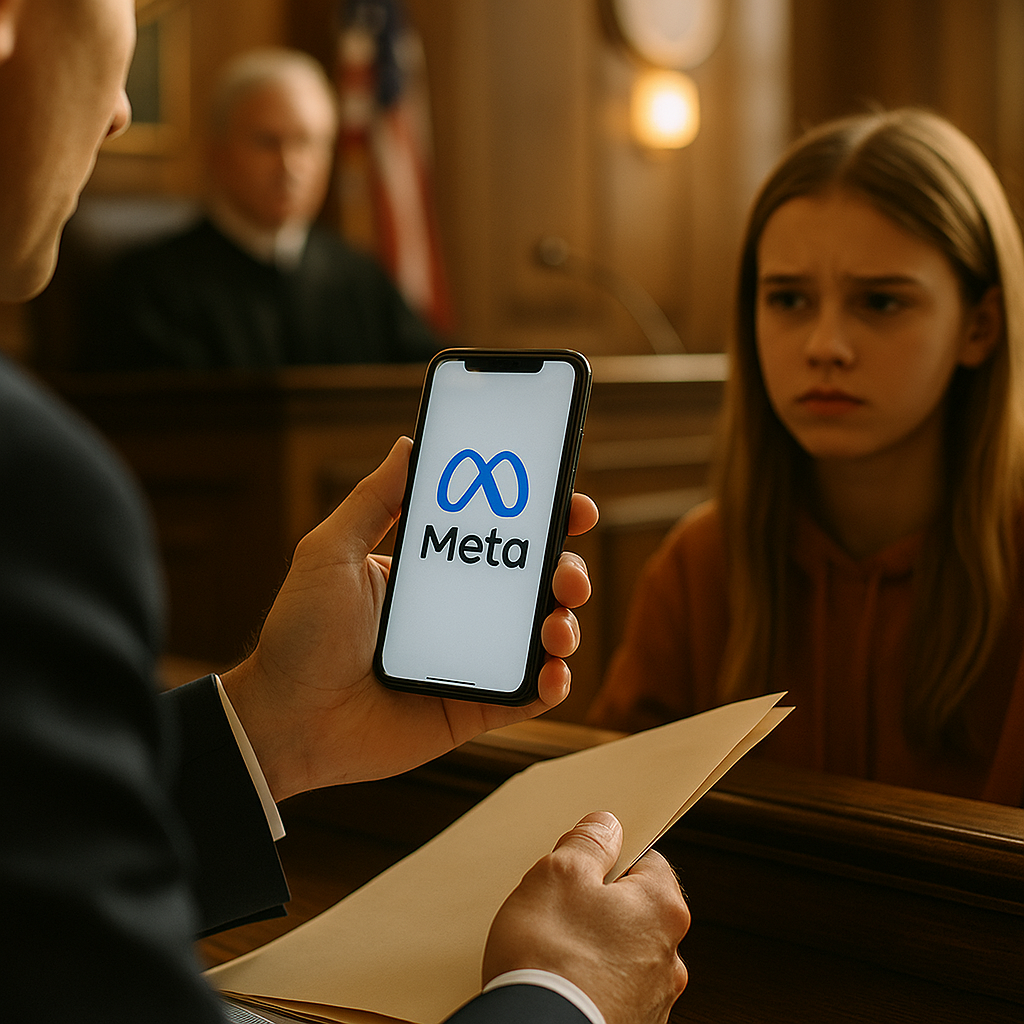
$459 million. That’s what Meta agreed to pay to resolve claims tied to the Cambridge Analytica scandal, layered on top of a separate 47-state settlement over Instagram and Facebook’s handling of minors’ data. Combined, these two actions just rewrote the baseline for youth data privacy compliance in every brand campaign that touches a platform, a creator, or a pixel. If your legal team hasn’t briefed your marketing org yet, they will soon.
What Actually Happened, and Why It’s Bigger Than Meta’s Problem
The Cambridge Analytica settlement closes out years of litigation stemming from the 2018 data harvesting scandal, where a political consultancy scraped tens of millions of Facebook profiles without meaningful consent. The 47-state accord is a separate, more recent action targeting how Instagram and Facebook designed features that allegedly kept minors engaged while collecting behavioral and location data that fed ad targeting systems. Attorneys general across nearly every state signed on, which is rare enough to signal a genuine bipartisan consensus: platforms cannot treat teen engagement data as fair game just because a checkbox says “13 or older.”
Neither settlement admits wrongdoing in the traditional sense, but both come bundled with binding operational changes: audits, default privacy settings for minors, restrictions on ad targeting using inferred age or behavioral signals, and ongoing regulatory monitoring. That last part matters most for brands. Monitoring means these terms don’t sunset quietly. They become the new floor.
When 47 state attorneys general agree on anything, it stops being a platform’s compliance headache and becomes an industry standard that every brand contract needs to reflect.
Why Brands Can’t Just Watch From the Sidelines
It’s tempting to read this as “Meta’s mess, Meta’s fine.” That reading is wrong, and expensive if you act on it. Brand campaigns running through Instagram creator partnerships, Facebook ad targeting, or lookalike audiences built on Meta’s ad platform are downstream beneficiaries of the exact data practices now under legal scrutiny. Regulators have made clear in adjacent actions, including the TikTok COPPA settlement, that platform-level penalties don’t shield advertisers who knowingly or negligently targeted minors using the resulting data pipes.
Think about your own campaign stack for a second. Do you know whether your custom audiences include inferred-age segments built before the accord’s restrictions took effect? Do your influencer contracts specify who owns first-party data collected during a branded challenge that skews teen? If you’re shrugging, you’re not alone, but that’s exactly the gap enforcement teams are now trained to find.
The Numbers Behind the Shift
Youth-focused enforcement has accelerated sharply. According to FTC enforcement records, penalties tied to children’s and teens’ data have multiplied across the last several enforcement cycles, spanning platforms, ad tech vendors, and now app-level game and social products. Add state-level momentum from the multistate accord, and you have a regulatory environment where “the platform handles compliance” is no longer a defensible brand position.
Marketers who track platform policy shifts through resources like eMarketer’s youth privacy coverage have watched this build for a while. What’s new is the dollar figure and the multistate unanimity, both of which raise the reputational stakes of getting caught flat-footed.
Does This Apply to Brands That Don’t Own the Platform?
Yes, and this is the part compliance teams keep underestimating. Brands don’t need to build the tracking infrastructure to be liable for using it. If your agency built a custom audience using Meta’s ad tools before the accord’s new defaults took hold, and that audience included users now understood to be minors mislabeled as adults, your campaign used data the settlement explicitly targets. The FTC’s expanded stance on endorsement and data practices, detailed in coverage of FTC endorsement rules, reflects a broader pattern: enforcement is following the data trail, not just the platform logo.
This is especially true for campaigns using creator content that references or targets teen audiences. If a brand’s influencer brief instructs a creator to “keep it fun for younger fans” without a documented age-assurance process, that brief itself becomes evidence in a future inquiry. The Meta teen safety settlement analysis we published earlier this year flagged exactly this exposure, and the 47-state accord only sharpens it.
The Compliance Checklist Nobody Wants to Run, But Should
Here’s the honest version of what your team needs to audit in the next quarter, not the next year:
- Audience segmentation logs. Pull every custom and lookalike audience used in the past 12 months. Flag any built from engagement signals rather than verified first-party opt-in data.
- Creator contract language. Confirm contracts specify data handling responsibilities, age-assurance obligations, and who bears liability if a creator’s audience skews younger than disclosed.
- Data processing agreements with ad tech vendors. If you’re using AI-driven affinity scoring or lookalike modeling, revisit your data processing addendum for AI affinity scoring to ensure it accounts for minor-status inference risk.
- Regional variance. Compliance obligations differ by jurisdiction, and brands running global campaigns need a framework that maps to the strictest applicable standard, similar to the approach outlined in our review of UK, EU, and Australia youth safety rules.
- State-level exposure. Emerging state privacy statutes, like the one covered in our Vermont privacy law breakdown, are adding layered obligations on top of federal and platform-level rules.
None of this is glamorous work. But the alternative is discovering these gaps during a state AG inquiry, which is a considerably worse place to learn your audience-targeting logic was noncompliant.
Age Assurance Is Becoming a Line Item, Not an Afterthought
One quiet consequence of the accord is that “age assurance” now needs a budget line, not a footnote in a platform’s terms of service. Brands running livestream commerce or shoppable content, particularly on TikTok Shop, have already seen this play out through mechanisms detailed in our coverage of age verification laws meeting livestream sales and the related cross-border compliance matrix. Meta’s settlements push the same logic across Instagram and Facebook: passive age self-declaration is no longer treated as sufficient diligence, and brands relying on it inherit the risk.
This shift also intersects with AI-driven personalization. Platforms increasingly use behavioral inference, not stated age, to build ad audiences and recommendation feeds. That means a “confirmed adult” account can still generate signals a regulator interprets as minor-targeting if the underlying behavior patterns skew young. Brands using AI chat interfaces for product discovery should review how those systems handle inferred demographic data, a topic we unpacked in Meta AI chat data and ad targeting.
Passive age self-declaration is no longer a defensible compliance strategy. Regulators are now evaluating behavioral inference, not just birthdate fields.
What Agencies Should Tell Clients This Quarter
If you’re on the agency side, the settlement gives you a rare gift: a concrete, headline-grade reason to push clients toward compliance investments they’ve been deferring. Frame it as risk mitigation with a clear ROI story. A one-time audit of audience data and creator contracts costs a fraction of what a state AG inquiry costs in legal fees, brand damage, and paused campaigns. Use the settlement figures as the anchor point in budget conversations. $459 million is a number that gets a CFO’s attention fast.
Practically, this means updating standard operating procedures for campaign launches. Add an age-assurance checkpoint before any custom audience goes live. Require creators to disclose known audience demographics, not just follower counts. Build a documented review step for any campaign targeting categories historically popular with teens, gaming, beauty, fast fashion, and mobile apps chief among them. Resources like HubSpot’s marketing compliance guides and platform-specific policy pages from Meta for Business are useful starting points, but they won’t replace an internal audit tailored to your actual campaign history.
The Bottom Line for Campaign Planning
Regulatory settlements of this size rarely stay contained to the company that paid them. They set expectations that spread to every brand using the same infrastructure, the same targeting logic, and the same creator ecosystems. Treat this as the moment to formalize youth data privacy compliance as a standing line item in campaign planning, not a reactive scramble the next time a headline breaks.
Frequently Asked Questions
What triggered Meta’s $459 million Cambridge Analytica settlement?
The settlement resolves long-running litigation over Meta’s failure to prevent unauthorized third-party access to user data in the 2018 Cambridge Analytica scandal, where a political consultancy harvested profile data from tens of millions of users without proper consent.
What does the 47-state Instagram and Facebook accord actually require?
It requires design and policy changes affecting minors, including restrictions on ad targeting built from behavioral or inferred-age data, updated default privacy settings for teen accounts, and ongoing compliance monitoring by participating state attorneys general.
Are brands legally exposed even if they don’t own the platform?
Yes. Brands and agencies that used ad targeting, custom audiences, or creator partnerships built on the data practices now under scrutiny can face separate liability, particularly if internal records show awareness of demographic mismatches or lax age-assurance processes.
What’s the fastest first step for a brand compliance team?
Audit existing custom and lookalike audiences for any built from behavioral or engagement data rather than verified opt-in sources, and review creator contracts to confirm data handling and age-assurance obligations are explicitly documented.
Does this affect campaigns outside the United States?
Indirectly, yes. Global platforms typically apply policy changes broadly rather than region by region, and brands running international campaigns should still map their obligations against the strictest applicable regional standard.
Top Influencer Marketing Agencies
The leading agencies shaping influencer marketing in 2026
Agencies ranked by campaign performance, client diversity, platform expertise, proven ROI, industry recognition, and client satisfaction. Assessed through verified case studies, reviews, and industry consultations.
Moburst

-
2

The Shelf
Boutique Beauty & Lifestyle Influencer AgencyA data-driven boutique agency specializing exclusively in beauty, wellness, and lifestyle influencer campaigns on Instagram and TikTok. Best for brands already focused on the beauty/personal care space that need curated, aesthetic-driven content.Clients: Pepsi, The Honest Company, Hims, Elf Cosmetics, Pure LeafVisit The Shelf → -
3

Audiencly
Niche Gaming & Esports Influencer AgencyA specialized agency focused exclusively on gaming and esports creators on YouTube, Twitch, and TikTok. Ideal if your campaign is 100% gaming-focused — from game launches to hardware and esports events.Clients: Epic Games, NordVPN, Ubisoft, Wargaming, Tencent GamesVisit Audiencly → -
4

Viral Nation
Global Influencer Marketing & Talent AgencyA dual talent management and marketing agency with proprietary brand safety tools and a global creator network spanning nano-influencers to celebrities across all major platforms.Clients: Meta, Activision Blizzard, Energizer, Aston Martin, WalmartVisit Viral Nation → -
5

The Influencer Marketing Factory
TikTok, Instagram & YouTube CampaignsA full-service agency with strong TikTok expertise, offering end-to-end campaign management from influencer discovery through performance reporting with a focus on platform-native content.Clients: Google, Snapchat, Universal Music, Bumble, YelpVisit TIMF → -
6

NeoReach
Enterprise Analytics & Influencer CampaignsAn enterprise-focused agency combining managed campaigns with a powerful self-service data platform for influencer search, audience analytics, and attribution modeling.Clients: Amazon, Airbnb, Netflix, Honda, The New York TimesVisit NeoReach → -
7

Ubiquitous
Creator-First Marketing PlatformA tech-driven platform combining self-service tools with managed campaign options, emphasizing speed and scalability for brands managing multiple influencer relationships.Clients: Lyft, Disney, Target, American Eagle, NetflixVisit Ubiquitous → -
8

Obviously
Scalable Enterprise Influencer CampaignsA tech-enabled agency built for high-volume campaigns, coordinating hundreds of creators simultaneously with end-to-end logistics, content rights management, and product seeding.Clients: Google, Ulta Beauty, Converse, AmazonVisit Obviously →