


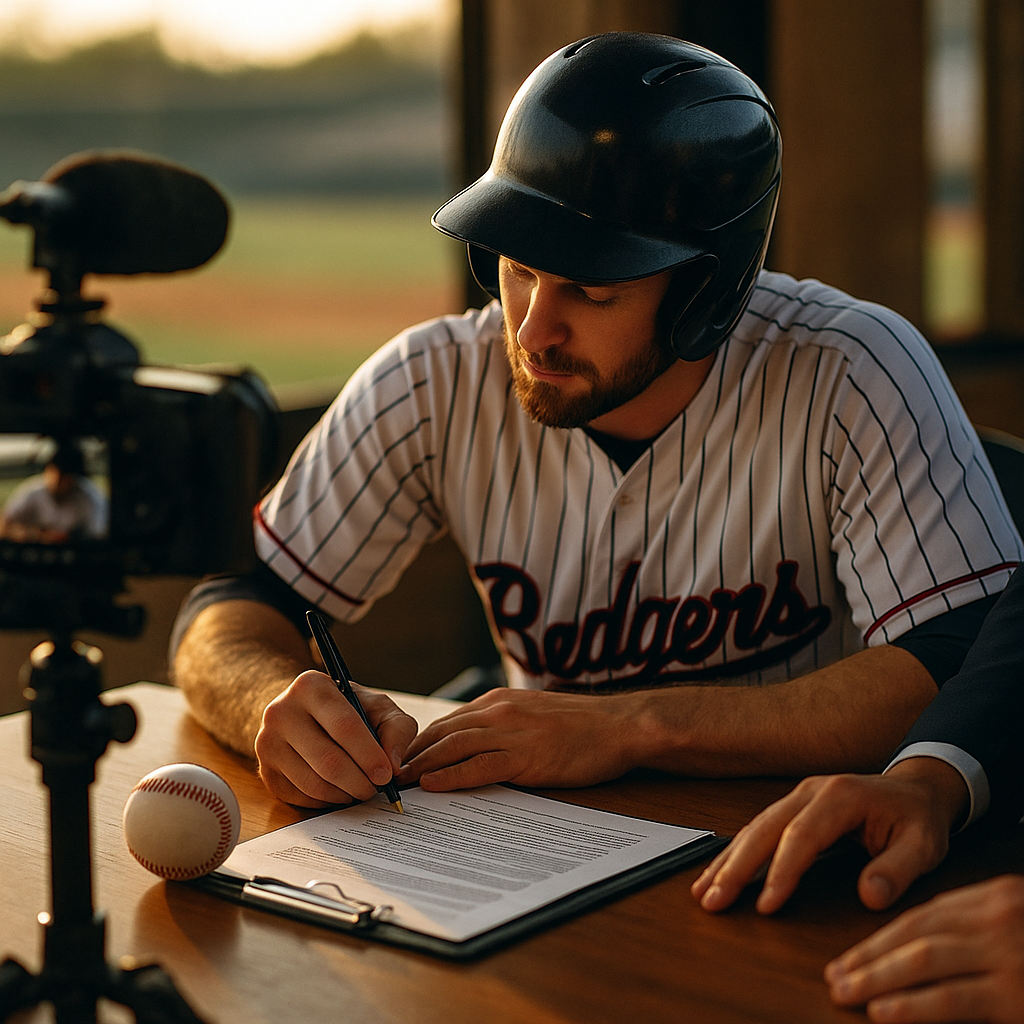
Buying into a centralized athlete content network sounds efficient. One contract, dozens of players, massive reach. But if your rights agreement isn’t built for the architecture of a collective licensing layer, you’re buying exposure without control — and that’s a risk most brand compliance teams don’t price in until after the campaign launches.
What Makes MLB Players Inc. Creator Network Deals Structurally Different
MLB Players Inc. is the licensing and marketing arm of the MLB Players Association. When brands access its creator network, they aren’t contracting with individual players. They’re buying into a group licensing framework that pools player rights — name, image, likeness, and increasingly, social content — under a collective umbrella. That’s a fundamentally different legal and commercial structure than a standard influencer deal.
In a traditional player deal, your contract counterparty is the athlete (or their agent). In the MLBPI model, the counterparty is the collective licensing entity. That single shift changes how you draft exclusivity provisions, how attribution flows, how content approval works, and critically, how revenue-share obligations cascade down to individual players. Brands that apply boilerplate influencer contract language to this structure often find themselves with ambiguous usage rights, contested attribution data, and no clean mechanism to pull content from a single player if their off-field conduct creates brand risk.
Group licensing agreements require a different contract architecture than individual influencer deals. The rights you think you’re buying at the collective level may not be enforceable at the individual player level without explicit pass-through language in the master agreement.
Rights Agreements: What to Nail Down Before You Sign
The first thing to clarify is scope. Group licensing deals are often sold on breadth — “access to X players across Y platforms.” But breadth without specificity is a legal trap. Your rights agreement needs to define, at minimum:
- Content type: Is this social posts only, or does it include long-form video, podcasts, and AI-generated likenesses? The MLBPI network is expanding its content formats. Make sure your agreement explicitly lists what’s included and what requires a separate license.
- Platform scope: Rights for Instagram posts do not automatically transfer to TikTok reposts or YouTube Shorts. Enumerate every platform, including paid distribution channels like Meta Ads Manager and Google DV360.
- Exclusivity tier: Full category exclusivity across the entire roster is rarely what you’re actually getting. Most group deals offer tiered exclusivity — exclusive within a subset of players, or exclusive within a category for a defined period. Require the agreement to name the exclusivity tier explicitly, not describe it in general terms.
- Content modification rights: Can your creative team edit player-generated content? Add voiceover? Combine clips from multiple players into a single asset? These are editorial rights that must be licensed separately from base usage rights. Given the rise of AI-assisted editing, review your AI remix contract language before finalizing any multi-athlete deal.
- Duration and renewal mechanics: Group deals often auto-renew on terms that favor the licensor. Build in a 90-day notice window before renewal, with a right to renegotiate if the active player roster changes by more than 15%.
One clause that brands consistently underinvest in: the right to audit the active roster. Players retire, get traded, face disciplinary action. If the network doesn’t give you a contractual mechanism to approve or remove specific players from your campaign activation, you’re exposed.
Revenue-Share Terms in Collective Licensing Models
This is where group deals get operationally messy. In a direct player deal, the payment structure is simple: flat fee, performance bonus, or hybrid. In a collective model, your brand pays the licensing entity, and the entity distributes to players according to its internal allocation methodology. You typically don’t control that distribution. But you should care about it for two reasons.
First, if the revenue-share formula is opaque, you can’t verify that the players you activated against actually received meaningful compensation. That matters for authenticity and compliance — the FTC has consistently signaled that material connections extend beyond direct payment to include any form of compensation flowing from brand activities, including group licensing pools.
Second, revenue-share opacity creates attribution conflicts. If a player’s team or agent disputes the allocation they received versus what your brand paid for activations involving that player specifically, you can find your campaign assets held in dispute. That’s operational risk.
Practical contractual remedies:
- Require the master agreement to include a revenue allocation methodology appendix, even if specific dollar amounts are redacted for confidentiality.
- Insert a “player acknowledgment” clause that requires the licensing entity to confirm in writing that activated players have been notified of and consented to the brand association before content goes live.
- If your deal includes performance-based bonuses tied to engagement or sales metrics, define attribution windows explicitly — 7-day, 14-day, or 30-day click and view attribution must be agreed upon before the campaign launches, not after the data is in dispute.
Attribution Clauses: Who Gets Credit When Content Scales Across a Roster
Attribution in multi-athlete deals is genuinely complex. When a single branded content series features eight players posting on different days across different platforms, which player “drove” the conversion? Most brands default to last-touch attribution, which systematically undercredits early-funnel awareness players (often the higher-profile athletes) and overcredits lower-tier players who happen to post closer to a purchase event.
Build attribution methodology directly into the contract. Specify whether you’ll use first-touch, last-touch, linear, or data-driven attribution. This matters not just for internal reporting — it directly affects how performance bonuses are calculated and paid through the collective. For campaigns running across social and e-commerce simultaneously, review your social commerce compliance obligations, since platform-level attribution tools have different data sharing rules that can complicate your contractual measurement commitments.
Also address content provenance. When player-generated content is distributed through a centralized network layer, the brand needs clear records of who created what, when, and under what brief. This isn’t just an attribution question — it’s a compliance necessity. AI search indexing rights are increasingly at stake as brand content gets scraped and reindexed without clear authorship metadata.
Brand Safety Provisions in a Multi-Athlete Environment
You cannot monitor 30+ athletes the way you monitor five. That’s not a judgment — it’s capacity math. Your contract needs to do the monitoring work your team can’t.
Insert a morality or conduct clause that applies at both the collective and individual player level, with explicit cure and termination rights. Specify what triggers a brand’s right to pause or terminate specific player activations without terminating the entire network agreement. Define the response window (48-72 hours is standard in group deals) within which the licensing entity must acknowledge a conduct concern and initiate content removal.
For campaigns involving AI-generated or AI-enhanced player content, additional layers apply. Several states have enacted synthetic performer protections that affect how AI-modified athlete likenesses can be used commercially. Review the synthetic performer compliance requirements for your active markets before including AI content in your rights request. The brand safety clause architecture for AI video is also directly applicable when your campaign involves programmatic ad variants featuring player likenesses.
A morality clause in a group licensing deal must specify individual player remedies — not just collective-level termination. Without player-level cure provisions, a single conduct incident can force you to exit an entire network investment.
Governance and Compliance Overhead You Didn’t Budget For
Group licensing deals look cost-efficient on a per-athlete basis. They often are. But they generate compliance overhead that direct deals don’t. You’re now managing one master agreement, potentially dozens of player-level consent records, a centralized attribution reporting relationship, and disclosure obligations across every platform where content runs.
FTC disclosure requirements don’t relax because the deal structure is collective. Every post featuring a brand association must carry appropriate disclosure, regardless of whether the player contracted directly with your brand or through a licensing pool. This applies to organic posts, boosted posts, and programmatic ad variants equally. Review your FTC dual disclosure obligations if any AI-generated content is involved in the activation.
Operationally, assign a single internal owner for the MLBPI relationship. Not a committee. One person who owns the master agreement, tracks the active roster, monitors conduct flags, and has authority to escalate content removal requests. Group deals fail in execution, not in negotiation — and they fail because no one owns the ongoing compliance relationship.
For brands managing multiple creator programs simultaneously, the governance frameworks post-agency consolidation offer a useful operational template for centralizing oversight without creating bottlenecks. External resources like eMarketer and the Statista sports marketing data can help you benchmark deal terms and CPM comparisons before you negotiate the network rate card.
Before finalizing any multi-athlete content network agreement, run the master contract through both your IP counsel and your compliance team in parallel — sequential reviews cost weeks and often miss the intersection where rights language creates disclosure risk. That parallel review process, built into your standard operating procedure before a deal closes, is the single highest-ROI structural change most brand legal teams can make.
FAQs
What is MLB Players Inc. and how does its creator network work?
MLB Players Inc. (MLBPI) is the licensing and marketing arm of the MLB Players Association. Its creator network functions as a group licensing layer, allowing brands to access content rights, name-image-likeness usage, and social media distribution across a pool of MLB players through a single master agreement rather than individual player contracts.
How should brands structure exclusivity in a group athlete licensing deal?
Brands should require the agreement to explicitly name the exclusivity tier — whether that’s full category exclusivity across the entire roster, exclusivity within a defined player subset, or time-limited exclusivity. Vague exclusivity language in group deals routinely results in competing brand activations using the same players within overlapping timeframes.
Do FTC disclosure rules apply to content distributed through a centralized athlete network?
Yes. FTC material connection disclosure requirements apply regardless of whether the brand contracted directly with the player or through a collective licensing entity. Every post, boosted asset, and programmatic ad variant featuring a brand association must carry appropriate disclosure on the platform where it appears.
What attribution model should brands use for multi-athlete content campaigns?
Attribution methodology should be written into the contract before the campaign launches. Most brands use last-touch by default, but linear or data-driven attribution is more accurate for awareness-heavy multi-athlete programs. Define the attribution window (7, 14, or 30 days) and the platforms included in measurement to avoid post-campaign disputes over performance bonuses.
How should a brand handle brand safety in a deal covering many athletes?
Insert individual player-level conduct clauses with explicit cure and termination rights that allow the brand to pause or remove a specific player’s content without exiting the entire network agreement. Require the licensing entity to acknowledge conduct concerns within 48-72 hours and initiate content removal upon written notice from the brand.
Are there additional compliance considerations when AI-generated content is included in a group licensing deal?
Yes. State-level synthetic performer laws, FTC AI disclosure rules, and platform-specific policies all apply when AI-modified athlete likenesses are used commercially. Brands should explicitly list AI content formats in the rights agreement and secure separate consent from the licensing entity confirming that individual player agreements cover AI-enhanced usage.
Top Influencer Marketing Agencies
The leading agencies shaping influencer marketing in 2026
Agencies ranked by campaign performance, client diversity, platform expertise, proven ROI, industry recognition, and client satisfaction. Assessed through verified case studies, reviews, and industry consultations.
Moburst

-
2

The Shelf
Boutique Beauty & Lifestyle Influencer AgencyA data-driven boutique agency specializing exclusively in beauty, wellness, and lifestyle influencer campaigns on Instagram and TikTok. Best for brands already focused on the beauty/personal care space that need curated, aesthetic-driven content.Clients: Pepsi, The Honest Company, Hims, Elf Cosmetics, Pure LeafVisit The Shelf → -
3

Audiencly
Niche Gaming & Esports Influencer AgencyA specialized agency focused exclusively on gaming and esports creators on YouTube, Twitch, and TikTok. Ideal if your campaign is 100% gaming-focused — from game launches to hardware and esports events.Clients: Epic Games, NordVPN, Ubisoft, Wargaming, Tencent GamesVisit Audiencly → -
4

Viral Nation
Global Influencer Marketing & Talent AgencyA dual talent management and marketing agency with proprietary brand safety tools and a global creator network spanning nano-influencers to celebrities across all major platforms.Clients: Meta, Activision Blizzard, Energizer, Aston Martin, WalmartVisit Viral Nation → -
5

The Influencer Marketing Factory
TikTok, Instagram & YouTube CampaignsA full-service agency with strong TikTok expertise, offering end-to-end campaign management from influencer discovery through performance reporting with a focus on platform-native content.Clients: Google, Snapchat, Universal Music, Bumble, YelpVisit TIMF → -
6

NeoReach
Enterprise Analytics & Influencer CampaignsAn enterprise-focused agency combining managed campaigns with a powerful self-service data platform for influencer search, audience analytics, and attribution modeling.Clients: Amazon, Airbnb, Netflix, Honda, The New York TimesVisit NeoReach → -
7

Ubiquitous
Creator-First Marketing PlatformA tech-driven platform combining self-service tools with managed campaign options, emphasizing speed and scalability for brands managing multiple influencer relationships.Clients: Lyft, Disney, Target, American Eagle, NetflixVisit Ubiquitous → -
8

Obviously
Scalable Enterprise Influencer CampaignsA tech-enabled agency built for high-volume campaigns, coordinating hundreds of creators simultaneously with end-to-end logistics, content rights management, and product seeding.Clients: Google, Ulta Beauty, Converse, AmazonVisit Obviously →